
Many poems are written to immortalize moments, emotions, or ideas. A special subset exists where poets turn their gaze not only inward or outward to the world but towards their fellow travelers in verse. These are poems about other poets, and the sonnet form, with its structured intensity, has proven a potent vessel for such tributes, critiques, and reflections across centuries of English literature.
Contents
- 10. “When I Behold the Greatest” by Robinson Jeffers (1887-1962)
- Analysis
- 9. “To Wordsworth” by Percy Shelley (1792-1822)
- Analysis
- 8. “Poets and Their Bibliographies” by Lord Alfred Tennyson (1809-1892)
- Analysis
- 7. “To John Keats” by Amy Lowell (1874-1925)
- Analysis
- 6. “On Sitting down to Read King Lear Once Again” by John Keats (1795-1821)
- Analysis
- 5. “Dante” by Henry Wadsworth Longfellow (1807-1882)
- Analysis
- 4. “Chaucer” by Henry Wadsworth Longfellow (1807-1882)
- Analysis
- 3. “To an American Painter Departing for Europe” by William Cullen Bryant (1794-1878)
- Analysis
- 2. “Scorn Not the Sonnet” by William Wordsworth (1770-1850)
- Analysis
- 1. “On First Looking into Chapman’s Homer” by John Keats (1795-1821)
- Analysis
This exploration presents ten significant English sonnets that engage directly or indirectly with other poets and their work. These are not exhaustive and represent a selection highlighting the rich tradition of poetic dialogue. From passionate admiration to pointed critique, these works reveal how poets see themselves and their contemporaries within the vast, ongoing conversation of poetry.
10. “When I Behold the Greatest” by Robinson Jeffers (1887-1962)
When I behold the greatest and most wise
Fall out of heaven, wings not by pride struck numb
Like Satan’s, but to gain some humbler crumb
Of pittance from penurious granaries;
And when I see under each new disguise
The same cowardice of custom, the same dumb
Devil that drove our Wordsworth to become
Apologist of kings and priests and lies;
And how a man may find in all he loathes
Contentment after all, and so endear it
By cowardly craft it grows his inmost own;—
Then I renew my faith with firmer oaths,
And bind with more tremendous vows a spirit
That, often fallen, never has lain prone.
Analysis
Jeffers delivers a powerful, even bitter, critique in this sonnet. While not addressed to a specific poet by name in the title, the reference to “our Wordsworth” in line 7 makes the target clear. Jeffers expresses dismay at perceived compromises made by esteemed figures (“the greatest and most wise”) for material gain or societal acceptance, contrasting this with the unwavering integrity he seeks in himself. The image of wings “not by pride struck numb / Like Satan’s” suggests a fall motivated by something less grand and more mundane than Lucifer’s rebellion – the pursuit of “humbler crumb[s]”.
The sonnet’s focus sharpens on Wordsworth, whom Jeffers sees as having betrayed his earlier revolutionary spirit by becoming an “Apologist of kings and priests and lies.” This aligns with critiques from contemporaries like Shelley, who saw Wordsworth’s acceptance of the Poet Laureateship and more conservative views as a betrayal of his youthful radicalism. Jeffers uses strong, judgmental language (“cowardice of custom,” “dumb Devil,” “cowardly craft”) to convey his disapproval. The poem is ultimately a declaration of personal resolve, a commitment to remain steadfast and independent, even when witnessing the perceived compromises of others. It is a testament to artistic integrity and resilience in the face of external pressures.
9. “To Wordsworth” by Percy Shelley (1792-1822)
Shelley
Poet of Nature, thou hast wept to know
That things depart which never may return:
Childhood and youth, friendship and love’s first glow,
Have fled like sweet dreams, leaving thee to mourn.
These common woes I feel. One loss is mine
Which thou too feel’st, yet I alone deplore.
Thou wert as a lone star, whose light did shine
On some frail bark in winter’s midnight roar:
Thou hast like to a rock-built refuge stood
Above the blind and battling multitude:
In honored poverty thy voice did weave
Songs consecrate to truth and liberty,–
Deserting these, thou leavest me to grieve,
Thus having been, that thou shouldst cease to be.
Analysis
Shelley’s sonnet is a poignant lament for what he perceived as Wordsworth’s ideological fall. It begins by acknowledging the universal sorrows Wordsworth captured so beautifully – the transience of youth, love, and life’s early joys. Shelley claims to share these “common woes” but identifies a more profound loss, one he feels uniquely acutely: Wordsworth’s departure from his earlier principles.
The sestet shifts from shared human sorrow to Shelley’s specific disappointment. He recalls Wordsworth’s earlier image as a guiding light (“a lone star”) and a steadfast presence (“a rock-built refuge”) offering truth and liberty to the chaotic world (“the blind and battling multitude”). The reference to “honored poverty” subtly contrasts with later material gains, echoing the sentiment in Jeffers’ critique. For Shelley, Wordsworth’s earlier poetry was “consecrate to truth and liberty,” and his abandonment of these ideals is a deeply personal betrayal. The famous final line, “Thus having been, that thou shouldst cease to be,” expresses a powerful sense of grief, mourning not the physical death of Wordsworth but the death of the poet Shelley admired and believed in. It’s a heartfelt expression of disappointed idealism from one Romantic poet to another.
8. “Poets and Their Bibliographies” by Lord Alfred Tennyson (1809-1892)
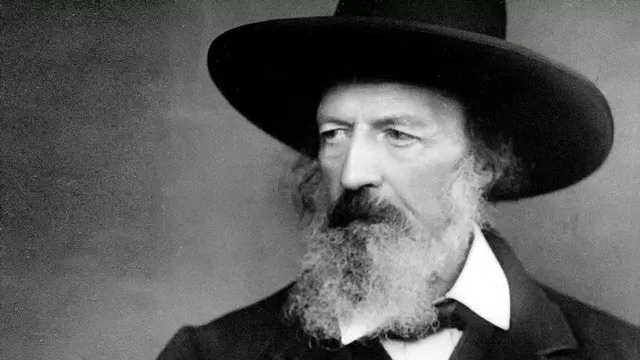
Old poets foster’d under friendlier skies,
Old Virgil who would write ten lines, they say,
At dawn, and lavish all the golden day
To make them wealthier in the readers’ eyes;
And you, old popular Horace, you the wise
Adviser of the nine-years-ponder’d lay,
And you, that wear a wreath of sweeter bay,
Catullus, whose dead songster never dies;
If, glancing downward on the kindly sphere
That once had roll’d you round and round the sun,
You see your Art still shrined in human shelves,
You should be jubilant that you flourish’d here
Before the Love of Letters, overdone,
Had swamped the sacred poets with themselves.
Analysis
Tennyson’s sonnet is a direct address to classical Roman poets: Virgil, Horace, and Catullus. He evokes their legendary dedication to their craft, referencing anecdotes about their writing processes – Virgil’s meticulous revision of just ten lines, and Horace’s advice to let a work sit for nine years before publication. Catullus is praised for his enduring legacy, his “dead songster” (referring either to his poetry or perhaps the sparrow of his famous poem) that “never dies.” Tennyson clearly admires the craftsmanship and lasting impact of these ancient masters.
The sonnet shifts in the sestet, imagining these poets looking down from the heavens upon their continued presence in literature, “shrined in human shelves.” The point of comparison is Tennyson’s own age. He suggests they should be grateful they lived and wrote before a time when the “Love of Letters, overdone,” or perhaps excessive focus on biographical detail and self-promotion, threatened to overshadow the poetry itself. The phrase “swamped the sacred poets with themselves” is ambiguous but implies a modern preoccupation with the poet’s personality or life story rather than the pure art. Tennyson contrasts the timelessness achieved by the Romans through dedicated craft with a perceived modern tendency towards self-absorption that detracts from the poetry. It’s a reflection on the nature of literary legacy and the dangers of ego in art.
7. “To John Keats” by Amy Lowell (1874-1925)
Lowell
Great master! Boyish, sympathetic man!
Whose orbed and ripened genius lightly hung
From life’s slim, twisted tendril and there swung
In crimson-sphered completeness; guardian
Of crystal portals through whose openings fan
The spiced winds which blew when earth was young,
Scattering wreaths of stars, as Jove once flung
A golden shower from heights cerulean.
Crumbled before thy majesty we bow.
Forget thy empurpled state, thy panoply
Of greatness, and be merciful and near;
A youth who trudged the highroad we tread now
Singing the miles behind him; so may we
Faint throbbings of thy music overhear.
Analysis
Amy Lowell’s sonnet is an impassioned tribute to John Keats, portraying him as both a “Great master” and a relatable, “Boyish, sympathetic man.” The opening lines use rich, organic imagery (“orbed and ripened genius,” “slim, twisted tendril,” “crimson-sphered completeness”) to describe the perceived perfection and natural emergence of Keats’s talent, suggesting his genius blossomed fully and beautifully in his short life.
Lowell elevates Keats to a near-mythic status, depicting him as a “guardian / Of crystal portals” whose work transports readers to a primordial, magical realm filled with “spiced winds” and scattered “wreaths of stars.” This evokes the lush, sensuous, and often mythological world of Keats’s own poetry. The octet establishes his distant, majestic greatness, before the sestet brings him closer. Lowell invites Keats to shed his “empurpled state” and “panoply / Of greatness” to become accessible. She imagines him as a fellow traveler, “A youth who trudged the highroad we tread now,” suggesting a shared journey and struggle in the world of poetry. The hope is that by connecting with this image of Keats, contemporary poets might still catch echoes (“Faint throbbings”) of his inspiring “music.” It’s a poem that balances reverence for a past master with a desire for ongoing inspiration and connection across generations.
6. “On Sitting down to Read King Lear Once Again” by John Keats (1795-1821)

O golden tongued Romance, with serene lute!
Fair plumed Syren, Queen of far-away!
Leave melodizing on this wintry day,
Shut up thine olden pages, and be mute:
Adieu! for, once again, the fierce dispute
Betwixt damnation and impassion’d clay
Must I burn through; once more humbly assay
The bitter-sweet of this Shakespearian fruit:
Chief Poet! and ye clouds of Albion,
Begetters of our deep eternal theme!
When through the old oak Forest I am gone,
Let me not wander in a barren dream,
But, when I am consumed in the fire,
Give me new Phoenix wings to fly at my desire.
Analysis
This sonnet is fascinating because it’s ostensibly about reading Shakespeare’s King Lear, a play, but is framed as a turning away from one kind of poetry (Romance) towards another (Shakespearean drama, treated here with poetic reverence). Keats bids farewell to “golden tongued Romance,” personified as a “Fair plumed Syren,” associated with gentle music and distant, idealized realms (“far-away”). This suggests a conscious decision to leave behind the comforts and beauties of Romantic poetry, perhaps his own earlier style or the genre itself.
The reason for this departure is the demanding task of re-engaging with King Lear. Keats describes the play’s core conflict as the “fierce dispute / Betwixt damnation and impassion’d clay,” highlighting its intense, human, and tragic nature. Reading it is an act of trial, something he must “burn through” and “humbly assay,” acknowledging the difficulty and depth of Shakespeare’s work. The shift occurs dramatically at the volta, with a direct address to “Chief Poet!” – clearly Shakespeare – and the “clouds of Albion” (Britain), framing Shakespeare as the source of Britain’s profound poetic heritage. The final lines express a desire for transformative understanding. Reading Lear is described as a consuming fire; Keats seeks not merely to understand the play but to be reborn by the experience, granted “new Phoenix wings to fly at my desire,” suggesting that engaging with such powerful art provides a profound, almost mystical liberation and renewal of the spirit. It’s a sonnet about the transformative power of confronting challenging, great art.
5. “Dante” by Henry Wadsworth Longfellow (1807-1882)

Tuscan, that wanderest through the realms of gloom,
With thoughtful pace, and sad, majestic eyes,
Stern thoughts and awful from thy soul arise,
Like Farinata from his fiery tomb.
Thy sacred song is like the trump of doom;
Yet in thy heart what human sympathies,
What soft compassion glows, as in the skies
The tender stars their clouded lamps relume!
Methinks I see thee stand, with pallid cheeks,
By Fra Hilario in his diocese,
As up the convent-walls, in golden streaks,
The ascending sunbeams mark the day’s decrease,
And, as he asks what there the stranger seeks,
Thy voice along the cloister whispers, “Peace!”
Analysis
Longfellow, a significant translator of Dante, offers a deeply felt portrait of the Italian master. The sonnet immediately establishes Dante’s association with suffering and solemnity, addressing him as the “Tuscan” who walks “through the realms of gloom” – a clear reference to the Inferno. Longfellow captures the stern, weighty nature of Dante’s vision, comparing the powerful thoughts rising from his soul to the formidable figure of Farinata rising from his tomb of fire. Dante’s poetry is described as a formidable, almost terrifying sound, “like the trump of doom.”
However, the octet pivots to acknowledge the profound “human sympathies” and “soft compassion” that also characterize Dante’s work, particularly evident in moments within the Commedia despite its severe judgments. The image of “tender stars their clouded lamps relume” offers a counterpoint of gentle light amidst the gloom. The sestet shifts to a specific, perhaps imagined, scene: Dante standing with “pallid cheeks” by Fra Hilario, a friar mentioned in early biographies of Dante. This scene places Dante in a quiet, contemplative setting within a cloister, bathed in the light of the setting sun. The friar’s question about what the stranger seeks elicits Dante’s single-word reply, “Peace!” This final image is profoundly moving, suggesting that despite or because of his harrowing journey through the realms of the afterlife, Dante’s ultimate desire, and perhaps the ultimate message gleaned from his work, is peace. It’s a sonnet that encapsulates the complex duality of Dante’s vision: stern justice coupled with deep, yearning compassion.

4. “Chaucer” by Henry Wadsworth Longfellow (1807-1882)
An old man in a lodge within a park;
The chamber walls depicted all around
With portraitures of huntsman, hawk, and hound,
And the hurt deer. He listeneth to the lark,
Whose song comes with the sunshine through the dark
Of painted glass in leaden lattice bound;
He listeneth and he laugheth at the sound,
Then writeth in a book like any clerk.
He is the poet of the dawn, who wrote
The Canterbury Tales, and his old age
Made beautiful with song; and as I read
I hear the crowing cock, I hear the note
Of lark and linnet, and from every page
Rise odors of ploughed field or flowery mead.
Analysis
In contrast to the somber intensity of his sonnet on Dante, Longfellow presents a warm, idyllic depiction of Geoffrey Chaucer. He imagines Chaucer as an “old man in a lodge within a park,” surrounded by scenes of country life depicted on the walls, reflecting the vibrant, earthy tapestry of The Canterbury Tales. This setting is one of peace and rustic beauty.
Longfellow focuses on Chaucer’s connection to nature and everyday life, portraying him listening to the “song comes with the sunshine through the dark / Of painted glass,” a beautiful image contrasting the light filtering through artifice with the natural sound. Chaucer’s reaction – he “listeneth and he laugheth at the sound, / Then writeth in a book like any clerk” – captures a sense of geniality, observant humor, and diligent craftsmanship. The title “poet of the dawn” suggests Chaucer’s foundational role in English literature, ushering in a new era. The poem concludes by describing the sensory experience of reading Chaucer’s work, highlighting its ability to transport the reader to the English countryside, filling the senses with the sounds of birds and the “odors of ploughed field or flowery mead.” It is a celebration of Chaucer’s vitality, his connection to the natural world, and the immersive quality of his poetry.
3. “To an American Painter Departing for Europe” by William Cullen Bryant (1794-1878)

Thine eyes shall see the light of distant skies:
Yet, Cole! thy heart shall bear to Europe’s strand
A living image of thy native land,
Such as on thy own glorious canvass lies.
Lone lakes—savannahs where the bison roves—
Rocks rich with summer garlands—solemn streams—
Skies, where the desert eagle wheels and screams—
Spring bloom and autumn blaze of boundless groves—
Fair scenes shall greet thee where thou goest—fair,
But different—everywhere the trace of men,
Paths, homes, graves, ruins, from the lowest glen
To where life shrinks from the fierce Alpine air.
Gaze on them, till the tears shall dim thy sight,
But keep that earlier, wilder image bright.
Analysis
William Cullen Bryant’s sonnet is addressed to his friend, the painter Thomas Cole, as Cole prepares to travel to Europe. While Cole is a painter, he also wrote poetry, fitting the theme of this list. The poem serves as a patriotic exhortation from Bryant to Cole, urging him not to forget the unique beauty of the American landscape while abroad. The octet is a celebration of this landscape, listing iconic American scenes: “Lone lakes,” “savannahs where the bison roves,” “solemn streams,” and the vast skies of the wilderness. Bryant suggests that Cole carries an “image” of this land within his heart, one that mirrors the grandeur depicted in Cole’s own paintings.
The sestet contrasts the European landscape with the American. Europe’s scenes are acknowledged as “fair,” but critically, they are characterized by “everywhere the trace of men.” This is detailed with a rapid, almost breathless list: “Paths, homes, graves, ruins,” highlighting the historical depth and human imprint on the European land. In contrast, the American landscape, celebrated in the octet, is implicitly presented as wilder, less touched by human history and settlement. Bryant advises Cole to observe and appreciate Europe (“Gaze on them, till the tears shall dim thy sight”) but implores him to prioritize and “keep that earlier, wilder image bright” – the image of untamed America. It’s a sonnet that articulates a distinct American identity tied to its natural wilderness and encourages an artist to remain true to his national source of inspiration.
2. “Scorn Not the Sonnet” by William Wordsworth (1770-1850)

Scorn not the Sonnet; Critic, you have frowned,
Mindless of its just honours; with this key
Shakespeare unlocked his heart; the melody
Of this small lute gave ease to Petrarch’s wound;
A thousand times this pipe did Tasso sound;
With it Camöens soothed an exile’s grief;
The Sonnet glittered a gay myrtle leaf
Amid the cypress with which Dante crowned
His visionary brow: a glow-worm lamp,
It cheered mild Spenser, called from Faery-land
To struggle through dark ways; and, when a damp
Fell round the path of Milton, in his hand
The Thing became a trumpet; whence he blew
Soul-animating strains—alas, too few!
Analysis
Wordsworth’s sonnet is a robust defense and celebration of the sonnet form itself, addressed initially to a dismissive “Critic.” However, its true power lies in the parade of illustrious poets from different eras and nations who used the sonnet to profound effect. Wordsworth refutes the critic’s “frown” by listing a series of masters and illustrating how the sonnet served them.
He presents the sonnet as a versatile and powerful tool: it was the “key” with which Shakespeare revealed his inner world, the “melody” that eased Petrarch’s lovesick “wound,” the instrument (“pipe”) played by Tasso, and the solace that “soothed” Camões in exile. The sonnet is depicted vividly as a “gay myrtle leaf” contrasting with the somber cypress crowning Dante’s brow, suggesting it offered moments of light or clarity within even the most serious visions. It was a humble “glow-worm lamp” guiding Spenser through difficulty and, most powerfully, became a “trumpet” in Milton’s hand, used to blow “Soul-animating strains.” By invoking these giants – Shakespeare, Petrarch, Tasso, Camões, Dante, Spenser, and Milton – Wordsworth demonstrates the sonnet’s enduring power, flexibility, and pedigree. The poem is a direct argument against dismissing the form, asserting its historical significance and its capacity for expressing the deepest human experiences.
1. “On First Looking into Chapman’s Homer” by John Keats (1795-1821)
Much have I travell’d in the realms of gold,
And many goodly states and kingdoms seen;
Round many western islands have I been
Which bards in fealty to Apollo hold.
Oft of one wide expanse had I been told
That deep-brow’d Homer ruled as his demesne;
Yet did I never breathe its pure serene
Till I heard Chapman speak out loud and bold:
Then felt I like some watcher of the skies
When a new planet swims into his ken;
Or like stout Cortez when with eagle eyes
He star’d at the Pacific—and all his men
Look’d at each other with a wild surmise
Silent, upon a peak in Darien.
Analysis
Perhaps the most famous sonnet about encountering another poet’s work, Keats’s poem describes the profound impact of reading George Chapman’s 17th-century translation of Homer’s epics. The octave establishes Keats’s prior experience with literature (“realms of gold,” “states and kingdoms,” “western islands”), indicating he was already well-read and familiar with the literary landscape, including tales of Homer (“deep-brow’d Homer ruled as his demesne”). However, he explicitly states that he had not fully experienced Homer’s world (“never breathe its pure serene”) until reading Chapman.
The volta at line 9 marks a dramatic shift, capturing the moment of revelation. The experience is likened to two powerful moments of discovery: an astronomer spotting a “new planet” and the explorer “stout Cortez” (though historically it was Balboa) beholding the Pacific Ocean for the first time from a peak in Darien. These similes convey the overwhelming, awe-inspiring nature of the discovery. The final image of Cortez and his men gazing in “wild surmise,” “Silent,” underscores the ineffable impact of the experience, leaving them struck dumb by the sheer magnitude of what they’ve encountered. Keats’s sonnet is a timeless testament to the transformative power of great literature and translation, portraying the act of reading as an act of exploration and profound personal discovery, revealing previously unknown worlds and expanding the reader’s understanding of the sublime.
These ten sonnets offer glimpses into the intricate relationships poets have with their predecessors and contemporaries. They are dialogues across time and space, expressing admiration, critique, and a shared dedication to the art of poetry.