
Exploring the best of English poetry can be a daunting task, given its rich and diverse history. This list focuses on brevity and impact, showcasing 10 exceptional poems of 50 lines or less, originally written in English. From timeless classics to modern masterpieces, these poems offer profound insights into the human condition, demonstrating the power of language to evoke emotion and inspire reflection. This selection, while subjective, aims to represent the diverse voices and themes that have shaped English poetry. We invite you to explore these works and discover the enduring beauty within their concise forms.
Contents
- 10. “The Road Not Taken” by Robert Frost
- 9. “The New Colossus” by Emma Lazarus
- 8. “Ozymandias” by Percy Bysshe Shelley
- 7. “Ode on a Grecian Urn” by John Keats
- 6. “The Tiger” by William Blake
- 5. “On His Blindness” by John Milton
- 4. “A Psalm of Life” by Henry Wadsworth Longfellow
- 3. “Daffodils” by William Wordsworth
- 2. “Holy Sonnet 10: Death, Be Not Proud” by John Donne
- 1. “Sonnet 18” by William Shakespeare
10. “The Road Not Taken” by Robert Frost
Two roads diverged in a yellow wood,
And sorry I could not travel both
And be one traveler, long I stood
And looked down one as far as I could
To where it bent in the undergrowth;
Then took the other, as just as fair,
And having perhaps the better claim,
Because it was grassy and wanted wear;
Though as for that the passing there
Had worn them really about the same,
And both that morning equally lay
In leaves no step had trodden black.
Oh, I kept the first for another day!
Yet knowing how way leads on to way,
I doubted if I should ever come back.
I shall be telling this with a sigh
Somewhere ages and ages hence:
Two roads diverged in a wood, and I—
I took the one less traveled by,
And that has made all the difference. Robert Frost in his later years
Frost’s iconic poem explores the concept of choice and its potential impact on one’s life. While seemingly simple, the poem’s ambiguity invites deeper interpretation, questioning whether the chosen path truly made a difference or if the narrative is a retrospective construction of meaning.
9. “The New Colossus” by Emma Lazarus
Not like the brazen giant of Greek fame,
With conquering limbs astride from land to land;
Here at our sea-washed, sunset gates shall stand
A mighty woman with a torch, whose flame
Is the imprisoned lightning, and her name
Mother of Exiles. From her beacon-hand
Glows world-wide welcome; her mild eyes command
The air-bridged harbor that twin cities frame.
“Keep, ancient lands, your storied pomp!” cries she
With silent lips. “Give me your tired, your poor,
Your huddled masses yearning to breathe free,
The wretched refuse of your teeming shore.
Send these, the homeless, tempest-tossed to me,
I lift my lamp beside the golden door!”
Lazarus’s sonnet, inscribed on the Statue of Liberty, encapsulates the American ideal of welcoming immigrants seeking refuge and opportunity. It contrasts the ancient symbolism of conquest with a message of compassion and hope, solidifying the statue as a beacon of freedom.
8. “Ozymandias” by Percy Bysshe Shelley
I met a traveller from an antique land
Who said: “Two vast and trunkless legs of stone
Stand in the desert. Near them, on the sand,
Half sunk, a shattered visage lies, whose frown,
And wrinkled lip, and sneer of cold command,
Tell that its sculptor well those passions read
Which yet survive, stamped on these lifeless things,
The hand that mocked them and the heart that fed:
And on the pedestal these words appear:
‘My name is Ozymandias, king of kings:
Look on my works, ye Mighty, and despair!’
Nothing beside remains. Round the decay
Of that colossal wreck, boundless and bare
The lone and level sands stretch far away.”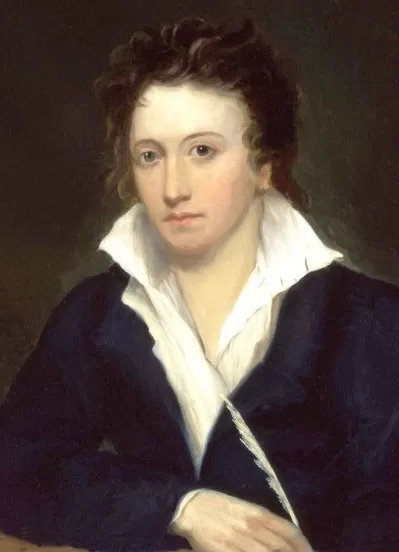 Percy Bysshe Shelley portrait
Shelley’s powerful poem reflects on the ephemeral nature of power and the inevitable decay of even the grandest monuments. The irony of Ozymandias’s boastful inscription amidst the ruins serves as a potent reminder of time’s destructive force.
7. “Ode on a Grecian Urn” by John Keats
Keats’s ode celebrates the enduring power of art to transcend time and mortality. The poem explores the tension between the static perfection of the urn’s figures and the dynamic, fleeting nature of human life, ultimately suggesting that beauty and truth are intertwined. See the original drawing below:
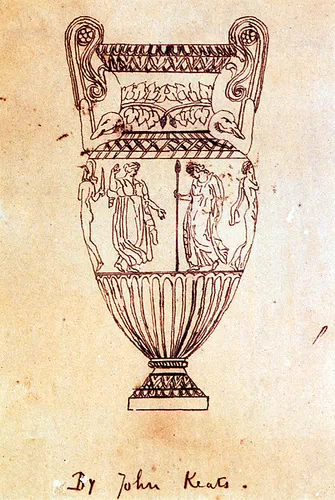 Keats's drawing of a Grecian Urn
6. “The Tiger” by William Blake
Blake’s evocative poem questions the nature of creation and the coexistence of good and evil. The tiger, a symbol of both beauty and ferocity, prompts profound questions about the divine hand that could create such a creature, challenging conventional notions of a benevolent creator.
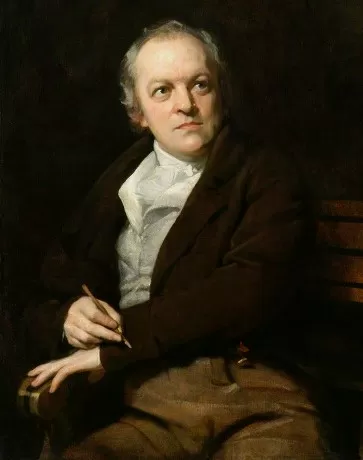 William Blake Portrait
5. “On His Blindness” by John Milton
Milton’s sonnet confronts the challenges of physical limitation and the search for purpose in the face of adversity. The poem explores the poet’s struggle with his blindness, ultimately finding solace in the belief that true service lies in accepting one’s fate and patiently awaiting God’s will.
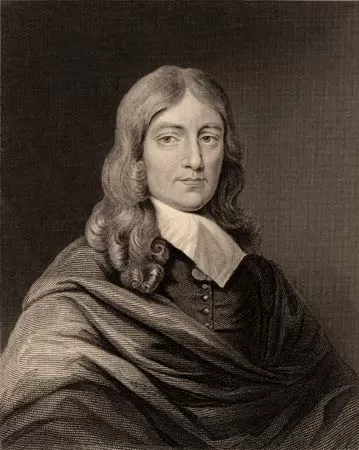 John Milton Portrait
4. “A Psalm of Life” by Henry Wadsworth Longfellow
Longfellow’s uplifting poem encourages action, perseverance, and the pursuit of a meaningful life. It rejects a passive acceptance of fate, urging readers to embrace the present and strive for greatness, leaving a positive impact on the world.
 A Psalm of Life manuscript page
3. “Daffodils” by William Wordsworth
Wordsworth’s lyrical poem celebrates the simple beauty of nature and its ability to inspire joy and solace. The image of the dancing daffodils becomes a source of enduring happiness for the poet, highlighting the restorative power of the natural world.
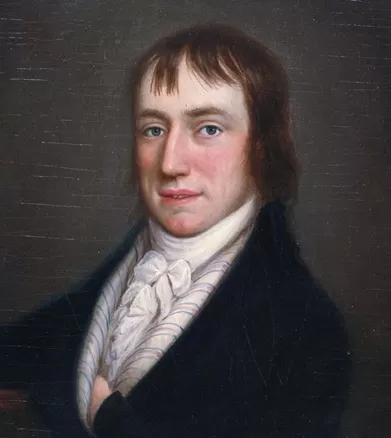 William Wordsworth at 28
2. “Holy Sonnet 10: Death, Be Not Proud” by John Donne
Donne’s defiant sonnet challenges the power of death, arguing that it is merely a temporary sleep before eternal life. The poem’s bold tone and vivid imagery diminish death’s perceived might, offering comfort and hope in the face of mortality.
1. “Sonnet 18” by William Shakespeare
Shakespeare’s iconic sonnet celebrates the enduring power of love and poetry to immortalize beauty. Comparing his beloved to a summer’s day, the poet argues that their beauty will never fade, preserved forever within the eternal lines of his verse.