
In the timeless search for the perfect expression of affection, readers are constantly asking: “What are the greatest love poems?” or “Where can I find verses that truly capture the depth of my feelings?” At Latrespace, we believe the answers often lie in the enduring works of classical poets. While modern poetry offers its own unique emotional landscape, the power of a classical declaration remains unmatched, offering a profound depth of feeling that has withstood centuries. If you’re looking for the most timeless poems to enrich your appreciation of the craft, our selection should satisfy your quest.
Contents
- The Spectrum of Affection: A Look at the Greatest Love Poems
- 10. “Since There’s No Help,” by Michael Drayton (1563-1631)
- 9. “How Do I Love Thee,” by Elizabeth Barrett Browning (1806-1861)
- 8. “Love’s Philosophy,” by Percy Bysshe Shelley (1792-1822)
- Love’s Philosophy
- 7. “Love,” by Samuel Taylor Coleridge (1772-1834)
- 6. “A Red, Red Rose,” by Robert Burns (1759-1796)
- A Red, Red Rose
- 5. “Annabel Lee,” by Edgar Allan Poe (1809-1849)
- Annabelle Lee
- 4. “Whoso List to Hunt,” by Sir Thomas Wyatt (1503-1542)
- Whoso List to Hunt
- 3. “To His Coy Mistress,” by Andrew Marvell (1621-1678)
- 2. “Bright Star,” by John Keats (1795-1821)
- 1. “Let Me Not to the Marriage of True Minds” (Sonnet 116), by William Shakespeare (1564-1616)
This list is a dive into the full emotional spectrum of love, from ecstatic joy to bitter anguish and the quiet steadfastness in between. As the original author notes, don’t take this as a relationship manual—for evidence of poets’ relationship know-how, simply read their biographies. These ten selections, however, beautifully showcase the complexity of the human heart through meter, metaphor, and an unwavering commitment to beauty.
The Spectrum of Affection: A Look at the Greatest Love Poems
The greatest expressions of love in poetry often come from the Romantic era, where grand emotional outpouring was the vogue, but we begin our journey even earlier.
10. “Since There’s No Help,” by Michael Drayton (1563-1631)
This sonnet is a difficult, yet honest, start to any list of greatest love poems. Drayton, a contemporary of Shakespeare, penned this verse at the unhappy conclusion of an affair, beginning with a facade of stoic indifference: “. . . you get no more of me.” However, the stoicism cracks in the closing six lines.
He personifies the dying figures of Love, Passion, Faith, and Innocence, pleading for them to be saved by the lady’s final act of kindness. This poem masterfully captures the moment of forced closure, where indifference is merely a cloak for desperate, lingering hope.
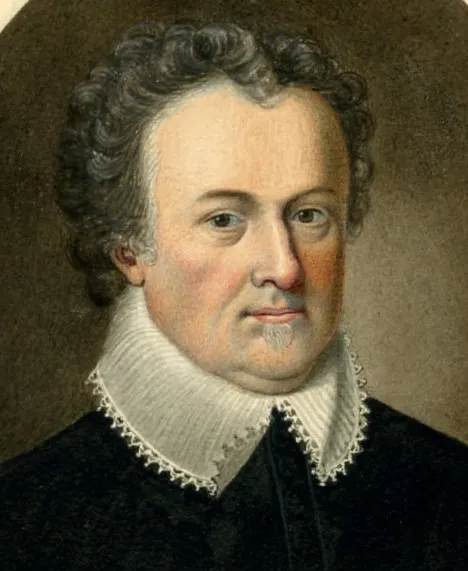 Portrait of Michael Drayton
The Poem:
Since there’s no help, come let us kiss and part;
Nay, I have done, you get no more of me,
And I am glad, yea glad with all my heart
That thus so cleanly I myself can free;
Shake hands forever, cancel all our vows,
And when we meet at any time again,
Be it not seen in either of our brows
That we one jot of former love retain.
Now at the last gasp of Love’s latest breath,
When, his pulse failing, Passion speechless lies,
When Faith is kneeling by his bed of death,
And Innocence is closing up his eyes,
Now if thou wouldst, when all have given him over,
From death to life thou mightst him yet recover.
9. “How Do I Love Thee,” by Elizabeth Barrett Browning (1806-1861)
Perhaps the most famous love poem of the Victorian age, this sonnet (Sonnet 43 from Sonnets from the Portuguese) is an inventory of devotion, brimming with the intense emotion that defines great Romantic works.
Barrett Browning’s passion for Robert Browning is evident in every line. She loves “to the depth and breadth and height / My soul can reach,” even replacing her “lost saints” with her beloved. This sheer, unbridled hyperbole has made it an eternal favorite for anyone [finding love poems] that are utterly overwhelming in their adoration.
 Portrait of Elizabeth Barrett Browning
The Poem:
How do I love thee? Let me count the ways.
I love thee to the depth and breadth and height
My soul can reach, when feeling out of sight
For the ends of being and ideal grace.
I love thee to the level of every day’s
Most quiet need, by sun and candle-light.
I love thee freely, as men strive for right.
I love thee purely, as they turn from praise.
I love thee with the passion put to use
In my old griefs, and with my childhood’s faith.
I love thee with a love I seemed to lose
With my lost saints. I love thee with the breath,
Smiles, tears, of all my life; and, if God choose,
I shall but love thee better after death.
8. “Love’s Philosophy,” by Percy Bysshe Shelley (1792-1822)
Despite its grand title, this sixteen-line lyric is less about philosophy and more about the oldest romantic argument: the universality of mingling. Shelley argues that nature itself—from fountains to rivers, winds to the ocean, mountains to heaven—all participates in an intimate, connected existence.
If “Nothing in the world is single,” and the “law divine” is to meet and mingle, then the central question is simple, but piercing: “What is all this sweet work worth / If thou kiss not me?” It is a sweet, beautifully orchestrated plea for unity.
 Cropped portrait of Percy Bysshe Shelley
Love’s Philosophy
The fountains mingle with the river
And the rivers with the ocean,
The winds of heaven mix for ever
With a sweet emotion;
Nothing in the world is single;
All things by a law divine
In one spirit meet and mingle.
Why not I with thine?—
See the mountains kiss high heaven
And the waves clasp one another;
No sister-flower would be forgiven
If it disdained its brother;
And the sunlight clasps the earth
And the moonbeams kiss the sea:
What is all this sweet work worth
If thou kiss not me?
7. “Love,” by Samuel Taylor Coleridge (1772-1834)
Coleridge presents a much more complicated seduction attempt than Shelley’s. In this ballad, the lover woos his beloved, Genevieve, by singing her a long, moving tale of chivalry—a knight who saves a lady from a great outrage, is wounded, and dies in her arms.
The poet’s motive is clear: he is “singing another’s love, / Interpreted my own.” The story’s sad passion moves the gentle Genevieve to tears and, ultimately, to surrender. Coleridge uses a lengthened ballad stanza to spin a truly romantic yarn, revealing a profound connection between shared emotional experience and intimacy.
 Portrait of Samuel Taylor Coleridge
All thoughts, all passions, all delights,
Whatever stirs this mortal frame,
All are but ministers of Love,
And feed his sacred flame.
Oft in my waking dreams do I
Live o’er again that happy hour,
When midway on the mount I lay,
Beside the ruined tower.
The moonshine, stealing o’er the scene
Had blended with the lights of eve;
And she was there, my hope, my joy,
My own dear Genevieve!
She leant against the arméd man,
The statue of the arméd knight;
She stood and listened to my lay,
Amid the lingering light.
Few sorrows hath she of her own,
My hope! my joy! my Genevieve!
She loves me best, whene’er I sing
The songs that make her grieve.
I played a soft and doleful air,
I sang an old and moving story—
An old rude song, that suited well
That ruin wild and hoary.
She listened with a flitting blush,
With downcast eyes and modest grace;
For well she knew, I could not choose
But gaze upon her face.
I told her of the Knight that wore
Upon his shield a burning brand;
And that for ten long years he wooed
The Lady of the Land.
I told her how he pined: and ah!
The deep, the low, the pleading tone
With which I sang another’s love,
Interpreted my own.
She listened with a flitting blush,
With downcast eyes, and modest grace;
And she forgave me, that I gazed
Too fondly on her face!
But when I told the cruel scorn
That crazed that bold and lovely Knight,
And that he crossed the mountain-woods,
Nor rested day nor night;
That sometimes from the savage den,
And sometimes from the darksome shade,
And sometimes starting up at once
In green and sunny glade,—
There came and looked him in the face
An angel beautiful and bright;
And that he knew it was a Fiend,
This miserable Knight!
And that unknowing what he did,
He leaped amid a murderous band,
And saved from outrage worse than death
The Lady of the Land!
And how she wept, and clasped his knees;
And how she tended him in vain—
And ever strove to expiate
The scorn that crazed his brain;—
And that she nursed him in a cave;
And how his madness went away,
When on the yellow forest-leaves
A dying man he lay;—
His dying words—but when I reached
That tenderest strain of all the ditty,
My faultering voice and pausing harp
Disturbed her soul with pity!
All impulses of soul and sense
Had thrilled my guileless Genevieve;
The music and the doleful tale,
The rich and balmy eve;
And hopes, and fears that kindle hope,
An undistinguishable throng,
And gentle wishes long subdued,
Subdued and cherished long!
She wept with pity and delight,
She blushed with love, and virgin-shame;
And like the murmur of a dream,
I heard her breathe my name.
Her bosom heaved—she stepped aside,
As conscious of my look she stepped—
Then suddenly, with timorous eye
She fled to me and wept.
She half enclosed me with her arms,
She pressed me with a meek embrace;
And bending back her head, looked up,
And gazed upon my face.
‘Twas partly love, and partly fear,
And partly ’twas a bashful art,
That I might rather feel, than see,
The swelling of her heart.
I calmed her fears, and she was calm,
And told her love with virgin pride;
And so I won my Genevieve,
My bright and beauteous Bride.
6. “A Red, Red Rose,” by Robert Burns (1759-1796)
Robert Burns’ well-known lyric is perhaps the purest and simplest declaration on this list. It is an extraordinary use of metaphor, stating that his love is “like a red, red rose / That’s newly sprung in June” and “like the melody / That’s sweetly played in tune.”
What elevates this poem is the boundless, almost impossible promise of its longevity: he will love her “Till a’ the seas gang dry” and “And the rocks melt wi’ the sun.” It is the epitome of a young man’s all-consuming affection—a powerful, short cry of love that knows no limits. If you are looking for [long poems about love] this one is short, but its sentiment is eternal.
 Portrait of Robert Burns
A Red, Red Rose
O my Luve is like a red, red rose
That’s newly sprung in June;
O my Luve is like the melody
That’s sweetly played in tune.
So fair art thou, my bonnie lass,
So deep in luve am I;
And I will luve thee still, my dear,
Till a’ the seas gang dry.
Till a’ the seas gang dry, my dear,
And the rocks melt wi’ the sun;
I will love thee still, my dear,
While the sands o’ life shall run.
And fare thee weel, my only luve!
And fare thee weel awhile!
And I will come again, my luve,
Though it were ten thousand mile.
5. “Annabel Lee,” by Edgar Allan Poe (1809-1849)
Poe’s masterpiece of sound manipulation is a tragic romance: the story of a beautiful, cherished maiden who dies after her “high-born kinsman” separates her from her lover. The poem is a feast of auditory effects, employing anapests, iambs, internal rhymes, and repetitions to create a mesmerizing, haunting rhythm.
The central theme is a love that transcends death and separation—a love so intense that “the winged seraphs of heaven” are envious. The lover’s ultimate devotion is to lie “all the night-tide” by his darling’s side in her tomb, a dark, consuming passion that cements its place among the greatest love poems.
 Portrait of Edgar Allan Poe from 1845
Annabelle Lee
It was many and many a year ago,
In a kingdom by the sea,
That a maiden there lived whom you may know
By the name of Annabel Lee;
And this maiden she lived with no other thought
Than to love and be loved by me.
I was a child and she was a child,
In this kingdom by the sea:
But we loved with a love that was more than love—
I and my Annabel Lee;
With a love that the winged seraphs of heaven
Laughed loud at her and me.
And this was the reason that, long ago,
In this kingdom by the sea,
A wind blew out of a cloud, chilling
My beautiful Annabel Lee;
So that her highborn kinsman came
And bore her away from me,
To shut her up in a sepulchre
In this kingdom by the sea.
The angels, not half so happy in heaven,
Went laughing at her and me—
Yes!—that was the reason (as all men know,
In this kingdom by the sea)
That the wind came out of the cloud by night,
Chilling and killing my Annabel Lee.
But our love it was stronger by far than the love
Of those who were older than we—
Of many far wiser than we—
And neither the laughter in heaven above,
Nor the demons down under the sea,
Can ever dissever my soul from the soul
Of the beautiful Annabel Lee:
For the moon never beams, without bringing me dreams
Of the beautiful Annabel Lee;
And the stars never rise, but I feel the bright eyes
Of the beautiful Annabel Lee;
And so, all the night-tide, I lie down by the side
Of my darling—my darling—my life and my bride,
In her sepulchre there by the sea,
In her tomb by the sounding sea.
4. “Whoso List to Hunt,” by Sir Thomas Wyatt (1503-1542)
This bitter, weary poem is rumored to be about Anne Boleyn, before her execution by King Henry VIII. The speaker compares his beloved to a fleeing deer, a chase the exhausted hunter (Wyatt himself) finally abandons because “in a net I seek to hold the wind.”
The true bitterness comes from the warning etched around the deer’s neck: “Noli me tangere, for Caesar’s I am,” meaning “Don’t touch me, for I am Caesar’s (the King’s).” This is a painful, poignant depiction of a love that is highjacked by immense external forces, forever elusive and forbidden, rendering it exquisitely compelling.
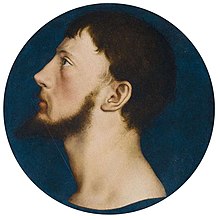
 Portrait of Sir Thomas Wyatt
Whoso List to Hunt
Whoso list to hunt, I know where is an hind,
But as for me, alas, I may no more.
The vain travail hath wearied me so sore,
I am of them that farthest cometh behind.
Yet may I by no means my wearied mind
Draw from the deer, but as she fleeth afore
Fainting I follow. I leave off therefore,
Since in a net I seek to hold the wind.
Who list her hunt, I put him out of doubt,
As well as I may spend his time in vain.
And graven with diamonds in letters plain
There is written, her fair neck round about:
“Noli me tangere, for Caesar’s I am,
And wild for to hold, though I seem tame.”
Whoso list: whoever wants
Hind: Female deer
Noli me tangere: “Don’t touch me”
3. “To His Coy Mistress,” by Andrew Marvell (1621-1678)
Though often seen as a brilliant seduction piece rather than a traditional love poem, Marvell’s work is indisputably one of the greatest poems in the English language. The speaker addresses a reluctant, ‘coy’ lady not with passion or song, but with a formal, logical argument: Time is limited, and death is inevitable.
The famous, chilling image—“then worms shall try / That long preserved virginity”—sets up the urgent call-to-action: “Now let us sport us while we may.” This poem captures a different kind of love: the intense, time-limited, and utterly physical connection that seeks to “tear our pleasures with rough strife / Thorough the iron gates of life” before Time’s chariot catches them.
 Portrait of Andrew Marvell
Had we but world enough and time,
This coyness, lady, were no crime.
We would sit down, and think which way
To walk, and pass our long love’s day.
Thou by the Indian Ganges’ side
Shouldst rubies find; I by the tide
Of Humber would complain. I would
Love you ten years before the flood,
And you should, if you please, refuse
Till the conversion of the Jews.
My vegetable love should grow
Vaster than empires and more slow;
An hundred years should go to praise
Thine eyes, and on thy forehead gaze;
Two hundred to adore each breast,
But thirty thousand to the rest;
An age at least to every part,
And the last age should show your heart.
For, lady, you deserve this state,
Nor would I love at lower rate.
But at my back I always hear
Time’s wingèd chariot hurrying near;
And yonder all before us lie
Deserts of vast eternity.
Thy beauty shall no more be found;
Nor, in thy marble vault, shall sound
My echoing song; then worms shall try
That long-preserved virginity,
And your quaint honour turn to dust,
And into ashes all my lust;
The grave’s a fine and private place,
But none, I think, do there embrace.
Now therefore, while the youthful hue
Sits on thy skin like morning dew,
And while thy willing soul transpires
At every pore with instant fires,
Now let us sport us while we may,
And now, like amorous birds of prey,
Rather at once our time devour
Than languish in his slow-chapped power.
Let us roll all our strength and all
Our sweetness up into one ball,
And tear our pleasures with rough strife
Through the iron gates of life:
Thus, though we cannot make our sun
Stand still, yet we will make him run.
2. “Bright Star,” by John Keats (1795-1821)
Keats brings an almost overwhelming sensuality to this sonnet, even when contemplating the cosmos. The first eight lines contrast the star’s steadfast, lonely existence with the human desire for intimate connection.
The sestet shifts entirely, finding the lover “Pillow’d upon my fair love’s ripening breast,” where he plans to stay “for ever” until death. The genius of the poem lies in the surprising juxtaposition: the wide, cosmic view of the steadfast star and the intimate, immediate picture of the lovers. This invests the simple scene of dalliance with a powerful, cosmic importance—it is the ideal of love realized in a mortal, passionate embrace.
 Portrait of John Keats by William Hilton
Bright star, would I were stedfast as thou art—
Not in lone splendour hung aloft the night
And watching, with eternal lids apart,
Like nature’s patient, sleepless Eremite,
The moving waters at their priestlike task
Of pure ablution round earth’s human shores,
Or gazing on the new soft-fallen mask
Of snow upon the mountains and the moors—
No—yet still stedfast, still unchangeable,
Pillow’d upon my fair love’s ripening breast,
To feel for ever its soft fall and swell,
Awake for ever in a sweet unrest,
Still, still to hear her tender-taken breath,
And so live ever—or else swoon to death.
1. “Let Me Not to the Marriage of True Minds” (Sonnet 116), by William Shakespeare (1564-1616)
The top spot belongs to Shakespeare’s Sonnet 116, which is not a personal appeal, but the most universal and enduring definition of love ever written. The poet defines love as an immovable, constant, and unchangeable force: “Love is not love / Which alters when it alteration finds.”
He compares it to the North Star (“an ever-fixed mark / That looks on tempests and is never shaken”), a guide whose worth is immeasurable. The sonnet states that love persists to the edge of doom, transcending both time and the physical decay of youth.
 The Chandos portrait of William Shakespeare
The final couplet is an unwavering commitment to this philosophy: “If this be error and upon me proved, / I never writ, nor no man ever loved.” In this profound revelation of a deeper, benevolent love, one from which all common love is derived, lies Shakespeare’s genius. It is the ultimate meditation on what true, enduring affection is.
Whether your choice is this profound reflection, a sensual ode like Keats’, or one of the many [cute poems for wife] found in other collections, the variety of the classical period offers a rich emotional canvas. These ten poems stand as monumental proof that the quest to define and capture love in language is perhaps the most noble of all poetic endeavors.
Let me not to the marriage of true minds
Admit impediments. Love is not love
Which alters when it alteration finds,
Or bends with the remover to remove.
O no! it is an ever-fixed mark
That looks on tempests and is never shaken;
It is the star to every wand’ring bark,
Whose worth’s unknown, although his height be taken.
Love’s not Time’s fool, though rosy lips and cheeks
Within his bending sickle’s compass come;
Love alters not with his brief hours and weeks,
But bears it out even to the edge of doom.
If this be error and upon me proved,
I never writ, nor no man ever loved.