
Grief is an intrinsic part of the human experience, an unavoidable emotional response to loss. While most commonly associated with the death of a loved one, grief can stem from numerous significant events, including the end of a relationship, job loss, or a major life change. For many, this response is intense, overwhelming, and debilitating – a state often described as being “grief-stricken.” To Define Grief-stricken is to understand a profound state of suffering marked by intense sorrow, helplessness, and deep emotional pain that significantly impacts a person’s ability to function and engage with the world around them.
Contents
This state goes beyond typical sadness, encompassing a complex interplay of emotions, physical sensations, and behavioral changes. It signifies being deeply afflicted or incapacitated by grief. While models like the five stages of grief (denial, anger, bargaining, depression, acceptance), originally proposed by Elisabeth Kübler-Ross, offer a framework for understanding the journey through loss, the experience of being grief-stricken highlights the overwhelming depth and sometimes prolonged nature of the pain, often transcending a simple linear progression through stages.
The state of being grief-stricken is highly individual. It can manifest differently depending on the person, the nature of the loss, their support system, and cultural background. Understanding this state is crucial, not only for those experiencing it but also for those seeking to support them, as it often necessitates specific approaches to healing and recovery.
What Characterizes Being Grief-Stricken?
To define grief-stricken in practical terms involves examining the intense emotional, mental, and physical symptoms that individuals grapple with. It’s a state where the pain of loss feels consuming, making everyday life extraordinarily difficult or impossible. Key characteristics include:
- Overwhelming Emotional Pain: An intense, pervasive sorrow that can feel unbearable. This may be accompanied by feelings of emptiness, hopelessness, and deep despair.
- Intrusive Thoughts and Preoccupation: The loss constantly occupies the individual’s thoughts. They may ruminate on the circumstances of the loss or memories of the person/situation lost to an excessive degree.
- Sense of Detachment or Numbness: Paradoxically, alongside intense pain, some grief-stricken individuals may feel numb or detached from others and the world, as if reality is distorted or they are observing life from a distance.
- Difficulty Functioning: Significant impairment in daily activities, including work, school, social interactions, and self-care. Simple tasks can feel monumental.
- Intense Anxiety, Guilt, or Anger: While anger and guilt are common in grief, in a grief-stricken state, these emotions can be particularly sharp and debilitating, perhaps directed inward or outward intensely. Anxiety about the future or coping alone is also prevalent.
- Physical Manifestations: Grief is not just emotional; it has physical effects. Being grief-stricken can lead to severe fatigue, sleep disturbances, changes in appetite, physical aches, and even stress-induced physical conditions like “broken heart syndrome.”
- Social Withdrawal and Isolation: The pain can be so intense that the individual pulls away from friends and family, feeling misunderstood or unable to connect.
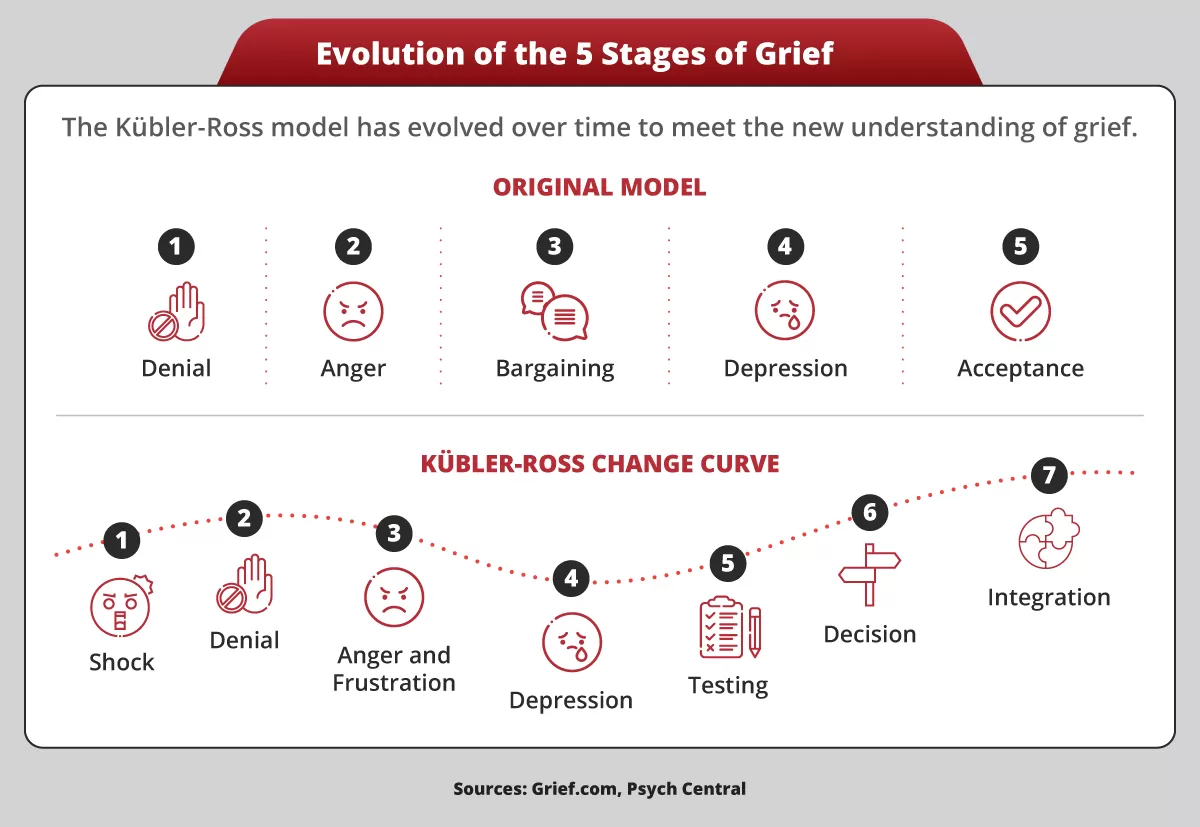 A diagram illustrating the evolution of the stages of grief, from the original five to a seven-stage model, showing denial, anger, depression, and acceptance related to profound loss.
These intense and persistent symptoms differentiate being grief-stricken from more typical, though still painful, grief responses. It’s a state where the natural process of mourning becomes complicated or overwhelming to the point of significantly disrupting life.
Navigating the Grief-Stricken State: The Role of Support and Counseling
Given the profound impact of being grief-stricken, seeking support and professional help is often essential for healing. Grief counseling is a form of therapy specifically designed to help individuals navigate this complex and painful process when they are overwhelmed by their loss. For someone who is grief-stricken, counseling offers a structured and safe environment to process the intense emotions and challenges they face.
The primary objectives of grief counseling are particularly relevant for those in this state:
- Accepting the Reality of the Loss: Helping the individual move past denial, which can be a strong initial defense, to acknowledge the permanence of the loss despite the intense pain.
- Working Through the Pain of Grief: Providing tools and a safe space to feel and express the overwhelming emotions rather than suppressing them, which can perpetuate the grief-stricken state.
- Adjusting to an Environment Without the Deceased (or Lost Entity): Assisting the individual in adapting to a life fundamentally changed by the loss, helping them regain a sense of agency and ability to function when they feel incapacitated.
- Maintaining a Continued Connection with the Deceased: Guiding the individual to find healthy ways to remember and honor the lost loved one, integrating the memory into their life without being consumed by the pain of absence.
For the grief-stricken, achieving these objectives is not a simple task but requires dedicated support to gently move from a state of overwhelming pain towards managing and integrating the loss.
[internal_links]
Therapeutic Approaches to Help the Grief-Stricken
A variety of grief counseling techniques are employed, tailored to the individual’s needs and the specific nature of their grief. These approaches aim to alleviate the intense suffering characteristic of being grief-stricken and help the individual find a path forward.
- Talk Therapy: Providing a dedicated, non-judgmental space for the grief-stricken to articulate the depth of their pain, share memories, and express the multitude of complex emotions associated with being overwhelmed by loss.
- Cognitive Behavioral Therapy (CBT): Helping individuals identify and challenge negative thought patterns that contribute to feelings of hopelessness, guilt, or anxiety common in the grief-stricken state. It assists in developing coping strategies to manage distressing thoughts.
- Mindfulness Practices: Techniques such as meditation or focused breathing can help ground a person overwhelmed by grief, allowing them to experience intense emotions without being completely consumed by them, fostering greater emotional resilience.
- Complicated Grief Treatment (CGT): A specialized form of psychotherapy specifically for individuals experiencing prolonged or complicated grief, which is a severe form of being grief-stricken. CGT focuses on accepting the grief, managing intense pain, planning for the future, and processing the story of the loss.
- Acceptance and Commitment Therapy (ACT): Encouraging individuals to accept the reality of their painful emotions while committing to actions aligned with their values, helping them move forward despite the presence of grief. This is particularly helpful when the grief-stricken feel stuck.
- Ritual: Utilizing symbolic acts, ceremonies, or creative expressions to help individuals externalize their grief, process difficult emotions, and maintain a meaningful connection to what was lost in a structured, healing way.
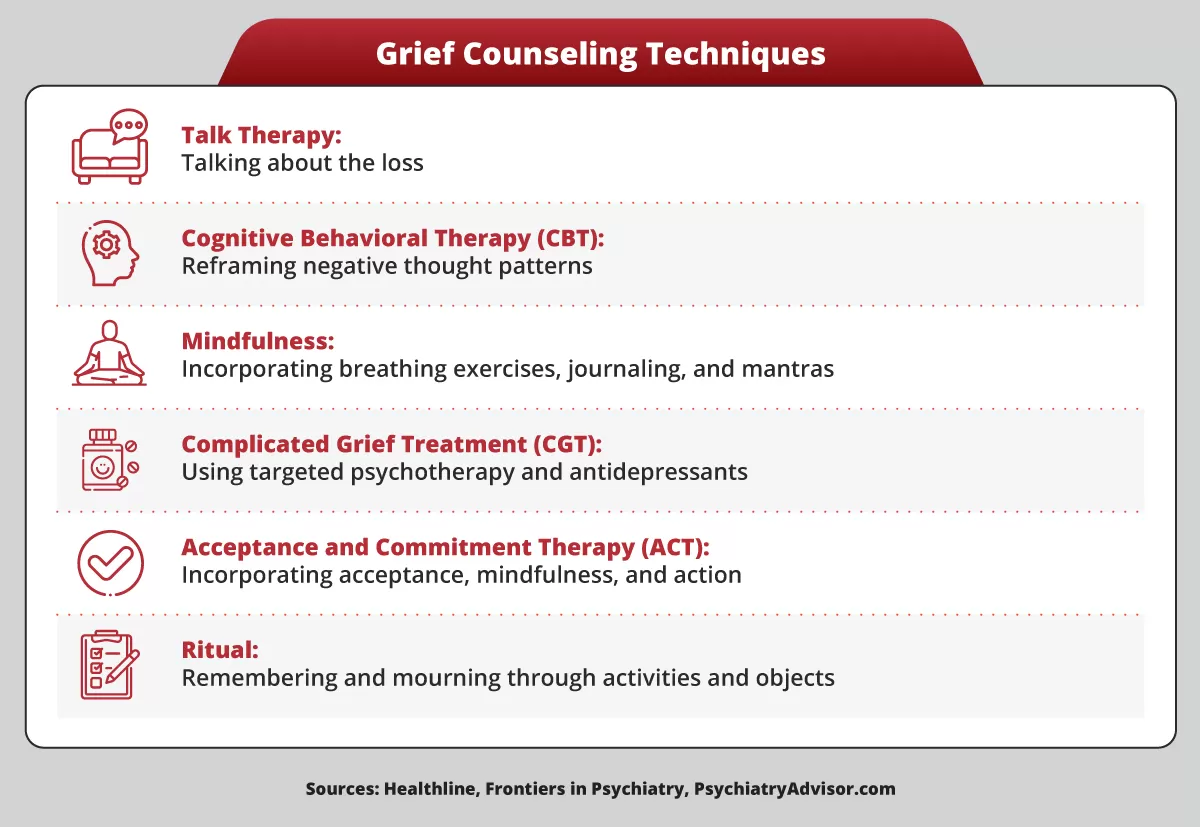 Infographic listing primary grief counseling techniques such as talk therapy, cognitive behavioral therapy (CBT), mindfulness, and ritual, used to help individuals navigate loss.
These techniques provide structured pathways for individuals who are grief-stricken to navigate the intensity of their emotions, process the reality of their loss, and gradually begin to reintegrate into life while honoring the memory of what was lost.
Addressing Being Grief-Stricken Across Different Age Groups
The experience and expression of being grief-stricken vary significantly across different age groups, necessitating tailored approaches in counseling.
- Children: Very young children may not grasp the finality of death, but they intensely feel the absence and disruption caused by loss, manifesting as anxiety or distress. Older children begin to understand permanence and universality but may externalize grief through behavioral issues, questions about their own mortality, or attempts to regain control. Counseling uses concrete language, incorporates family cultural backgrounds and belief systems, and utilizes rituals to help grief-stricken children understand and process their overwhelming feelings in an age-appropriate manner, allowing them to lead their own process of expression.
- Teens: Adolescents possess a more adult understanding of death but often lack developed coping mechanisms. Being grief-stricken can lead to emotional withdrawal, social isolation, risk-taking behaviors (like substance abuse) to escape pain, or intense anger and confusion. Counseling for grief-stricken teens involves creating a safe space to talk (even if they initially resist), active listening, validating their often intense and confusing emotions, and helping them understand their reactions are normal. Understanding their social context and potentially involving family or group therapy is also crucial.
- Adults: Grief-stricken adults may struggle with intense guilt, especially concerning perceived actions or inactions before the loss. They might become fixated on traumatic memories surrounding the death, preventing healthy grieving. Counseling for adults focuses on providing a safe space to talk freely about the deceased, distinguishing healthy grief from trauma fixation, and addressing debilitating guilt. Techniques involve helping them recontextualize traumatic memories, encouraging self-care breaks, and incorporating rituals to honor the lost loved one in a way that supports moving forward.
- Families: When a family member is grief-stricken, it impacts the entire unit. Differing grieving styles, unresolved past issues, and the stress of practical arrangements (like funerals or estates) can add layers of complexity. Family grief counseling addresses these dynamics, helping members understand and respect each other’s unique ways of grieving, working through underlying conflicts, and fostering kind communication to support mutual healing.
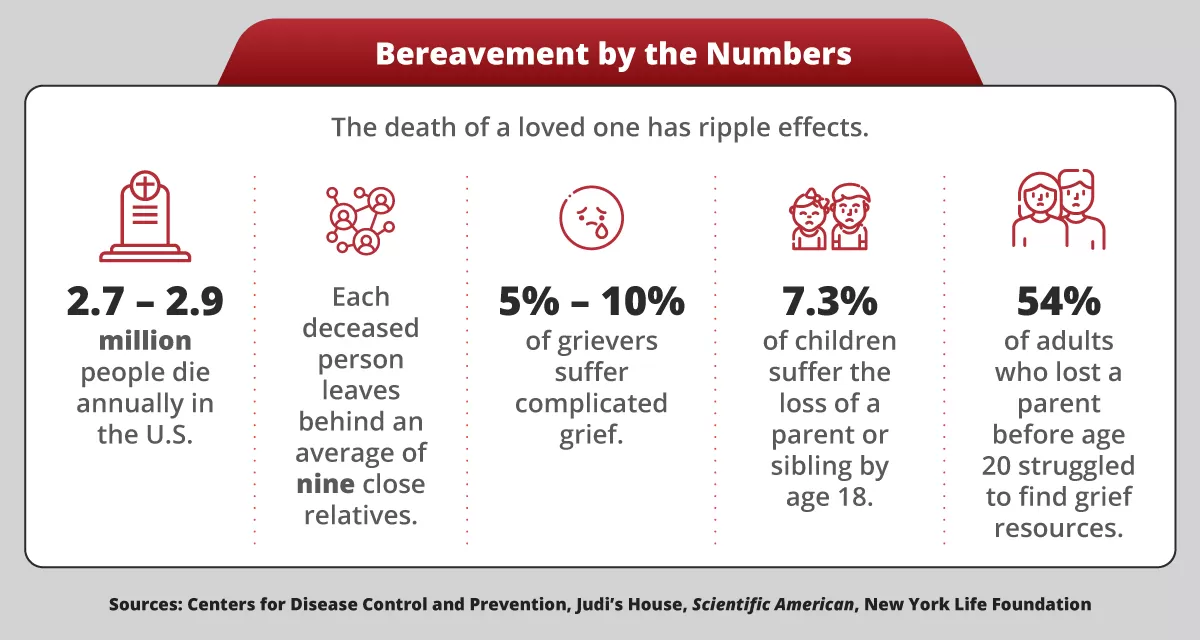 Statistics illustrating the widespread impact of grief and loss in the U.S., including the number of people affected and prevalence of complicated grief.
Recognizing how being grief-stricken presents differently across the lifespan is vital for providing targeted and effective support, ensuring that individuals receive the appropriate care for their specific needs.
The Importance of Support for the Grief-Stricken
To define grief-stricken is to acknowledge a state of profound vulnerability and pain that requires compassion, understanding, and often, professional intervention. Grief is a natural response to loss, but when it becomes overwhelming and debilitating, leading to the state of being grief-stricken, it can severely impact a person’s mental, emotional, and physical well-being.
Grief counseling and other forms of support are not about erasing the memory of the loss or eliminating the pain entirely. Instead, they are crucial tools that help the grief-stricken navigate the intensity of their suffering, process their emotions in a healthy way, adapt to a changed life, and maintain a connection to what was lost without being consumed by sorrow. By providing a safe environment, validated understanding, and effective strategies, counseling empowers individuals to move through the most challenging phases of grief towards a place where they can honor their loss while living a meaningful life.
Understanding what it means to be grief-stricken underscores the necessity of accessible and compassionate support systems for those grappling with the most severe impacts of loss.
References
- Centers for Disease Control, “FastStats: Death and Mortality”
- Frontiers in Psychology, Ritual in Therapy for Prolonged Grief: A Scoping Review of Ritual Elements in Evidence-Informed Grief Interventions
- Grief.com, Five Stages of Grief by Elisabeth Kubler Ross & David Kessler
- Healthline, Therapy for Grief: What You Need to Know
- Judi’s House, Childhood Bereavement Estimation Model
- New York Life Foundation, Bereavement Survey Key Findings
- PsychCentral, 5 Stages of Grief After Facing A Loss
- Psychiatry Advisor, When Mourning Does Not End: Identifying and Treating Complicated Grief
- Scientific American, “COVID Has Put the World at Risk of Prolonged Grief Disorder”