
Le voyage, qu’il s’agisse d’une grande aventure vers des terres lointaines ou d’une exploration introspective plus près de chez soi, éveille quelque chose de profond en nous. Il modifie notre perspective, remet en question nos suppositions et révèle souvent des aspects cachés de nous-mêmes et du monde. La poésie, avec sa capacité unique à saisir des émotions complexes et des expériences éphémères, sert de véhicule puissant pour exprimer ces sentiments. Nous pouvons les appeler « poèmes de voyage » – des vers qui explorent l’anticipation, la réalité, les défis et les transformations inhérents aux périples. Cet article explore une sélection de poèmes de voyage notables de diverses époques et voix, analysant comment ils illuminent l’expérience multiforme du voyage et ce qu’ils offrent à ceux qui apprécient l’art de la poésie et l’appel de la route.
Contents
- Vacation par Rita Dove
- If You Were in Cairo par Simon Constam
- Self-Portrait on the Street of an Unnamed Foreign City par Jennifer Grotz
- Viaggiate (Travel) par Gio Evan
- Consolation par Billy Collins
- Dislocation par Simon Constam
- Learning to Travel par Julene Tripp Weaver
- Majorca par John Cooper Clarke
- Questions of Travel par Elizabeth Bishop
- For the Traveler par John O’Donohue
- The Lady in 38C par Lori Jakiela
- The World Won’t Miss You for a While par Kathryn Simmonds
- 3 Poems About Travel par Sheenagh Pugh
- What If This Road
- The Opportune Moment
- Do You Think We’ll Ever Get to See Earth, Sir?
- Song of the Open Road par Walt Whitman
- Why Do I Travel? Auteur inconnu
- The Return par Geneen Marie Haugen
- The Road Not Taken par Robert Frost
- Die Slowly par Martha Medeiros
Comme les poèmes significatifs sur la vie, les poèmes de voyage abordent souvent des thèmes universels d’identité, de connexion et de découverte, encadrés par la lentille du mouvement et du lieu. Ils nous rappellent que chaque voyage, physique ou métaphorique, est une opportunité de croissance.
Vacation par Rita Dove
« Vacation » de Rita Dove capture une phase spécifique, souvent négligée, d’un voyage : la période d’attente avant le départ. Ce poème transforme le cadre banal d’une porte d’embarquement d’aéroport en un espace liminal, un « intervalle sans temps, sans foyer ».
I love the hour before takeoff,
that stretch of no time, no home
but the gray vinyl seats linked like
unfolding paper dolls. Soon we shall
be summoned to the gate, soon enough
there’ll be the clumsy procedure of row numbers
and perforated stubs—but for now
I can look at these ragtag nuclear families
with their cooing and bickering
or the heeled bachelorette trying
to ignore a baby’s wail and the baby’s
exhausted mother waiting to be called up early
while the athlete, one monstrous hand
asleep on his duffel bag, listens,
perched like a seal trained for the plunge.
Even the lone executive
who has wandered this far into summer
with his lasered itinerary, briefcase
knocking his knees—even he
has worked for the pleasure of bearing
no more than a scrap of himself
into this hall. He’ll dine out, she’ll sleep late,
they’ll let the sun burn them happy all morning—
a little hope, a little whimsy
before the loudspeaker blurts
and we leap up to become
Flight 828, now boarding at Gate 17.
(Dove, Rita. “Vacation.” Poets.org, American Academy of Poets, https://poets.org/poem/vacation)
Ce poème de voyage se concentre sur la communauté partagée et transitoire formée par les voyageurs. Dove observe les divers individus et groupes unis seulement par leur destination commune et l’anticipation partagée du départ. L’image de personnes se dépouillant de leur quotidien, ne portant « pas plus qu’un fragment », met en évidence le potentiel du voyage pour une libération temporaire de la routine et des attentes. C’est un moment chargé de possibilités, une respiration silencieuse avant le saut littéral et figuré dans l’expérience du voyage elle-même.
If You Were in Cairo par Simon Constam
Le poème de Simon Constam explore le thème de la connexion qui transcende la distance géographique, accentué par le fait de faire un voyage. Les vastes distances mentionnées—le Caire, Kampala, Phoenix, La Havane, Saïgon, Phnom Penh, Tuvalu—soulignent le désir inébranlable du locuteur de rester près d’un être cher, peu importe à quel point leurs voyages les emmènent loin.
If you were in Cairo, and I in Kampala;
if you took to Phoenix, and I to Havana;
if you sojourned in Saigon, and I in Phnom Penh
even that short distance would deeply offend.
And seeing as how I’d want to stay close to you,
I’d find every which way to stay in touch with you.

If you moved to Tuvalu, to live or to work,
And email was stalled and the phones didn’t work.
I’d train clever pigeons to soar up above,
to faithfully reach you with my missives of love.

I’d vouchsafe a letter with a monk in a monastery.
I’d entrust my love note to an Amazon missionary.
I’d hire a Sherpa to mountain climb after you
on Everest, on Lhotse, Nanga Parbat or K2…

I would do anything to keep myself close to you.
I’d learn Swahili, Hindi, and even Urdu.
No hurdle of language I’d have to confront,
could ever deter my untiring want.

You can travel as far and as long as you like
by plane, train, or boat, by car or by bike.
I’d find a way, some way, to reach out to you,
I’d even use snail mail if I absolutely had to.

If you flew supersonically out into the blue,
I’d radio the pilot to tell you I love you.
If you pined for space travel and lived in the shuttle,
and our back and forth was a quite public muddle,
and officials below and your crewmates above
had all grown quite tired of such raging, unending, fulsome, embarrassing love,

no matter the trouble I’d have surely incurred,
I’d carry on calling, could not be deterred by
pleading from NASA, complaints or protests,
they’d have to come get me, put me under arrest.

If not-talking was something that you took a vow for,
I’d read to you, sing to you, whatever you’d need me to.
I’d learn to lip read and learn to sign too
There’s really no end to what I would do.

I’d follow you through darkness.
I’d follow you through rain.
My daily attention might drive you insane.

Have I made my point clear? You have nothing to fear
I’m resourceful enough to keep loving you.

So great is my love, I am indefatigable .
When it comes to you, love,
I can’t stop loving you!
Ce poème de voyage utilise l’hyperbole et l’humour pour souligner le pouvoir de la connexion sur fond de voyages mondiaux étendus. Il suggère que si un voyage peut séparer physiquement les personnes, les liens d’amour et de détermination peuvent combler n’importe quelle distance, même à travers les continents ou dans l’espace. La liste variée de lieux met en évidence l’étendue des voyages potentiels, les contrastant avec la concentration singulière du locuteur sur le maintien de la proximité. 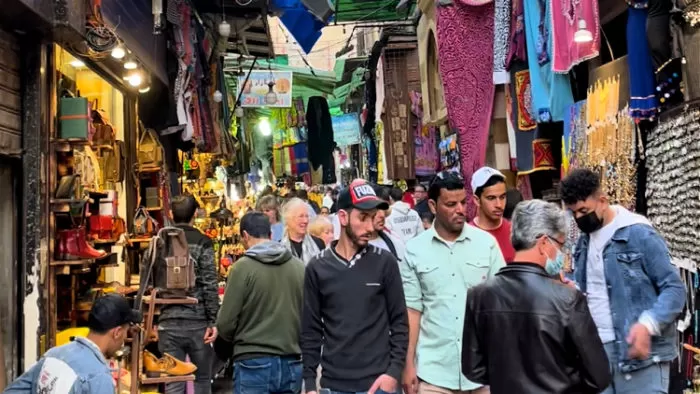 Scène de rue animée dans un bazar du Caire, illustrant les décors évoqués dans des poèmes comme 'If You Were in Cairo'Une scène de rue animée dans un bazar du Caire, illustrant les décors évoqués dans des poèmes de voyage comme ‘If You Were in Cairo’.
Self-Portrait on the Street of an Unnamed Foreign City par Jennifer Grotz
Le poème de Jennifer Grotz capture la nature introspective de voyager seul, en particulier dans une ville étrangère. L’anonymat d’un tel cadre permet une forme unique d’auto-réflexion.
The lettering on the shop window in which
you catch a glimpse of yourself is in Polish.

Behind you a man quickly walks by, nearly shouting
into his cell phone. Then a woman

at a dreamier pace, carrying a just-bought bouquet
upside-down. All on a street where pickpockets abound

along with the ubiquitous smell of something baking.
It is delicious to be anonymous on a foreign city street.

Who knew this could be a life, having languages
instead of relationships, struggling even then,

finding out what it means to be a woman
by watching the faces of men passing by.

I went to distant cities, it almost didn’t matter
which, so primed was I to be reverent.

All of them have the beautiful bridge
crossing a grey, near-sighted river,

one that massages the eyes, focuses
the swooping birds that skim the water’s surface.

The usual things I didn’t pine for earlier
because I didn’t know I wouldn’t have them.

I spent so much time alone, when I actually turned lonely
it was vertigo.

Myself estranged is how I understood the world.
My ignorance had saved me, my vices fueled me,

and then I turned forty. I who love to look and look
couldn’t see what others did.

Now I think about currencies, linguistic equivalents, how lop-sided they are, while
my reflection blurs in the shop windows.

Wanting to be as far away as possible exactly as much as still with you.
Shamelessly entering a Starbucks (free wifi) to write this.
(Grotz, Jennifer. “Self-Portrait on the Street of an Unnamed Foreign City.” Poets.org, American Academy of Poets, https://poets.org/poem/self-portrait-street-unnamed-foreign-city)
Ce poème de voyage explore les dualités du voyage : le désir de distance et d’anonymat face à l’attrait de la connexion ; la richesse sensorielle d’un nouveau lieu face au sentiment d’étrangeté. La locutrice observe l’environnement étranger et ses habitants, mais aussi sa propre réflexion, utilisant le voyage comme un miroir pour une introspection interne. La mention de l’entrée dans un Starbucks ancre l’expérience dans une réalité moderne et relatable, contrastant l’idéal romantique de l’exploration étrangère avec les aspects pratiques du voyage aujourd’hui. Ce poème souligne à quel point un voyage peut être autant un périple intérieur qu’un périple physique.  Une personne avec un sac à dos marchant dans une rue animée, symbolisant l'introspection et l'anonymat d'un voyage solo dans une ville étrangère.Une personne avec un sac à dos marchant dans une rue animée, symbolisant l’introspection et l’anonymat vécus lors d’un voyage en solo dans une ville étrangère.
Viaggiate (Travel) par Gio Evan
La pièce puissante de Gio Evan, souvent partagée pour son message motivant, considère le voyage non seulement comme un loisir mais comme une nécessité vitale pour la croissance personnelle et sociétale. Ce poème de voyage affirme que sans l’expérience du voyage, on risque de devenir étroit d’esprit et craintif.
Try to travel, otherwise you may become racist, and you may end up believing that your skin is the only one to be right, that your language is the most romantic and that you were the first to be the first. Travel, because if you don't travel then your thoughts won’t be strengthened, won’t get filled with ideas. Your dreams will be born with fragile legs and then you end up believing in tv-shows, and in those who invent enemies that fit perfectly with your nightmares to make you live in terror. Travel, because travel teaches to say good morning to everyone regardless of which sun we come from. Travel, because travel teaches to say goodnight to everyone regardless of the darkness that we carry inside. Travel, because traveling teaches to resist, not to depend, to accept others, not just for who they are but also for what they can never be. To know what we are capable of, to feel part of a family beyond borders, beyond traditions and culture. Traveling teaches us to be beyond. Travel, otherwise you end up believing that you are made only for a panorama and instead inside you there are wonderful landscapes still to visit.(Original italien fourni dans la source, ceci est la traduction anglaise.)
Ce poème de voyage est une exhortation directe, utilisant la répétition (« Voyage, parce que… ») pour créer de l’urgence. Il relie directement l’acte de faire un voyage au développement de l’empathie, de la pensée critique et de la résilience. En s’exposant à différentes cultures et perspectives, le voyage élargit l’esprit et remet en question les croyances insulaires. Les dernières lignes offrent une belle métaphore : tout comme il y a des paysages à visiter à l’extérieur, il y a de merveilleux paysages en nous que seul le voyage peut nous aider à découvrir. Cette perspective positionne le voyage comme un outil pour une profonde exploration intérieure et une libération.
Consolation par Billy Collins
Billy Collins, connu pour son style accessible et souvent humoristique, offre un contrepoint à la glorification habituelle du voyage dans « Consolation ». Ce poème de voyage célèbre les plaisirs tranquilles de rester chez soi, trouvant la richesse et le confort dans le familier plutôt que de les chercher dans l’exotique.
How agreeable it is not to be touring Italy this summer,
wandering her cities and ascending her torrid hilltowns.
How much better to cruise these local, familiar streets,
fully grasping the meaning of every roadsign and billboard
and all the sudden hand gestures of my compatriots.

There are no abbeys here, no crumbling frescoes or famous
domes and there is no need to memorize a succession
of kings or tour the dripping corners of a dungeon.
No need to stand around a sarcophagus, see Napoleon’s
little bed on Elba, or view the bones of a saint under glass.

How much better to command the simple precinct of home
than be dwarfed by pillar, arch, and basilica.
Why hide my head in phrase books and wrinkled maps?
Why feed scenery into a hungry, one-eyes camera
eager to eat the world one monument at a time?

Instead of slouching in a café ignorant of the word for ice,
I will head down to the coffee shop and the waitress
known as Dot. I will slide into the flow of the morning
paper, all language barriers down,
rivers of idiom running freely, eggs over easy on the way.

And after breakfast, I will not have to find someone
willing to photograph me with my arm around the owner.
I will not puzzle over the bill or record in a journal
what I had to eat and how the sun came in the window.
It is enough to climb back into the car

as if it were the great car of English itself
and sounding my loud vernacular horn, speed off
down a road that will never lead to Rome, not even Bologna.
(Collins, Billy. “Consolation.” Poetry Foundation, Poetry Magazine, July 1991, https://www.poetryfoundation.org/poetrymagazine/issue/71257/july-1991.)
Ce poème, présenté comme un choix délibéré de ne pas faire un voyage spécifique, fonctionne comme un type unique de poème de voyage. En contrastant les conforts familiers de la maison avec les stress potentiels et la banalité des pièges à touristes du voyage étranger, Collins définit implicitement ce qu’un certain type de voyage est (ou n’est pas). Il trouve de la joie dans la facilité de compréhension, l’absence de performance (« caméra affamée à un œil »), et les interactions simples et authentiques qui sont souvent plus difficiles à trouver lors de la navigation dans un environnement étranger. C’est un rappel que si les voyages offrent une évasion, il y a aussi une valeur profonde dans le monde que nous habitons déjà.
Dislocation par Simon Constam
L’extrait de « Dislocation » de Simon Constam explore la réalité moins glamour, souvent difficile, des voyages prolongés. Il parle de l’incertitude intérieure qui peut survenir lorsque le frisson initial d’être dans un lieu étranger s’estompe.
> I envy those who envy me for traveling.
> Sometimes I sit on a foreign street in a busy cafe,
> imagining you wishing you were here,
> feeling for the first time the thrilling flush
> of wanting to be elsewhere,
> the frisson of happiness that wishes bring.
> And so I sit quietly knowing that now
> it’s time to figure out just what it is
> I meant to do here.
Ce fragment de poème de voyage capture le sentiment d’être physiquement présent dans un lieu exotique tout en éprouvant un sentiment de déconnexion ou d’absence de but. Il remet en question la perception commune selon laquelle le voyage n’est qu’excitation et découverte constantes. Le locuteur réfléchit à l’envie des autres, reconnaissant l’attrait perçu du voyage, mais est confronté à la tâche tranquille et difficile de confronter sa propre présence et son but pendant le voyage. Il met en évidence le voyage comme un état qui peut révéler des questions internes autant que des merveilles externes. Une personne avec un sac à dos marchant dans une rue animée, symbolisant l'introspection et l'anonymat d'un voyage solo dans une ville étrangère.Une personne avec un sac à dos marchant dans une rue animée, symbolisant l’introspection et l’anonymat vécus lors d’un voyage en solo dans une ville étrangère.
Learning to Travel par Julene Tripp Weaver
« Learning to Travel » de Julene Tripp Weaver dépeint magnifiquement l’immersion profonde que peut faciliter un voyage lent et de longue durée. Il souligne comment un voyage, pris sans hâte, permet une connexion authentique avec un lieu et ses habitants.
> She will learn French,
> enough to greet and shop become known.
> A French baker befriends her.
> After a long summer
> she stays on into the fall
> writes poems, picks wild herbs.
> An old woman cooks with her.
> They sit in silence
> while the sun sets. In the evenings
> she lights candles, when hungry
> they share bread and cheese.
>
> A circus comes to town,
> young children knock
> on her door to watch
> elephants parade in the street.
> Tents are raised.
> A knife thrower invites her for his act.
> The wind of flying knives pulses
> dreams of moving on with the circus
> until there is no question. She will go.
> She pulls together a bag
> says goodbye to the old woman
> to the baker, to the children,
> moves to the next town
> beneath the throw of the knife.
(Weaver, Julene Tripp. “Learning to Travel.” The Literary Bohemian, Issue 03, February 2009, https://literarybohemian.com/poetry/learning-to-travel/.)
Ce poème de voyage illustre une forme de voyage qui va au-delà du simple tourisme pour devenir une vie authentique au sein d’une communauté. La voyageuse apprend la langue, établit des relations (avec le boulanger, la vieille femme, les enfants) et s’intègre aux rythmes locaux. L’apparition soudaine du cirque et l’invitation du lanceur de couteaux introduisent un élément d’opportunité inattendue et de risque, symbolisant comment un long voyage peut ouvrir les portes à des chemins entièrement nouveaux. La décision de quitter la vie confortable et connue pour l’aventure incertaine « sous le lancer du couteau » capture l’esprit d’embrasser la nature imprévisible d’un voyage continu. Ce poème est un hommage au pouvoir transformateur de suivre la sérendipité pendant un voyage.
Majorca par John Cooper Clarke
« Majorca » de John Cooper Clarke offre un regard résolument peu sentimental, voire cynique, sur l’expérience du voyage organisé. Ce poème de voyage contraste fortement avec les notions idéalisées du voyage, trouvant de l’humour noir dans les vacances de masse.
> fasten your seatbelts says a voice
> inside the plane you can't hear no noise
> engines made by rolls royce
> take your choice…make mine majorca
>
> check out the parachutes
> can't be found
> alert those passengers
> they'll be drowned
> a friendly mug says “settle down”
> when i came round i was gagged and bound…
> for Majorca
>
> and the eyes caress
> the neat hostess
> her unapproachable flip finesse
> i found the meaning of the word excess
> they've got little bags if you wanna make a mess
> i fancied Cuba but it cost me less…
> to Majorca
>
> (Whose blonde sand fondly kisses the cool fathoms of the blue mediteranean)
>
> they packed us into the white hotel
> you could still smell the polycell
> wet white paint in the air-conditioned cell
> the waiter smelled of fake Chanel
> Gaulois… Garlic as well
> says if i like… i can call him “Miguel”…
> well really
>
> i got drunk with another fella
> who'd just brought up a previous paella
> he wanted a fight but said they were yella'…
> in Majorca
>
> the guitars rang and the castinets clicked
> the dancer's stamped and the dancer's kicked
> it's likely if you sang in the street you'd be nicked
> the double diamond flowed like sick
> mother's pride, tortilla and chips
> pneumatic drills when you try to kip…
> in Majorca
>
> a stomach infection put me in the shade
> must have been something in the lemonade
> but by the balls of franco i paid
> had to pawn my bucket and spade
> next year I'll take the international brigade…
> to Majorca
Ce poème de voyage utilise une imagerie vive, souvent désagréable, et un ton sardonique pour dépeindre la réalité chaotique, parfois sombre, d’un voyage organisé bon marché. De l’avion potentiellement défectueux à l’hôtel de mauvaise qualité (« cellule climatisée ») et à la scène locale peu attrayante (touriste vomissant, bruit fort, infection intestinale), Clarke dépouille tout romantisme. La ligne en italique, excessivement poétique, sur le sable méditerranéen est une moquerie claire des brochures de voyage typiques. Ce poème nous rappelle que tous les voyages ne sont pas une évasion idyllique ; certains sont simplement des expériences à endurer, trouvant de l’humour dans les absurdités.  Vue côtière panoramique de Majorque avec eau bleue et falaises, contrastant avec la représentation cynique du voyage organisé dans le poème 'Majorca'.Vue côtière panoramique de Majorque avec eau bleue et falaises, contrastant avec la représentation cynique d’un voyage organisé dans le poème ‘Majorca’.
Questions of Travel par Elizabeth Bishop
Le poème réfléchi d’Elizabeth Bishop explore les motivations fondamentales derrière l’acte de voyager. Plutôt que de simplement décrire un lieu, il questionne l’acte même de quitter la maison pour voir le monde.
There are too many waterfalls here; the crowded streams
hurry too rapidly down to the sea,
and the pressure of so many clouds on the mountaintops
makes them spill over the sides in soft slow-motion,
turning to waterfalls under our very eyes.
–For if those streaks, those mile-long, shiny, tearstains,
aren’t waterfalls yet,
in a quick age or so, as ages go here,
they probably will be.
But if the streams and clouds keep travelling, travelling,
the mountains look like the hulls of capsized ships,
slime-hung and barnacled.

Think of the long trip home.
Should we have stayed at home and thought of here?
Where should we be today?
Is it right to be watching strangers in a play
in this strangest of theatres?
What childishness is it that while there's a breath of life
in our bodies, we are determined to rush
to see the sun the other way around?
The tiniest green hummingbird in the world?
To stare at some inexplicable old stonework,
inexplicable and impenetrable,
at any view,
instantly seen and always, always delightful?
Oh, must we dream our dreams
and have them, too?
And have we room
for one more folded sunset, still quite warm?

But surely it would have been a pity
not to have seen the trees along this road,
really exaggerated in their beauty,
not to have seen them gesturing
like noble pantomimists, robed in pink.
–Not to have had to stop for gas and heard
the sad, two-noted, wooden tune
of disparate wooden clogs
carelessly clacking over
a grease-stained filling-station floor.
(In another country the clogs would all be tested.
Each pair there would have identical pitch.)
–A pity not to have heard
the other, less primitive music of the fat brown bird
who sings above the broken gasoline pump
in a bamboo church of Jesuit baroque:
three towers, five silver crosses.
–Yes, a pity not to have pondered,
blurr’dly and inconclusively,
on what connection can exist for centuries
between the crudest wooden footwear
and, careful and finicky,
the whittled fantasies of wooden footwear
and, careful and finicky,
the whittled fantasies of wooden cages.
–Never to have studied history in
the weak calligraphy of songbirds’ cages.
–And never to have had to listen to rain
so much like politicians’ speeches:
two hours of unrelenting oratory
and then a sudden golden silence
in which the traveller takes a notebook, writes:

“Is it lack of imagination that makes us come
to imagined places, not just stay at home?
Or could Pascal have been not entirely right
about just sitting quietly in one’s room?

Continent, city, country, society:
the choice is never wide and never free.
And here, or there . . . No. Should we have stayed at home,
wherever that may be?”
(Bishop, Elizabeth. “Questions of Travel.” All Poetry, https://allpoetry.com/Questions-of-Travel.)
Ce poème de voyage philosophique s’ouvre sur la description d’un paysage submergé par la beauté naturelle, suscitant une remise en question immédiate de la présence du voyageur. Bishop demande si l’impulsion de voyager découle d’un « manque d’imagination », suggérant que l’on pourrait peut-être pleinement expérimenter le monde intérieurement sans faire de voyage physique. Pourtant, la deuxième partie du poème fournit des détails sensoriels vifs sur des choses rencontrées uniquement en voyageant – la beauté exagérée des arbres, le son des sabots de bois, le chant de l’oiseau au-dessus d’une station-service, la connexion historique entre des objets disparates. Ces détails plaident puissamment pour la valeur irremplaçable de l’expérience directe acquise en faisant un voyage. Le poème se termine sans réponse définitive, laissant le lecteur méditer sur ses propres motivations pour explorer le monde.
For the Traveler par John O’Donohue
John O’Donohue, poète et philosophe irlandais, offre une perspective spirituelle sur l’acte de voyager dans « For the Traveler ». Ce poème présente le voyage comme une opportunité de profonde découverte intérieure et de transformation.
> Every time you leave home,
> Another road takes you
> Into a world you were never in.
>
> New strangers on other paths await.
> New places that have never seen you
> Will startle a little at your entry.
> Old places that know you well
> Will pretend nothing
> Changed since your last visit.
>
> When you travel, you find yourself
> Alone in a different way,
> More attentive now
> To the self you bring along,
> Your more subtle eye watching
> You abroad; and how what meets you
> Touches that part of the heart
> That lies low at home:
>
> How you unexpectedly attune
> To the timbre in some voice,
> Opening in conversation
> You want to take in
> To where your longing
> Has pressed hard enough
> Inward, on some unsaid dark,
> To create a crystal of insight
> You could not have known
> You needed
> To illuminate
> Your way.
>
> When you travel,
> A new silence
> Goes with you,
> And if you listen,
> You will hear
> What your heart would
> Love to say.
>
> A journey can become a sacred thing:
> Make sure, before you go,
> To take the time
> To bless your going forth,
> To free your heart of ballast
> So that the compass of your soul
> Might direct you toward
> The territories of spirit
> Where you will discover
> More of your hidden life,
> And the urgencies
> That deserve to claim you.
>
> May you travel in an awakened way,
> Gathered wisely into your inner ground;
> That you may not waste the invitations
> Which wait along the way to transform you.
>
> May you travel safely, arrive refreshed,
> And live your time away to its fullest;
> Return home more enriched, and free
> To balance the gift of days which call you.
(O’Donohue, John. “For the Traveler.” Awakin.org, https://www.awakin.org/v2/read/view.php?tid=2191.)
Ce poème de voyage met l’accent sur la dimension intérieure de l’acte de voyager. O’Donohue suggère que le voyage crée une solitude et une attention uniques, permettant au voyageur de se connecter à sa « vie cachée » et à ses « territoires de l’esprit ». Les rencontres et les observations faites à l’étranger (« ce qui vous rencontre ») touchent des parties du cœur « qui restent cachées à la maison », favorisant des insights inattendus. Le poème élève l’acte physique de voyager à une pratique sacrée, exhortant le voyageur à être conscient et ouvert aux possibilités de transformation qui l’attendent sur la route. Il parle de la croissance personnelle profonde qui peut résulter d’un voyage. 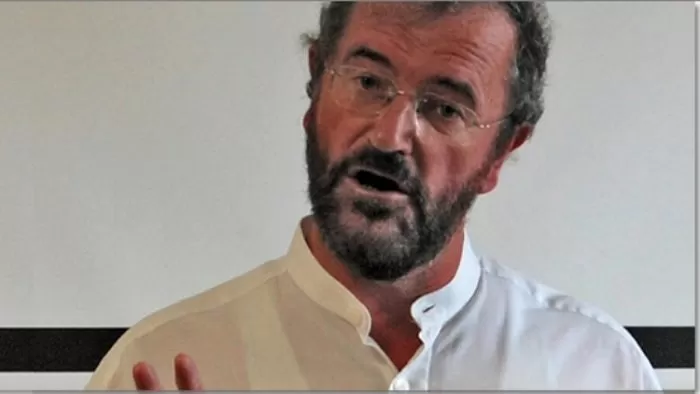 Portrait de John O'Donohue, érudit, philosophe et poète irlandais, dont l'œuvre 'For the Traveler' considère le voyage comme un chemin sacré de découverte de soi.Portrait de John O’Donohue, érudit, philosophe et poète irlandais, dont l’œuvre ‘For the Traveler’ considère le voyage comme un chemin sacré de découverte de soi.
The Lady in 38C par Lori Jakiela
Lori Jakiela, s’inspirant de son expérience d’ancienne hôtesse de l’air, trouve une joie et une perspective inattendues dans l’environnement confiné d’une cabine d’avion. Ce poème de voyage met en évidence comment même les voyages courts et routiniers peuvent offrir des moments de connexion humaine et d’introspection.
> The Lady in 38 C
> gets confused. She thinks I'm her nurse.
> “Nurse!” she yells. “My finger!”
> So I bring her a band-aid
> and put it on even though she's fine.
> “Oh thank you nurse!” she yells.
> “You're a good one.”
> She winks and smiles and the woman next to her
> glares into her computer.
> I think the old lady's charming.
> She's 86, still pretty. Her eyes are blue.
> Her hair is a cloud.
> She looks exactly like what's outside.
> She's the only air in this cabin, the only light.
> “Nurse!” she yells, and I look back
> over the sad heads, eggs in a carton,
> faces pressed against
> the mite-ridden blankets
> and pillows they fought for,
> and there she is, beaming.
> “Nurse,” she says. “Where are we?”
> I take her hand
> and look out the window.
> I scratch my head, smile
> and say, “Somewhere
> over Idunno.”
> She's the only passenger
> who's ever gotten that joke.
> Up here, nearly everyone is miserable.
> I count on small joys to get by.
> The woman in 38C says, “Oh, Nurse!”
> and the woman next to her
> who probably thinks we're somewhere
> over Idaho, that wonderland of Hemingway
> and golden potatoes,
> rolls her eyes and bangs the computer keys
> until the seatbelt sign goes on
> and the captain says,
> “We'll be experiencing weather.”
> which is what people say
> instead of scary things like storm and turbulence
> and pretty soon the plane is bouncing
> and the woman with the computer
> grips her armrest
> while the old lady throws her arms up
> like she's on a roller coaster and yells,
> “They should charge extra for this!”
(Jakiela, Lori. The Lady in 38C. Source non explicitement citée dans l’extrait original.)
Ce poème de voyage, se déroulant lors d’un vol turbulent, trouve de l’humour et de la chaleur dans l’interaction humaine au sein de l’espace confiné du voyage. Le contraste entre la passagère âgée joyeuse et désorientée et la femme stressée et concentrée à côté d’elle met en évidence différentes façons dont les gens vivent le même voyage. La narratrice hôtesse de l’air, lasse de la misère habituelle du voyage aérien (« têtes tristes, œufs dans une boîte »), trouve consolation et humour dans la réaction débridée de la vieille femme face à la turbulence, la considérant comme une course palpitante plutôt qu’une frayeur. C’est un poème de voyage petit et intime qui nous rappelle que des moments mémorables et des connexions humaines peuvent se produire n’importe où, même à des milliers de pieds dans les airs lors d’un voyage apparemment ordinaire. Les moments inattendus et les histoires loufoques peuvent apporter de la légèreté pendant un voyage, tout comme les histoires drôles de Noël pour adultes peuvent apporter de la joie pendant une saison spécifique.
The World Won’t Miss You for a While par Kathryn Simmonds
Le poème de Kathryn Simmonds offre un argument convaincant pour s’éloigner des exigences incessantes de la vie quotidienne, suggérant que prendre une pause ou faire un voyage n’est pas un acte de dérobade, mais une pause nécessaire pour la revitalisation.
> Lie down with me you hillwalkers and rest,
> untie your boots and separate your toes,
> ignore the compass wavering north/north west.
>
> Quit trailing through the overcrowded streets
> with tinkling bells, you child of Hare Krishna.
> Hush. Unfurl your saffron robes. How sweet
>
> the grass. And you, photographer of wars,
> lie down and cap your lens. Ambassador,
> take off your dancing shoes. There are no laws
>
> by which you must abide oh blushing boy
> with Stanley knife, no county magistrates
> are waiting here to dress you down: employ
>
> yourself with cutting up these wild flowers
> as you like. Sous chef with baby guinea fowl
> to stuff, surveillance officer with hours
>
> to fill, and anorexic weighing up a meal,
> lie down. Girl riding to an interview,
> turn back before they force you to reveal
>
> your hidey holes. Apprentice pharmacist,
> leave carousels of second generation
> happy pills. The long term sad. And journalist
>
> with dreams, forget the man from Lancashire
> who lost his tongue, the youth who found it,
> kept it quivering in a matchbox for a year.
(Simmonds, Kathryn. “The World Won’t Miss You for a While.” The Guardian, https://www.theguardian.com/books/2008/aug/28/guardianfirstbookaward.awardsandprizes9.)
Ce poème de voyage, bien qu’il ne traite pas explicitement d’un voyage physique, défend l’esprit de s’éloigner – de prendre une pause du voyage habituel de sa vie exigeante. Il s’adresse à un groupe diversifié de personnes, du randonneur et de l’adepte d’Hare Krishna au photographe de guerre et au sous-chef, les exhortant tous à faire une pause. Le message principal est que prendre du recul, même brièvement, permet le repos, l’introspection et une récalibration qui est finalement bénéfique. C’est un appel à se donner la permission de se désengager du rythme effréné, suggérant que le monde se débrouillera sans vous pendant un certain temps, impliquant que faire un « voyage » personnel loin des responsabilités est un acte précieux d’auto-préservation.
3 Poems About Travel par Sheenagh Pugh
Sheenagh Pugh explore différentes facettes de l’expérience du voyage, de l’attrait du voyage inattendu à l’importance d’être véritablement présent pendant un voyage.
What If This Road
> What if this road, that has held no surprises
> these many years, decided not to go
> home after all; what if it could turn
> left or right with no more ado
> than a kite-tail? What if its tarry skin
> were like a long, supple bolt of cloth,
> that is shaken and rolled out, and takes
> a new shape from the contours beneath?
> And if it chose to lay itself down
> in a new way; around a blind corner,
> across hills you must climb without knowing
> what's on the other side; who would not hanker
> to be going, at all risks? Who wants to know
> a story's end, or where a road will go?
Ce poème joue avec la métaphore d’une route familière qui prend soudainement conscience et choisit un nouveau chemin. Il parle du désir humain inné de nouveauté et de l’inconnu, suggérant que la partie la plus excitante d’un voyage est son imprévisibilité. L’image de la route comme un tissu souple souligne l’idée de tracer de nouveaux chemins et d’embrasser la déviation de la routine. Il capture le « désir ardent » d’exploration et le choix délibéré de s’engager sur une route où la destination est incertaine, incarnant l’esprit d’entreprendre un véritable voyage d’aventure.
The Opportune Moment
> If you were waiting for the opportune moment, that was it” –*Capt Jack Sparrow, Pirates of the Caribbean: Curse of the Black Pearl*
>
> When you go ashore in that town,
> take neither a camera nor a notebook.
> However many photographs you upload
> of that street, the smell of almond paste
> will be missing; the harbour will not sound
> of wind slapping on chains. You will read
> notes like “Sami church”, later, and know
> you saw nothing, never put it where
> you could find it again, were never
> really there. When you go ashore
> in the small port with the rusty trawlers,
> there will be fur hawkers who all look
> like Genghis Khan on a market stall,
> crumbling pavements, roses frozen in bud,
> an altar with wool hangings, vessels
> like canal ware, a Madonna
> with a Russian doll face. When you go
> ashore, take nothing but the knowledge
> that where you are, you never will be again
Ce poème de voyage utilise une citation de film comme épigraphe pour souligner l’importance de saisir l’instant. C’est un poème de mise en garde sur l’expérience d’un voyage à travers des dispositifs de médiation plutôt que directement par les sens. Pugh soutient que les photos et les notes, bien que des enregistrements, ne parviennent pas à capturer la réalité complète et multi-sensorielle d’un lieu – les odeurs, les sons et les détails subtils. En exhortant le voyageur à arriver les mains vides, le poème plaide pour une présence totale pendant le voyage, suggérant que le plus précieux des acquis est le souvenir indélébile et personnel formé en habitant pleinement le moment et en connaissant sa nature transitoire.
Do You Think We’ll Ever Get to See Earth, Sir?
> I hear they're hoping to run trips
> one day, for the young and fit, of course.
> I don't see much use in it myself;
> there'll be any number of places
> you can't land, because they're still toxic,
> and even in the relatively safe bits
> you won't see what it was; what it could be.
> I can't fancy a tour through the ruins
> of my home with a party of twenty-five
> and a guide to tell me what to see.
> But if you should see some beautiful thing,
> some leaf, say, damascened with frost,
> some iridescence on a pigeon's neck,
> some stone, some curve, some clear water;
> look at it as if you were made of eyes,
> as if you were nothing but an eye, lidless
> and tender, to be probed and scorched
> by extreme light. Look at it with your skin,
> with the small hairs on the back of your neck.
> If it is well-shaped, look at it with your hands;
> if it has fragrance, breathe it into yourself;
> if it tastes sweet, put your tongue to it.
> Look at it as a happening, a moment;
> let nothing of it go unrecorded,
> map it as if it were already passing.
> Look at it with the inside of your head,
> look at it for later, look at it for ever,
> and look at it once for me.
Ce poème présente un futur spéculatif où la Terre est un lieu endommagé, potentiellement visité uniquement par des touristes « jeunes et en forme » faisant un difficile retour vers leur foyer ancestral. Cette vision dystopique sert de toile de fond poignante à la deuxième partie du poème, qui offre des instructions intenses sur comment véritablement voir et expérimenter le monde maintenant. En imaginant un futur où l’expérience de la Terre est un privilège rare, le poème souligne l’urgence de s’engager avec notre environnement à travers tous les sens pendant tout voyage ou moment. C’est un appel puissant à l’observation attentive et à l’immersion sensorielle, faisant de chaque rencontre, même apparemment petite, une expérience profonde digne d’un engagement profond, tout comme trouver de la profondeur dans les poèmes significatifs sur la vie ou réfléchir à l’histoire comme dans les poèmes pour le Memorial Day.
Song of the Open Road par Walt Whitman
L’épopée « Song of the Open Road » de Walt Whitman est peut-être l’un des poèmes de voyage américains les plus emblématiques. Il célèbre la liberté, l’autonomie et l’esprit démocratique du voyage lui-même, considérant la route comme une métaphore de la vie et de la connexion.
Afoot and light-hearted I take to the open road,
Healthy, free, the world before me,
The long brown path before me leading wherever I choose.

Henceforth I ask not good-fortune, I myself am good-fortune,
Henceforth I whimper no more, postpone no more, need nothing,
Done with indoor complaints, libraries, querulous criticisms,
Strong and content I travel the open road.

The earth, that is sufficient,
I do not want the constellations any nearer,
I know they are very well where they are,
I know they suffice for those who belong to them.

(Still here I carry my old delicious burdens,
I carry them, men and women, I carry them with me wherever I go,
I swear it is impossible for me to get rid of them,
I am fill'd with them, and I will fill them in return.)

2
You road I enter upon and look around, I believe you are not all
that is here,
I believe that much unseen is also here.

Here the profound lesson of reception, nor preference nor denial,
The black with his woolly head, the felon, the diseas'd, the
illiterate person, are not denied;
The birth, the hasting after the physician, the beggar's tramp, the
drunkard's stagger, the laughing party of mechanics,
The escaped youth, the rich person's carriage, the fop, the eloping couple,
The early market-man, the hearse, the moving of furniture into the
town, the return back from the town,
They pass, I also pass, any thing passes, none can be interdicted,
None but are accepted, none but shall be dear to me.

3
You air that serves me with breath to speak!
You objects that call from diffusion my meanings and give them shape!
You light that wraps me and all things in delicate equable showers!
You paths worn in the irregular hollows by the roadsides!
I believe you are latent with unseen existences, you are so dear to me.

You flagg'd walks of the cities! you strong curbs at the edges!
You ferries! you planks and posts of wharves! you timber-lined
side! you distant ships!
You rows of houses! you window-pierc'd facades! you roofs!
You porches and entrances! you copings and iron guards!
You windows whose transparent shells might expose so much!
You doors and ascending steps! you arches!
You gray stones of interminable pavements! you trodden crossings!
From all that has touch'd you I believe you have imparted to
yourselves, and now would impart the same secretly to me,
From the living and the dead you have peopled your impassive surfaces,
and the spirits thereof would be evident and amicable with me.

4
The earth expanding right hand and left hand,
The picture alive, every part in its best light,
The music falling in where it is wanted, and stopping where it is
not wanted,
The cheerful voice of the public road, the gay fresh sentiment of the road.

O highway I travel, do you say to me Do not leave me?
Do you say Venture not–if you leave me you are lost?
Do you say I am already prepared, I am well-beaten and undenied,
adhere to me?

O public road, I say back I am not afraid to leave you, yet I love you,
You express me better than I can express myself,
You shall be more to me than my poem.

I think heroic deeds were all conceiv'd in the open air, and all
free poems also,
I think I could stop here myself and do miracles,
I think whatever I shall meet on the road I shall like, and whoever
beholds me shall like me,
I think whoever I see must be happy.

5
From this hour I ordain myself loos'd of limits and imaginary lines,
Going where I list, my own master total and absolute,
Listening to others, considering well what they say,
Pausing, searching, receiving, contemplating,
Gently, but with undeniable will, divesting myself of the holds that
would hold me.

I inhale great draughts of space,
The east and the west are mine, and the north and the south are mine.

I am larger, better than I thought,
I did not know I held so much goodness.

All seems beautiful to me,
can repeat over to men and women You have done such good to me
I would do the same to you,
I will recruit for myself and you as I go,
I will scatter myself among men and women as I go,
I will toss a new gladness and roughness among them,
Whoever denies me it shall not trouble me,
Whoever accepts me he or she shall be blessed and shall bless me.

6
Now if a thousand perfect men were to appear it would not amaze me,
Now if a thousand beautiful forms of women appear'd it would not
astonish me.

Now I see the secret of the making of the best persons,
It is to grow in the open air and to eat and sleep with the earth.

Here a great personal deed has room,
(Such a deed seizes upon the hearts of the whole race of men,
Its effusion of strength and will overwhelms law and mocks all
authority and all argument against it.)

Here is the test of wisdom,
Wisdom is not finally tested in schools,
Wisdom cannot be pass'd from one having it to another not having it,
Wisdom is of the soul, is not susceptible of proof, is its own proof,
Applies to all stages and objects and qualities and is content,
Is the certainty of the reality and immortality of things, and the
excellence of things;
Something there is in the float of the sight of things that provokes
it out of the soul.

Now I re-examine philosophies and religions,
They may prove well in lecture-rooms, yet not prove at all under the
spacious clouds and along the landscape and flowing currents.

Here is realization,
Here is a man tallied–he realizes here what he has in him,
The past, the future, majesty, love–if they are vacant of you, you
are vacant of them.

Only the kernel of every object nourishes;
Where is he who tears off the husks for you and me?
Where is he that undoes stratagems and envelopes for you and me?

Here is adhesiveness, it is not previously fashion'd, it is apropos;
Do you know what it is as you pass to be loved by strangers?
Do you know the talk of those turning eye-balls?

7
Here is the efflux of the soul,
The efflux of the soul comes from within through embower'd gates,
ever provoking questions,
These yearnings why are they? these thoughts in the darkness why are they?
Why are there men and women that while they are nigh me the sunlight
expands my blood?
Why when they leave me do my pennants of joy sink flat and lank?
Why are there trees I never walk under but large and melodious
thoughts descend upon me?
(I think they hang there winter and summer on those trees and always
drop fruit as I pass;)
What is it I interchange so suddenly with strangers?
What with some driver as I ride on the seat by his side?
What with some fisherman drawing his seine by the shore as I walk by
and pause?
What gives me to be free to a woman's and man's good-will? what
gives them to be free to mine?

8
The efflux of the soul is happiness, here is happiness,
I think it pervades the open air, waiting at all times,
Now it flows unto us, we are rightly charged.

Here rises the fluid and attaching character,
The fluid and attaching character is the freshness and sweetness of
man and woman,
(The herbs of the morning sprout no fresher and sweeter every day
out of the roots of themselves, than it sprouts fresh and sweet
continually out of itself.)

Toward the fluid and attaching character exudes the sweat of the
love of young and old,
From it falls distill'd the charm that mocks beauty and attainments,
Toward it heaves the shuddering longing ache of contact.

9
Allons! whoever you are come travel with me!
Traveling with me you find what never tires.

The earth never tires,
The earth is rude, silent, incomprehensible at first, Nature is rude
and incomprehensible at first,
Be not discouraged, keep on, there are divine things well envelop'd,
I swear to you there are divine things more beautiful than words can tell.

Allons! we must not stop here,
However sweet these laid-up stores, however convenient this dwelling
we cannot remain here,
However shelter'd this port and however calm these waters we must
not anchor here,
However welcome the hospitality that surrounds us we are permitted
to receive it but a little while.

10
Allons! the inducements shall be greater,
We will sail pathless and wild seas,
We will go where winds blow, waves dash, and the Yankee clipper
speeds by under full sail.

Allons! with power, liberty, the earth, the elements,
Health, defiance, gayety, self-esteem, curiosity;
Allons! from all formules!
From your formules, O bat-eyed and materialistic priests.

The stale cadaver blocks up the passage–the burial waits no longer.

Allons! yet take warning!
He traveling with me needs the best blood, thews, endurance,
None may come to the trial till he or she bring courage and health,
Come not here if you have already spent the best of yourself,
Only those may come who come in sweet and determin'd bodies,
No diseas'd person, no rum-drinker or venereal taint is permitted here.

(I and mine do not convince by arguments, similes, rhymes,
We convince by our presence.)

11
Listen! I will be honest with you,
I do not offer the old smooth prizes, but offer rough new prizes,
These are the days that must happen to you:
You shall not heap up what is call'd riches,
You shall scatter with lavish hand all that you earn or achieve,
You but arrive at the city to which you were destin'd, you hardly
settle yourself to satisfaction before you are call'd by an
irresistible call to depart,
You shall be treated to the ironical smiles and mockings of those
who remain behind you,
What beckonings of love you receive you shall only answer with
passionate kisses of parting,
You shall not allow the hold of those who spread their reach'd hands
toward you.

12
Allons! after the great Companions, and to belong to them!
They too are on the road–they are the swift and majestic men–they
are the greatest women,
Enjoyers of calms of seas and storms of seas,
Sailors of many a ship, walkers of many a mile of land,
Habitues of many distant countries, habitues of far-distant dwellings,
Trusters of men and women, observers of cities, solitary toilers,
Pausers and contemplators of tufts, blossoms, shells of the shore,
Dancers at wedding-dances, kissers of brides, tender helpers of
children, bearers of children,
Soldiers of revolts, standers by gaping graves, lowerers-down of coffins,
Journeyers over consecutive seasons, over the years, the curious
years each emerging from that which preceded it,
Journeyers as with companions, namely their own diverse phases,
Forth-steppers from the latent unrealized baby-days,
Journeyers gayly with their own youth, journeyers with their bearded
and well-grain'd manhood,
Journeyers with their womanhood, ample, unsurpass'd, content,
Journeyers with their own sublime old age of manhood or womanhood,
Old age, calm, expanded, broad with the haughty breadth of the universe,
Old age, flowing free with the delicious near-by freedom of death.

13
Allons! to that which is endless as it was beginningless,
To undergo much, tramps of days, rests of nights,
To merge all in the travel they tend to, and the days and nights
they tend to,
Again to merge them in the start of superior journeys,
To see nothing anywhere but what you may reach it and pass it,
To conceive no time, however distant, but what you may reach it and pass it,
To look up or down no road but it stretches and waits for you,
however long but it stretches and waits for you,
To see no being, not God's or any, but you also go thither,
To see no possession but you may possess it, enjoying all without
labor or purchase, abstracting the feast yet not abstracting one
particle of it,
To take the best of the farmer's farm and the rich man's elegant
villa, and the chaste blessings of the well-married couple, and
the fruits of orchards and flowers of gardens,
To take to your use out of the compact cities as you pass through,
To carry buildings and streets with you afterward wherever you go,
To gather the minds of men out of their brains as you encounter
them, to gather the love out of their hearts,
To take your lovers on the road with you, for all that you leave
them behind you,
To know the universe itself as a road, as many roads, as roads for
traveling souls.

All parts away for the progress of souls,
All religion, all solid things, arts, governments–all that was or is
apparent upon this globe or any globe, falls into niches and corners
before the procession of souls along the grand roads of the universe.

Of the progress of the souls of men and women along the grand roads of the
universe, all other progress is the needed emblem and sustenance.

Forever alive, forever forward,
Stately, solemn, sad, withdrawn, baffled, mad, turbulent, feeble,
dissatisfied,
Desperate, proud, fond, sick, accepted by men, rejected by men,
They go! they go! I know that they go, but I know not where they go,
But I know that they go toward the best–toward something great.

Whoever you are, come forth! or man or woman come forth!
You must not stay sleeping and dallying there in the house, though
you built it, or though it has been built for you.

Out of the dark confinement! out from behind the screen!
It is useless to protest, I know all and expose it.

Behold through you as bad as the rest,
Through the laughter, dancing, dining, supping, of people,
Inside of dresses and ornaments, inside of those wash'd and trimm'd faces,
Behold a secret silent loathing and despair.

No husband, no wife, no friend, trusted to hear the confession,
Another self, a duplicate of every one, skulking and hiding it goes,
Formless and wordless through the streets of the cities, polite and
bland in the parlors,
In the cars of railroads, in steamboats, in the public assembly,
Home to the houses of men and women, at the table, in the bedroom,
everywhere,
Smartly attired, countenance smiling, form upright, death under the
breast-bones, hell under the skull-bones,
Under the broadcloth and gloves, under the ribbons and artificial flowers,
Keeping fair with the customs, speaking not a syllable of itself,
Speaking of any thing else but never of itself.

14
Allons! through struggles and wars!
The goal that was named cannot be countermanded.

Have the past struggles succeeded?
What has succeeded? yourself? your nation? Nature?
Now understand me well–it is provided in the essence of things that
from any fruition of success, no matter what, shall come forth
something to make a greater struggle necessary.

My call is the call of battle, I nourish active rebellion,
He going with me must go well arm'd,
He going with me goes often with spare diet, poverty, angry enemies,
desertions.

15
Allons! the road is before us!
It is safe–I have tried it–my own feet have tried it well–be not
detain'd!
Let the paper remain on the desk unwritten, and the book on the
shelf unopen'd!
Let the tools remain in the workshop! let the money remain unearn'd!
Let the school stand! mind not the cry of the teacher!
Let the preacher preach in his pulpit! let the lawyer plead in the
court, and the judge expound the law.

Camerado, I give you my hand!
I give you my love more precious than money,
I give you myself before preaching or law;
Will you give me yourselp. will you come travel with me?
Shall we stick by each other as long as we live?
(Whitman, Walt. “Song of the Open Road.” Poetry Foundation, https://www.poetryfoundation.org/poems/45162/song-of-the-open-road)
Le poème de Whitman, vaste et en vers libres, est une célébration du mouvement, de la liberté et de la connexion, ce qui en fait un poème de voyage par excellence. La « route ouverte » est à la fois un chemin littéral et une métaphore puissante du voyage de la vie. Le locuteur embrasse la route comme une source de vérité et de découverte de soi, trouvant la sagesse en dehors des institutions conventionnelles (« Fini les plaintes d’intérieur, les bibliothèques, les critiques querelleuses »). La vision démocratique du poème inclut tous ceux rencontrés sur la route (« Aucun ne sera refusé, tous me seront chers »). Il met l’accent sur la richesse acquise par l’expérience sensorielle et l’interaction avec le monde. L’appel répété « Allons ! » est une invitation au lecteur à se joindre à ce voyage de liberté, d’autonomie et de connexion, considérant l’univers entier comme une série de « routes pour les âmes voyageuses ». Il aborde le voyage collectif de l’humanité, tout comme les poèmes écrits en hommage honorent souvent des expériences ou des figures partagées. 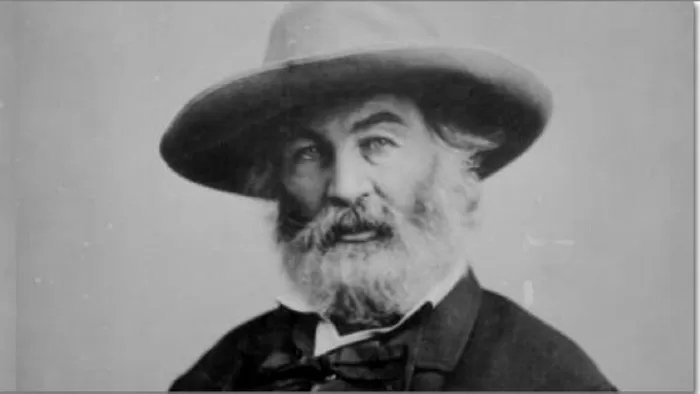 Portrait historique de Walt Whitman, dont 'Song of the Open Road' est un poème de voyage fondamental célébrant la liberté et le chemin de la vie.Portrait historique de Walt Whitman, dont ‘Song of the Open Road’ est un poème de voyage fondamental célébrant la liberté et le chemin de la vie lui-même.
Why Do I Travel? Auteur inconnu
Cette pièce réflexive, dont l’auteur n’est pas définitivement connu, exprime avec puissance l’impact personnel profond de l’acte de voyager, en particulier seul. Elle présente le voyage comme un catalyseur de découverte de soi et d’émancipation.
> It is on the road that my inner voice speaks the loudest and my heart beats the strongest.
> It is on the road that I take extra pride in my wooly hair, full features and lineage.
> It is on the road that I develop extra senses and the hairs on my arms stand up and say “Sana, don't go there”, and I listen.
> It's when I safety pin my money to my underclothes and count it a million times before I go to sleep,
> It is on the road that I am a poet, an ambassador, a dancer, medicine woman, an angel and even a genius.
> It's on the road that I am fearless and unstoppable and if necessary ball up my fist and fight back.
> It is on the road that I talk to my deceased parents and they speak back
> It's on the road that I reprimand myself, and set new goals, refuel, stop and begin again.
> It is on the road that I experience what freedom truly is.
> It is my travel that has transformed me making me a citizen of the world. When my humanness, compassion and affection are raised to a new level and I share unconditionally.
Ce poème de voyage est un témoignage du voyage comme force transformatrice. La locutrice énumère les nombreuses façons dont le voyage améliore son identité, son intuition et son courage. La route n’est pas seulement un chemin physique mais un espace où le moi intérieur prend vie et se sent le plus authentique. Le poème met en évidence les réalités pratiques du voyage (« épingle de sûreté mon argent ») parallèlement à l’état d’être accru qu’il induit – se sentir comme un poète, un ambassadeur ou un génie. Il parle de la liberté unique et de l’autonomie acquises en naviguant seul dans le monde. La référence à parler aux parents décédés relie le voyage physique à un voyage interne, spirituel, suggérant que le voyage offre un espace pour une réflexion personnelle profonde et la guérison, des thèmes parfois explorés dans les beaux poèmes sur la mort d’un être cher.
The Return par Geneen Marie Haugen
Le poème de Geneen Marie Haugen explore l’expérience souvent inexprimée du retour à la maison après un voyage important. Il met en évidence les façons subtiles mais profondes dont le voyage peut changer une personne, la faisant se sentir à la fois enrichie et peut-être étrangère à son retour.
> Some day, if you are lucky,
> you'll return from a thunderous journey
> trailing snake scales, wing fragments
> and the musk of Earth and moon.
>
> Eyes will examine you for signs
> of damage, or change
> and you, too, will wonder
> if your skin shows traces
>
> of fur, or leaves,
> if thrushes have built a nest
> of your hair, if Andromeda
> burns from your eyes.
>
> Do not be surprised by prickly questions
> from those who barely inhabit
> their own fleeting lives, who barely taste
> their own possibility, who barely dream.
>
> If your hands are empty, treasureless,
> if your toes have not grown claws,
> if your obedient voice has not
> become a wild cry, a howl,
>
> you will reassure them. We warned you,
> they might declare, there is nothing else,
> no point, no meaning, no mystery at all,
> just this frantic waiting to die.
>
> And yet, they tremble, mute,
> afraid you've returned without sweet
> elixir for unspeakable thirst, without
> a fluent dance or holy language
> to teach them, without a compass
> bearing to a forgotten border where
> no one crosses without weeping
> for the terrible beauty of galaxies
>
> and granite and bone. They tremble,
> hoping your lips hold a secret,
> that the song your body now sings
> will redeem them, yet they fear
>
> your secret is dangerous, shattering,
> and once it flies from your astonished
> mouth, they — like you — must disintegrate
> before unfolding tremulous wings.
(Haugen, Geneen Marie. “The Return.” Awakin.org, https://www.awakin.org/v2/read/view.php?tid=2191.)
Ce poème de voyage se concentre sur le pouvoir transformateur du périple et le défi de la réintégration dans la vie ordinaire. L’imagerie (« trainant des écailles de serpent, des fragments d’aile ») suggère qu’une transformation profonde, presque sauvage, s’est produite pendant le voyage. Le voyageur est examiné pour des signes de ce changement, à la fois par les autres et par lui-même. Le poème contraste les perspectives limitées de ceux qui n’ont pas voyagé avec la conscience élargie du voyageur. Il y a un sentiment que les autres espèrent que le voyageur rapporte un « secret » ou un « élixir », quelque chose pour racheter leurs propres vies inachevées. Le poème suggère que le voyageur revient changé, chantant une nouvelle « chanson », et que cette transformation, si elle est partagée, peut être à la fois puissante et déstabilisante pour ceux qui sont restés derrière. C’est une exploration puissante de l’impact durable de l’acte de faire un voyage significatif.  Une illustration du poème 'The Return', montrant une personne contemplant un paysage, symbolisant la réflexion et la transformation possibles après un voyage marquant.Une illustration du poème ‘The Return’, montrant une personne contemplant un paysage, symbolisant la réflexion et la transformation possibles après un voyage marquant.
The Road Not Taken par Robert Frost
Peut-être le poème le plus célèbre sur les choix, « The Road Not Taken » de Robert Frost est souvent interprété comme une métaphore des chemins divergents de la vie, ce qui en fait un poème de voyage résonnant sur le chemin de la vie elle-même.
> Two roads diverged in a yellow wood,
> And sorry I could not travel both
> And be one traveler, long I stood
> And looked down one as far as I could
> To where it bent in the undergrowth;
>
> Then took the other, as just as fair,
> And having perhaps the better claim,
> Because it was grassy and wanted wear;
> Though as for that the passing there
> Had worn them really about the same,
>
> And both that morning equally lay
> In leaves no step had trodden black.
> Oh, I marked the first for another day!
> Yet knowing how way leads on to way,
> I doubted if I should ever come back.
>
> I shall be telling this with a sigh
> Somewhere ages and ages hence:
> Two roads diverged in a wood, and I—
> I took the one less traveled by,
> And that has made all the difference.
Ce poème de voyage utilise l’image simple de routes divergentes dans un bois pour représenter des choix de vie importants. Bien que souvent lu comme une célébration de l’individualisme et du choix du chemin le moins fréquenté, la nuance du poème réside dans les lignes suggérant que les routes étaient « en fait à peu près les mêmes » et « égales en cette matinée » sans trace de pas. Le « soupir » et l’affirmation de la différence faite en prenant la route « moins fréquentée » sont attribués à une réflexion future, suggérant peut-être une narration construite sur le passé. Quelle que soit l’interprétation, le poème capture l’expérience fondamentale de se tenir à la croisée des chemins, de faire un choix quant à la direction de son voyage, et de réfléchir à la façon dont cette décision a façonné le voyage qui a suivi.  Statue de Robert Frost, auteur du poème de voyage emblématique 'The Road Not Taken', qui utilise des chemins divergents comme métaphore des choix de vie.Statue de Robert Frost, auteur du poème de voyage emblématique ‘The Road Not Taken’, qui utilise des chemins divergents comme métaphore des choix de vie.
Die Slowly par Martha Medeiros
Le poème de Martha Medeiros est un appel puissant à vivre pleinement, considérant l’inaction et la stagnation comme une forme de mort lente. Ce poème de voyage est moins axé sur le voyage physique et plus sur l’approche de la vie comme un voyage rempli de changement, de risque et de nouvelles expériences.
> He who becomes the slave of habit,
> who follows the same routes every day,
> who never changes pace,
> who does not risk and change the color of his clothes,
> who does not speak and does not experience,
> dies slowly.
>
> He or she who shuns passion,
> who prefers black on white,
> dotting ones i's rather than a bundle of emotions, the kind that make your eyes glimmer,
> that turn a yawn into a smile,
> that make the heart pound in the face of mistakes and feelings,
> dies slowly.
>
> He or she who does not turn things topsy-turvy,
> who is unhappy at work,
> who does not risk certainty for uncertainty,
> to thus follow a dream,
> those who do not forego sound advice at least once in their lives,
> die slowly.
>
> He who does not travel, who does not read,
> who does not listen to music,
> who does not find grace in himself,
> she who does not find grace in herself,
> dies slowly.
>
> He who slowly destroys his own self-esteem,
> who does not allow himself to be helped,
> who spends days on end complaining about his own bad luck, about the rain that never stops,
> dies slowly.
>
> He or she who abandons a project before starting it, who fails to ask questions on subjects he doesn't know, he or she who doesn't reply when they are asked something they do know,
> dies slowly.
>
> Let's try and avoid death in small doses,
> reminding oneself that being alive requires an effort far greater than the simple fact of breathing.
>
> Only a burning patience will lead
> to the attainment of a splendid happiness
Ce poème fonctionne comme un poème de voyage métaphorique, assimilant le manque de changement, de passion et d’expérience à un lent déclin. Il mentionne directement le voyage comme l’une des choses nécessaires pour éviter ce destin. En énumérant des activités comme changer de routine, prendre des risques, chercher des expériences, lire et écouter de la musique aux côtés du voyage, Medeiros positionne l’esprit d’exploration et d’ouverture essentiel à l’acte de voyager comme des éléments essentiels d’une vie pleinement vécue. C’est un rappel puissant que l’état d’esprit d’un voyageur – curiosité, courage, engagement – peut et doit être appliqué au-delà des voyages physiques pour revigorer son existence quotidienne et rechercher des poèmes significatifs sur la vie sous toutes leurs formes.
La sélection diversifiée de poèmes de voyage explorés ici — de l’anticipation du départ et des défis sur la route à la transformation au retour et aux voyages métaphoriques de la vie elle-même — démontre les façons riches et variées dont les poètes ont capturé l’essence de l’expérience du voyage. Ces poèmes nous invitent à réfléchir à nos propres voyages, nous rappelant que, que nous voyagions loin ou restions chez nous, il y a toujours de nouveaux paysages, extérieurs et intérieurs, qui attendent d’être explorés avec curiosité et un cœur ouvert.
Références
- Bishop, Elizabeth. “Questions of Travel.” All Poetry, https://allpoetry.com/Questions-of-Travel.
- Collins, Billy. “Consolation.” Poetry Foundation, Poetry Magazine, July 1991, https://www.poetryfoundation.org/poetrymagazine/issue/71257/july-1991.
- Dove, Rita. “Vacation.” Poets.org, American Academy of Poets, https://poets.org/poem/vacation.
- Grotz, Jennifer. “Self-Portrait on the Street of an Unnamed Foreign City.” Poets.org, American Academy of Poets, https://poets.org/poem/self-portrait-street-unnamed-foreign-city.
- Haugen, Geneen Marie. “The Return.” Awakin.org, https://www.awakin.org/v2/read/view.php?tid=2191.
- O’Donohue, John. “For the Traveler.” Awakin.org, https://www.awakin.org/v2/read/view.php?tid=2191.
- Simmonds, Kathryn. “The World Won’t Miss You for a While.” The Guardian, https://www.theguardian.com/books/2008/aug/28/guardianfirstbookaward.awardsandprizes9.
- Weaver, Julene Tripp. “Learning to Travel.” The Literary Bohemian, Issue 03, February 2009, https://literarybohemian.com/poetry/learning-to-travel/.
- Whitman, Walt. “Song of the Open Road.” Poetry Foundation, https://www.poetryfoundation.org/poems/45162/song-of-the-open-road.