
Henry Wadsworth Longfellow (1807-1882) stands as one of the most beloved and influential American poets of the 19th century. A central figure among the “Fireside Poets,” a group known for their accessible verse often read aloud by the family hearth, Longfellow achieved remarkable popularity during his lifetime, both in America and abroad. His work captivated readers with its clear language, engaging narratives, and exploration of universal themes, cementing his place in the literary landscape and shaping the appreciation of poetry for generations. Understanding h.w. longfellow requires delving into his background, his distinct poetic voice, and the cultural context that embraced his writings.
Longfellow’s career spanned a transformative period in American history and literature. Born in Portland, Maine, he became a professor of modern languages, first at Bowdoin College and later at Harvard University, a position he held for many years. This academic background informed his work, as he drew inspiration from European literature, history, and mythology, blending these influences with American settings and themes. He was not just a poet but a scholar and translator, efforts that broadened the horizons of American letters.
His poetic style is characterized by its lyricism, use of traditional forms and meters, and a focus on storytelling. Unlike some of his contemporaries, Longfellow’s language was generally straightforward and easily understood by a wide audience, contributing significantly to his widespread appeal. His poems often carried moral lessons or celebrated American history and values, resonating deeply with the national sentiment of the time. Themes such as patriotism, nature, the dignity of labor, domestic life, and the passage of time are woven throughout his extensive body of work.
 Interior corridor of the historic H.W. Longfellow School building, showcasing traditional architectural features and long-standing educational spaces named after the poet.
Among h.w. longfellow‘s most famous works are narrative poems like “Paul Revere’s Ride,” which dramatizes a key moment in the American Revolution and became an instant classic, widely memorized by schoolchildren. “The Song of Hiawatha,” an epic drawing on Native American legends, and “Evangeline, A Tale of Acadie,” a poignant story of love and loss set against the backdrop of historical events, further demonstrate his skill in crafting compelling narratives in verse. Shorter, lyrical poems such as “The Village Blacksmith” and “Excelsior” also achieved immense popularity for their relatable characters and uplifting messages. These poems weren’t just read; they were recited, sung, and integrated into the fabric of American culture.
 A view inside an older classroom at H.W. Longfellow School, reflecting the enduring commitment to education within a historical building.
The legacy of h.w. longfellow is complex. While immensely popular during his lifetime, his critical reputation waned in the early 20th century as modernist poets favored different styles and themes. However, his historical importance remains undeniable. He helped shape a nascent American literary identity, bringing poetry into the homes of ordinary people and demonstrating that American stories and landscapes could be subjects of great verse. His work continues to be studied for its historical context, its technical craftsmanship, and its window into 19th-century American thought and feeling.
 Built-in architectural detail within H.W. Longfellow School, illustrating the craftsmanship present in historic educational structures.
His role as an educator and his dedication to making literature accessible also form a crucial part of his legacy. Longfellow believed in the power of poetry to inspire and educate, a philosophy that resonated deeply with his contemporaries and contributed to his widespread respect. Schools, libraries, and public spaces were named in his honor, testaments to the high esteem in which he was held as both a poet and a cultural figure.
 An historical image, a postcard depicting the Sixteenth Avenue School building, later renamed H.W. Longfellow School.
While critical perspectives on his work have evolved, the accessibility and emotional resonance of many of his poems ensure their continued presence in anthologies and educational curricula. Exploring the works of h.w. longfellow today offers a fascinating glimpse into a pivotal era of American literature and the power of poetry to connect with a broad audience through vivid imagery, compelling stories, and timeless themes. His contributions extended beyond the written word, influencing how poetry was perceived, shared, and valued in American society.
 An archival photograph of the H.W. Longfellow School building from 1927, showing the school’s historical facade.
Longfellow’s commitment to his craft and his audience set him apart. He approached poetry not as an isolated art form for the elite, but as a means of sharing stories, history, and human experience in a way that was understandable and moving. This democratic approach to poetry was revolutionary for its time and helped cultivate a wider readership for verse in America. His influence can be seen not only in the poets who followed but in the very way poetry was taught and appreciated in schools and homes across the nation.
 Tinted architectural floor plans by Henry C. Koch, architect involved in the design of buildings including the original structure of H.W. Longfellow School.
The continued study of h.w. longfellow allows us to appreciate the foundational elements of American poetry before the advent of modernism. His mastery of meter and rhyme, his ability to adapt European forms to American themes, and his skill in creating memorable characters and scenes provide valuable lessons for aspiring poets and offer rich material for literary analysis. Even as critical tastes have shifted, the sheer impact of his work on the cultural consciousness of the 19th century cannot be overstated.
 Architectural plans, drawn by Henry C. Koch, showing the design of the initial building that would become part of H.W. Longfellow School.
His life and work are a testament to the power of the word to shape national identity and capture the human spirit. From the ringing anvil of “The Village Blacksmith” to the tragic journey of Evangeline, Longfellow’s poems continue to offer insights into the past and evoke enduring emotions. His place in American literary history is secure, not just as a popular poet, but as a key figure who brought poetry to the people and helped define what American verse could be.
 An old architectural plan, possibly related to later expansions of the H.W. Longfellow School building.
His legacy is also reflected in the institutions named after him, symbolizing an enduring connection between his role as an educator and his impact through poetry. These namesakes, like the school buildings, stand as physical reminders of the historical figure and the values associated with his life and work: education, perseverance, and the enduring power of creative expression.
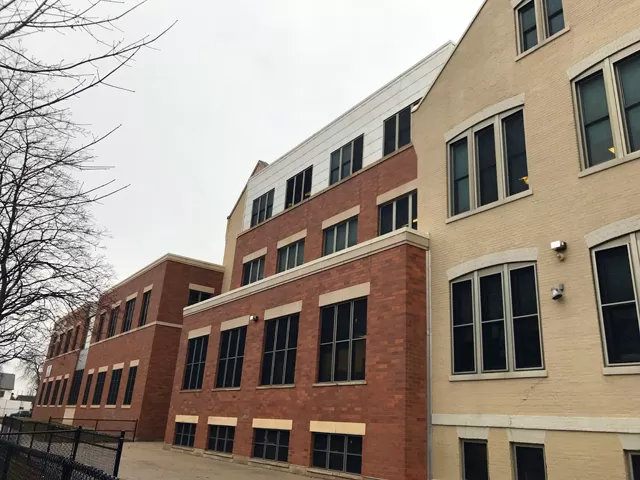 Exterior view of a modern addition to H.W. Longfellow School, shared with community organizations like Journey House, representing ongoing development.
In conclusion, exploring h.w. longfellow means understanding a poet who masterfully blended academic rigor with popular appeal. His accessible style, engaging narratives, and resonant themes made him a household name, while his historical and cultural impact left an indelible mark on American literature. While different eras have viewed his work through varying lenses, the historical significance and the artistic value of his contributions to poetry remain a vital area of study and appreciation.
 The interior of the former gymnasium space at H.W. Longfellow School, now repurposed into an art room, showing adaptation within the historic structure.
His poems, whether taught in classrooms or discovered by readers, continue to speak to the enduring aspects of the human condition and the rich tapestry of American history and myth. H.W. Longfellow’s place among the giants of American letters is well-earned, reflecting not just his prolific output but his profound connection with the audience he sought to reach and inspire through verse.
 Historic graffiti dating from 1895 found in the attic of H.W. Longfellow School, offering a glimpse into the building’s past occupants.
The study of his work encourages a deeper appreciation for the craft of poetry and its ability to capture the spirit of an age. H.W. Longfellow’s poems serve as literary landmarks, inviting readers to explore the narratives, characters, and themes that captivated 19th-century America and continue to offer valuable insights into the history of poetry and culture.
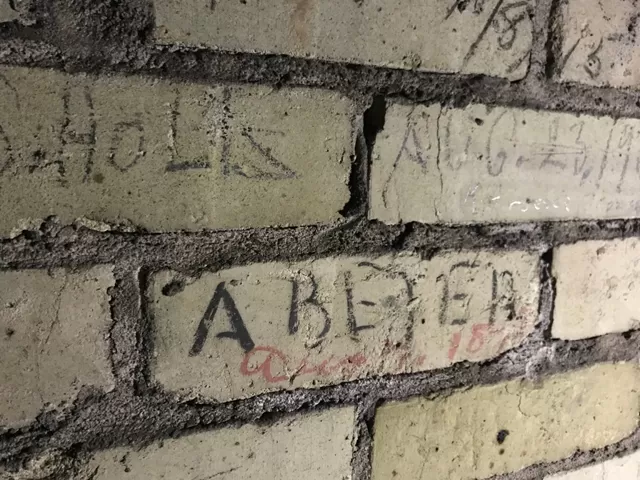 A sample of 19th-century graffiti located within the attic space of H.W. Longfellow School.
His influence, though perhaps less overt in contemporary poetry, is still felt in the tradition of narrative verse and the ongoing effort to make poetry accessible and relevant to a wide audience. h.w. longfellow remains a crucial figure for anyone seeking to understand the development of American literary voice and the historical role of poetry in shaping national identity and cultural values.
 Modern additions of names alongside historic graffiti in the attic of H.W. Longfellow School, symbolizing the continuity of connection to the building’s history.