
The quest for the perfect words to capture the essence of love is a timeless pursuit. For centuries, poets have wrestled with this profound emotion, crafting verses that resonate across generations. This exploration delves into the world of classic love poems, examining works by renowned poets who have given voice to the joys, sorrows, and complexities of love. From Shakespeare’s enduring sonnets to the passionate declarations of the Romantic era, we’ll uncover the enduring power and beauty of these literary treasures.
Contents
Shakespeare’s Definition of Love: Sonnet 116
Shakespeare’s Sonnet 116 stands as a cornerstone of love poetry. It offers not a personal plea, but a universal definition of love. Shakespeare portrays love as an unyielding force, impervious to circumstance and time.
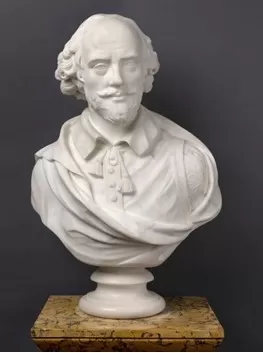 Shakespeare
Sonnet 116
Let me not to the marriage of true minds
Admit impediments. Love is not love
Which alters when it alteration finds,
Or bends with the remover to remove.
O no! it is an ever-fixed mark
That looks on tempests and is never shaken;
It is the star to every wand’ring bark,
Whose worth’s unknown, although his height be taken.
Love’s not Time’s fool, though rosy lips and cheeks
Within his bending sickle’s compass come;
Love alters not with his brief hours and weeks,
But bears it out even to the edge of doom.
If this be error and upon me proved,
I never writ, nor no man ever loved.
This sonnet’s power lies in its unwavering portrayal of love’s constancy, a beacon amidst life’s storms. This steadfastness contrasts sharply with the more tumultuous depictions of love found in other classic poems.
The Ardour of Romantic Love: Keats’ “Bright Star”
John Keats, a prominent figure of the Romantic era, imbues “Bright Star” with intense sensuality. The poem juxtaposes the vastness of the cosmos with the intimacy of love.
Bright Star
Bright star, would I were stedfast as thou art—
Not in lone splendour hung aloft the night
And watching, with eternal lids apart,
Like nature’s patient, sleepless Eremite,
The moving waters at their priestlike task
Of pure ablution round earth’s human shores,
Or gazing on the new soft-fallen mask
Of snow upon the mountains and the moors—
No—yet still stedfast, still unchangeable,
Pillow’d upon my fair love’s ripening breast,
To feel for ever its soft fall and swell,
Awake for ever in a sweet unrest,
Still, still to hear her tender-taken breath,
And so live ever—or else swoon to death.
The opening lines address a star, a symbol of permanence, before shifting to the intimate embrace of a lover. This shift creates a powerful contrast, highlighting the desire for eternal connection within the ephemeral realm of human existence.
Burns’ Simple Declaration: “A Red, Red Rose”
Robert Burns, a celebrated Scottish poet, offers a simpler, yet equally powerful expression of love in “A Red, Red Rose.”
 Robert Burns
A Red, Red Rose
O my Luve is like a red, red rose
That’s newly sprung in June;
O my Luve is like the melody
That’s sweetly played in tune.

So fair art thou, my bonnie lass,
So deep in luve am I;
And I will luve thee still, my dear,
Till a’ the seas gang dry.

Till a’ the seas gang dry, my dear,
And the rocks melt wi’ the sun;
I will love thee still, my dear,
While the sands o’ life shall run.

And fare thee weel, my only luve!
And fare thee weel awhile!
And I will come again, my luve,
Though it were ten thousand mile.
Burns utilizes evocative metaphors, comparing his love to a vibrant rose and a sweet melody. The poem’s simplicity and directness amplify its emotional impact, expressing a love that transcends distance and time.
Exploring the Spectrum of Love
These classic love poems, though diverse in style and tone, share a common thread: the exploration of the human heart’s deepest emotions. From Shakespeare’s philosophical musings to Keats’ sensual imagery and Burns’ straightforward declarations, these poets offer a glimpse into the multifaceted nature of love. They provide us with not just beautiful words, but enduring insights into the complexities of this fundamental human experience. By studying these classic works, we gain a deeper appreciation for the power of poetry to illuminate and express the timeless and universal language of love.