
Love and hope are intertwined emotions, often sought in times of hardship and uncertainty. Poetry, with its evocative language and imagery, can be a powerful medium for exploring these themes. This article delves into two poems, one by Jane Hirshfield and another by Ada Limón, that beautifully capture the complexities of love, hope, and resilience. Both poems feature the striking image of a heron, a symbol that adds depth and resonance to their explorations of human emotion.
Contents
The Quiet Strength of Hirshfield’s Heron
Jane Hirshfield’s “Hope and Love” presents a poignant image of a heron amidst horses in winter. The speaker’s uncertainty about the heron’s solitude—is it natural or a longing for a lost companion?—mirrors the human experience of questioning the nature of hope itself.
All winter
the blue heron
slept among the horses.
I do not know
the custom of herons,
do not know
if the solitary habit
is their way,
or if he listened for
some missing one—
not knowing even
that was what he did—
in the blowing
sounds in the dark,
I know that
hope is the hardest
love we carry.
He slept
with his long neck
folded, like a letter
put away.
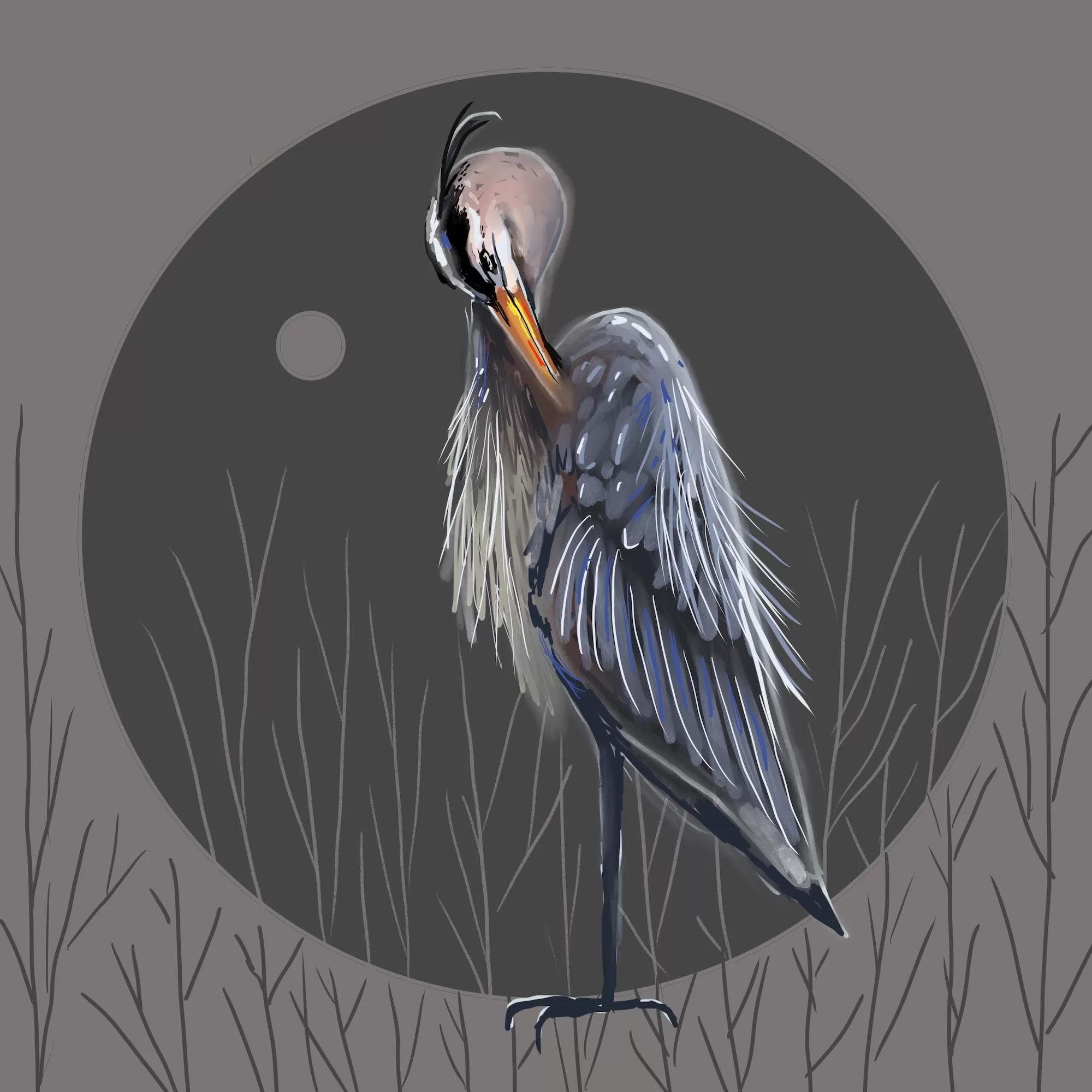 alt text describing a drawing of a heron
The heron’s folded neck, likened to a “letter put away,” suggests a quiet, reserved strength. The poem subtly connects this image to the enduring nature of hope, characterizing it as the “hardest love we carry.” This difficulty arises from the vulnerability inherent in hoping, the potential for disappointment, and the strength required to maintain it in the face of adversity.
Limón’s Heron: A Shared Narrative of Hope
Ada Limón’s “The Great Blue Heron of Dunbar Road” offers a more personal and narrative approach to the themes of hope and love. The poem begins with a yearning for simple domestic joys, juxtaposed with the harsh realities of a world filled with suffering.
That we might walk out into the woods together,
and afterwards make toast
in our sock feet, still damp from the fern’s
wet grasp, the spiky needles stuck to our
legs, that’s all I wanted, the dog in the mix,
jam sometimes, but not always.
This longing for connection and normalcy sets the stage for a reflection on the challenges of maintaining hope amidst personal struggles and global tragedies. Limón uses the image of the heron as a shared symbol of hope between the speaker and her stepfather, a recovering alcoholic. The heron becomes a ritual, a small but vital point of connection in their daily lives.
When he drove me to school, we decided
it would be a good day, if we saw the blue heron
in the algae-covered pond next to the road,
so that if we didn’t see it, I’d be upset. Then,
he began to lie.
The stepfather’s initial lie about seeing the heron evolves into a shared fiction, a testament to their mutual desire for something positive to hold onto. This shared narrative, though built on a fabrication, becomes a source of strength and comfort.
That’s the real truth. What we told each other
to help us through the day: the great blue heron
was there, even when the pond dried up,
or froze over; it was there because it had to be.
The heron, whether present or not, represents the resilience of hope, the human capacity to create meaning and find solace even in the face of hardship. The poem concludes with a powerful affirmation of this enduring need for hope.
I still want to point out the heron like I was taught,
still want to slow the car down to see the thing
that makes it all better, the invisible gift,
what we see when we stare long enough into nothing.
Enduring Symbols of Hope and Love
Both Hirshfield and Limón utilize the image of the heron to explore the nuances of hope and love. Hirshfield’s heron embodies the quiet strength and resilience required to maintain hope. Limón’s heron becomes a symbol of shared experience and the human capacity to create and sustain hope, even through difficult times. These poems offer solace and remind us of the enduring power of these fundamental human emotions.