
Afghanistan, a land steeped in history and poetry, holds within its cultural memory the tragic tale of Rabia Balkhi, a 10th-century poetess from the ancient city of Balkh. Her story, passed down through generations, resonates with themes of love, loss, defiance, and artistic expression, making her a potent symbol of Afghan identity. This article explores Rabia’s life, her enduring legacy, and the impact of her poetry, considering her as a voice for Afghanistan and its rich literary heritage.
Contents
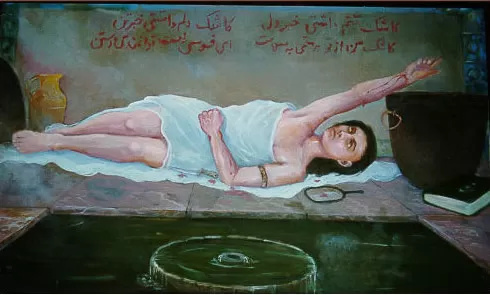 alt text: Painting depicting Rabia Balkhi in a hamam, composing poetry on the walls with her blood.
Rabia’s Story: Love, Loss, and Legacy
Rabia’s story, often recounted in hushed tones, speaks to the power of love and the pain of loss. She, the daughter of an Emir, fell in love with Baktash, her brother’s slave. This forbidden love, met with disapproval and jealousy, led to tragedy. Imprisoned in a hamam, Rabia, using her own blood as ink, inscribed her final verses upon the walls, a testament to her undying love and artistic spirit.
The details of her life, though shrouded in some mystery, are preserved through oral traditions and the writings of later poets, particularly the Sufi poet Farid al-Din Attar in his Ilahi-Nama. These accounts portray Rabia not just as a lover but as a mystic, her poetry imbued with a spiritual longing that transcends earthly desires.
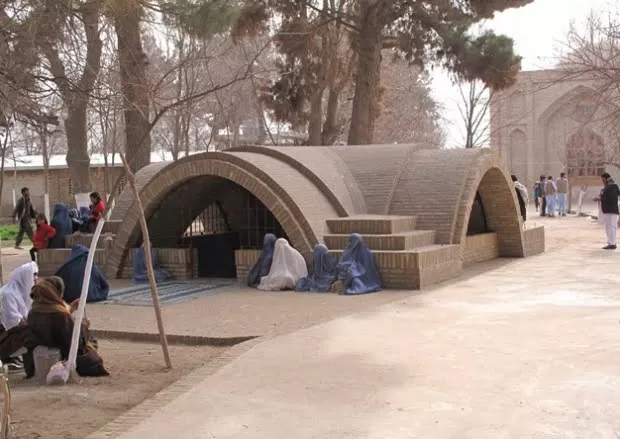 alt text: Photograph of the mausoleum of Rabia Balkhi, a site of pilgrimage and reverence in Afghanistan.
Rabia’s Poetry: A Voice for Afghanistan
While a complete collection of Rabia’s work, a divan, does not exist, fragments of her verses survive, offering glimpses into her poetic genius. Writing in both Persian and Arabic, she is considered a pioneer of New Persian poetry (Parsi-ye Dari), contributing to the foundation of the Persian literary tradition. Her poetry, steeped in pre-Islamic imagery and metaphors, became a cornerstone of later Persian poetic expression.
A Poem Attributed to Rabia:
سر انگشت در خون میزد آن ماه ز خون خود همه دیوار بنوشت
The moon-faced beauty struck blood with her fingertip With her blood she covered the walls
بدرد دل بسی اشعار بنوشت چو در گرمابه دیواری نماندش
Many poems stemmed from her agonized heart When no walls remained in the hamam
This verse, evoking the image of Rabia writing in blood, captures the essence of her tragic story and the enduring power of her art.
Rabia’s Enduring Influence: A Symbol of Defiance
Over a thousand years after her death, Rabia remains a powerful figure in the Afghan cultural imagination. Schools, hospitals, and even a university bear her name. She is celebrated as a feminist icon, a martyr for love, and a symbol of resistance against patriarchal oppression. Her story continues to be reinterpreted and retold, reflecting the changing social and political landscape of Afghanistan.
A Poem for Afghanistan: Rabia’s Legacy
Rabia Balkhi, a poet for Afghanistan, represents the enduring power of art and the resilience of the human spirit. Her tragic story and powerful poetry serve as a reminder of the rich cultural heritage of Afghanistan and the importance of preserving and celebrating the voices of its poets. Her legacy continues to inspire, particularly young Afghan women, to challenge societal norms and embrace their artistic expression.
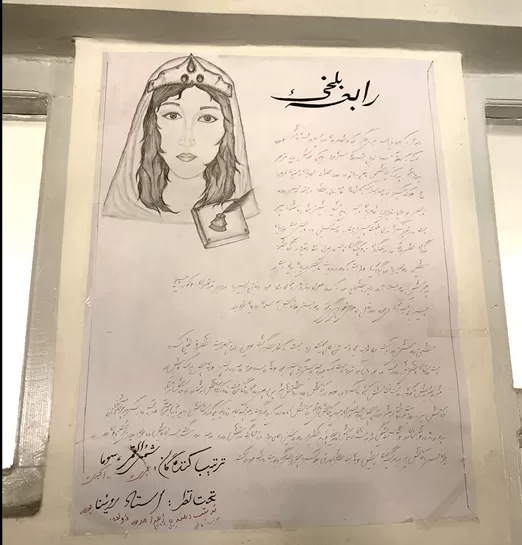 alt text: Schoolgirls in Panjshir, Afghanistan, stand beside a poster detailing the life and legacy of Rabia Balkhi.
In conclusion, Rabia Balkhi’s story transcends the boundaries of time and place. She remains a poem for Afghanistan, a testament to the power of love, loss, and the enduring legacy of art in the face of adversity. Her story continues to inspire and resonate with those who seek solace and strength in the power of words.
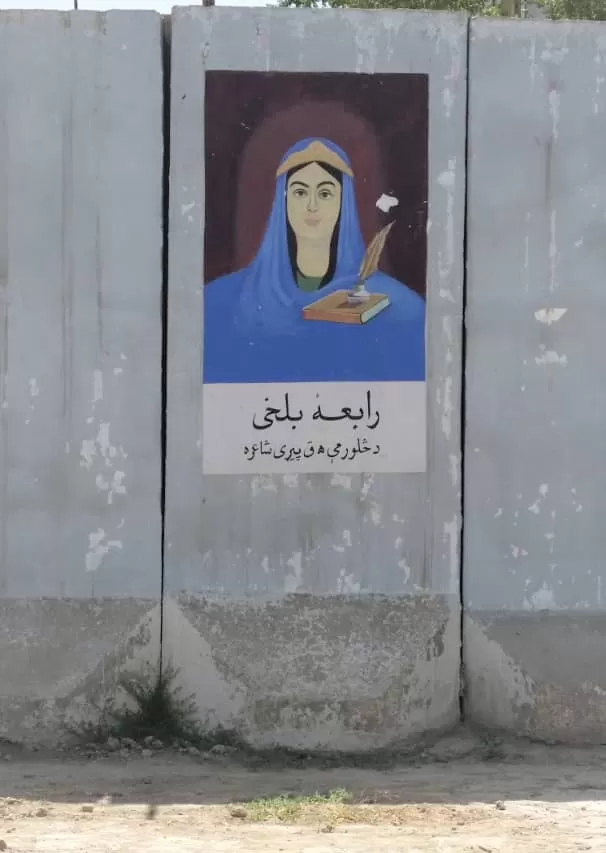 alt text: A poster of Rabia Balkhi affixed to a protective wall outside Afghanistan's Supreme Court, underscoring her significance as a national figure.