
The critically acclaimed film A Quiet Place plunged audiences into a world where silence is the only shield against terrifying creatures that hunt by sound. Amidst the nail-biting tension and ingenious survival tactics, eagle-eyed viewers might have spotted something unexpected: a poem written on a whiteboard. This subtle inclusion offers a fascinating layer of meaning, connecting the film’s themes of survival and silence to the ancient art of poetry, and perhaps reflecting the Abbott family’s efforts to maintain a semblance of normal “day one” learning and life in their post-invasion world.
Contents
This seemingly small detail—a fragment of Shakespeare’s Sonnet 18—provides a rich opportunity to explore the relationship between sound and silence in poetry, a concept known as prosody, and how this connects to the film’s central premise.
The Poem Revealed in a Silent Classroom
The poem visible on the whiteboard in A Quiet Place is the opening quatrain of William Shakespeare’s famous Sonnet 18:
Shall I compare thee to a summer’s day?
Thou art more lovely and more temperate:
Rough winds do shake the darling buds of May,
And summer’s lease hath all too short a date;
This sonnet, a timeless meditation on love, beauty, and the power of poetry to immortalize its subject, appears in a scene where Evelyn Abbott (Emily Blunt) is homeschooling her son Marcus (Noah Jupe). In a world where speaking aloud can mean instant death, education must adapt. While the characters communicate via American Sign Language (ASL), the poem remains a silent visual cue.
What makes its appearance particularly poignant and relevant to the film’s narrative is not just the text of the poem, but the markings written above the words. These are prosodic markings, designed to indicate the rhythm and stress patterns of the lines—elements usually perceived through sound.
What is Prosody and Scansion?
For many readers, poetry is primarily about understanding the literal and figurative meanings of words on the page. However, a crucial element of poetry, particularly in traditional forms, is its soundscape. Prosody is the study of the elements of language that contribute to rhythmic and acoustic effects in poetry, including meter, stress patterns, pitch, and the sounds of words themselves (like alliteration, assonance, consonance).
In A Quiet Place‘s silent world, directly experiencing the sound of prosody is impossible for the characters (and for us, as we don’t hear it read aloud). Yet, the poem’s presence, complete with its markings, highlights that the structure of sound, the pattern of rhythm, still matters.
The specific technique displayed on the whiteboard is scansion. Scansion is the process of analyzing a poem’s meter, identifying the pattern of stressed and unstressed syllables, and grouping them into metrical feet. Typically, a forward slash (/) denotes a stressed syllable, and a breve (˘) or ‘x’ marks an unstressed syllable. By visually mapping out the stress patterns, scansion allows one to “see” the rhythm of a poem, even if it cannot be audibly spoken. This act of creating a silent sound map is perfectly aligned with the film’s world, where sound must be understood and navigated without being produced.
Sonnet 18 and Iambic Pentameter
Shakespeare’s Sonnet 18 is written in iambic pentameter, one of the most common meters in English poetry. Iambic pentameter consists of five “iambs” per line. An iamb is a metrical foot containing one unstressed syllable followed by a stressed syllable (˘ /). The rhythm sounds like “da-DUM”.
So, a line of iambic pentameter generally follows the pattern:
˘ / | ˘ / | ˘ / | ˘ / | ˘ /
(five iambs)
Let’s look at the first line of Sonnet 18 scanned in perfect iambic pentameter:
˘ / | ˘ / | ˘ / | ˘ / | ˘ /
Shall I | com-PARE | thee TO | a SUM | mer’s DAY?
The markings on the whiteboard in A Quiet Place likely represent a scansion, helping Marcus understand the inherent rhythm and flow of the lines visually. This teaching method demonstrates an ingenious way to appreciate the musicality of language when sound itself is forbidden. It suggests that understanding the pulse and rhythm of poetry can still enrich life, even on what feels like an early “day one” of enduring this terrifying new reality.
Of course, perfectly metered lines can become monotonous. Skilled poets like Shakespeare often introduce variations within the meter to create emphasis, surprise, and richer texture. For example, a line might start with a stressed syllable (a trochee) or have two stressed syllables together (a spondee). The specific scansion shown in the film might reflect Evelyn’s teaching method or a particular interpretation, possibly adhering to a strict, almost defiant, perfect meter in contrast to the chaos outside. This adherence to form mirrors the family’s strict adherence to rules for survival. Finding moments of connection and learning, such as reading loving poems for girlfriend or partner, might similarly offer solace and a connection to past norms in trying times.
 alt text describing a scene from A Quiet Place movie where a woman is teaching a boy in a quiet room with a poem on a whiteboard
The choice of Sonnet 18 itself is also significant. It is a love poem comparing the beloved to a summer’s day and asserting that their beauty will live forever through the poem itself. Deep love—specifically parental love—is the driving force behind the characters’ actions and sacrifices in A Quiet Place. The poem’s theme of enduring beauty and life through art resonates with the family’s desperate struggle to preserve their lives and humanity. Even in the face of monstrous threats, they cling to beauty, knowledge, and connection, embodying the spirit that poetry, like love, can offer a form of immortality or at least enduring value. The concept of continuing education and finding beauty in a harsh environment is not unlike reflecting on simpler times or even the structure of a poem about classroom life.
Deeper Meaning in a Silent World
The silent presence of Shakespeare’s sonnet and the visual analysis of its prosody serve as powerful metaphors in A Quiet Place. They highlight:
- The Persistence of Culture and Education: Even in an apocalypse, the need to learn, to connect with the past, and to appreciate beauty persists. Evelyn’s act of teaching poetry, even silently, is an act of resistance against the regression forced upon humanity by the monsters.
- Finding “Sound” in Silence: Prosody is usually about audible sound and rhythm. By teaching scansion, Evelyn shows that the structure and pattern of poetic sound can still be appreciated and understood visually, intellectually, and perhaps even physically (by tapping a foot or feeling the pulse). It’s about experiencing poetry’s rhythm through means other than voice.
- The Enduring Power of Love: Sonnet 18 is a declaration of love. The film is a profound exploration of parental love and sacrifice. The poem subtly underscores the core emotional motivation driving the family’s survival efforts. The enduring nature of such connections is often celebrated in verse, from classic sonnets to modern i love you girlfriend poem compositions.
 alt text depicting actress Emily Blunt and director John Krasinski looking subdued at a movie premiere
The clever integration of this poetic element into A Quiet Place enriches its narrative and demonstrates the multifaceted nature of poetry itself. It reminds us that poetry isn’t just about the words we read or hear, but also about structure, rhythm, and the emotional weight carried within its form, aspects that can be perceived even when silence is paramount.
Beyond the Film: A Contemporary Voice
While Sonnet 18 is a cornerstone of English poetry, it’s important to explore the vibrant landscape of contemporary poetry as well, particularly voices that engage with form and theme in compelling ways.
Chad Abushanab, author of The Last Visit (winner of the Donald Justice Poetry Prize), is a contemporary poet whose work often utilizes formal elements like rhyme and meter with skill and emotional depth. His approach to form echoes the precision seen in scansion, demonstrating how traditional structures can be powerful tools for expressing modern experiences and feelings. Exploring contemporary works can offer new perspectives on themes found in older poems, much like finding christmas eve poems can provide festive comfort grounded in tradition.
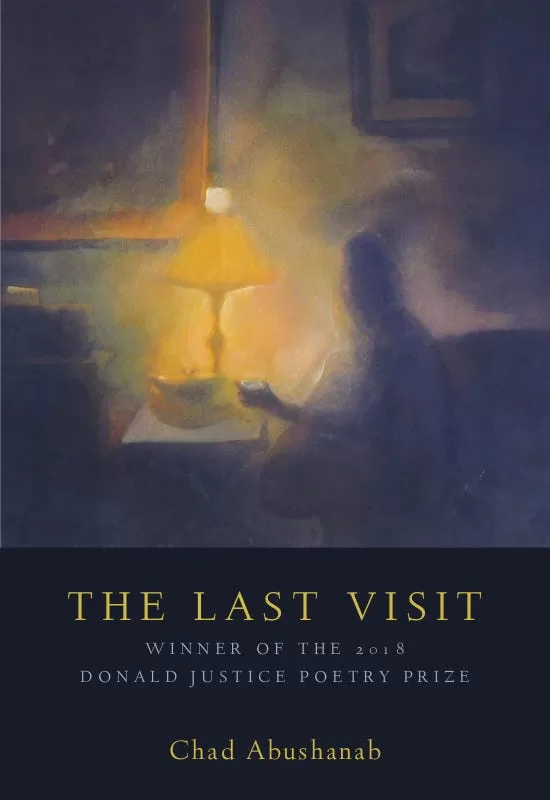 alt text showing the cover of the poetry book The Last Visit by Chad Abushanab, featuring a figure looking out a window
Abushanab’s work can be found in his book, The Last Visit (Autumn House Press, 2019), available from the publisher (https://www.autumnhouse.org/books/the-last-visit-chad-abushanab-poetry/) or through independent bookstores via IndieBound (https://www.indiebound.org/book/9781938769375). More about his work is available on his website (https://www.chadabushanab.com/).
Conclusion
The inclusion of Shakespeare’s Sonnet 18 and the concept of prosody in A Quiet Place serves as a brilliant, subtle nod to the resilience of art and culture in the face of devastation. It underscores the idea that even when robbed of sound, humanity’s connection to language, rhythm, and enduring themes like love and survival remains vital. This hidden detail offers a unique “day one” lesson in appreciating poetry not just for its meaning, but for its silent, structural pulse, proving that even in the quietest place, words continue to bloom.