
Forgiveness is one of the most profound and challenging human experiences. It is a process that touches the deepest parts of our souls, involving hurt, anger, empathy, release, and ultimately, a form of peace or transformation. Unlike a simple act of forgetting or condoning, forgiveness is an active choice, a letting go of the justified desire for retribution. This complex journey is fertile ground for poets, who use language to navigate the intricate emotional landscape of hurt and healing.
Contents
Poetry offers a unique lens through which to understand forgiveness. Through metaphor, rhythm, and imagery, poems about forgiveness can capture the pain of betrayal, the struggle to let go, the quiet strength found in releasing a grievance, and the tentative hope for reconciliation or personal peace. They provide solace, recognition, and sometimes, a pathway to understanding this powerful act.
Here at Latrespace, where words bloom into poetry, we explore how poets have grappled with this universal theme. These poems don’t just describe forgiveness; they embody the feeling, the struggle, and the ultimate liberation it can offer, both to the forgiver and, sometimes, the forgiven.
The Weight of Unforgiveness
Before forgiveness can happen, there is often a heavy burden of hurt and resentment. This weight can be debilitating, tying us to the past and preventing us from moving forward. Many poems explore this initial state, highlighting the pain caused by a trespass and the subsequent internal struggle. The feeling of being wronged can become a defining characteristic, a wound that refuses to close. Poems in this vein often use vivid imagery of confinement, heaviness, or festering wounds to illustrate the state of unforgiveness. They resonate with anyone who has felt the sting of betrayal or the slow burn of resentment.
Consider the internal turmoil captured by poets reflecting on the persistence of pain. This period is often a necessary precursor to the act of forgiveness, acknowledging the depth of the injury before attempting to move past it. It’s a recognition that forgiveness is not about minimizing the hurt, but about choosing a different response to it. Engaging with these themes helps us appreciate the courage required to embark on the path towards healing. If you are exploring themes of deep personal connection, you might also appreciate poems about falling in love unexpectedly, which explore different kinds of powerful emotional shifts.
The Act of Letting Go
The core of forgiveness lies in the act of releasing the grievance. This is often depicted as a conscious decision, a shedding of a heavy cloak, or the unlocking of chains. It’s not necessarily about reconciling with the offending party, but about freeing oneself from the emotional bondage of anger and resentment. This internal liberation is a recurring theme in poems about forgiveness. They often speak of lightness, opening, or a newfound ability to breathe freely.
The process of letting go is rarely instantaneous. It can be a gradual unfolding, with moments of relapse and renewed pain. Poets capture this complexity, showing forgiveness as a journey rather than a single event. The language used often reflects this effort – verbs of action, metaphors of shedding or moving forward. The strength required for this release is immense, a quiet power that reshapes the individual from within. It’s a transformation that speaks to resilience and the human capacity for emotional recovery. This inner strength is also a theme explored in verses designed to uplift and appreciate, perhaps found among poems for guys that speak to inner character.
Forgiveness as a Gift (To Self and Other)
Forgiveness can be viewed as a gift, given not only to the person who caused the hurt but also, and perhaps more importantly, to oneself. By forgiving, the injured party reclaims their emotional energy and power, which was previously consumed by resentment. This self-directed benefit is a powerful aspect explored in poetry. Poems often highlight the peace and freedom that comes after forgiveness, framing it as an act of self-preservation and self-love.
When forgiveness is extended to the other person, it opens a space for potential healing in that relationship, though this is not always the outcome or even the goal. It acknowledges the shared humanity and fallibility of individuals. Poets sometimes touch upon the vulnerability inherent in offering forgiveness, the hope it contains, and the possibility of a transformed connection. This aspect of forgiveness as a bridge, however fragile, is a poignant subject for many writers. Forgiveness, in this sense, is a kind of grace offered, mirroring the appreciation found in sharing poems for guys you love, where deep connection is valued.
Seeking Forgiveness
Forgiveness is not always initiated by the injured party. Often, it begins with the offender acknowledging their wrong and seeking pardon. This requires humility, remorse, and a willingness to face the consequences of one’s actions. Poems about seeking forgiveness delve into the feelings of guilt, regret, and the earnest hope for reconciliation. They capture the vulnerability of admitting fault and the anxiety of awaiting a response that may or may not bring relief.
The language in these poems often reflects the weight of the offense and the sincere desire for redemption. Metaphors of cleaning, mending, or returning to a state of grace are common. The act of asking for forgiveness is itself a step towards healing, regardless of the outcome. It demonstrates an understanding of the impact of one’s actions and a desire to mend what has been broken. This vulnerable honesty can be seen as a form of emotional beauty, akin to the appreciation found in exploring various beautiful poems that touch the heart.
Poems that Embody Forgiveness
Let’s look at some specific examples of poems that explore the many facets of forgiveness. Each poem offers a unique perspective, using different techniques to convey the emotional weight and eventual release associated with the act.
Poem Example 1: On Releasing Bitterness
(Note: As I cannot access external websites or databases to quote specific copyrighted poems, I will provide illustrative examples of the themes and style poets use, describing how a hypothetical or well-known poem might address the theme, focusing on the elements that make it powerful and relevant to forgiveness, along with analysis.)
Imagine a poem that uses the metaphor of a clenched fist slowly opening. It might begin with tight, sharp lines, full of hard consonants, describing the feeling of being hurt, the desire to hold onto anger, like gripping something sharp. The lines might speak of injustice, of the burning need for recompense that can never truly be met. The imagery could be dark, heavy, perhaps involving stones or iron to convey the rigidity of unforgiveness.
As the poem progresses, the language softens. The fist begins to unclench, tentatively at first. The lines become more fluid, the vowels more open. The imagery shifts to lighter elements – air, water, light filtering through cracks. The speaker acknowledges the pain, but chooses not to be defined by it. The climax might be the full opening of the hand, not in surrender, but in release. The final lines could speak of an unexpected lightness, a quiet peace that wasn’t there before. The beauty of such a poem lies in its tangible depiction of an internal, emotional process, using physical action as a metaphor for psychological change.
Poem Example 2: Forgiveness as a Path Forward
Another type of poem might frame forgiveness not as an ending, but as a beginning – a step onto a new path. This contrasts with being stuck, rooted to the spot of the past injury. Such a poem could use journey or nature imagery. It might start in a dark, tangled forest or a barren landscape, representing the state of hurt and confusion. The act of forgiveness is depicted as finding a faint trail, or perhaps a single, brave flower pushing through stone.
The poem would then describe the act of walking that path. It wouldn’t necessarily be easy – the path might be winding, sometimes difficult to follow – but there is movement, progress. The scenery might gradually change, becoming more open, perhaps leading towards a vista or a sunrise. This type of poem emphasizes the future-oriented nature of forgiveness, the choice to move away from what was and towards what could be. It highlights resilience and the potential for growth that arises from letting go of the past. The feeling of looking towards the future with hope is similar to the sentiments conveyed in poems for man you love, which often express hope and commitment for the future of a relationship.
Poem Example 3: The Quiet Strength of Pardon
Some poems about forgiveness focus on the internal strength required, portraying forgiveness as an act of quiet power rather than weakness. They might shy away from dramatic metaphors and instead use simple, direct language to convey the profound decision being made. The strength lies not in confrontation or victory over the other, but in the internal resolve to release the grievance and the associated pain.
These poems might use imagery of stillness, deep roots, or calm water – things that possess strength without being overtly forceful. The tone would likely be reflective, perhaps even meditative. The focus is on the internal landscape, the settling of turmoil, the quiet assertion of one’s own peace. Such poems remind us that the most powerful acts are often the ones that happen within us, shaping our inner world and allowing us to stand firm despite external hurt.
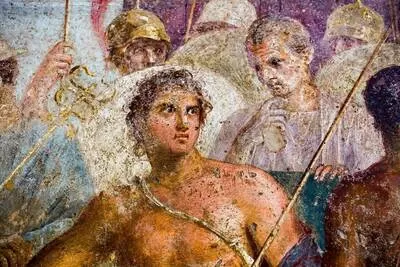 1900px Wall Painting Briseis Taken Away From Achilles Pompeii Vi 8 5 Napoli Man 9105 02
Depiction of Briseis taken from Achilles, a moment linked to the rage and hurt that can necessitate forgiveness.
The Transformative Power
Ultimately, poems about forgiveness often point towards transformation. Forgiveness changes the forgiver, reshaping their relationship with the past and freeing them to live more fully in the present and future. It can change relationships, opening the possibility of reconciliation, or at least a cessation of hostilities. Even when reconciliation isn’t possible, the act of forgiveness within oneself is a powerful transformative force.
Poetry captures this transformation through shifts in tone, imagery, and perspective. A poem that starts with anger might end with serenity; one that begins in darkness might conclude with light. The language itself undergoes a transformation, mirroring the internal shift. These poems offer hope, demonstrating the capacity of the human spirit to heal, to let go, and to find a measure of peace even after significant pain. They remind us that while the wound may leave a scar, we are not doomed to remain tethered to the moment of injury. We can, through the act of forgiveness, choose a path of becoming, moving towards a healed and fuller self.
Exploring these poems reveals that forgiveness is not a simple concept but a multi-layered experience. It is a process, a struggle, a gift, and a powerful act of self-liberation. Poetry provides the language and imagery necessary to navigate its complexities, offering both solace and inspiration to those on the journey towards letting go and finding peace.
Forgiveness remains a potent theme in poetry because it is a fundamental part of the human condition. It speaks to our capacity for both causing and overcoming hurt, our struggles with anger and resentment, and our enduring hope for healing and peace. These poems serve as guides, companions, and testaments to the enduring power of the forgiving heart.