
Robert Frost stands as one of America’s most beloved and widely read poets, known for his accessible language and profound insights into the human condition. While often associated with pastoral New England settings, his poems delve deep into universal themes that resonate with readers across generations. Among his most significant contributions are his powerful poems about life Robert Frost masterfully crafted, exploring its inherent complexities, challenges, and quiet moments of beauty found in everyday experiences.
Contents
- Key Facets of Life in Frost’s Poetry
- Analyzing Prominent Robert Frost Poems About Life
- “The Road Not Taken”: An Icon of Life’s Choices
- “Stopping By Woods on a Snowy Evening”: The Call of Rest vs. Responsibility
- “Nothing Gold Can Stay”: The Ephemerality of Life’s Best Moments
- “Acquainted With The Night”: Facing Life’s Darkness
- Frost’s Poetic Craft: Bringing Life to Verse
- The Enduring Wisdom of Frost’s Poems About Life
Frost’s approach to life in poetry is rarely straightforward or overly philosophical. Instead, he uses concrete, often rural, imagery and narrative situations to explore abstract ideas about existence, choice, nature’s influence, and the individual’s place in the world. He captures the tension between human desires and external realities, the weight of decisions, and the simple yet profound truths revealed through observation and reflection.
Key Facets of Life in Frost’s Poetry
Examining Frost’s work reveals recurring motifs and perspectives on life:
- The Journey and Choices: Perhaps the most famous example, “The Road Not Taken,” encapsulates the idea that life is a path requiring choices, and the consequences, real or imagined, shape who we become. It’s less about the actual roads and more about the human act of choosing and reflecting upon those choices.
- Nature as a Mirror: Frost frequently uses the natural world not just as a backdrop but as a symbolic representation of human experience. The changing seasons, woods, fields, and animals reflect aspects of life’s cycle, its challenges, and moments of quiet contemplation. His insights often feel as elemental and enduring as the landscapes he describes.
- Work and Reality: Many poems depict the realities of rural work and daily tasks, grounding abstract thoughts in tangible experience. This grounds his exploration of life in the necessity of labor, perseverance, and facing things as they are.
- Isolation and Connection: Frost explores the individual’s solitude (“Acquainted With The Night”) but also touches upon the importance of human connection (“A Time To Talk”), highlighting the balance between independence and community in navigating life.
- The Weight of Duty and Desire: Poems like “Stopping By Woods on a Snowy Evening” capture the pull between personal desires (rest, beauty, escape) and obligations or duties, a common struggle in life.
- Acceptance of Impermanence: The understanding that beauty and moments are fleeting (“Nothing Gold Can Stay”) is a recurring theme, reflecting life’s transient nature and the inevitability of change and loss.
Frost’s genius lies in presenting these weighty themes not as academic lectures, but as observations colored by personal experience and presented with deceptive simplicity.
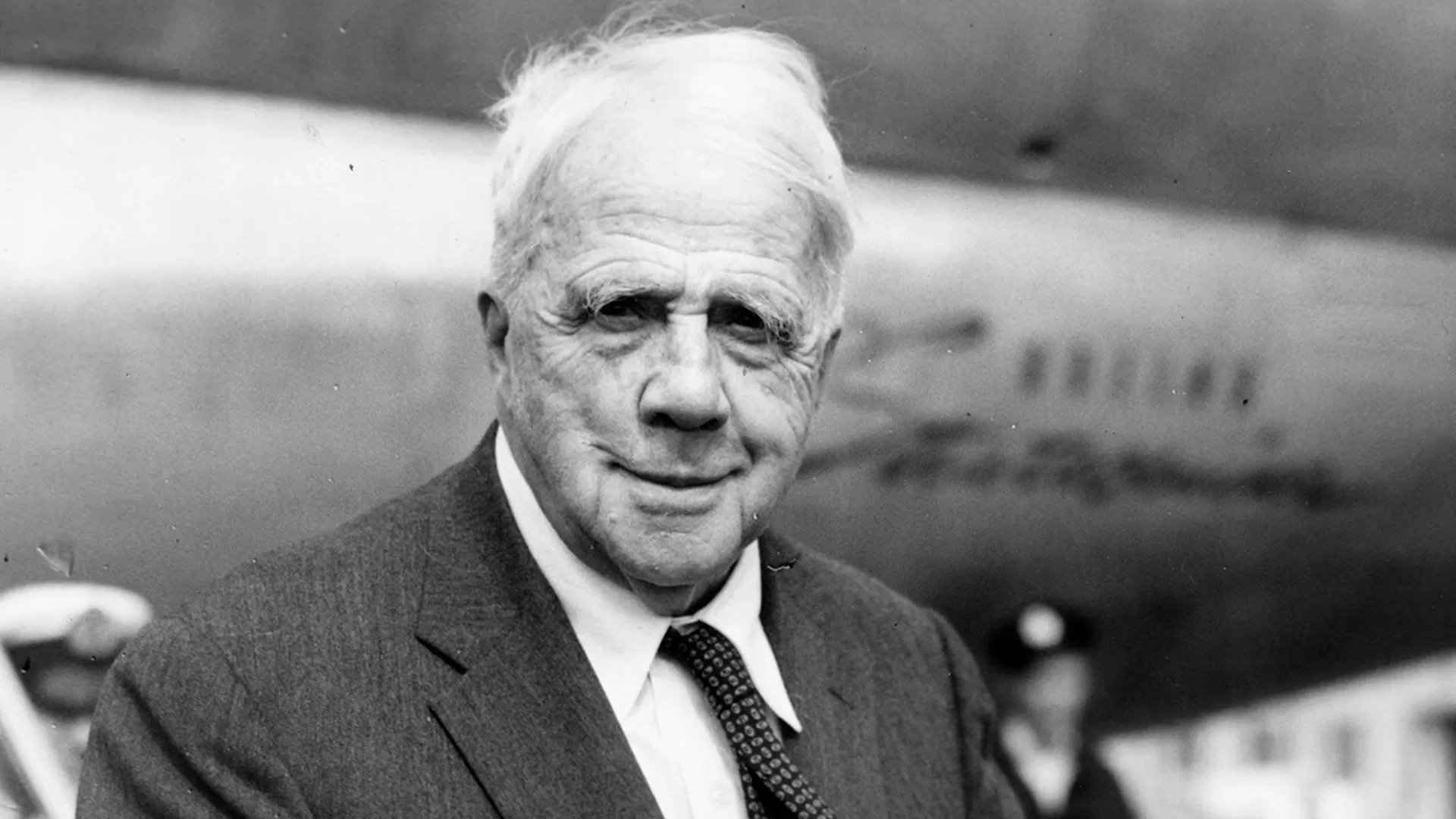 Portrait of American poet Robert Frost
Analyzing Prominent Robert Frost Poems About Life
To truly appreciate how Frost addresses life, we can look closely at some of his most celebrated works. These aren’t just narrative poems; they are vehicles for deep contemplation on existence. Robert Frost’s poems about life offer a unique perspective on the human journey.
“The Road Not Taken”: An Icon of Life’s Choices
Two roads diverged in a yellow wood,
And sorry I could not travel both
And be one traveler, long I stood
And looked down one as far as I could
To where it bent in the undergrowth;

Then took the other, as just as fair,
And having perhaps the better claim,
Because it was grassy and wanted wear;
Though as for that the passing there
Had worn them really about the same,

And both that morning equally lay
In leaves no step had trodden black.
Oh, I kept the first for another day!
Yet knowing how way leads on to way,
I doubted if I should ever come back.

I shall be telling this with a sigh
Somewhere ages and ages hence:
Two roads diverged in a wood, and I—
I took the one less traveled by,
And that has made all the difference.
Often misinterpreted as a simple endorsement of individualism, this poem is a nuanced reflection on memory, choice, and self-deception. The speaker insists they took “the one less traveled by,” yet earlier stanzas note the paths were “equally lay” and “worn them really about the same.” This ambiguity is key to its power as a poem about life; it captures the human tendency to romanticize past decisions or create narratives that give meaning to our present circumstances. Life isn’t always about clearly defined, wildly different paths, but how we perceive and recount the journey afterward.
“Stopping By Woods on a Snowy Evening”: The Call of Rest vs. Responsibility
Whose woods these are I think I know.
His house is in the village, though;
He will not see me stopping here
To watch his woods fill up with snow.

My little horse must think it queer
To stop without a farmhouse near
Between the woods and frozen lake
The darkest evening of the year.

He gives his harness bells a shake
To ask if there is some mistake.
The only other sound’s the sweep
Of easy wind and downy flake.

The woods are lovely, dark and deep,
But I have promises to keep,
And miles to go before I sleep,
And miles to go before I sleep.
This seemingly simple poem about pausing in winter woods is a profound meditation on the temptations of rest, escape, and perhaps even death (“lovely, dark and deep,” “miles to go before I sleep”). The traveler is drawn to the beauty and stillness of the woods, a stark contrast to their obligations. Life requires movement, effort, and the fulfillment of duties (“promises to keep”). The poem captures that universal tension between the desire to pause, retreat, or give in to weariness, and the necessity of continuing the journey. It’s a quiet affirmation of perseverance in the face of life’s demands.
“Nothing Gold Can Stay”: The Ephemerality of Life’s Best Moments
Nature's first green is gold,
Her hardest hue to hold.
Her early leaf's a flower;
But only so an hour.
Then leaf subsides to leaf.
So Eden sank to grief,
So dawn goes down to day.
Nothing gold can stay.
In eight short lines, Frost encapsulates the fleeting nature of perfection and innocence. Comparing the brief, brilliant “gold” of early spring leaves to the ephemeral nature of a flower, the Garden of Eden, and dawn, he reflects on the inevitability of change and loss. This poem is a poignant commentary on life’s transient beauty and the inherent sadness in knowing that the most precious moments cannot last. It encourages an appreciation for the present while acknowledging the cycle of decay and renewal that defines existence. It’s a reminder that like the vibrant green, the youthful vigor or golden moments of life are the hardest hue to hold. The emotional value found in poetry often lies in this recognition of shared human experience.
“Acquainted With The Night”: Facing Life’s Darkness
I have been one acquainted with the night.
I have walked out in rain - and back in rain.
I have outwalked the furthest city light.

I have looked down the saddest city lane.
I have passed by the watchman on his beat
And paused to interrupt his cry.

No one has called me back or said good-bye;
And further still at an unearthly cry
From somewhere near a cry for me

That was not meant for me - and there at flood
I stood still and stopped the sound of feet
When everything was just the same at flood.

And human cry heard round the world cannot
Indemnify me from what I have known.
The clock was not afraid to tell the time
Of night when I was one acquainted with the night.
This sonnet explores themes of loneliness, isolation, and perhaps depression. The speaker is a solitary figure traversing the city at night, disconnected from human connection (no one says “good-bye,” he interrupts the watchman’s cry but doesn’t interact). The “night” here symbolizes a state of being, a profound acquaintance with life’s darker, solitary, and perhaps melancholic aspects. The ambiguous “cry for me / That was not meant for me” adds a layer of existential confusion or yearning. The unwavering clock simply marks time, indifferent to the speaker’s internal state. It’s a powerful depiction of navigating the parts of life that are solitary and shadowed, a different but equally valid facet of the human journey compared to the choices on a road or the pause in snowy woods.
Frost’s Poetic Craft: Bringing Life to Verse
Frost’s exploration of life is inseparable from his masterful poetic technique. He often employed traditional forms like blank verse and rhyming stanzas, yet infused them with natural, colloquial speech rhythms. This juxtaposition creates a sense of authenticity – everyday language grappling with profound ideas.
His use of imagery, rooted in the New England landscape, is symbolic without being overly academic. The woods, the stone wall, the snow, the patch of old snow – all serve as entry points into deeper contemplation. He uses simple metaphors and similes to unlock complex emotions and philosophical questions.
The interplay between sound and sense is crucial. Frost himself emphasized the importance of the “sound of sense” – the way language sounds when spoken, reflecting human thought and emotion. This attention to aural quality adds another layer of depth to his poems about life, making them resonate on an intuitive, felt level. While some poets might focus on specific elements like finding words that rhyme with heart for a poem for effect, Frost’s sound choices feel organic to the voice and setting, serving the overall thematic exploration of life.
The Enduring Wisdom of Frost’s Poems About Life
Robert Frost’s lasting appeal lies in his ability to articulate fundamental human experiences with honesty and grace. His poems about life don’t offer easy answers or prescriptive advice. Instead, they present scenarios, feelings, and observations that mirror our own struggles, decisions, and moments of quiet contemplation.
From the choices we face on metaphorical roads to the duties that call us away from moments of peace, the fleeting beauty of nature, and the necessary navigation of solitude and darkness, Frost covers a wide spectrum of what it means to be alive. His work encourages readers to look closely at their own lives, the paths they’ve taken, the moments they’ve paused, and the nature that surrounds them, finding universal meaning in the particular. His contribution places him firmly among the giants of American literature, whose works are often included in lists of the ten best poems and stand alongside the famous poems of poets like robert burns famous poems in their cultural impact and enduring relevance. His exploration of life’s seasons and transitions, while distinct, offers a contemplative counterpart to themes found in more specific seasonal poetry like christmas rhymes and poems, inviting reflection on the passage of time and human experience.
In reading Frost, we encounter a voice that is wise, sometimes wry, and deeply human, reminding us that the most profound truths about life are often found not in grand pronouncements, but in the simple observation of a snowy wood, a patch of melting snow, or the path we chose, or remember choosing, long ago.