
The 1800s marked a vibrant era for poetry, a time when verse held a prominent place in culture, captivating both the young and the old. Lyrics were scrutinized, emotions evoked, and poetic works often graced the pages of newspapers across the land. In this rich literary landscape, certain physical spaces became synonymous with poetic inspiration and community. One such place, steeped in history and connected to the voices of poets from the 1800s, is Poets’ Rock in Solebury Township, Pennsylvania. This historic stone attracted a devoted following among bards of the time, serving as a natural stage and gathering point. To find this legendary spot requires a journey down a steep incline, across Cuttaloosa Creek, followed by a short hike upstream through tangled undergrowth to the moss-draped quartz stone.
Contents
Poetry’s significance in the 1800s is hard to overstate. Unlike today, where music dominates popular charts, a 19th-century “Billboard Top 100” would likely have been filled entirely with poetry. This era saw the rise of influential poets whose words shaped national identity, challenged social norms, and explored the depths of human experience. Understanding the works of poets from the 1800s offers a window into the societal values, intellectual currents, and emotional landscape of the time. Exploring places like Poets’ Rock helps us connect with the environments that nurtured these creative minds and the communities that celebrated their art.
i love you poems girlfriend
John Greenleaf Whittier: A Voice Among 1800s Poets
Among the notable poets from the 1800s who found inspiration in the Cuttalossa valley was John Greenleaf Whittier (1807-1892). Known as the “Quaker poet” for his plain attire and devout faith, Whittier was also a fervent abolitionist. His commitment to the anti-slavery cause was profound, writing diatribes against slavery and narrowly escaping death himself in New Hampshire. By 1837, he was active in the Anti-Slavery Society of Pennsylvania and edited the “Pennsylvania Freeman,” a publication based in Philadelphia’s Pennsylvania Hall. When a pro-slavery mob burned the hall in 1838, Whittier sought refuge and eventually settled near Lumberville in the 1840s.
Whittier’s connection to the Cuttalossa valley was personal and deeply felt. He daily walked the mile from his stone house on Green Hill Road to retrieve his mail in Lumberville, often hiking back along the winding Cuttalossa Creek. This narrow valley, with its alpine feel, meadows, sycamores, pine forests, and historic ruins, provided a sanctuary and source of creative energy. Despite often being in fragile health, Whittier found renewed vigor during these walks. It was in this landscape that he pondered revising works like “Moll Pitcher and the Minstrel Girl” and discovered the muse for “The Trailing Arbutus,” his eulogy to the spring blossoms. Recalling the area in 1873, he fondly remembered “the little river, its woodlands and meadows and the junction of the Cuttalossa with the Delaware.” Whittier stands as a prime example of the ways in which poets from the 1800s drew directly from the natural world and local surroundings for their verse.
cute poems for your girlfriend
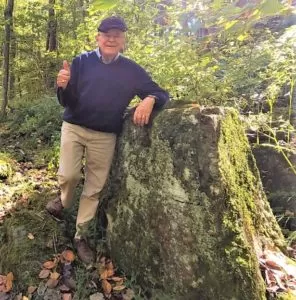 Historic Poets' Rock, a large moss-covered stone, near Cuttalossa Creek
Poets’ Rock: A Gathering Place for 19th-Century Verse
The significance of Poets’ Rock peaked in the latter half of the 1800s. On September 30, 1871, a group of local poets convened at the rock itself to formally establish a poetry society. Arriving by carriage and on foot, these poets from the 1800s took turns standing upon the flat-topped stone, sharing and reciting their original compositions. Works inspired by the local landscape and life, such as “Legend of the Cuttalossa,” “The Pine Tree,” “My Native Land,” “Copper Nose,” and “The Wood Thrush’s Song,” were among those shared, some reportedly inspired by the melodious birds singing overhead during the gathering. This event underscores the social and community aspects of poetry in the 1800s, highlighting how poets gathered, shared, and honed their craft together.
The environment of the Cuttalossa, which inspired Whittier and others, likely played a significant role in the themes and imagery found in the works of these local poets from the 1800s. The rugged vales, shifting seasons, and natural beauty provided ample material for verse that resonated with a populace attuned to the rhythms of the earth and the power of evocative language.
good morning to girlfriend poem
Whittier himself composed verse while connected to this area. His poem “Indian Corn,” written at Cuttalossa, serves as an atmospheric ode to the growing season in Bucks County. The opening lines capture this regional focus:
Let other lands exulting glean
The apple from the pine,
The orange from its glossy green,
The cluster from the vine.
We better love the hardy gift
Our rugged vales bestow,
To cheer us when the storm shall drift,
Our harvest fields with snow. . . .
This excerpt exemplifies how poets from the 1800s, like Whittier, often used specific, local imagery to convey universal themes of appreciation for one’s homeland and its unique blessings, grounding their work in tangible experience while reaching for broader emotional resonance.
famous poems about self love
The Legacy of 1800s Poets and Poets’ Rock
While the era of poetry dominating popular culture has passed, the legacy of poets from the 1800s endures. Their works continue to be studied, recited, and cherished for their linguistic artistry, thematic depth, and historical insight. Places like Poets’ Rock stand as quiet monuments to this rich past, offering a tangible link to the individuals who found inspiration and community there. Visiting such a site allows for a deeper connection, imagining the voices that once echoed among the trees and the passion that fueled their creative endeavors. The story of Poets’ Rock and the poets who gathered there is a reminder of the enduring power of verse and the specific cultural moment in the 1800s when poetry flourished.
cute short poems about love
Understanding the context, the lives, and the gathering places of poets from the 1800s enriches our reading experience and deepens our appreciation for the art form that played such a vital role in shaping thought and feeling during that transformative century.
References:
- “Lumberville: 300 Year Heritage” by Willis Rivinus (2006)
- “Place Names in Bucks County” by George MacReynolds (1942)
- “The Cuttalossa and Its Historical, Traditional and Poetical Associations” by William J. Buck (1897)
- “Historical Reminiscences of the Cuttalossa Creek in Solebury Township” by Thaddeus Stevens Kenderdine (1926)