
Poetry holds a unique power to articulate the often unspeakable complexities of the human condition. It allows poets to pronounce truths, emotions, and experiences with a depth and resonance unmatched by ordinary language. This act of poetic “pronunciation” involves not just the sound of words, but their weight, their placement, and their cumulative impact. Flavian Mark Lupinetti’s prize-winning collection, The Pronunciation Part, offers a compelling exploration of this concept through the intense lens of a cardiac surgeon’s career. The title itself, hinting at the gravest of medical duties—the pronouncement of death—challenges us to consider what it means for poets to “pronounce” the realities they face, particularly those involving life, death, and profound emotional stakes.
Contents
Lupinetti, drawing from 35 years in the operating room, the emergency room, and the intensive care unit, pronounces upon a world few outside medicine truly grasp. His poems reveal the secrets of the human heart not just as a biological organ, but as the center of triumph, tragedy, and survival. The collection confronts the stark realities of surgical practice with a language that is both precise and deeply felt, demonstrating a powerful form of poets pronunciation—the unflinching articulation of difficult truths.
The Surgeon’s “Pronunciation” vs. The Poet’s Voice
The title The Pronunciation Part immediately resonates with the medical profession. It evokes the moment of finality, the clinical act of declaring a patient deceased. This is a “pronunciation” laden with immense gravity and sorrow. Lupinetti’s unique position as both surgeon and poet allows him to bridge this clinical “pronunciation” with the poet’s act of voicing reality. He uses poetic language not just to describe, but to pronounce upon the experiences he has witnessed – the tension of the operating room, the quiet despair of loss, the fleeting victory of saving a life.
The blurbs endorsing the collection highlight this unique voice and the power of his “pronunciation.” Donna Hilbert notes the poems’ “propulsive force” and “accurate, edgy language,” suggesting a direct, powerful articulation. Pamela Uschuk praises his “biting ironic sense of humor,” “scalpel sharp intellect,” and “deep compassion,” calling him a “master storyteller” whose poems offer a “heartfelt window into the world of surgical medicine.” These descriptions point to a poetic voice that does not shy away from the harshness of reality but pronounces upon it with clarity and emotional honesty.
Pronouncing “After Today”: A Sample Analysis
Let’s examine the sample poem provided, “After Today,” to see Lupinetti’s poets pronunciation in action. The poem, written from the perspective of a surgeon reflecting on his final day before retirement, immediately establishes a tone of poignant reflection and transition.
The opening lines set the scene with a simple question about retirement, answered with a mix of wry humor (“Something worthwhile. Just to shake things up.”) and underlying seriousness. But the poem quickly pivots inward:
Today, I reflect that I got it wrong. I thought I spent all these years holding those hearts in my hands. But it was those hearts holding on to me.
This is a profound “pronouncement” on a lifetime of work. It’s a moment of vulnerability where the poet-surgeon reveals the emotional weight the profession carried, articulating a truth about mutual dependence that transcends the clinical. This introspection is a key aspect of his poets pronunciation; he not only describes the external world but voices the internal landscape shaped by it.
The poem then moves to concrete details of the operating room: the scrubs, the headlight, the loupes, the sneakers “consecrated by the blood of thousands of patients and permanently stained.” This stark imagery “pronounces” the visceral reality of his daily life. The list of surgical instruments – “scalpels and rongeurs, scissors and trochars…” – is a litany, almost ritualistic, emphasizing the tools of his trade, the means by which he interacted with life and death. Each instrument imparts “unique gratification when I grasp it, when I touch it to the patient’s heart,” a surprising “pronouncement” of tactile connection in such a high-stakes, technical environment.
The final stanza brings the reflection full circle, contemplating the operating table where his last patient will lie:
After today, if I show up in this room again, I will be the one lying on this table.
This concluding “pronouncement” is stark, immediate, and deeply human. It collapses the distance between the healer and the healed, the one who performs the “pronunciation part” and the one for whom it might eventually be performed. It’s a powerful articulation of mortality that gives the poem its emotional punch and resonates long after reading. Poets, much like Lupinetti here, often use simple, direct language to pronounce the most complex and universal truths, making the abstract palpable. This kind of clarity and emotional weight is central to effective poets pronunciation. Many poets throughout history, from those capturing rural scenes to complex urban life, have sought to “pronounce” their world with similar authenticity, giving readers a felt sense of their experience. For example, exploring the poets pronunciation in robert frost poems reveals a different, yet equally impactful, way of articulating the texture of life, often through careful attention to vernacular speech and natural imagery.
The Poetic Pronouncement of Pain and Empathy
The reviews further emphasize how Lupinetti’s poets pronunciation handles themes of pain, anger, and empathy. Tricia E. Bratton notes the presence of “All of the emotional landscape is here: anger at the medical system… anger at the patients… at the political apathy… feelings of helplessness.” This wide range of difficult emotions is “pronounced” with “crisp and explicit descriptions,” offering readers a genuine, unfiltered window into the emotional toll of the profession. The poet acts as a witness, and his “pronunciation” carries the weight of that testimony.
Ed Skoog’s review speaks to the collection’s ability to “align the practices of medicine and the lyric imagination, exploring the complexities, limits and revelations of both getting it right and getting it wrong.” This highlights another aspect of poetic pronunciation: the willingness to voice uncertainty and fallibility alongside skill and triumph. The poet “pronounces” not just the facts, but the human struggle inherent in them. The ability of poets to “pronounce” such nuanced emotional states is a hallmark of the art form, whether they are discussing grand themes or focusing on smaller, intimate moments found in robert frost short poems.
“Poets Pronunciation”: Beyond Sound to Meaning
While “poets pronunciation” can refer to how poets use sound devices, rhythm, and meter, Lupinetti’s collection and its title push us towards a broader interpretation. It’s about the definitive act of speaking, of giving voice, of articulating reality with finality and weight. His experience gives him a unique platform from which to “pronounce” upon life’s most critical junctures.
Ultimately, The Pronunciation Part reminds us that poetry is a vital act of witness and articulation. Poets, like surgeons, must handle their subjects with precision and care, but also with deep empathy and courage. They “pronounce” upon the world, giving shape to chaos, voice to silence, and emotional resonance to experience. This act of poets pronunciation, as exemplified by Lupinetti’s powerful collection, is what makes poetry essential – it is the part where words are given their full weight, where reality is faced head-on, and where the human heart, in all its complexity, is truly revealed. The critical acclaim the book has received underscores the power of this unique voice to connect with readers, much like how critics assess the best poems of robert frost based on their enduring impact and resonance. Exploring various poets allows us to appreciate the diverse ways in which poets pronunciation can manifest, each voice unique, yet all contributing to the rich tapestry of human experience captured in verse. Readers seeking to understand the breadth of poetic expression might delve into collections featuring some of the most famous robert frost poems alongside contemporary works like Lupinetti’s to see how different experiences are articulated through the art of poetry.
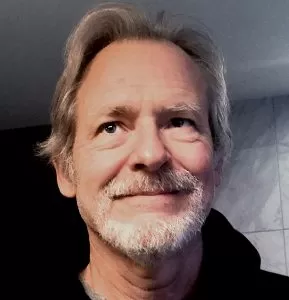 A photo of Flavian Mark Lupinetti, a cardiac surgeon and poet.
Flavian Mark Lupinetti’s contribution to the literary world, stemming from his extraordinary professional life, offers a powerful illustration of how lived experience informs poetic voice. His ability to transform the technical and emotionally demanding world of surgery into compelling verse is a testament to the power of art to process and communicate profound human experiences. It invites us to listen closely to how poets, drawing from their own unique encounters with the world, choose to pronounce the truths they carry, making the invisible seen and the unspeakable heard. This unique perspective on life and death sets his work apart, adding a distinct voice to the chorus of contemporary poets. Analyzing works across different styles and themes, from the grounded observations in robert frost best poems to Lupinetti’s medical insights, reveals the vast landscape of poets pronunciation and its capacity to illuminate the many facets of existence.