
Día de los Muertos, the Day of the Dead, is a vibrant celebration where families remember and honor their deceased loved ones. Far from a somber occasion, it is a joyful, colorful expression of love and remembrance, weaving together traditions that span generations. At the heart of this celebration lies a profound connection to memory, ancestry, and the enduring bonds that transcend death. Poetry, with its power to capture complex emotions and evoke vivid imagery, serves as a natural and powerful medium for exploring the themes inherent in Día de los Muertos. It offers a space to reflect on loss, celebrate life, and acknowledge the presence of those who have passed on.
Contents
Recently, the spirit of Día de los Muertos infused Santa Barbara during a community celebration that included a poetry reading by the city’s Poet Laureate, Melinda Palacio. Such events highlight how contemporary poets engage with traditional cultural themes, bringing them to life for modern audiences. The reading showcased poems that resonated deeply with the occasion, demonstrating poetry’s role in keeping memories vibrant and voices alive.
Melinda Palacio’s reading drew from various collections, including How Fire Is a Story, Waiting and Bird Forgiveness. These works often touch upon personal histories, grief, and the indelible mark left by loved ones. Poetry centered around themes like the care of a dying grandmother speaks directly to the core of Día de los Muertos – the act of remembering and honoring those who have journeyed on. The act of reading these poems aloud, often accompanied by music, transforms the written word into a communal experience, much like the shared activities surrounding an ofrenda (altar) or a calenda (procession).
 Santa Barbara Poet Laureate Melinda Palacio at a Dia de los Muertos event at the Santa Barbara Museum of Art, standing near an altar.
A particularly powerful segment of the reading focused on the myth of La Llorona, “The Weeping Woman.” This figure from Latin American folklore, often associated with loss and tragedy, was reimagined by Palacio. In her “La Llorona” set, Palacio presented poems that connected the folkloric figure to contemporary issues, specifically the plight of children at the border. This approach exemplifies how dia de los muertos poetry can bridge the gap between ancient myths and modern realities, using traditional narratives to comment on current human experiences of sorrow, separation, and the desperate need for protection.
The poems shared reimagined La Llorona not just as a figure of lament but as a potential agent of redemption and aid. This transformation aligns with the spirit of Día de los Muertos, which views death not as an end but as a transition, and encourages a continued relationship with the departed. By positioning La Llorona as a protector of vulnerable children, the poetry injects hope and a sense of purpose into a figure traditionally associated with despair.
Here are two poems shared during the reading that delve into this thematic space:
Last Words to La Llorona
by Melinda Palacio
The poet’s coffin is made of books.
She said, bury me with my books,
Send me down the Rio Grande.
Even La Llorona needs to read.
Llorona, I dedicate this poem to you.
Read these pages before my coffin sinks into mud.
If the ink should bleed onto pebbles at the bottom
of the river, do not worry.
I have memorized them all. I will sing to you.
But please, cover me, for I grow colder.
I know where you went wrong, Llorona.
You are here and this is my last flor y canto.
On the river we will float on a song.
My last dying wish: Protect the Children at the Border.
Children have left their homes with nothing
But a name and a flower embroidered on their sleeves.
Llorona, redeem yourself, redeem them, redeem me.
Aye de mi Llorona, ayudales. Save the children.
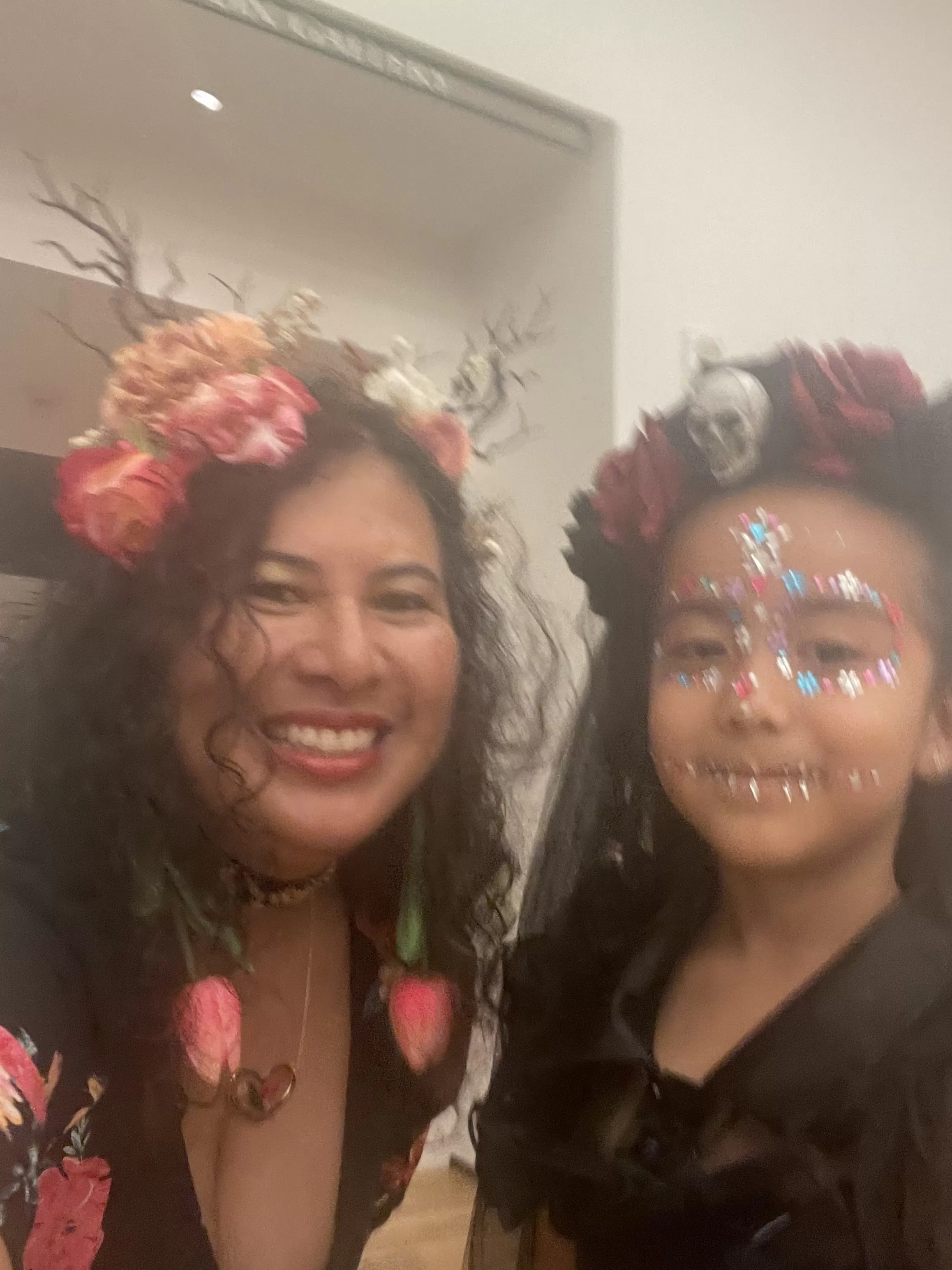
 Attendees gathered at a Dia de los Muertos celebration, many with painted faces, listening to poetry.
This poem directly addresses La Llorona, linking the poet’s own journey towards death with the legendary figure’s eternal wandering. It introduces the powerful plea for La Llorona to protect migrant children, reframing her sorrow into a call for redemptive action. The reference to “flor y canto” (flower and song) invokes pre-Hispanic poetic traditions, beautifully connecting the ancient roots of Mexican culture (from which Dia de los Muertos stems) with contemporary themes.
La Respuesta / La Llorona’s Response
by Melinda Palacio
I have come to take your hand, child.
Don’t think you’re in a stranger’s land.
Don’t you know I’ve always been here
You belong here too.
First, they came for the children
Then they came for the land
Built a wall so high, crushed butterflies
To a fine pulp, their royal wings discarded.
When I met the Devil,
his cloven hooves wanted to dance.
I knew better. I will not lose again.
My children died in this river.
I will escort you out of this hell.
What they say is a lie.
He alone has jailed the children.
All at the border.
 Details from a Dia de los Muertos altar display, featuring marigolds and traditional decorations.
“La Respuesta” offers La Llorona’s voice, responding to the call for help. She acknowledges her history of loss but declares her refusal to “lose again,” asserting her presence and connection to the land and the children who arrive there. The imagery of crushed butterflies is particularly poignant, symbolizing the fragile lives affected by borders. Through these lines, the poem transforms La Llorona into a powerful, protective figure, her tragic past fueling a fierce resolve to guard the innocent. This reimagining aligns with the Día de los Muertos belief that the spirits of the departed can still influence and protect the living.
 Poet Laureate Melinda Palacio reading poetry at a Dia de los Muertos event, dressed in festive attire.
The reading of these poems within the context of a Día de los Muertos celebration underscores the profound role poetry plays in cultural commemoration. It provides a space for reflection on the past, engagement with the present, and hope for the future. Dia de los Muertos poetry, whether it directly addresses deceased relatives, reinterprets folklore, or comments on social issues through a lens of loss and remembrance, enriches our understanding of this vital tradition and its connection to the human experience of love, grief, and enduring connection. The vibrant atmosphere of the event, with its altars, music, and costumed participants, provided a powerful backdrop, demonstrating how poetry is not confined to the page but is a living art form, deeply woven into the fabric of cultural life and community celebration.
[internal_links]
In conclusion, the exploration of Día de los Muertos through poetry offers a moving perspective on memory, loss, and cultural identity. Melinda Palacio’s reading exemplified how poets can utilize traditional narratives and personal experiences to create works that resonate with the core themes of this significant celebration. Dia de los muertos poetry serves as a bridge between worlds – the living and the departed, the past and the present, myth and reality – ensuring that the stories and spirits of those we remember continue to bloom through language and emotion.