
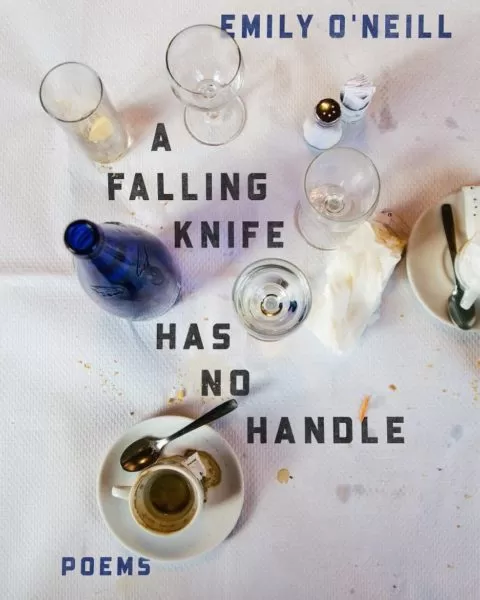
Poetry has long been a vessel for exploring the depths of human experience, capturing fleeting emotions, vivid memories, and the complexities of life. While themes like love, nature, and loss are perennial favorites, some poets delve into less conventional territories, revealing profound connections in unexpected places. Emily O’Neill, particularly in her collection A Falling Knife Has No Handle, masterfully employs the language and landscape of food and drink to illuminate broader aspects of the human condition, offering a unique perspective on “drink poetry” and beyond. Her work invites us to consider how the simple act of consuming, preparing, or serving food and drink can become a powerful lens through which to examine relationships, memory, class, and self-worth.
Contents
- The Restaurant and Bar as Poetic Space
- The Sensory Language of Drink, Food, and Memory
- Writing “Drink Poetry”: Process and Association
- Culinary References as Cultural Touchstones
- Drink, Food, and Disordered Relationships
- Indulgence, Deserve, and Relationship Dynamics
- Case Study: Analyzing “You Drink with Your Eyes First”
- Thematic Evolution Across O’Neill’s Work
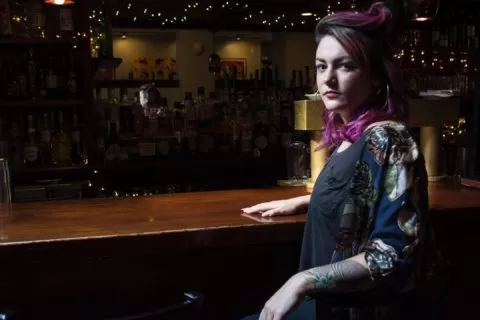
O’Neill’s unique vantage point stems from her extensive background working in restaurants and bars. As she notes in an interview discussing the book, this industry provides a specific “vocabulary” and an “interesting lens into other people’s lives.” Restaurants and bars are stages for significant life events – celebrations, dates, quiet moments of solace. Witnessing these moments from the perspective of a server or bartender offers an intimate, albeit sometimes detached, view of human interaction and emotion. This environment becomes a rich source of inspiration, where the daily tasks of the job intersect with the raw experiences of patrons and colleagues.
The Restaurant and Bar as Poetic Space
The service industry setting isn’t just a backdrop; it’s an active participant in the poems. O’Neill describes taking on “a lot of emotional content on a daily basis at work,” which influenced “how poems moved.” The collaborative nature of the environment means the poet’s observations are shaped by the space itself – the clatter of dishes, the conversations overheard, the rhythm of service.
The classic image of the bartender as an impromptu therapist is deeply rooted in the reality of these spaces. People seek companionship, a shared space where conversation is almost expected. O’Neill acknowledges playing this role, recognizing that patrons come for various reasons, sometimes simply because a “Bud Light costs $3.75” and a therapist doesn’t. This underscores the complex social and emotional dynamics embedded within seemingly simple transactions involving drink. It highlights how bars, places centered around the consumption of beverages, become unexpected sites of vulnerability and connection.
The Sensory Language of Drink, Food, and Memory
One of the most compelling aspects of using food and drink in poetry is their powerful connection to memory and emotion. Flavor and aroma can trigger vivid recollections, transporting us across time and distance. For O’Neill, whose childhood food experiences were rooted in comfort cooking by her grandmother, the vocabulary of smells and sensations is deeply tied to emotional nourishment.
Her experience watching others in fine dining settings while being intimately familiar with the “nuts and bolts” of service created a dual perspective. She could see the “mechanisms that brought those things to the table” even when she was the diner. This layered experience—of seeing the service side, the dining side, and the memory/emotional side—informs her writing. The sights, smells, and tactile experiences of food are intensely emotional for her, directly linking the physical act of eating or drinking to psychological states and personal history.
Consider the line she quotes: “I bake potatoes twice & they taste / like your mother is still / alive & full of salt.” This powerfully illustrates how a specific flavor or dish can embody the presence and essence of a person, transforming a simple culinary act into an elegy or a moment of vivid remembrance. It reveals how deep the roots of food and drink can go, intertwining with our most significant relationships and past. The concept that “the history people have with a food is always so layered” resonates deeply; each sip or bite can carry the weight of countless past experiences. Just as we explore our connections through language, we can explore the layers of our past through the food and drink we encounter. This depth of connection can be as profound as expressing feelings in love poems for her heart, where shared meals and drinks often mark significant moments in a relationship.
Writing “Drink Poetry”: Process and Association
How does a poet translate these sensory and emotional layers into verse? O’Neill’s writing process involved making extensive lists – documenting details of meals, conversations, settings, and her internal responses. This practice allowed her to ground her observations in reality while simultaneously engaging in “free association” with the elements on the list. By connecting specific culinary details (a particular wine, the components of a dish, the ambiance of a room) to broader associations, she could move from the concrete to the lyrical, creating poems that are both grounded and emotionally resonant.
This analytical approach also transformed her relationship with food itself. What began as simply documenting magical dining experiences evolved into an understanding of why they felt magical, or conversely, why they felt manipulative. The poems became a tool for deeper engagement with the act of eating out, helping her understand the emotional and artistic layers involved beyond just the taste or cost.
Culinary References as Cultural Touchstones
O’Neill strategically uses specific food and drink references as a form of cultural shorthand. Mentioning items like Banana Runts, Rene Redzepi (the chef at Noma), craft beers, French 75s, or Tank 7s grounds the poems in a specific time and place, much like pop culture references. These aren’t just random details; they function as cultural markers that can resonate with or challenge the reader’s own experiences and palate.
Using brand names or specific items like craft beers in poetry is relatively uncommon, but it serves a deliberate purpose. It’s a way to guide the reader, signaling “This is what she likes, or what she finds interesting.” It acknowledges that taste is subjective and rooted in personal experience. This approach also subtly addresses the “putting on of airs” sometimes found in both culinary criticism and poetry – the pressure to name-drop only the most impressive or obscure items. O’Neill challenges this pretension, as captured in the line from “It Belongs in a Museum” about people “parading their taste violently.”
This act of including “lower-brow” foods or specific, identifiable drinks is a deliberate choice with political undertones. It pushes back against the idea that certain subjects or vocabularies are inherently more “poetic” or worthy of artistic exploration than others. Just as she encountered judgment for having tattoos or unconventional hair in fine dining spaces, or for being a successful poet without an MFA, her inclusion of accessible culinary references asserts that the beauty and meaning can be found anywhere, and anyone who appreciates the art (whether dining or poetry) has a right to participate and understand. This mirrors the idea that authentic expressions of emotion, like in poems about love life, don’t need to adhere to strict academic forms to be valid or moving.

Drink, Food, and Disordered Relationships
The connection between food, drink, and emotion takes on a more complex dimension when O’Neill discusses her personal history, including a disordered relationship with eating stemming from her years as a ballerina and growing up in an “emotionally fraught environment.” Food became a means of control in a life where other aspects felt uncontrollable. This personal history deeply intertwines the act of eating and drinking with emotional states and mental well-being.
She connects specific “crisis meals” – the foods sought out during moments of devastation, sadness, or depression – to this history. Craving certain snacks from a period of being broke and devastated isn’t just about physical hunger; it’s the brain returning to a moment where that food was present during intense emotional experience. Macaroni and cheese or ramen noodles, often considered “lower-brow” foods, can become intensely resonant because they were the meals of crisis or necessity. This highlights that the things that hold emotional weight are not always the impressive or conventionally beautiful ones. They are the ones tied to our personal history, our comfort, or our struggle. Exploring these complex ties in verse adds a layer of raw honesty to her “drink poetry,” acknowledging the sometimes unhealthy ways we interact with consumption and emotion. When writing [romance love poems for her](https://latrespace.com/romance-love-poems-for her/), poets often explore the positive aspects of connection, but O’Neill shows that poetry can also honestly depict the challenging aspects of our inner lives, including those linked to food and drink.
Indulgence, Deserve, and Relationship Dynamics
The themes of food and drink are further intertwined with relationship dynamics through the concepts of indulgence and what one feels they “deserve.” O’Neill draws a parallel between eating “shit food” when feeling bad (which reinforces the negative feeling) and staying in unhealthy relationships because one doesn’t believe they “deserved anything better or more nourishing.”
The poem “Kitchen Note: Severe Seafood Allergy, Seat 2” serves as a powerful metaphor for relationship risks. The partner’s severe allergy becomes a physical manifestation of potential harm in a relationship, leading to lines like “worry that / you can’t touch me without hives / & your throat swelling closed.” This isn’t just about food; it’s about the fear that connection itself might be inherently harmful or incompatible. The choice to eat an oyster out of spite early in the relationship is an act of indulgence tied to negative emotion, mirroring how we sometimes engage in self-sabotaging behaviors in relationships because we are operating from a place of feeling undeserving.
Radical changes in diet for self-care are equated with making similar changes in relationship patterns – moving from accepting “really bad behavior” to being with someone who genuinely cares for your happiness. This transition can be alarming, as navigating a healthy, non-toxic relationship requires a different kind of emotional engagement, much like learning to cook and eat nourishing food requires a different relationship with consumption than relying on crisis snacks. The “drink poetry” here expands to encompass the difficult but necessary work of self-care and seeking healthier connections, whether that involves what you eat or who you love. It speaks to the personal journey of recognizing one’s worth in both sustenance and connection, themes often explored in personal expressions like my love for her poems. The courage to pursue what you deserve in love and life mirrors the journey O’Neill describes in changing her relationship with food.
Case Study: Analyzing “You Drink with Your Eyes First”
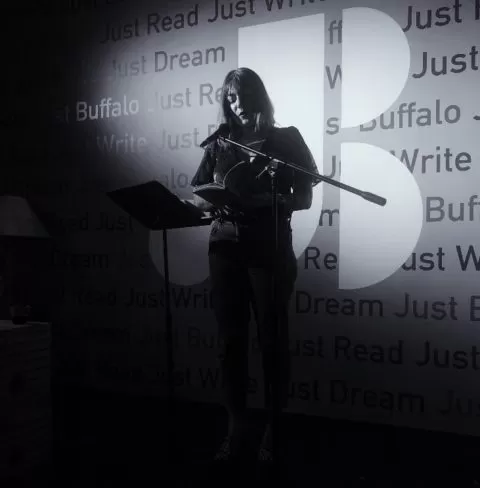
O’Neill points to the poem “You Drink with Your Eyes First” as an example where the focus shifts away from food and even the taste/smell of drinks towards their visual aspect and the surrounding environment. The title itself, a concept from cocktail culture about presentation, becomes a metaphor for how we size up people (“Are they going to act like what they look like?”).
The poem is set in a “super divey” bar in Harvard Square during a period when O’Neill was leaving a bad relationship and working a difficult, drug-fueled summer job. It recounts the atmosphere, the people, and the specific drinks consumed (Tank 7s, French 75s) while reflecting on the possibility that her current, stable partner might have been present in that very space years before they met.
Here is the poem:
YOU DRINK WITH YOUR EYES FIRST
when the color makes
your molars ache or the roses
come too late & are left
behind for the cleaning crew when
you would have Tank 7s at my bar
the summer I wore the same boots
no matter the heat / black leather
stacked heel & Levi’s cut-offs
rude as every photo I haven’t sent yet
I was leaving him & free to swan
dive or better still belly flop into French 75s
mid afternoon & Kentucky Trevor promised
me a bicycle & that he’d be back to see
whose horse finished first
& I can’t stand not knowing
if I knocked into your elbow
with an empty tray / or why I got engaged
a 2nd time just after I got laid off
but before you were a regular
at the bar where the syrups poured
like almost-amber & I wasn’t good at pretending
I didn’t want to go home with you again
which is why we’d stand just beyond the door
talking & I’d smoke before 3 which I never do
because you made me nervous & you knew
about it didn’t you? couldn’t you always
read the heat passing through me in waves?
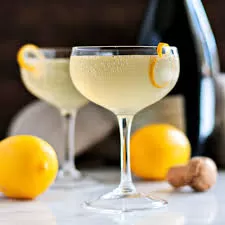
The drinks mentioned – Tank 7s (a specific craft beer) and French 75s (a champagne cocktail) – are visually distinct. The syrups in the coffee shop (“poured / like almost-amber”) are described by their color and texture, not their taste. This visual emphasis aligns with the title’s premise. The lack of focus on food or even the sensory experience of drinking reflects the emotional state and circumstances of that summer – a “fugue state” where basic needs like eating or doing laundry were neglected amidst unhappiness and instability. The poem uses the bar setting and drinks not for their flavor, but as markers of a specific, chaotic time and place where a meaningful future connection was unknowingly present.
The poem beautifully illustrates how timing is crucial. Meeting her current partner during that unstable period would have resulted in a vastly different outcome. The “drink poetry” here captures the atmosphere of a dive bar and the self-destructive behaviors associated with that time (heavy drinking, wearing the same clothes, living chaotically) while contrasting it with the potential for a stable future, represented by the partner she would meet later. The mystery of whether their paths crossed (“if I knocked into your elbow / with an empty tray”) adds a layer of poignant reflection on how significant connections can be missed in the chaos of life, even in a seemingly small world like the Boston industry scene. It reflects on how we perceive others (drinking with our eyes) and how readiness, not just proximity, determines when meaningful relationships can begin. This exploration of missed connections and the timing of relationships can resonate with readers of famous african american love poems, which often explore the complexities of love, timing, and societal context.
Thematic Evolution Across O’Neill’s Work
O’Neill’s approach to A Falling Knife Has No Handle, where food and drink emerged as central themes, reflects a pattern in her work where concepts often crystallize during the writing process itself. Her previous books have centered around strong, emergent themes – mortality and grief in Pelican, and processing abusive relationships through abstract means (You Can’t Pick Your Genre) before tackling them directly (Polaris).
Similarly, the food and drink theme in Falling Knife arose naturally from the centrality of the restaurant world in her life at the time. Embracing this vocabulary, which she initially felt embarrassed by, became an act of asserting the validity of her own experience and perspective as poetic subject matter. It underscores that potent themes for “drink poetry,” or any form of poetry, can be found in the everyday realities of work, personal history, and the sensory world around us, regardless of conventional notions of what is deemed “literary.”
Emily O’Neill’s exploration of food and drink in A Falling Knife Has No Handle offers a compelling example of how culinary themes can serve as powerful metaphors and lenses in contemporary “drink poetry.” By grounding her work in the visceral, sensory, and social landscape of restaurants and bars, she uncovers profound insights into memory, emotion, relationships, class, and the journey of self-discovery. Her poems demonstrate that the vocabulary of menus, cocktails, and shared meals is rich ground for exploring the messy, beautiful, and often complicated experience of being human. Her work encourages readers to look closer at the everyday acts of consumption and service, recognizing the hidden depths of meaning and connection they hold.