
Holocaust Memorial Day serves as a solemn reminder of the six million Jewish people systematically murdered by the Nazis, alongside millions of others targeted for their disability, ethnicity, sexual orientation, or political beliefs. While statistics and historical accounts provide the crucial factual framework of this horrific period, engaging with holocaust poetry offers a uniquely intimate and personal pathway to understanding the human experience beneath the numbers.
Contents
Poetry, with its inherent capacity for emotional immediacy and concise expression, became a vital medium for individuals facing unimaginable circumstances. Whether written by those trapped within ghettos and camps as events unfolded, or by survivors and later generations grappling with the trauma and legacy, holocaust poetry gives voice to the fears, hopes, losses, and resistance of individuals. Unlike historical prose, which often deals with macro events, poetry distills experience into potent images and resonant phrases, capable of conveying what might otherwise be unsayable.
Many poems from this era were preserved precariously – scribbled on scraps of paper, hidden, buried, or smuggled out. These acts of writing were often defiant gestures of retaining humanity and bearing witness. The poets, writing in various languages from Yiddish and German to French and Hungarian, chose poetry for its direct emotional impact and ability to capture the essence of their reality with stark power. For English speakers today, the work of skilled translators is essential, bridging the linguistic divide to allow these powerful voices to reach a wider audience, striving to retain the original intensity and resonance.
 An abstract image possibly representing loss or memory.
Voices of Witness: Famous and Lesser-Known Poets
Some poets whose lives were irrevocably shaped by the Holocaust have achieved international recognition. Paul Celan, a Romanian-German poet whose parents perished, is one of the most significant. His work, including the searing “Death-Fugue” (1948), captures the nightmarish rhythms and brutal realities of the camps through complex, haunting imagery. His suicide in 1970 underscores the enduring trauma inflicted by the genocide.
Nelly Sachs, a German Jewish poet who narrowly escaped to Sweden, was awarded the Nobel Prize in Literature in 1966. Her poetry, deeply infused with Jewish mysticism and the suffering of her people, explores themes of flight, exile, and the ashes of annihilation, transforming grief into powerful, symbolic language.
Other prominent figures include the Yiddish poet Abraham Sutzkever, Italian writer and Holocaust survivor Primo Levi (known also for his powerful prose memoirs), and the Hungarian poet Miklós Radnóti, who continued writing even while in a forced labour camp, hiding poems in a notebook found with his body after his death.
While these famous poets provide essential perspectives, the broader picture of holocaust poetry is enriched immensely by the voices of lesser-known writers. Their poems often capture the granular details of daily life, the intimate fears, and the desperate hopes of individuals, offering a different kind of resonance.
Selma Meerbaum-Eisinger, a Romanian-German poet, wrote with poignant foresight at just 17 before being transported to a concentration camp where she died a year later. Her poems capture the fearful anticipation of youth facing encroaching darkness. Similarly, the Lithuanian poet Matilda Olkinaitė was murdered at 19. The poetry these young writers left behind offers a heartbreaking glimpse of the potential lost, recreated for us through translation.
Exploring Depth Through Anthologies
For those seeking a comprehensive understanding of holocaust poetry, anthologies are invaluable resources. They gather diverse voices from various languages and experiences, often providing crucial contextual information that enhances comprehension and emotional connection. Earlier anthologies like Holocaust Poetry by Hilda Schiff (1995) and Beyond Lament by Marguerite Striar (1998) remain significant collections.
More recent efforts aim to broaden the scope further. Poetry of the Holocaust (2019), co-edited by Jean Boase-Beier and Marian de Vooght, specifically sought out less well-known poems. Featuring works from 35 translators, the anthology presents poems in both original and translated forms, accompanied by contextual notes. This collection includes voices previously marginalized, such as the anonymous “Song of the Roma,” which mourns the fate of the Roma and Traveller victims, and the work of French writer André Sarcq, whose poem “To the Twice-Murdered Men” vividly depicts the brutal killing of his lover, reflecting the horrific treatment of gay men.
The anthology also includes intensely personal accounts: Polish Resistance member Irena Bobowska, dependent on a wheelchair cruelly taken from her, envisioned the world she lost in “So I Learn Life’s Greatest Art.” German poet Alfred Schmidt-Sas, his hands bound, wrote “Strange Lightness of Life” just before his execution. And in “My God,” French poet Catherine Roux captures the horrifying yet mundane reality of arriving at a camp: “I’ve no hair / I’ve no hanky.”
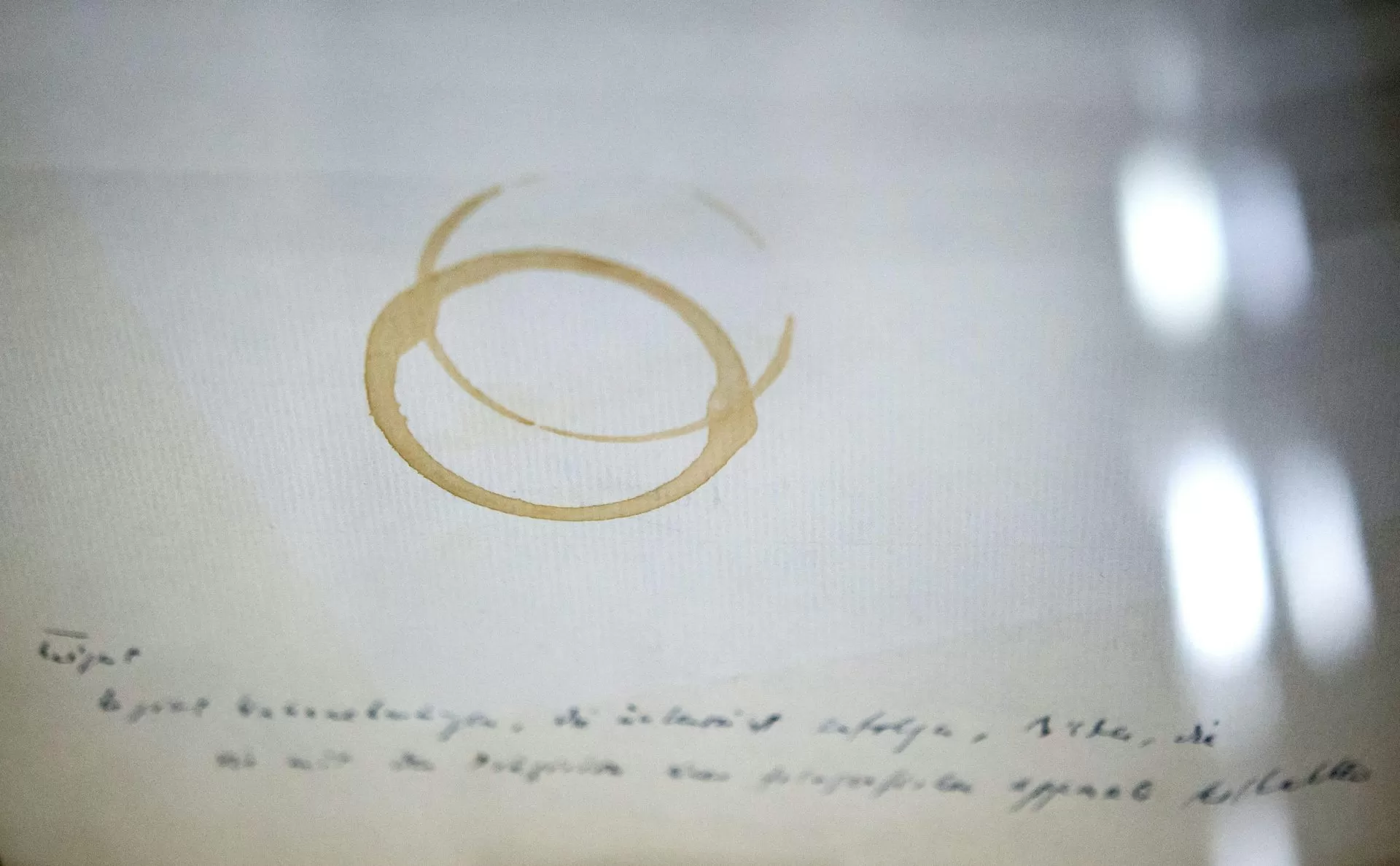 A close-up image of a page with handwritten text and a large red wine stain.
Through these intensely personal verses, much like the deep emotions captured in my love for you poems for my husband, these poets articulated their specific fears, losses, and fleeting moments of reflection or resistance.
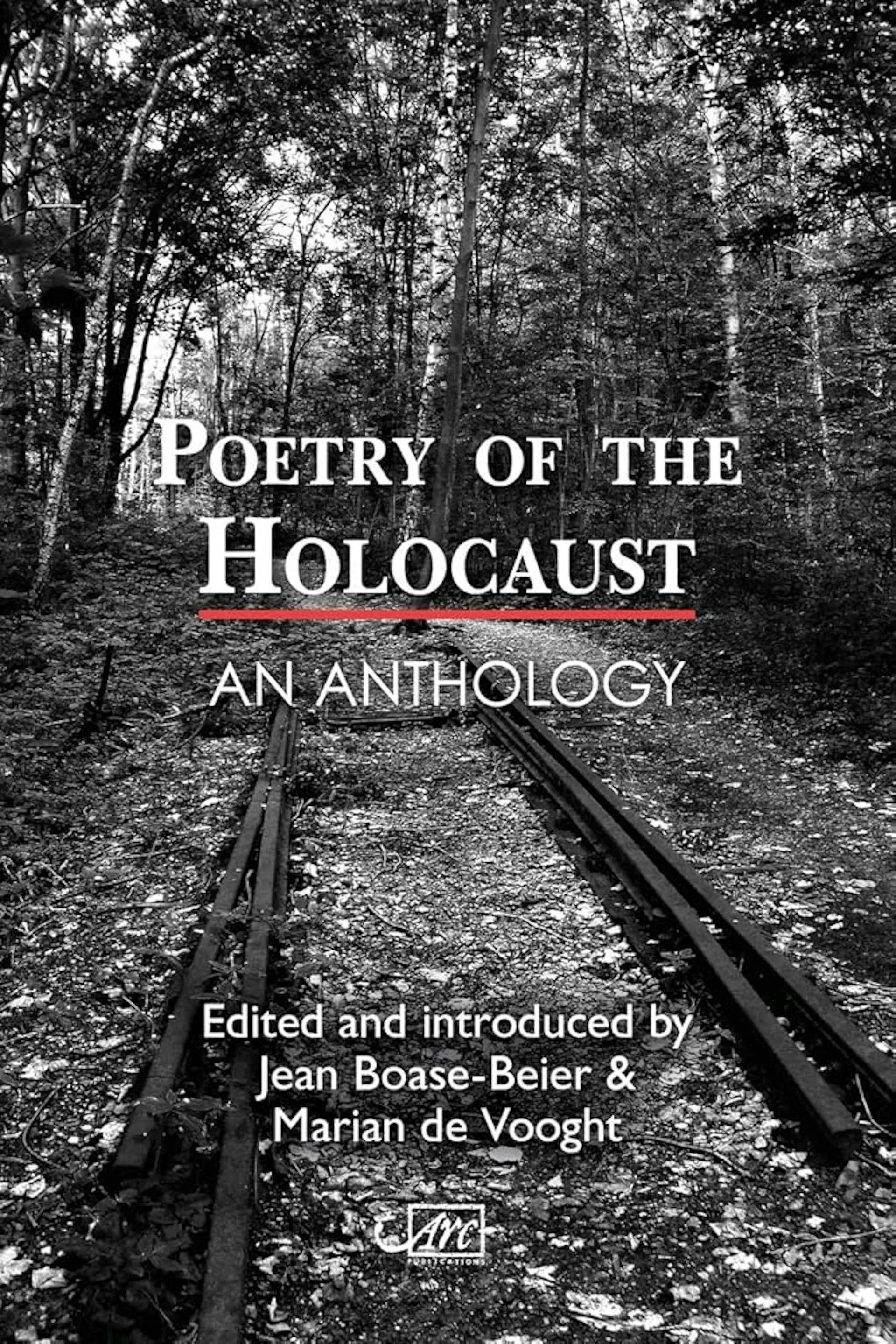 The cover of the book "Poetry of the Holocaust".
Conclusion
Reading holocaust poetry is not merely an academic exercise; it is an act of profound empathy and remembrance. It allows us to move beyond the overwhelming statistics to connect with the individual human beings who suffered and were murdered. Each poem is a testament to the resilience of the human spirit, even in the face of absolute depravity, and a plea for future generations to remember and understand. By engaging with these diverse poetic voices, we honor the victims and gain a deeper, more emotionally resonant understanding of the Holocaust and other genocides throughout history. Poetry ensures that their individual stories, their fears, and their humanity are not lost to time.