
Haiku, a traditional Japanese poetic form, captures fleeting moments and profound emotions with just a few carefully chosen words. Love, a universal human experience, lends itself beautifully to the haiku’s concise structure. This exploration delves into the art of Haiku Poems About Love, showcasing examples and discussing how this compact form can effectively convey the complexities of romance.
Contents
Exploring Love Through Haiku
The 5-7-5 syllable structure of haiku provides a framework for distilling the essence of love. While traditional haiku often focus on nature, contemporary poets frequently explore themes of love, longing, and connection within this structure. The challenge lies in conveying deep emotion within the limited syllable count, relying on imagery and suggestion rather than explicit statements.
Examples of Haiku Poems About Love
Peter Galen Massey’s collection of love haiku offers a compelling example of how this form can be used to narrate a relationship’s journey. From the initial spark of attraction to the complexities of commitment and the enduring power of love, these poems paint a vivid picture of romantic love.
- beguiling motion
thrum and fire of my life
your supple machine
 Alt text: Haiku poem about love featuring the lines "beguiling motion / thrum and fire of my life / your supple machine"
- i am warm honey
i am sweet cream and cherries
lick me like candy
 Alt text: Haiku poem about love, comparing love to sweet treats with the lines "i am warm honey / i am sweet cream and cherries / lick me like candy"
- today we woke up
to a hundred yellow suns
on the blooming tree
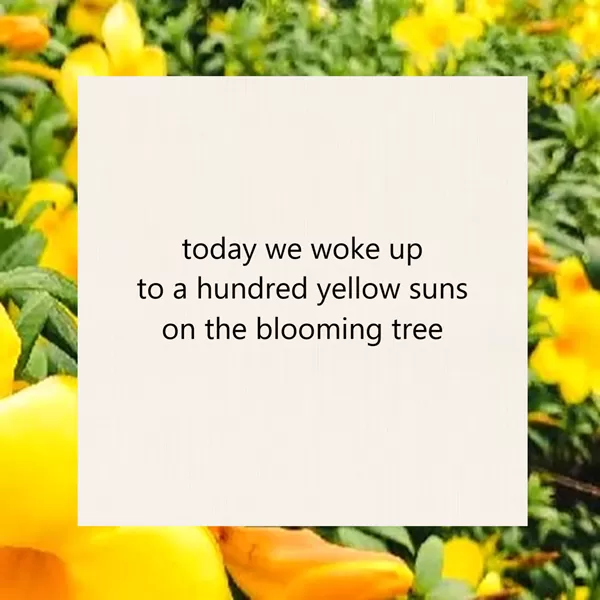 Alt text: Haiku poem about love, using the imagery of a blooming tree with "today we woke up / to a hundred yellow suns / on the blooming tree"
- my heart is dark and
dramatic. my body aches
for you. be impressed
 Alt text: Haiku about love expressing longing and vulnerability: "my heart is dark and / dramatic. my body aches / for you. be impressed"
These haiku, while deviating from traditional form by incorporating two voices and forming a narrative sequence, effectively convey the emotional nuances of love. The use of sensory details, like “warm honey” and “yellow suns,” evokes vivid imagery, while the direct address and vulnerability create a powerful emotional connection with the reader.
Modern Haiku and Love
Massey’s work highlights the evolution of haiku in English. While he adheres to the 5-7-5 syllable count, he embraces a more contemporary approach, prioritizing emotional expression and narrative over strict adherence to traditional rules. This approach opens up new possibilities for exploring complex themes like love within the haiku form.
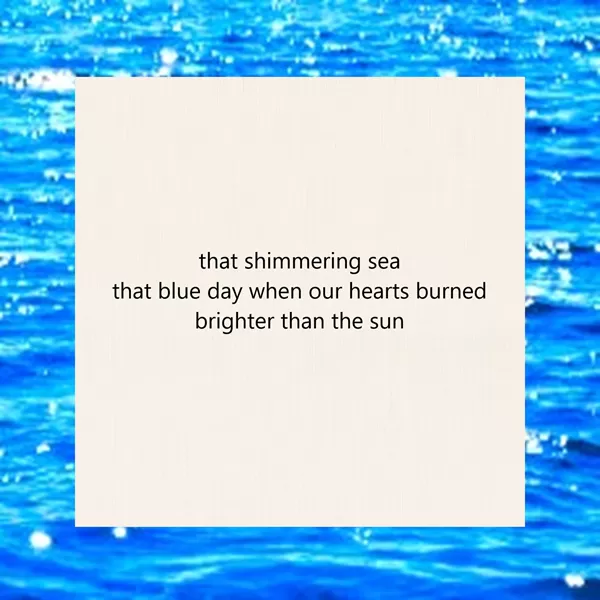 Alt text: Haiku poem about love with the lines: "that shimmering sea / that blue day when our hearts burned / brighter than the sun"
- that shimmering sea
that blue day when our hearts burned
brighter than the sun
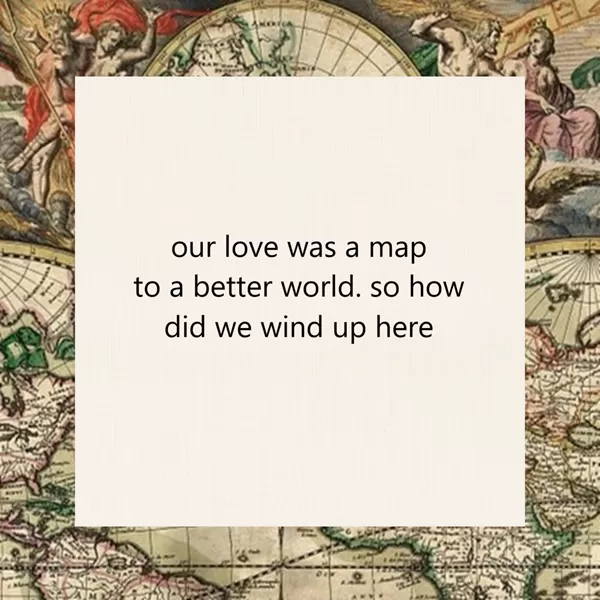 Alt text: Haiku about love reflecting on a past relationship: "our love was a map / to a better world. so how / did we wind up here"
- our love was a map
to a better world. so how
did we wind up here
The Power of Brevity
The beauty of haiku lies in its ability to convey profound meaning with minimal words. In the context of love, this brevity allows for a potent expression of emotion, leaving space for the reader to connect with the poem on a personal level. The haiku invites contemplation and reflection, allowing the reader to fill in the gaps and create their own interpretations of love’s complexities.
Conclusion
Haiku poems about love offer a unique and powerful way to explore the multifaceted nature of this universal human experience. Whether adhering to traditional form or embracing a more contemporary approach, the haiku’s concise structure provides a compelling canvas for capturing the essence of love in all its forms. The examples provided by Peter Galen Massey demonstrate the effectiveness of this compact form in conveying the emotional depth and complexities of romantic love, offering readers a glimpse into the heart’s journey through a handful of carefully crafted syllables.