
The return to fall routines brings a sense of normalcy, yet amidst busy schedules, connecting with our children can feel challenging. A common hurdle? The dreaded cycle of careless questions and monosyllabic answers. “How was school?” “Fine.” “What did you do?” “Nothing.” This article explores how to move beyond these monosyllabic roadblocks and foster richer, more meaningful conversations with our kids.
Contents
Creating Space for Dialogue
Building strong connections requires intentionality, especially regarding time and space. Consider your children’s energy levels and choose moments conducive to open communication. Perhaps it’s during the walk home, at dinner, or while reading bedtime stories. The key is to find what works best for your family.
Beyond the Monosyllabic: Asking Engaging Questions
Generic questions like “How was it?” often elicit limited responses. Instead, try asking questions that spark curiosity and invite deeper sharing. Instead of “Did you do well on the test?”, try “Ask me a question from your test that you think might stump me.” This shifts the focus from evaluation to engagement and shared learning.
From Inquisitor to Partner
Resist the urge to interrogate. Instead of a question-and-answer dynamic, invite your children to teach you something new. Ask them about a favorite comic book, a card trick, or a song they’re learning. This fosters a more organic exchange and shows genuine interest in their world.
The Power of Storytelling
Children love telling stories. Encourage this by asking for narratives. “Tell me a story about something that made you laugh today.” Stories reveal values, emotions, and perspectives in a way that factual questions cannot. They offer a window into your child’s inner world.
Sharing Our Own Stories
Conversations are two-way streets. Share your own experiences, frustrations, and joys. Children learn communication by observing the adults around them. By modeling open and engaging communication, we empower our children to do the same.
Ensuring Everyone is Heard
Structured conversation can be helpful, especially in larger families. A “go-around” allows each person to speak uninterrupted, ensuring that even quieter voices are heard. This creates a safe space for self-expression and fosters mutual respect.
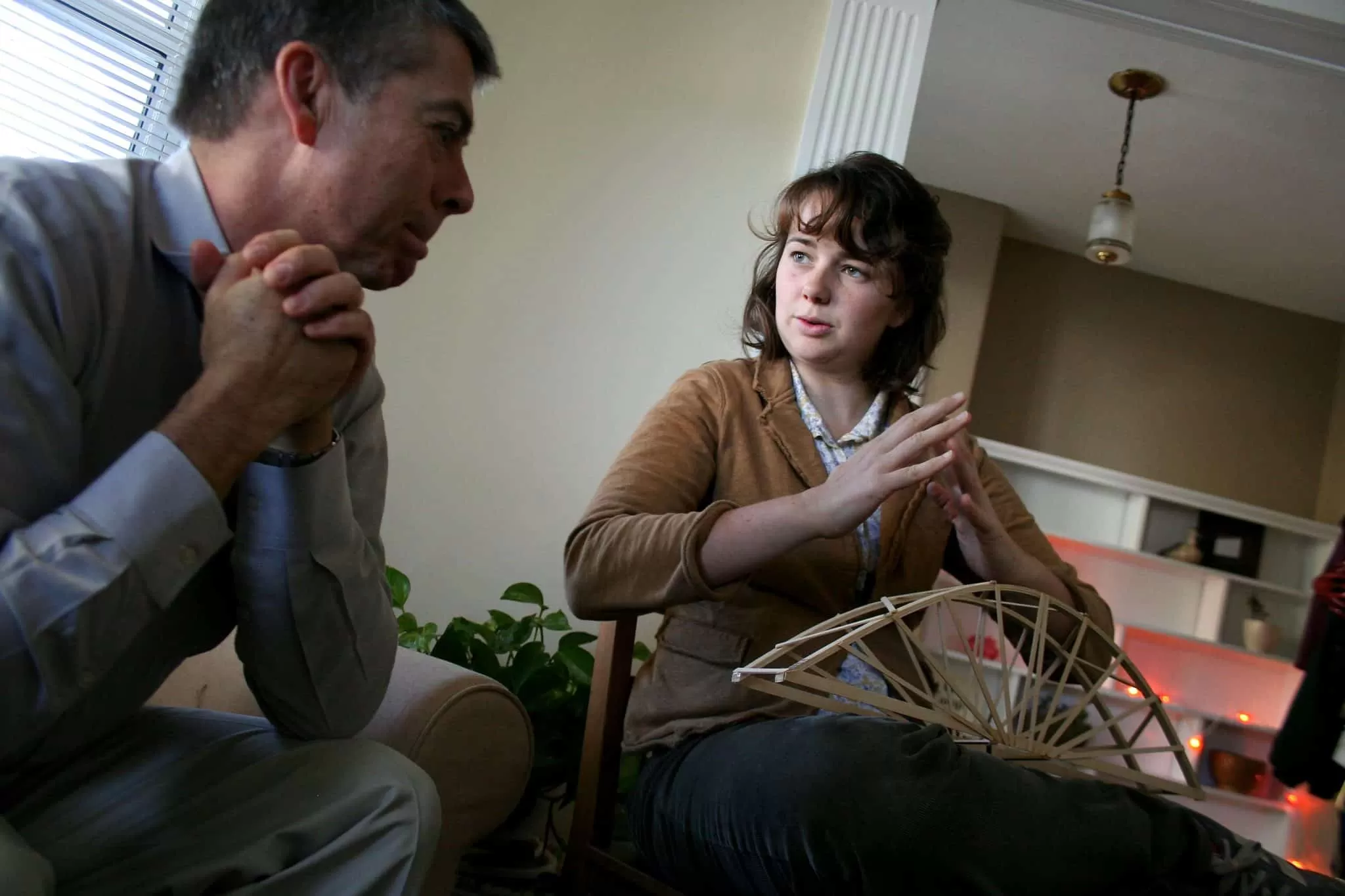 A daughter explains load tensioning and other details about building a bridge with her father.
The Art of Listening
Asking questions is only half the battle. Listen attentively and respond thoughtfully. Children can sense when our interest is feigned. Genuine listening builds trust and encourages open communication.
Embracing Silence
Silence can be a powerful form of connection. Shared activities like walking, stargazing, or reading together can create moments of quiet intimacy. Sometimes, words aren’t necessary for deep connection.
Acknowledging the Full Spectrum of Experience
Don’t shy away from discussing challenges and disappointments. Talking about both highs and lows normalizes difficult emotions and provides opportunities for growth and understanding.
By incorporating these strategies, we can transform monosyllabic exchanges into meaningful conversations that strengthen our bonds with our children. These conversations become opportunities for connection, learning, and shared growth.