
The bow of Odysseus, a pivotal element in Homer’s Odyssey, represents more than just a weapon; it symbolizes strength, cunning, and the hero’s rightful place. This article explores the legendary bow, delving into its literary significance and the physics behind its power, highlighting the concept of “palintonos,” or backward-bent, design.
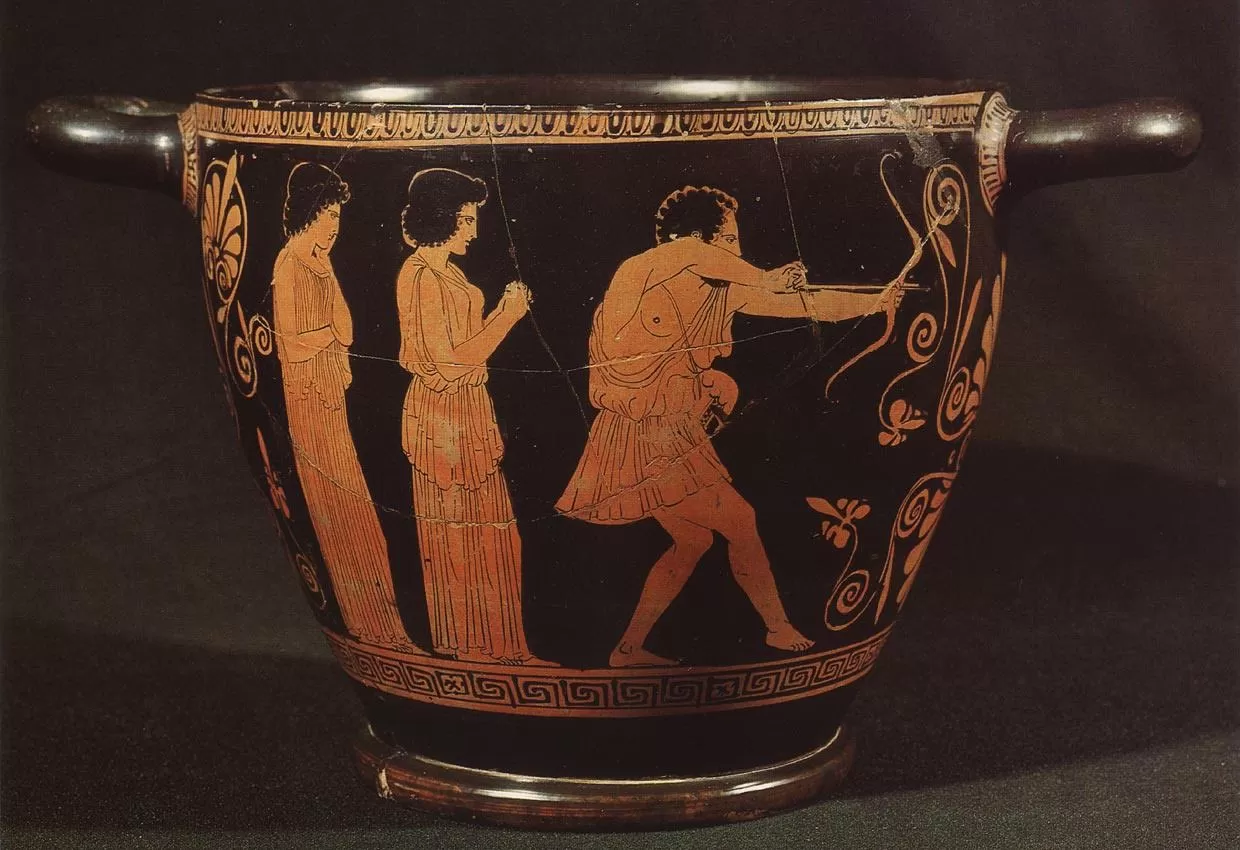 Ceramic with depiction of Odysseus holding bow and arrow in The Odyssey
Penelope, Odysseus’s wife, cleverly uses the bow as a test of strength and identity for her persistent suitors. Only Odysseus possesses the strength to string the bow and shoot an arrow through twelve axe heads, proving his identity and reclaiming his rightful place. This feat of strength is not merely a display of physical prowess but a testament to Odysseus’s cunning and resilience, qualities that define his heroic journey.
The bow’s unique “palintonos” design further enhances its power and significance. A typical bow stores energy when drawn back, releasing it upon the arrow’s release. The “palintonos” bow, however, stores energy even in its unstrung state due to its backward-bent design. This pre-loaded strain energy adds to the force imparted to the arrow, making it a more formidable weapon.
 Sketches of traditional long bow in unstrung, strung and extended conditions
Let’s delve into the physics. A strong man can draw a bowstring back about 60 cm with a maximum force of approximately 350 N. This translates to 210 Joules of potential energy. In a standard bow, the stored energy is equal to the area under the force-displacement curve.
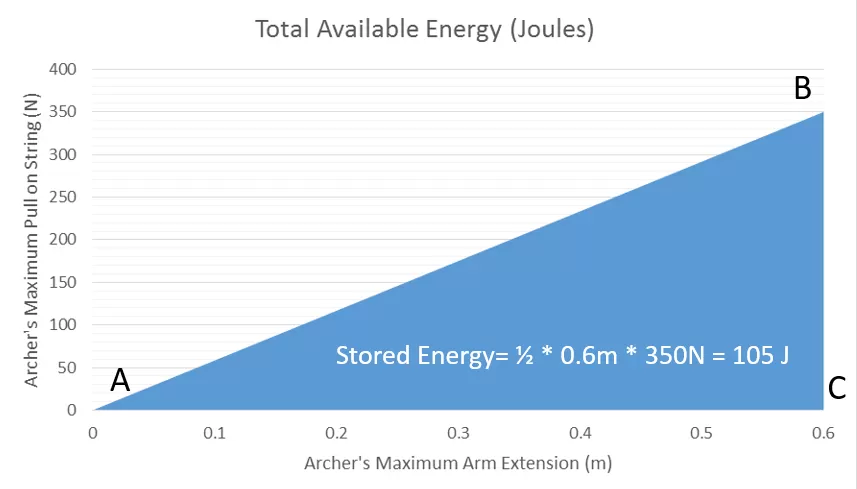 Figure 1: The archer’s maximum pull on the string plotted against the distance of arm extension. The area under the curve is equal to the total stored energy in Joules.
However, Odysseus’s “palintonos” bow differs significantly. The initial backward curve requires substantial energy to straighten, adding to the stored energy when drawn. This results in a significantly higher energy output upon release, estimated at 170 Joules.
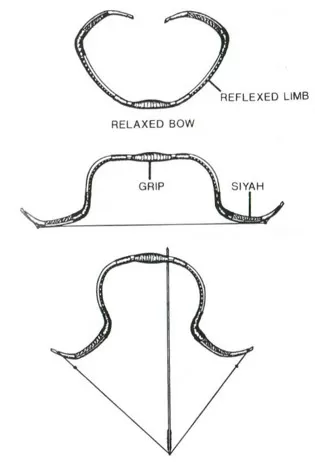 Sketches of palintonos in unstrung, strung and extended conditions
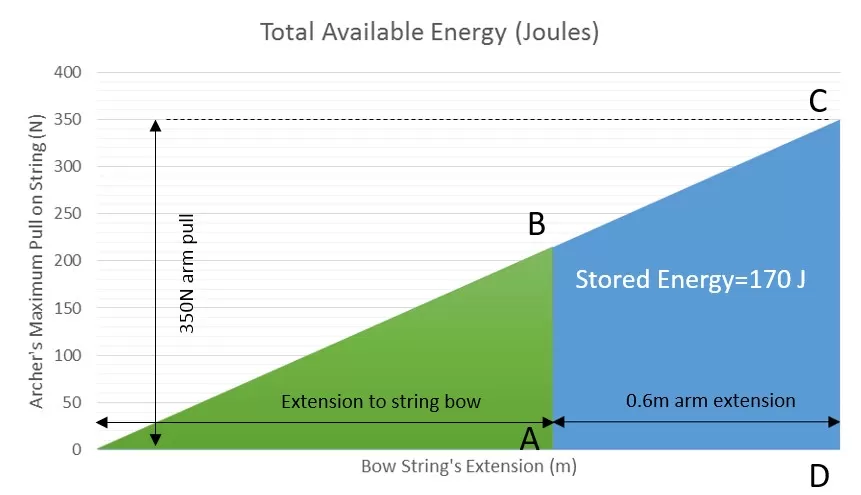 Figure 2: The force on the bow’s string plotted against the distance of extension both in stringing the bow and the archer’s arm extension. Due to the added extension in stringing the bow, the total stored energy is larger.
This ingenious design, incorporating horn for compression and sinew for tension, showcases remarkable engineering for its time.
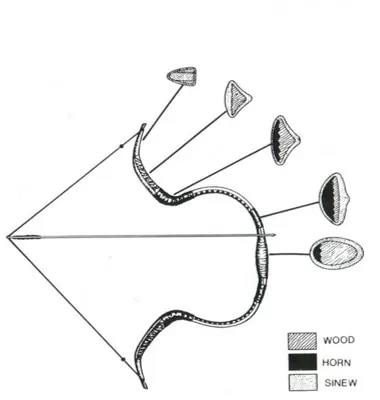 Sketch of composite bow with cross sectional views of materials. The sinew is in tension and horn in compression
The concept of strain energy, so effectively utilized in Odysseus’s bow, continues to inspire modern engineering. Pop-up tents and deployable structures, like Volvo’s solar-powered pavilion, harness this principle to efficiently store and release energy for rapid deployment.
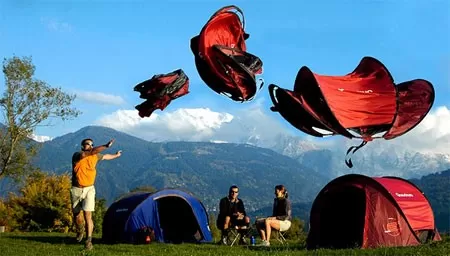 Quecha tent takes form due to strain energy of poles much like a bow
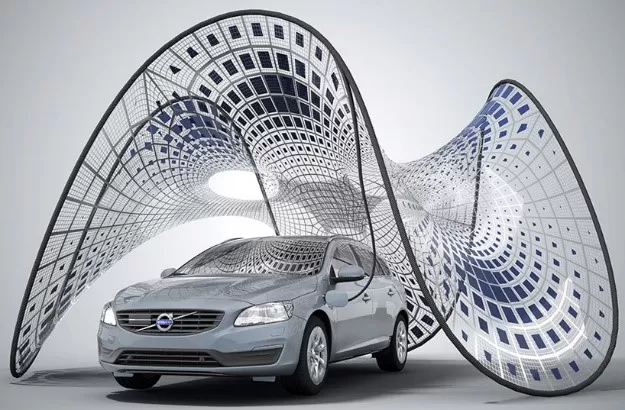 Volvo uses strain energy to create a deployable solar pavilion
The bow of Odysseus serves as a powerful symbol of strength, ingenuity, and the enduring influence of ancient technology on modern design. It reminds us that even in literature, the principles of physics and engineering play a crucial role in shaping narratives and inspiring innovation.
References:
Gordon, J. E. (2009). Structures-Or Why Things Don’t Fall Down, p. 70-75.