
The legendary bow of Odysseus plays a pivotal role in Homer’s Odyssey. More than just a weapon, it symbolizes Odysseus’s strength, cunning, and eventual triumph. This article explores the significance of Odysseus With Bow, delving into the mechanics of the “palintonos” bow and its connection to the hero’s identity.
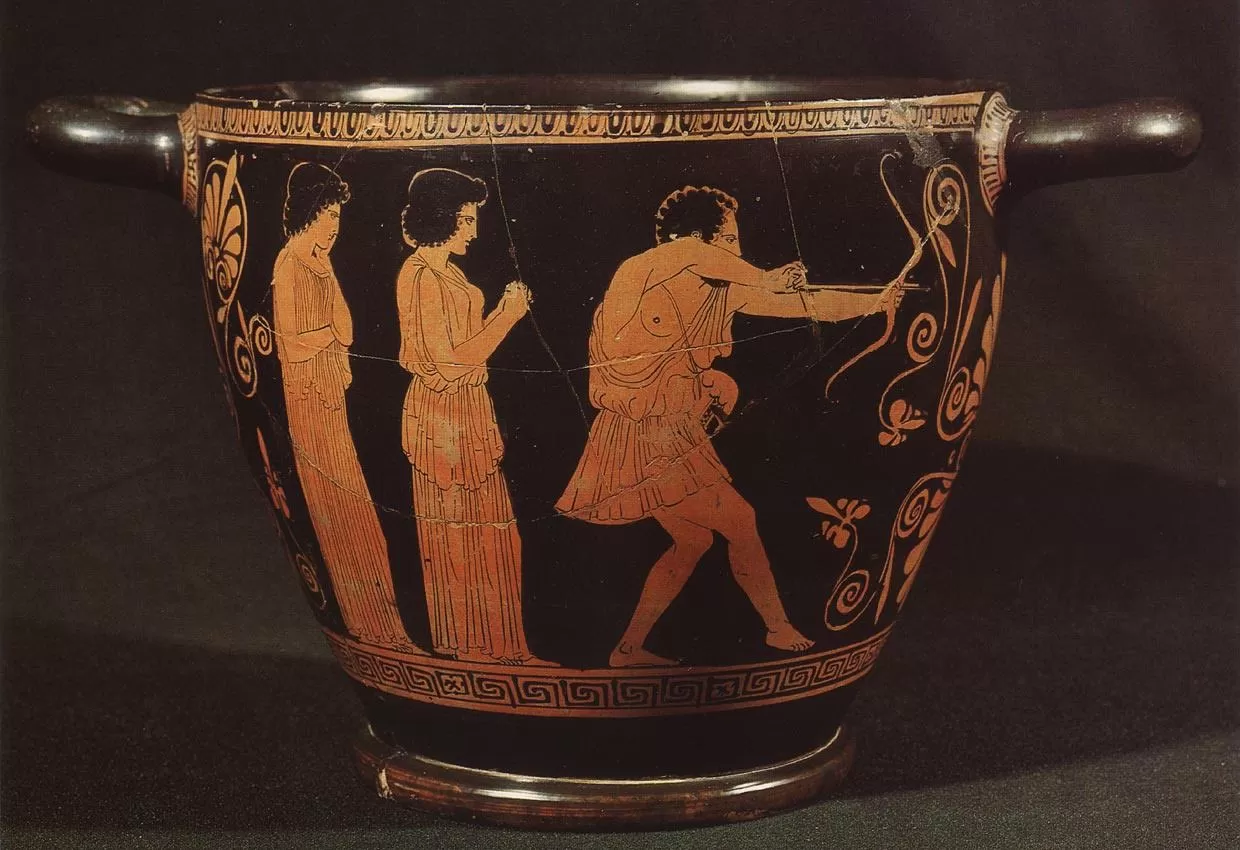 Ceramic with depiction of Odysseus holding bow and arrow in The Odyssey
The story of Penelope’s challenge to her suitors is famous: string Odysseus’s bow or forfeit her hand. This seemingly simple task proved impossible for all but Odysseus himself. Why? The answer lies in the unique design of the bow, described by Homer as “palintonos,” meaning “bent or stretched backwards.”
A typical bow stores energy as it’s drawn back. The archer’s pull creates strain energy, which is then released to propel the arrow. However, the palintonos bow possessed a unique feature: it was already under tension in its unstrung state, bent backward. This “pre-loaded” state significantly increased the energy required to string it and subsequently the force with which it launched an arrow.
 Sketches of traditional long bow in unstrung, strung and extended conditions
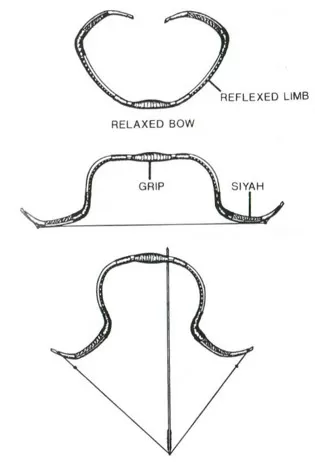 Sketches of palintonos in unstrung, strung and extended conditions
Imagine a regular bow, like the one illustrated above. The archer pulls the string back, storing energy represented by the area under the force-extension curve (Figure 1 below). Now consider Odysseus’s bow. The initial backward bend means that energy is required just to string it, adding to the stored energy when drawn (Figure 2 below). This resulted in a more powerful shot, requiring immense strength and skill to wield effectively.
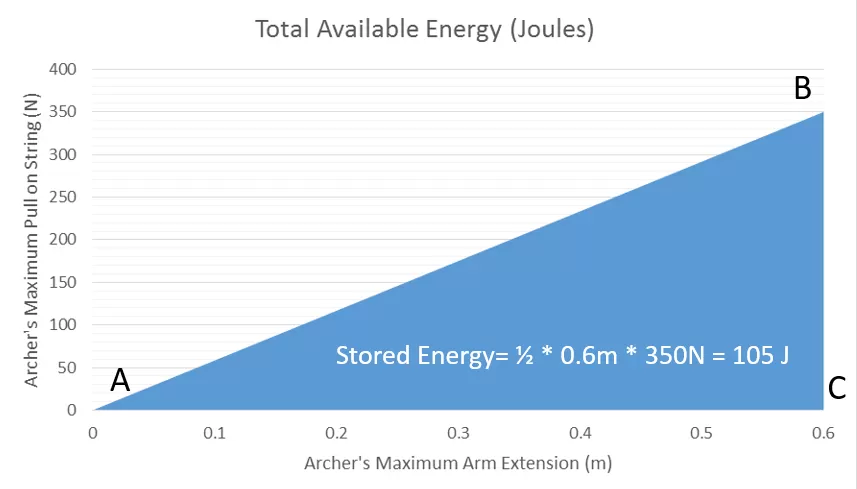 Figure 1: The archer’s maximum pull on the string plotted against the distance of arm extension. The area under the curve is equal to the total stored energy in Joules.
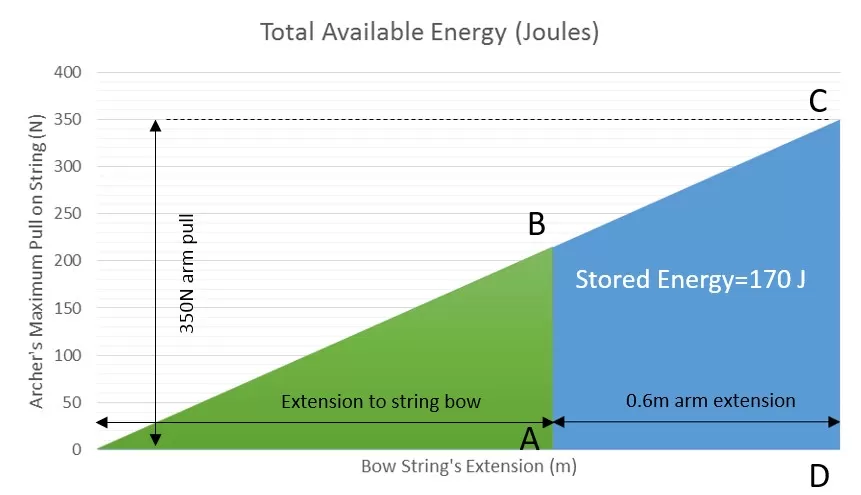 Figure 2: The force on the bow’s string plotted against the distance of extension both in stringing the bow and the archer’s arm extension. Due to the added extension in stringing the bow, the total stored energy is larger.
This “palintonos” design wasn’t just a narrative device. Historical records suggest that composite bows, constructed with layers of horn, wood, and sinew, were capable of achieving this pre-tensioned state. The sinew provided tensile strength, while the horn resisted compression, creating a powerful and resilient weapon.
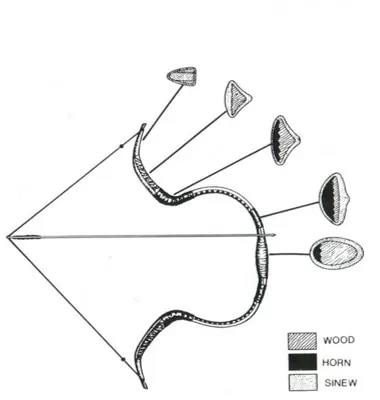 Sketch of composite bow with cross sectional views of materials. The sinew is in tension and horn in compression
The bow of Odysseus, therefore, represents more than just a weapon. It’s a symbol of his strength and skill, a key to his identity, and a testament to the ingenuity of ancient craftsmanship. The difficulty in stringing it highlights Odysseus’s exceptional abilities, separating him from the common suitors and solidifying his heroic status.
The principle of strain energy, so effectively utilized in Odysseus’s bow, finds echoes even in modern engineering. Pop-up tents and deployable structures utilize similar concepts, storing energy in bent or compressed members to achieve rapid and efficient deployment.
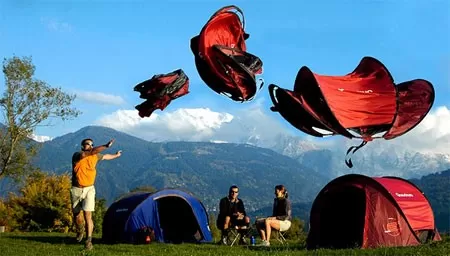 Quecha tent takes form due to strain energy of poles much like a bow
 Volvo uses strain energy to create a deployable solar pavilion
The bow of Odysseus serves as a powerful reminder of the ingenuity of ancient engineering and its lasting impact on how we understand strength, skill, and the power of stored energy.