
The passion flower, with its intricate and symbolic design, has captivated poets and artists for centuries. Its unique structure, rich in religious connotations, lends itself readily to poetic interpretation. The passion flower’s meaning is deeply rooted in Christian symbolism, first recognized by the Mexican Augustinian friar, Emmanuel de Villegas, in the early 17th century. He saw within its form a representation of Christ’s Passion, hence the name “passion flower,” or in Spanish, “La Flor de las Cinco Llagas,” meaning “The Flower With The Five Wounds.”
Contents
 alt text: A close-up of a purple passion flower with visible corona filaments, anthers, and stigmas.
Decoding the Passion Flower’s Symbolism
Each element of the passion flower’s complex structure has been assigned a symbolic meaning relating to the crucifixion of Christ. These symbolic connections transform the flower from a simple botanical wonder into a powerful emblem of faith and sacrifice. This layered meaning makes the passion flower a potent source of inspiration for verse, allowing poets to explore themes of faith, suffering, and redemption through its intricate beauty.
The Crown of Thorns: Corona Filaments
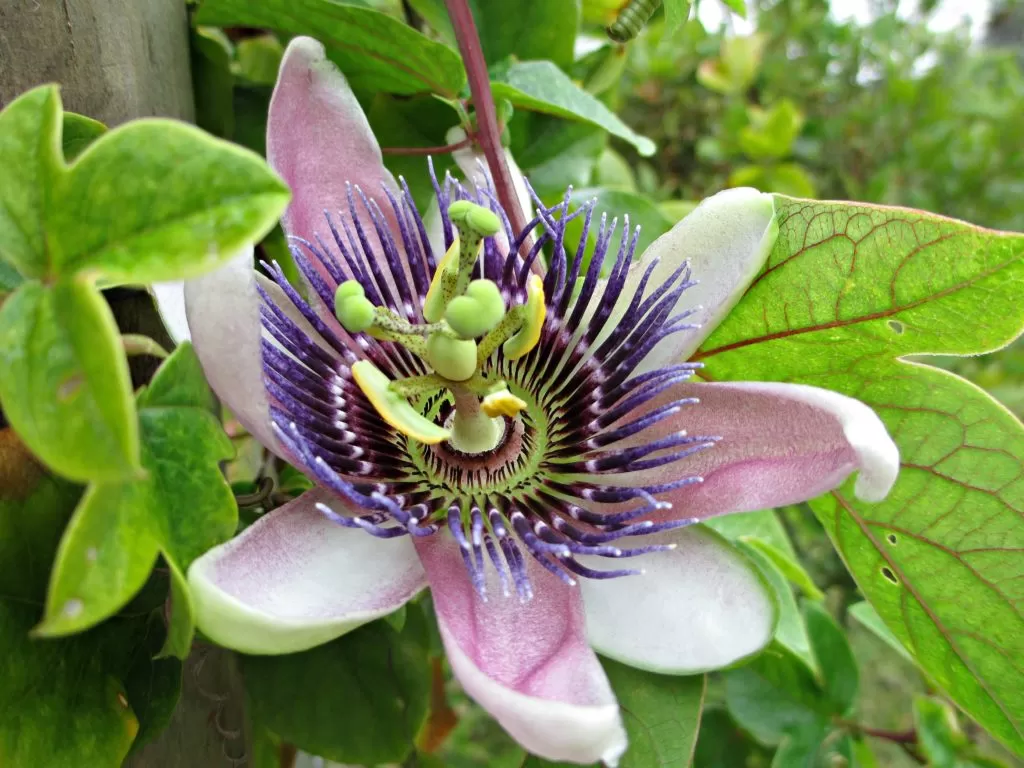
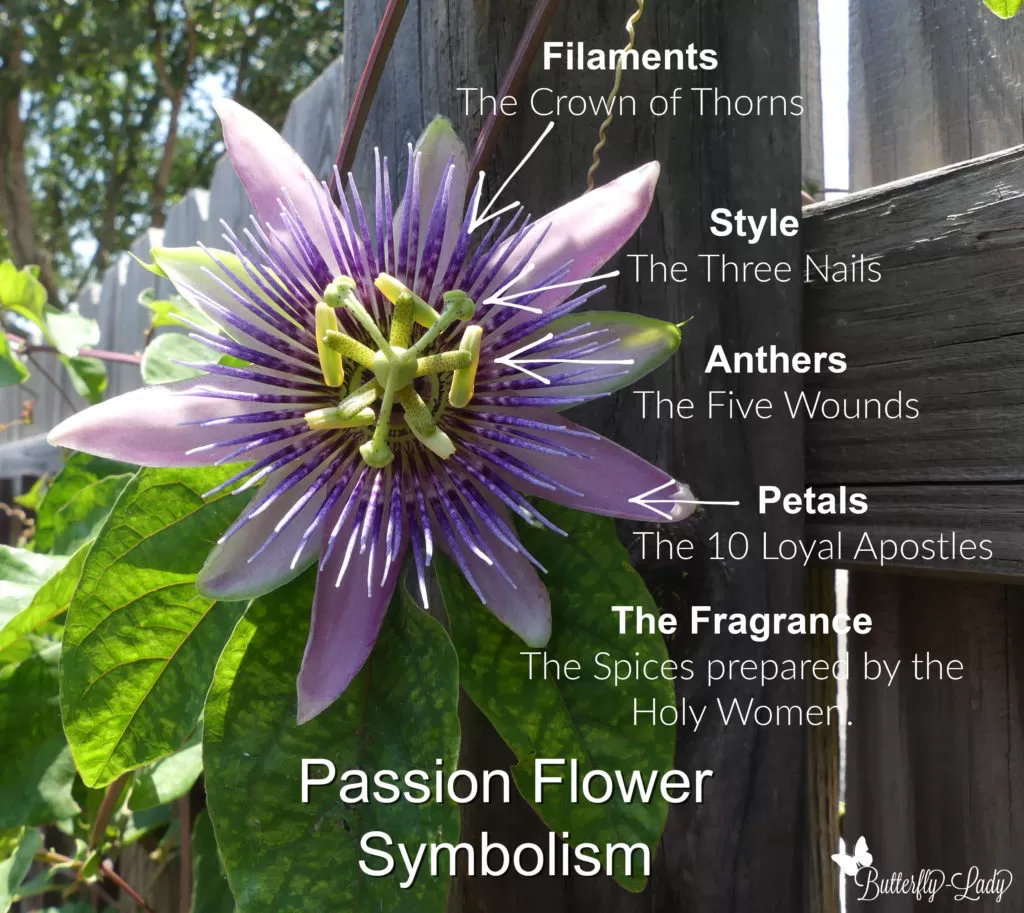
The prominent ring of filaments, known as the corona, immediately draws the eye. These filaments, positioned above the petals and sepals, symbolize the crown of thorns placed upon Jesus’ head. The very word “corona” signifies a crown-like shape, further reinforcing this association.
 alt text: A passion flower vine with several blossoms and buds, highlighting the intricate detail of the flowers.
The Three Nails: Stigma
Above the corona filaments sit three stigmas, the pollen-receiving parts of the flower. These three stigmas represent the three nails used to crucify Jesus. This potent symbolism infuses the delicate structure of the stigma with profound meaning.
The Faithful Apostles: Petals and Sepals
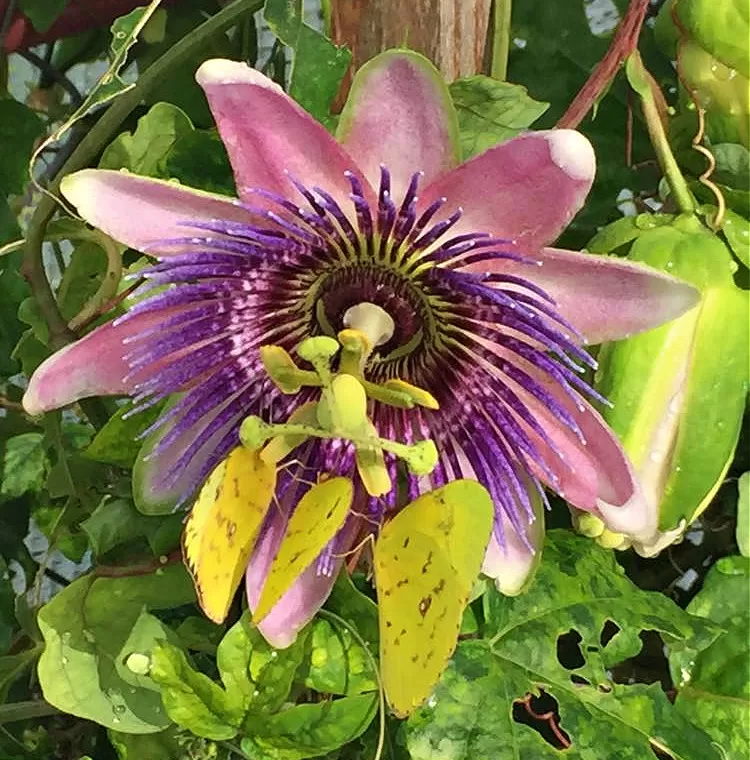
The ten petals and sepals of the passion flower are said to symbolize the ten apostles who remained faithful to Jesus during his Passion. Excluding Judas, who betrayed him, and Peter, who denied him three times, these remaining apostles stood by Jesus in his final hours.
 alt text: A close-up of a pink passion flower with a Cloudless Sulphur butterfly feeding on its nectar.
The Five Wounds: Anthers
Five anthers, the pollen-producing parts of the flower, are found below the stigmas. These anthers represent the five wounds Jesus suffered during the crucifixion: the wounds in his hands, feet, and side.
The World Redeemed: The Fruit
The passion flower’s fruit, often round, symbolizes the world that Jesus saved through his sacrifice. This representation links the passion flower’s life cycle to the Christian narrative of redemption.
 alt text: A Zebra Longwing butterfly perched on a purple passion flower, with its wings partially open.
The Passion Flower in Poetry
The rich symbolism of the passion flower provides poets with a powerful vocabulary to explore themes of faith, suffering, and redemption. From its crown of thorns to its world-representing fruit, every element of the passion flower can be woven into verse, creating a tapestry of meaning that resonates with readers on both an emotional and spiritual level.
 alt text: A close-up of a yellow passion fruit, showcasing its ripe and textured skin.
A Living Symbol
The passion flower stands as a testament to the power of nature to reflect and embody spiritual meaning. Its intricate beauty, paired with its profound symbolism, continues to inspire poetic expression and serves as a tangible reminder of the story of Christ’s Passion.
 alt text: A graphical representation of the Passion Flower's symbolism, highlighting its different parts and their corresponding religious meanings.