
Poetry, often hailed as the “crown of literature,” possesses a unique power to capture the profound complexities of the human experience. While its popularity may fluctuate with trends, the timeless wisdom, emotional depth, and stirring imagery found in great poems remain as relevant today as ever, offering invaluable insights and inspiration. For men navigating the varied landscapes of life – from striving towards goals and facing adversity to understanding love, duty, and self – poetry provides a mirror to the soul and a compass for the spirit.
Contents
- 1. “Ulysses” by Alfred, Lord Tennyson
- The Unyielding Spirit of Exploration
- 2. “If—” by Rudyard Kipling
- A Blueprint for Character and Composure
- 3. “Sailing to Byzantium” by W. B. Yeats
- Seeking Enduring Value in the Face of Aging
- 4. Sonnet 29 by William Shakespeare
- Finding Riches in Love Amidst Despair
- 5. “Invictus” by William Ernest Henley
- The Unconquerable Soul
- 6. “Mending Wall” by Robert Frost
- Boundaries, Community, and Inherited Wisdom
- 7. “Pioneers! O Pioneers!” by Walt Whitman
- The Call to Adventure and Exploration
- 8. “Horatius” by Thomas Babington Macaulay
- Courage, Duty, and Sacrifice
- 9. “On the Stork Tower” by Wang Zhihuan
- Expanding Perspective Through Effort
- 10. “The Builders” by Henry Wadsworth Longfellow
- Crafting a Life with Diligence and Integrity
- 11. “The Negro Speaks of Rivers” by Langston Hughes
- Connecting to Heritage and Enduring Identity
- 12. “The Soldier” by Rupert Brooke
- Idealism, Patriotism, and Sacrifice
- 13. “The Love Song of J. Alfred Prufrock” by T. S. Eliot
- Hesitation, Insecurity, and Missed Opportunities
- 14. “Ozymandias” by Percy Bysshe Shelley
- The Ephemeral Nature of Power and Tyranny
- 15. “A Valediction: Forbidding Mourning” by John Donne
- Love That Transcends Physical Separation
- 16. Poem from The Iron Heel by Jack London
- An Ode to Human Potential and Experience
- 17. “The Charge of the Light Brigade” by Alfred, Lord Tennyson
- Duty, Obedience, and the Valor of the Soldier
- 18. “Opportunity” by John James Ingalls
- Seizing the Moment
- 19. “Character of the Happy Warrior” by William Wordsworth
- Defining Ideal Virtues
- 20. Ode 1.11 by Horace
- Embracing the Present Moment (Carpe Diem)
- Conclusion
Historically, engaging with poetry was considered a mark of a well-rounded man, from ancient kings to founding fathers and literary giants. This tradition reminds us that strength isn’t solely physical or material; it resides also in character, resilience, introspection, and the ability to connect with deep emotions and universal truths. Exploring poetry allows for reflection, fosters empathy, and sharpens our understanding of ourselves and the world around us.
To rediscover this rich heritage and provide a starting point for those seeking verses that resonate with themes often central to men’s lives, we’ve curated a collection of enduring poems. These works, spanning centuries and styles, offer perspectives on ambition, perseverance, honor, love, loss, and the quiet dignity found in building a life of meaning. They invite contemplation and provide memorable lines that can serve as guiding principles or sources of comfort. These are more than just words; they are condensed wisdom and distilled emotion, offering timeless companionship for the journey. If you’re looking to explore the depths of verse, you might also enjoy delving into other forms like short poems that are funny to appreciate the breadth of poetic expression.
1. “Ulysses” by Alfred, Lord Tennyson
The Unyielding Spirit of Exploration
Tennyson’s dramatic monologue finds the legendary hero Odysseus (Ulysses in Latin) in old age, back home in Ithaca after his epic voyages. Yet, instead of finding peace in retirement, Ulysses expresses a deep-seated restlessness and an insatiable hunger for further adventure and knowledge. The famous lines, “I cannot rest from travel: I will drink / Life to the lees,” capture a powerful urge to push boundaries and continue striving, even as physical strength wanes. This poem speaks to the enduring human spirit that refuses complacency, urging us to embrace new challenges and seek new horizons until the very end. It’s a testament to the idea that life is a continuous journey of learning and experience.
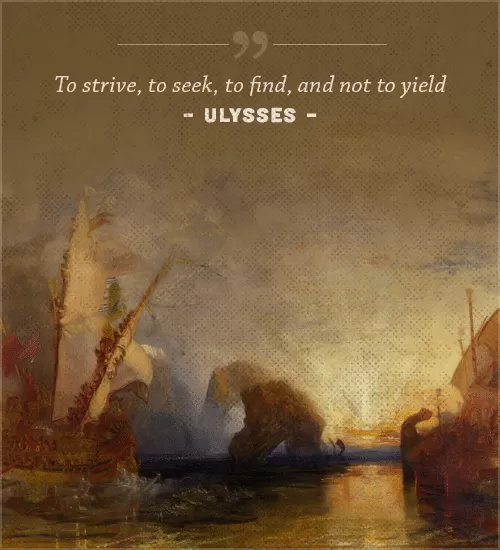 Ulysses in old age contemplating further travel.
2. “If—” by Rudyard Kipling
A Blueprint for Character and Composure
Arguably one of the most direct and influential poems on the theme of character, “If—” lays out a series of conditional statements describing the qualities and actions that constitute true manliness in Kipling’s view. Addressing a hypothetical son, the speaker advises on maintaining composure under pressure (“If you can keep your head when all about you / Are losing theirs”), trusting oneself, dealing with triumph and disaster, speaking truth, and remaining humble and virtuous regardless of external circumstances or opinion. It champions the virtues of resilience, self-control, patience, honesty, and integrity. The poem’s structure, building towards the powerful conclusion that mastering these traits makes one a “Man,” has resonated deeply across generations, serving as a timeless guide to cultivating inner strength and dignity.
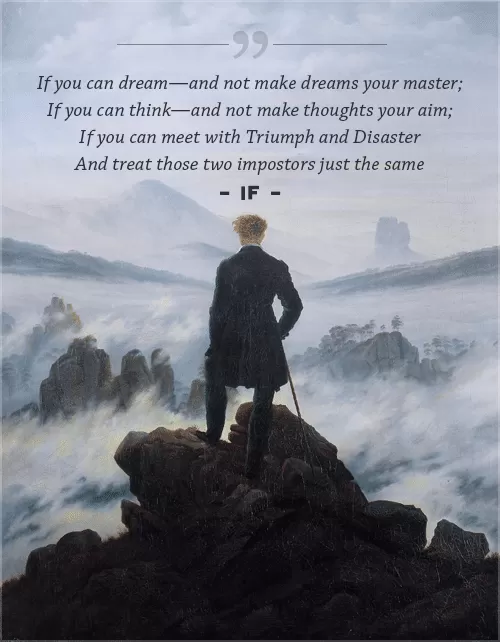 A page featuring Kipling's poem 'If—', emphasizing its status as a guide to character.
3. “Sailing to Byzantium” by W. B. Yeats
Seeking Enduring Value in the Face of Aging
Yeats’s profound meditation on aging and the desire for spiritual or artistic permanence stands in stark contrast to the transient nature of youth and physical vitality. The poem opens with the famous line, “That is no country for old men,” immediately establishing a theme of exclusion from the vibrant world of the young. The speaker yearns to leave the physical realm, where “decaying sense” dominates, and journey to Byzantium, a place symbolic of art, intellect, and spiritual eternity. He seeks to become an artifact of timeless art (“a golden bird”) that can sing of the past, present, and future. This poem challenges the modern obsession with fleeting youth, suggesting that true value and purpose can be found in the wisdom and creative legacy accumulated over a lifetime. It’s a contemplation on finding meaning that transcends physical limitations and explores themes of enduring legacy.
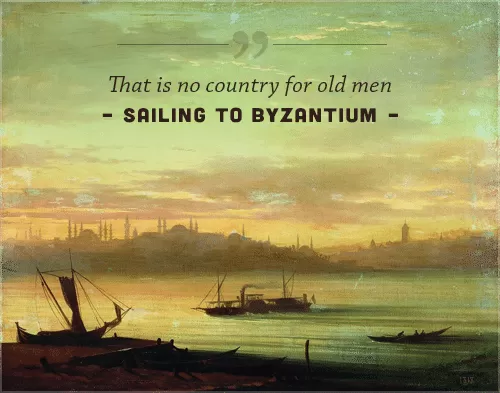 A symbolic depiction related to Yeats's poem, featuring elements of timeless artistry and contemplation.
4. Sonnet 29 by William Shakespeare
Finding Riches in Love Amidst Despair
Among Shakespeare’s vast collection of sonnets, Sonnet 29 offers a raw glimpse into feelings of dejection, envy, and discontent. The speaker laments his “outcast state,” feeling unlucky, disgraced, and envious of others’ talents, friends, and prospects. This opening paints a picture of profound self-pity and isolation. However, the sonnet takes a dramatic turn (a “volta”) in the third quatrain with the word “Yet.” The speaker’s mood shifts entirely when he remembers the love of his beloved. This remembrance is so uplifting that it makes him feel richer than a king, dismissing his earlier despair. The poem beautifully illustrates how genuine connection and affection can provide solace and immense value, outweighing external measures of success or fortune. It reminds us that true wealth often lies in our most cherished relationships. For more verses exploring enduring bonds, consider reading some forever poems.
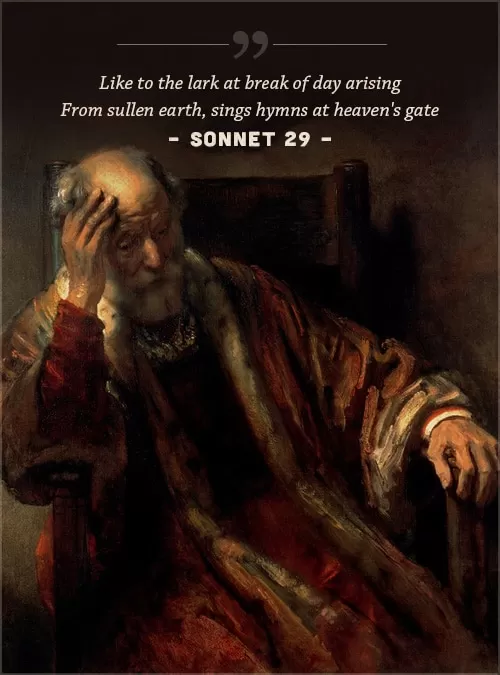 A visual suggesting introspection and the finding of solace through love, related to Shakespeare's Sonnet 29.
5. “Invictus” by William Ernest Henley
The Unconquerable Soul
Written during a period of severe physical hardship for Henley, who faced debilitating tuberculosis and amputation, “Invictus” is a powerful declaration of stoic resilience and self-mastery. The title itself means “unconquered” in Latin. Despite enduring immense suffering (“Out of the night that covers me, / Black as the Pit from pole to pole”), the speaker refuses to bow to fate or circumstance. The poem builds to its iconic final lines: “It matters not how strait the gate, / How charged with punishments the scroll, / I am the master of my fate, / I am the captain of my soul.” This is not a denial of suffering, but a defiant assertion of internal freedom and agency. It is a rallying cry for perseverance, reminding us that while external events may challenge us, our inner response and spirit remain within our control. It embodies a powerful message of personal responsibility and indomitable will in the face of hardship.
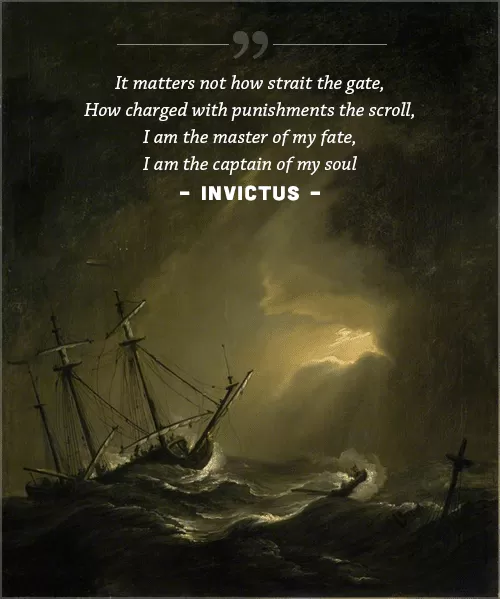 A stormy sea and a ship, symbolizing the struggle and resilience evoked by Henley's "Invictus".
6. “Mending Wall” by Robert Frost
Boundaries, Community, and Inherited Wisdom
Frost’s narrative poem explores the complex relationship between neighbors and the symbolic and literal walls they build. The speaker questions the need for a wall between his apple orchard and his neighbor’s pine trees, noting that nature itself seems to work against it (“Something there is that doesn’t love a wall”). His neighbor, however, clings to an old adage: “Good fences make good neighbors.” The poem contrasts the speaker’s questioning, progressive attitude with the neighbor’s adherence to tradition and perceived necessity. It’s a nuanced look at the role of boundaries in human relationships – are they divisive or necessary for maintaining respectful distance? The poem invites reflection on inherited wisdom, community dynamics, and the often-unspoken reasons behind established customs. It prompts us to consider the walls we build in our own lives and whether they truly serve their purpose.
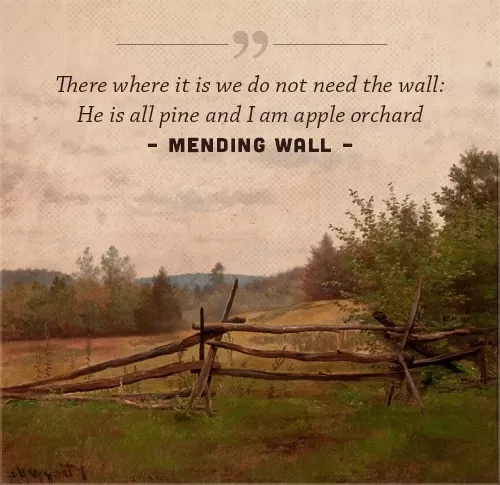 Two men by a stone wall under trees, illustrating the themes of Frost's "Mending Wall".
7. “Pioneers! O Pioneers!” by Walt Whitman
The Call to Adventure and Exploration
Characteristic of Whitman’s expansive, energetic style, “Pioneers! O Pioneers!” is an anthem celebrating the spirit of westward expansion in America, but also a broader call to forge new paths in life. The poem’s driving rhythm and repeated refrain evoke a sense of movement, collective purpose, and boundless possibility. Whitman extols the “strong pioneers” – embodying youth, courage, and determination – who venture into the unknown, driven by a vision of the future. While rooted in a specific historical context, the poem’s core message is universal: the urge to explore, to break free from the familiar, and to contribute to building something new. It’s an ode to the adventurous spirit, the willingness to face hardship for the promise of discovery and progress.
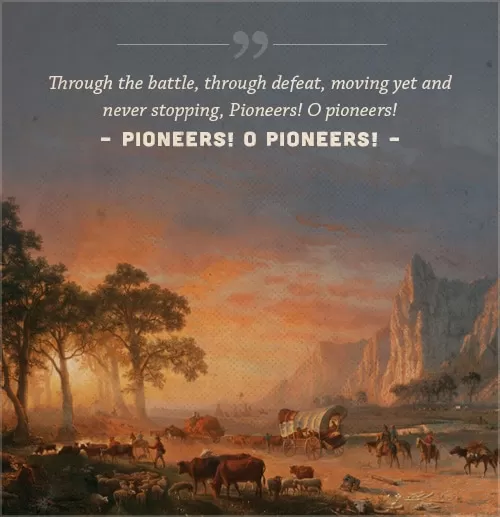 A herd moving across a vast landscape, symbolizing the journey and collective spirit of pioneers.
8. “Horatius” by Thomas Babington Macaulay
Courage, Duty, and Sacrifice
Macaulay’s ballad recounts the legendary Roman story of Publius Horatius Cocles, a brave soldier who, with two comrades, defended the Sublician bridge against the Etruscan army, single-handedly holding them off while the Romans behind him destroyed the bridge. The poem is a celebration of heroic courage, unwavering duty, and selfless sacrifice for the greater good of the community or nation. The famous line, “How can man die better / Than facing fearful odds,” encapsulates the poem’s central theme: finding meaning and honor in standing firm against overwhelming forces, even unto death. It’s a powerful narrative about valor and the willingness to make the ultimate sacrifice in defense of one’s principles or people, a theme that has inspired leaders and soldiers throughout history.
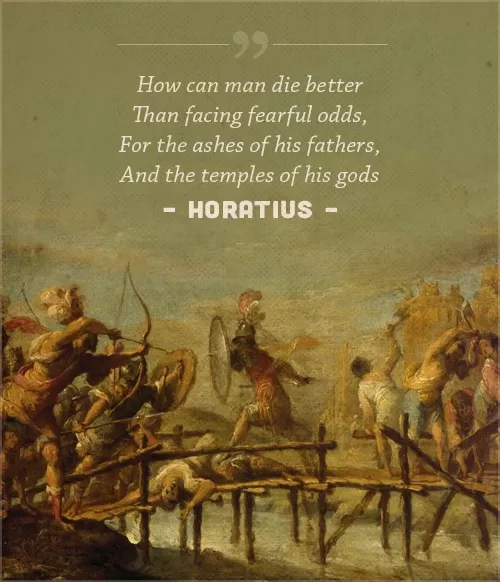 Ancient warriors engaged in battle on a bridge, depicting the scene from Macaulay's "Horatius".
9. “On the Stork Tower” by Wang Zhihuan
Expanding Perspective Through Effort
This remarkably concise Tang Dynasty poem (登鹳雀楼) is a masterpiece of brevity and profound insight. In just four lines, the speaker describes ascending the Stork Tower and seeing the Yellow River flow into the sea. The final two lines offer a timeless piece of wisdom: “To see a thousand miles further, / Go up another storey.” The literal act of climbing higher on the tower is a metaphor for effort and aspiration. By pushing oneself, whether physically, intellectually, or emotionally, one gains a wider perspective and a deeper understanding of the world. It suggests that overcoming limitations and gaining clarity requires conscious effort and a willingness to ascend beyond one’s current level. This short poem serves as a powerful epigram, encouraging continuous self-improvement and the pursuit of broader understanding.
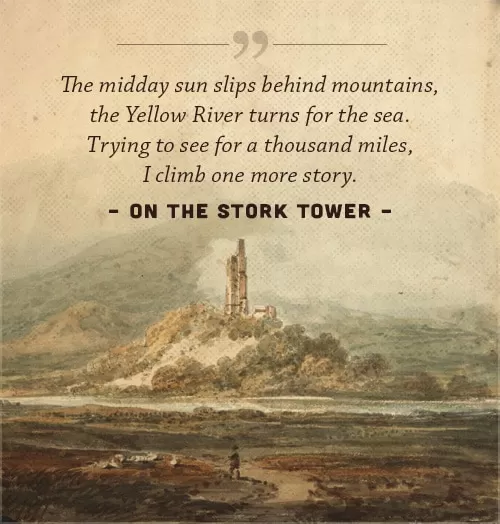 A solitary figure walking towards a tower in a misty landscape, symbolizing seeking higher perspective.
10. “The Builders” by Henry Wadsworth Longfellow
Crafting a Life with Diligence and Integrity
Longfellow’s poem uses the metaphor of building to reflect on the construction of one’s own life and character. It posits that we are all “architects” and “builders,” and our daily actions, thoughts, and decisions are the materials with which we construct the edifice of our existence. The poem emphasizes the importance of diligence, care, and integrity in this process, even in details that may not be visible to others (“In the walls that no man sees”). Just as a weak foundation or carelessly laid stone compromises the entire structure, flawed character or dishonest actions undermine the strength and potential height of a life. The poem serves as a reminder that the quality of our lives is a direct result of the consistent effort and integrity we apply to our daily endeavors, urging us to build with purpose and conscience.
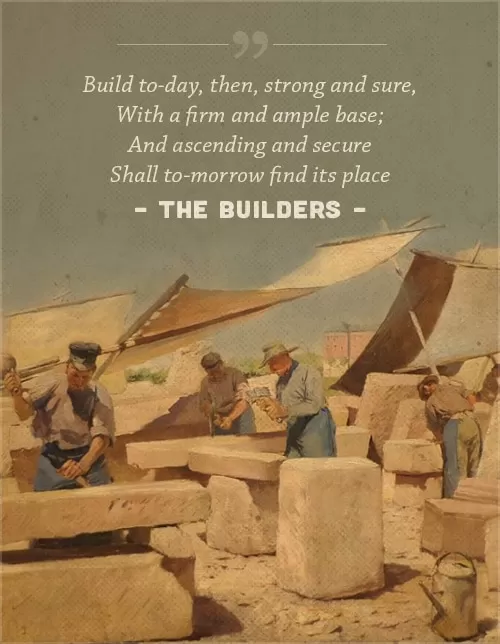 Craftsmen working on a structure, representing the theme of building a life with care and integrity.
11. “The Negro Speaks of Rivers” by Langston Hughes
Connecting to Heritage and Enduring Identity
Written by a young Langston Hughes, this poem is a powerful declaration of connection to deep historical roots and the enduring strength of the African-American identity, symbolized by ancient rivers. The speaker traces his lineage through iconic waterways – the Euphrates, Congo, Nile, and Mississippi. These rivers represent not just geographical locations, but the flow of history, civilization, struggle, and resilience experienced by people of African descent across millennia. The repeated line, “My soul has grown deep like the rivers,” is a profound statement of accumulated wisdom, experience, and spiritual depth derived from this vast, shared history. The poem is both a personal assertion of identity and a collective tribute to the enduring spirit of a people, linking the contemporary self to the richness and weight of the past. It speaks to the importance of understanding and drawing strength from one’s heritage.
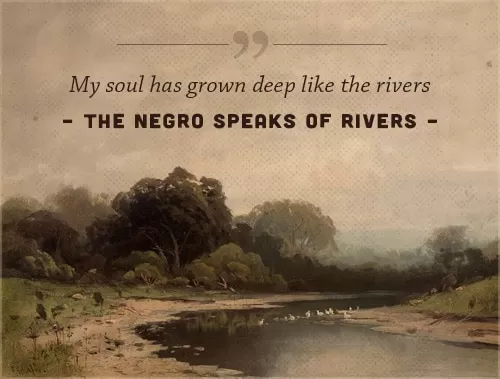 A serene scene of a lake with birds, evoking the depth, history, and natural flow symbolized by rivers in Hughes's poem.
12. “The Soldier” by Rupert Brooke
Idealism, Patriotism, and Sacrifice
One of the most famous poems to emerge from the early days of World War I, Rupert Brooke’s “The Soldier” offers an idealized vision of patriotic sacrifice. Written before the full horror of trench warfare became apparent, the poem speaks from the perspective of a soldier contemplating his potential death in foreign soil. The speaker imagines that if he should die, the piece of foreign land where he is buried will forever become a part of England, enriched by his dust. The poem is filled with love for his homeland, seeing himself as fundamentally shaped by England’s culture, landscape, and values. It’s a poignant expression of devotion and the belief that giving one’s life in service to the nation is a noble and meaningful act. While later war poetry would offer stark critiques of the conflict, Brooke’s poem captures an earlier, more idealistic perspective on duty, identity, and the ultimate sacrifice.
 A lone soldier amidst wildflowers, representing contemplation of sacrifice and homeland in Brooke's poem.
13. “The Love Song of J. Alfred Prufrock” by T. S. Eliot
Hesitation, Insecurity, and Missed Opportunities
T. S. Eliot’s seminal modernist poem is a dramatic monologue exploring themes of alienation, inertia, and the paralysis of indecision in the face of social and emotional interactions. Prufrock is an overthinking, insecure individual who longs for connection (“Do I dare disturb the universe?”) but is utterly consumed by anxiety and self-doubt. He worries about social judgment, the banality of everyday life, and his own perceived inadequacies. The “love song” is ironic, as it’s less about expressing love and more about his inability to act or connect meaningfully with others, particularly women. The poem is a profound exploration of modern consciousness, highlighting the internal barriers that prevent us from living fully and authentically. It serves as a cautionary tale about the cost of hesitation and allowing fear to dictate our actions and relationships.
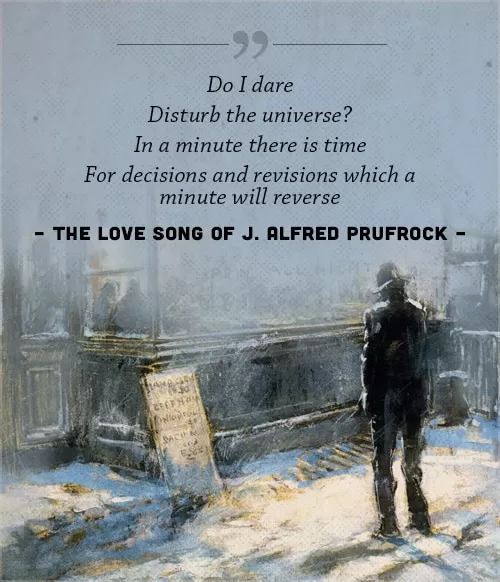 A man standing alone in a street, symbolizing the isolation and introspection central to Eliot's "The Love Song of J. Alfred Prufrock".
14. “Ozymandias” by Percy Bysshe Shelley
The Ephemeral Nature of Power and Tyranny
Shelley’s sonnet is a stark commentary on the transient nature of power, ambition, and the futility of tyranny. The poem is narrated by a traveler who encounters the ruined remnants of a statue of Ozymandias, a once-powerful king, in the desert. Despite the boastful inscription on the pedestal (“My name is Ozymandias, king of kings: / Look on my works, ye Mighty, and despair!”), all that remains is a shattered statue surrounded by empty, desolate sand. The poem vividly contrasts the ruler’s arrogant claim to eternal power with the reality of decay and oblivion brought by time. It serves as a powerful memento mori for those who wield power and a reminder that all empires and individual legacies built solely on dominance are ultimately subject to ruin. It emphasizes humility in the face of history and the enduring power of nature and time over human ambition.
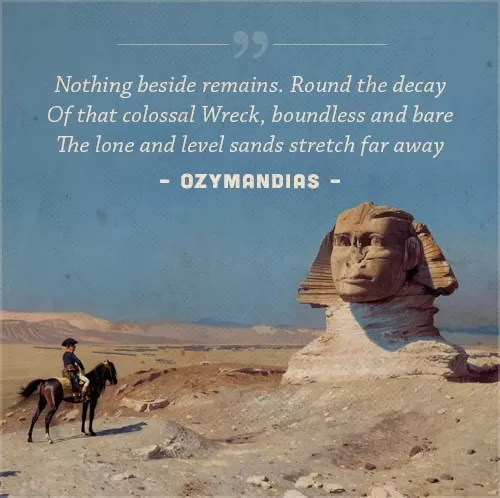 A figure standing near ancient ruins or a pyramid, representing the passage of time and the decay of empires as explored in Shelley's "Ozymandias".
15. “A Valediction: Forbidding Mourning” by John Donne
Love That Transcends Physical Separation
John Donne’s intricately crafted poem is a powerful argument for a love so pure and spiritual that it is unaffected by physical distance. Written ostensibly to his wife before a journey, Donne urges her not to mourn his departure with dramatic displays of grief, which would profane their sacred love in the eyes of lesser, “laity” lovers. He uses a famous metaphysical conceit, comparing their souls to the legs of a compass. Her soul is the fixed foot, remaining stable, while his is the moving foot that ventures out but always returns, guided and drawn back by the steadfastness of hers. This extended metaphor beautifully illustrates how their love is interconnected and expansive rather than fragile and broken by separation. The poem is a profound exploration of mature, enduring love based on a deep spiritual and intellectual bond that transcends physical presence. It offers a perspective on commitment and connection that is stable and true, regardless of distance. When exploring themes of lasting connection, delving into forever poems can offer similar insights.
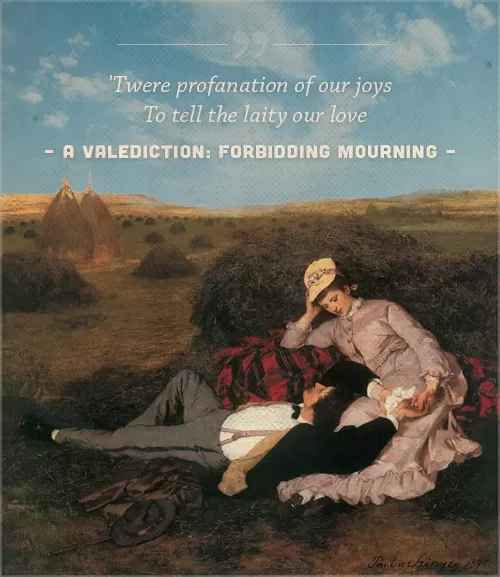 A couple holding hands, symbolizing the deep connection and enduring love depicted in Donne's poem.
16. Poem from The Iron Heel by Jack London
An Ode to Human Potential and Experience
This poem, embedded within Jack London’s dystopian novel The Iron Heel, is presented as a favorite of the protagonist and a reflection of his vitalistic philosophy. It is a vigorous, almost breathless cascade of images and actions celebrating the intensity and breadth of human experience and potential. Lines like “I would be the thunder, I would be the lightning, / The wind, the rain, the vast heave of the sea” express a powerful desire to embody and experience the raw, untamed forces of nature and existence. The poem rejects passivity and limitation, asserting a fervent embrace of life in all its forms – struggle, joy, creation, destruction. It speaks to a belief in the inherent power and dynamic energy within humanity, urging the reader to fully engage with the world and realize their potential. It’s a passionate call to live intensely and explore the full spectrum of being.
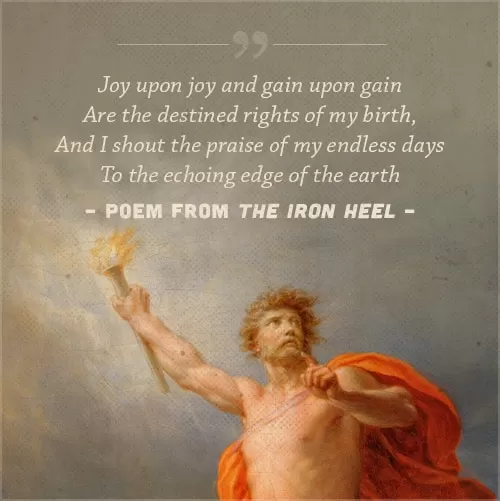 A figure holding a lamp in a dark, dramatic setting, symbolizing the search for light, knowledge, and experience.
17. “The Charge of the Light Brigade” by Alfred, Lord Tennyson
Duty, Obedience, and the Valor of the Soldier
Tennyson’s narrative poem commemorates the disastrous Charge of the Light Brigade during the Battle of Balaclava in the Crimean War. Despite being a terrible military blunder resulting in heavy casualties, Tennyson focuses not on criticizing the command but on celebrating the courage and unwavering obedience of the cavalrymen who rode into certain death. The famous refrain, “Theirs not to make reply, / Theirs not to reason why, / Theirs but to do and die,” highlights the soldiers’ disciplined adherence to duty, even when faced with a suicidal order. The poem creates a vivid, almost epic scene of the charge into the cannon-filled valley, honoring the bravery and sacrifice of the men who rode “boldly.” It’s a powerful, albeit complex, tribute to military valor, exploring the themes of duty, sacrifice, and the often-tragic reality of war.
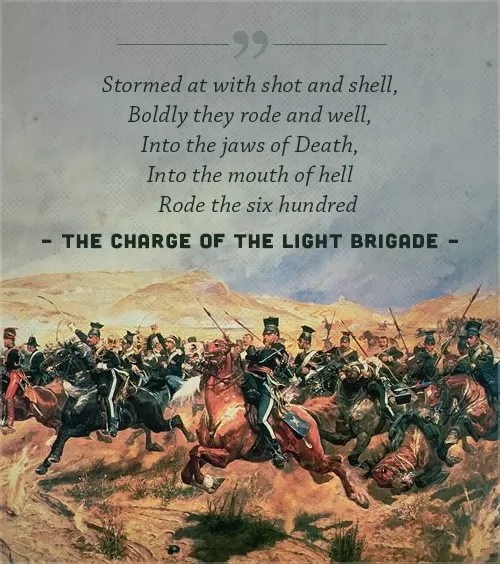 A depiction of a historical cavalry charge, illustrating the scene of battle commemorated in Tennyson's poem.
18. “Opportunity” by John James Ingalls
Seizing the Moment
John James Ingalls’ short poem presents Opportunity as a fleeting, almost personified entity that visits but does not linger. The central message is clear and direct: opportunity knocks but once. The poem describes Opportunity arriving with a “master-key” to success and fortune, but if ignored or missed, it departs forever, “And from that threshold passes out, and so / Into the darkness nevermore returns.” This straightforward allegory serves as a potent reminder of the importance of readiness, decisiveness, and the willingness to act when favorable circumstances arise. It encourages vigilance and initiative, urging readers not to let fear or procrastination prevent them from seizing the moments that can change the course of their lives. Its conciseness makes it a memorable and impactful piece of wisdom.
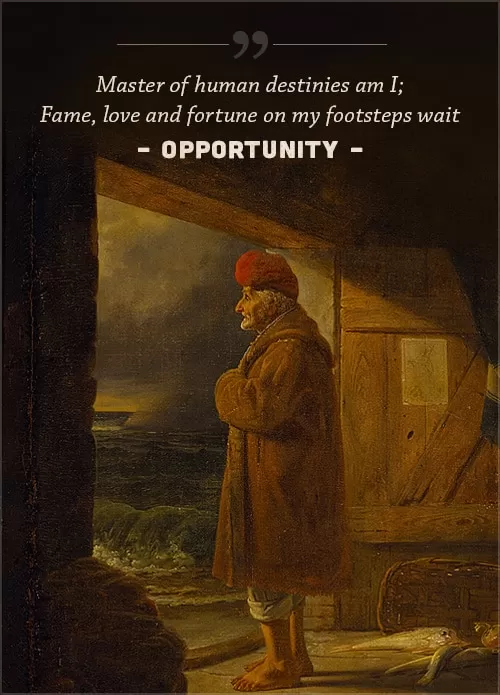 An aged figure looking out at the ocean, symbolizing the contemplation of past chances or the hope for future opportunities.
19. “Character of the Happy Warrior” by William Wordsworth
Defining Ideal Virtues
Wordsworth’s poem is not about military combat in a literal sense, but rather an exploration of the ideal character traits of someone who navigates the struggles and challenges of life with integrity, purpose, and inner peace. The “Happy Warrior” is defined by a balance of strength and gentleness, eagerness for noble struggle tempered by wisdom and patience. He is guided by conscience, humble in success, resilient in adversity, and motivated by love and duty rather than selfish ambition. The poem paints a portrait of moral excellence, detailing virtues such as fortitude, self-possession, generosity, and a deep connection to truth and righteousness. It provides a timeless model for living a purposeful life, suggesting that true happiness and fulfillment come not from external victories, but from cultivating a virtuous and resilient inner character.
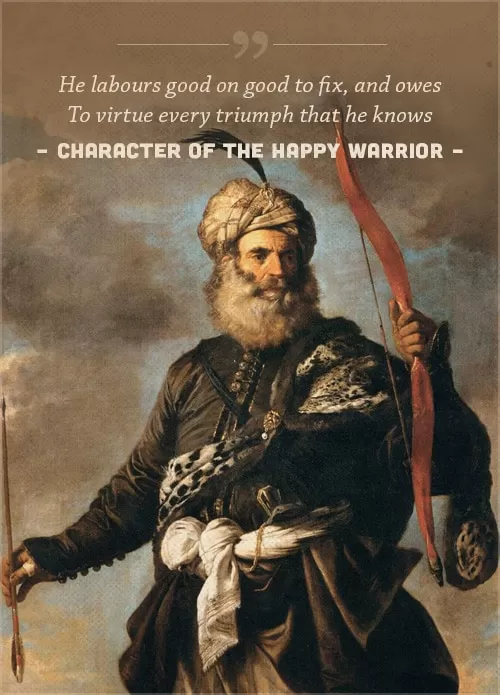 A figure with a bow, representing strength, readiness, and purposeful action akin to the 'Happy Warrior' concept.
20. Ode 1.11 by Horace
Embracing the Present Moment (Carpe Diem)
Horace’s famous ode is the origin of the enduring Latin phrase carpe diem, usually translated as “seize the day.” Addressing his friend Leuconoe, Horace advises against trying to know the future or relying on uncertain prospects. Instead of consulting astrologers or worrying about what tomorrow may bring, he urges her (and by extension, the reader) to accept the present moment, whether it is the last or one of many to come. The lines “carpe diem, quam minimum credula postero” (seize the day, trusting as little as possible in tomorrow) encapsulate the poem’s philosophy. It’s a powerful reminder to live mindfully in the present, make the most of the time we have, and not defer happiness or action based on future uncertainties. It encourages a proactive and appreciative stance towards life, emphasizing the value of the here and now. If you are looking for seasonal inspirations, inspirational christmas poems for adults can also offer engaging perspectives on time and reflection.
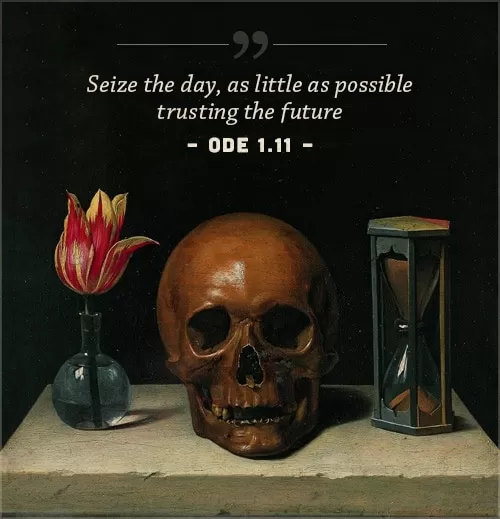 A symbolic image featuring a skull, flowers, and a sand timer, representing the passage of time and the imperative to seize the day.
Conclusion
The poems in this collection, diverse in origin and style, share a common thread: they speak to fundamental aspects of the human condition, offering insights that resonate particularly with the experiences and aspirations often associated with men. From the call to adventure and the pursuit of excellence to the quiet strength found in love, duty, and perseverance, these verses provide rich ground for reflection and inspiration. They remind us that poetry is not merely an academic pursuit but a vibrant, living art form capable of speaking directly to our hearts and minds. Engaging with these “poems for men” is an invitation to deepen our understanding of ourselves and the world, cultivate resilience, and find enduring meaning in the timeless wisdom captured within their lines. We encourage you to read them, ponder them, and perhaps discover a new appreciation for the power of words to illuminate the path ahead.