
Poetry possesses a unique power to capture the myriad facets of human emotion, and among its most cherished expressions are those that focus on the tender, comforting, and gently joyous aspects of love. These are the sweet poems that whisper rather than shout, offering solace, warmth, and a quiet affirmation of connection. Unlike verses consumed by fiery passion or sharp heartbreak, sweet poems delve into the subtle beauty of shared moments, unwavering devotion, and the simple happiness found in another’s presence.
Contents
- Sweet Comfort in Challenging Times
- “Come, And Be My Baby” by Maya Angelou
- The Sweetness of Honest Appreciation
- “Bird-Understander” by Craig Arnold
- Enduring Sweetness of Partnership
- “Habitation” by Margaret Atwood
- The Diverse Flavors of Love’s Sweetness
- “Variations on the Word Love” by Margaret Atwood
- The Sweetness of Devotion and Gratitude
- “To My Dear and Loving Husband” by Anne Bradstreet
- Anticipation and the Sweetness of Waiting
- “Always For The First Time” by André Breton
- The Underrated Sweetness of Friendship
- “Love and Friendship” by Emily Brontë
- Love’s Sweet Transformation
- “To Be In Love” by Gwendolyn Brooks
- The Sweet Assurance of Deep Connection
- “How Do I Love Thee? (Sonnet 43)” by Elizabeth Barrett Browning
- Comparisons That Evoke Sweetness
- “A Red, Red Rose” by Robert Burns
- The Sweetness of Pure Admiration
- “She Walks in Beauty” by Lord Byron
- The Sweet Complexity of Love
- “Love is a fire that burns unseen” by Luís Vaz de Camões
- Sweetness of Universal Connection
- “Beautiful Signor” by Cyrus Cassells
- Sweetness of Unwavering Devotion
- “Rondel of Merciless Beauty” by Geoffrey Chaucer
- The Subtle Sweetness of Intimacy
- “Love Comes Quietly” by Robert Creeley
- The Overwhelming Sweetness of Carrying Love Within
- “[i carry your heart with me(i carry it in]” by E. E. Cummings
- Defining Love’s Sweet Paradoxes
- “[love is more thicker than forget]” by E.E. Cummings
- The Sweetness of Feeling Fully Seen
- “Sthandwa sami (my beloved, isiZulu)” by Yrsa Daley-Ward
- Sweetness of Unity and Becoming One
- “Married Love” by Guan Daosheng
- Finding Sweetness Even After Loss
- “Heart, we will forget him!” by Emily Dickinson
- Divine Comparisons for Earthly Sweetness
- “Air and Angels” by John Donne
- The Sparkling Sweetness of Flirtation
- “Flirtation” by Rita Dove
- Sweetness in Plain Speak
- “Heart to Heart” by Rita Dove
- Sweetness as Boundless Force
- “Love” by Carol Ann Duffy
- The Sweet Challenge of Expressing Love
- “The Love Poem” by Carol Ann Duffy
- Love’s Sweet Restoration of Perception
- “Before You Came” by Faiz Ahmed Faiz
- The Simple, Sweet Joy of Noticing
- “Lines Depicting Simple Happiness” by Peter Gizzi
- Sweetness of a Cherished Bond Linked to Nature
- “For Keeps” by Joy Harjo
- The Sweetness of Realistic Love
- “You Are the Penultimate Love of My Life” by Rebecca Hazelton
- Sweetness Through Evocative Metaphor
- “Yours” by Daniel Hoffman
- The Sweet Exhilaration of New Love
- “A Love Song for Lucinda” by Langston Hughes
- The Sweetness of Spiritual Connection
- “Poem for My Love” by June Jordan
- Sweetness in Simplicity and Recognition
- “for him” by Rupi Kaur
- Bitter-Sweetness of Love’s Realities
- Untitled by Rupi Kaur
- Sweet Power in Self-Possession
- “Poem To An Unnameable Man” by Dorothea Lasky
- Bittersweet Hope After Ending
- “Movement Song” by Audre Lorde
- The Quiet Sweetness of Familiar Comfort
- “Camomile Tea” by Katherine Mansfield
- Sweetness in Longing for Return
- “Dear One Absent This Long While” by Lisa Olstein
- Sweetness in Finding Refuge
- “My Lover Is a Woman” by Pat Parker
- The Sweet Echo of Shared Beginnings
- “It Is Here” by Harold Pinter
- Sweetness of Uncontainable Affection
- “Untitled” by Christopher Poindexter
- Sweetness as an Elemental Force
- “Love Is Not A Word” by Riyas Qurana
- The Sweetness of Constant Recommitment
- “[Again and again, even though we know love’s landscape]” by Rainer Maria Rilke
- Sweet Longing for What Was
- “Echo” by Christina Rossetti
- The Sweetness of Merging Loves
- “I loved you first: but afterwards your love” by Christina Rossetti
- Sweet Surrender to Love’s Power
- “Defeated by Love” by Rumi
- The Enduring Sweetness of Timeless Beauty
- “Shall I compare thee to a summer’s day? (Sonnet 18)” by William Shakespeare
- Sweetness of Unchanging Love
- “Let me not to the marriage of true minds (Sonnet 116)” by William Shakespeare
- Sweetness in Seeing Beyond Ideal
- “My mistress’ eyes are nothing like the sun” (Sonnet 130) by William Shakespeare
- Logical Sweetness of Natural Harmony
- “Love’s Philosophy” by Percy Bysshe Shelley
- The Sweet Promise of Eternity
- “One Day I Wrote her Name (Sonnet 75)” by Edmund Spenser
- Longing for a Sweet, All-Encompassing Love
- “I Am Not Yours” by Sara Teasdale
- Sweetness of Sensual Intimacy
- “Now Sleeps the Crimson Petal” by Alfred, Lord Tennyson
- Sweetness in Shared Adventures (Big or Small)
- “poem I wrote sitting across the table from you” by Kevin Varrone
- The Sweet Intensity of Craving and Presence
- “On Earth We’re Briefly Gorgeous” by Ocean Vuong
- The Sweetness of Returning to Self
- “Love After Love” by Derek Walcott
- Sweetness in Simple Moments
- “I Love You” by Ella Wheeler Wilcox
- The Sweet Urgency of Cherishing Time
- “We Have Not Long to Love” by Tennessee Williams
- The Sweetness of Peak Emotional Memory
- “Poem to First Love” by Matthew Yeager
For centuries, poets across cultures and eras have turned their gaze to this softer side of affection. From timeless declarations of enduring partnership to intimate glimpses of domestic bliss, sweet poems remind us that love isn’t always a grand spectacle; often, it’s found in the quiet understanding, the shared smile, or the simple comfort of knowing someone is there. Whether you’re seeking words to express your own gentle feelings, looking for comfort in the steady flow of commitment, or simply wishing to appreciate the understated artistry of tenderness, exploring the realm of sweet poems offers a deeply rewarding experience. This collection highlights some of the most moving examples, analyzing the ways poets craft verses that resonate with sweetness, warmth, and enduring affection. Understanding how poets convey these delicate emotions can also offer valuable insights for those looking to how to wrote poetry themselves, showing how simple language and heartfelt observation can create profound emotional impact.
Sweet Comfort in Challenging Times
Sometimes the sweetest aspect of love is the feeling of finding refuge in another person. During life’s overwhelming moments, the simple presence and understanding of a loved one can be a profound source of comfort.
“Come, And Be My Baby” by Maya Angelou
Maya Angelou, renowned for her powerful voice and deep understanding of the human condition, captures this beautifully in ‘Come, And Be My Baby’. This poem speaks to the desire to escape the complexity and noise of the world, finding a haven in the embrace of a loved one. It highlights the sweetness of protection and simplified existence offered by a caring partner when life feels like too much. The plea “Come, And Be My Baby” isn’t about infantilization, but a call for the uncomplicated, foundational comfort that deep affection provides.
 Person reading a book with a gentle smile
The Sweetness of Honest Appreciation
True sweetness in love often comes from genuinely seeing and appreciating the core essence of another person, without pretense or grandiosity. It’s about valuing their unique way of being.
“Bird-Understander” by Craig Arnold
These are your own words
your way of noticing
and saying plainly
of not turning away
from hurt
you have offered them
to me I am only
giving them back
if only I could show you
how very useless
they are not
Craig Arnold’s ‘Bird-Understander’ is a touching example of appreciating a partner’s specific qualities. The sweetness here lies in the speaker’s admiration for the loved one’s way of observing the world – their honesty, their plain speaking, their refusal to turn away from difficulty. It’s a gentle affirmation of the partner’s character, offered back with profound gratitude. The simple language underscores the sincere and unaffected nature of this appreciation, embodying the essence of sweet, genuine regard.
Enduring Sweetness of Partnership
Love’s sweetness isn’t just in the beginning; it can deepen over time, evolving into the quiet strength and shared experience of a long-term partnership.
“Habitation” by Margaret Atwood
at the back where we squat
outside, eating popcorn
the edge of the receding glacier
where painfully and with wonder
at having survived even
this far
we are learning to make fire
Margaret Atwood, known for her sharp insights, offers a realistic yet sweet portrayal of marriage in ‘Habitation’. While acknowledging the challenges (“painfully”), the sweetness emerges from the shared experience of enduring (“survived even this far”) and the act of learning and building together (“learning to make fire”) even at the edge of difficulty. The simple image of “eating popcorn” adds a touch of domestic sweetness to the larger, more challenging landscape. It speaks to the quiet, persistent sweetness of a bond that withstands the passage of time and hardship.
The Diverse Flavors of Love’s Sweetness
Sweetness isn’t monolithic; it can manifest in many forms – from the comfort of friendship to the complexity of various emotional connections.
“Variations on the Word Love” by Margaret Atwood
Love, even in its “sweet” forms, is multifaceted. Margaret Atwood’s ‘Variations on the Word Love’ explores different interpretations and experiences of love. While the poem touches on various aspects, it inherently recognizes the word’s capacity to describe everything from patronizing affection to passionate connection. The poem’s exploration of love’s nuances highlights the complexity from which moments of sweetness can arise, reminding us that even within complicated feelings, there can be instances of gentle connection and tender meaning.
 Closeup of hands gently intertwined
The Sweetness of Devotion and Gratitude
A deep and abiding sense of gratitude towards a loved one for their affection can be a profound source of sweetness in a relationship.
“To My Dear and Loving Husband” by Anne Bradstreet
Thy love is such I can no way repay;
The heavens reward thee manifold, I pray.
Then while we live, in love let’s so persever,
That when we live no more, we may live ever.
Anne Bradstreet’s ‘To My Dear and Loving Husband’ is a classic expression of marital sweetness rooted in Puritan devotion. The sweetness here lies in the speaker’s overwhelming gratitude and sense of being cherished. Her declaration that her husband’s love is beyond repayment and her prayer for heavenly rewards for him emphasize the depth of her appreciation. The final lines, wishing to “persever” in love so they may “live ever” together, speak to the sweet hope of an eternal bond, a powerful expression of enduring marital affection.
Anticipation and the Sweetness of Waiting
Even before two people meet, the anticipation and hope for a connection can be imbued with a unique sweetness.
“Always For The First Time” by André Breton
There is a silk ladder unrolled across the ivy
There is
That leaning over the precipice
Of the hopeless fusion of your presence and absence
I have found the secret
Of loving you
Always for the first time
André Breton’s ‘Always For The First Time’ captures the sweet anticipation of love, even for someone not yet met. The surreal imagery (“silk ladder,” “hopeless fusion of your presence and absence”) creates a dreamlike sweetness of longing and expectation. The “secret / Of loving you / Always for the first time” speaks to a perpetual sense of newness and wonder in this anticipated connection, a sweet fantasy that fuels hope.
The Underrated Sweetness of Friendship
While often focused on romance, love in its broader sense includes the deep and lasting bonds of friendship, which hold their own unique sweetness.
“Love and Friendship” by Emily Brontë
Emily Brontë’s ‘Love and Friendship’ draws a comparison between romantic love and friendship. By likening friendship to the enduring holly tree that withstands all seasons, in contrast to the fleeting rose of romantic love, Brontë highlights the quiet, persistent sweetness of platonic bonds. The reliability, constancy, and comfort found in true friendship are depicted as a sturdy, ever-present sweetness, perhaps less dramatic than romantic passion but deeply valuable and enduring.
 Detailed drawing of a rose and a holly branch
Love’s Sweet Transformation
Falling in love can fundamentally alter one’s perspective, imbuing everyday life with a new sense of lightness and well-being – a sweet transformation. This is one aspect of the broad spectrum of love that poets explore, and understanding how this feeling translates into verse can help aspiring writers refine their how to wrote poetry skills.
“To Be In Love” by Gwendolyn Brooks
To be in love
Is to touch with a lighter hand.
In yourself you stretch, you are well.
Gwendolyn Brooks’ ‘To Be in Love’ beautifully articulates the sweet, uplifting effect of love on the self. The sense of touching “with a lighter hand” suggests a newfound gentleness and ease. The feeling of stretching and being “well” implies a sense of wholeness, growth, and inner harmony that love brings. This poem captures the intrinsic sweetness that love imparts to one’s personal state of being, making the world feel brighter and oneself feel complete.
The Sweet Assurance of Deep Connection
Some poems express love with an undeniable clarity and depth, leaving no doubt about the strength of the bond. This certainty, while powerful, also holds a sweet assurance.
“How Do I Love Thee? (Sonnet 43)” by Elizabeth Barrett Browning
How do I love thee? Let me count the ways.
I love thee to the depth and breadth and height
My soul can reach, when feeling out of sight
For the ends of being and ideal grace.
Elizabeth Barrett Browning’s famous Sonnet 43 is a passionate declaration, but its methodical attempt to quantify the immeasurable depth of love also contains a sweet earnestness. The sheer scope of her love, reaching the limits of her soul, is expressed with a devotion that feels profoundly sweet in its totality and sincerity. It’s the sweetness of an overwhelming, yet deeply felt and articulated commitment. This classic example showcases the enduring appeal of sonnets in expressing profound emotion, a key element in understanding form poetry.
Comparisons That Evoke Sweetness
Sometimes, love’s sweetness is best described through comparisons to other delightful sensations or natural wonders.
“A Red, Red Rose” by Robert Burns
Robert Burns’ ‘A Red, Red Rose’ uses natural imagery to convey love. Comparing his love to a “red, red rose” that is “newly sprung in June” and “O, my Luve’s like the melodie / That’s sweetly play’d in tune!” directly links love to the beauty and pleasantness of nature and music. The sweetness here is in the freshness, beauty, and harmony of these comparisons, making the love feel vibrant and delightful.
 Illustration of a bright red rose
The Sweetness of Pure Admiration
Sometimes love begins with simple, overwhelming admiration for another person’s beauty or essence, perceived with innocent delight.
“She Walks in Beauty” by Lord Byron
She walks in beauty, like the night
Of cloudless climes and starry skies;
And all’s best of dark and bright
Meet in her aspect and her eyes;
Thus mellowed to that tender light
Which heaven to gaudy day denies.
Lord Byron’s ‘She Walks in Beauty’ focuses on pure, non-sexualized admiration. The sweetness comes from the gentle, almost ethereal comparisons of the woman’s beauty to a clear, starry night and a “tender light.” It’s an appreciation of her inner and outer harmony, described with reverence and a sense of wonder. This poem captures the sweetness of being captivated by someone’s inherent grace and loveliness.
The Sweet Complexity of Love
Love can be a mix of emotions, yet even in its complexity, certain aspects can feel inherently sweet – the sweet ache, the sweet discontent.
“Love is a fire that burns unseen” by Luís Vaz de Camões
Love is a fire that burns unseen,
a wound that aches yet isn’t felt,
an always discontent contentment,
a pain that rages without hurting,
Luís Vaz de Camões’ poem describes love through paradoxes. While acknowledging pain and discontent, the phrases “a wound that aches yet isn’t felt” and “an always discontent contentment” suggest a sweetness within the turmoil. It’s the sweet ache of longing, the sweet surrender to a feeling that defies logic. This poem finds a unique sweetness in the complex, sometimes contradictory, nature of love itself.
Sweetness of Universal Connection
Some poets see love not just as a personal bond, but as a reflection of a larger, universal connection or a profound state of being.
“Beautiful Signor” by Cyrus Cassells
Cyrus Cassells’ ‘Beautiful Signor’ extends the concept of love towards a universal, almost divine sweetness. The poem speaks of “April-upon-April love” that keeps the speaker spinning towards “the unsurpassed: / the one vast claiming heart, / the glimmering, / the beautiful and revealed Signor.” This elevates love from a personal relationship to a state of spiritual or universal sweetness, a connection to something vast and beautiful that encompasses all individual loves.
Sweetness of Unwavering Devotion
Even when love is unrequited or ends painfully, the act of maintaining unwavering devotion can be seen as a form of sweet, albeit sorrowful, loyalty.
“Rondel of Merciless Beauty” by Geoffrey Chaucer
Geoffrey Chaucer’s ‘Rondel of Merciless Beauty’ (in translation) describes heartbreak, but the sweetness is found in the speaker’s steadfast, albeit painful, devotion. The pledge “Through life and after death you are my queen” is a testament to an enduring loyalty that transcends the present suffering. It’s the sweetness of a heart that, despite being wounded, remains utterly dedicated to the object of its affection.
The Subtle Sweetness of Intimacy
Love often develops quietly, almost unnoticed, settling into a comfortable, intimate connection that feels profoundly sweet.
“Love Comes Quietly” by Robert Creeley
Robert Creeley’s ‘Love Comes Quietly’ perfectly captures the subtle, gentle arrival of love. The idea that love “comes quietly” suggests a lack of fanfare, a gradual settling into intimacy. The ending, focusing on the desire for the loved one “not to go,” highlights the sweet comfort and completeness that this quiet love brings, making the thought of its absence unbearable. It’s the sweetness found in the simple, settled presence of a loved one.
 Minimalist image suggesting quiet closeness or presence
The Overwhelming Sweetness of Carrying Love Within
When love is truly deep, it becomes an intrinsic part of who you are, a constant, sweet presence carried within.
“[i carry your heart with me(i carry it in]” by E. E. Cummings
i carry your heart with me(i carry it in
my heart)i am never without it(anywhere
i go you go,my dear;and whatever is done
by only me is your doing,my darling)
E.E. Cummings’ iconic poem is a powerful expression of inseparable love, brimming with sweetness. The core idea of literally carrying the loved one’s heart within one’s own is intensely intimate and sweet. The parenthetical inclusions feel like sweet asides, personal whispers reinforcing the connection (“my dear,” “my darling”). The sense that the loved one is present everywhere and is the source of the speaker’s actions underscores the overwhelming, all-encompassing sweetness of this bond. Learning to express such deep personal connection is a key part of mastering how do you write a poetry that resonates.
Defining Love’s Sweet Paradoxes
Love can be confusing and contradictory, yet finding sweetness within these paradoxes is a testament to its complex nature.
“[love is more thicker than forget]” by E.E. Cummings
love is more thicker than forget
more thinner than recall
more seldom than a wave is wet
more frequent than to fail
Another example from E.E. Cummings, ‘[love is more thicker than forget]’ explores love through a series of paradoxical comparisons. The sweetness lies in the unexpected yet insightful juxtapositions. Describing love as “more thicker than forget” suggests its substantial, enduring nature. The comparison to failing (“more frequent than to fail”) implies that love, like trying, is a constant, sweet endeavor, always present. This poem finds sweetness not in simple definition, but in embracing love’s elusive, contradictory truth.
The Sweetness of Feeling Fully Seen
Love that makes you feel truly like yourself, comfortable and real, holds a special kind of sweetness.
“Sthandwa sami (my beloved, isiZulu)” by Yrsa Daley-Ward
my thoughts about you are frightening but precise
I can see the house on the hill where we make our own vegetables out back
and drink warm wine out of jam jars
and sing songs in the kitchen until the sun comes up
wena you make me feel like myself again.
Yrsa Daley-Ward’s poem offers a contemporary view of love’s sweetness. The sweetness here is in the feeling of being completely accepted and made to feel “like myself again.” The domestic imagery (“make our own vegetables,” “drink warm wine out of jam jars,” “sing songs in the kitchen”) paints a picture of simple, comfortable intimacy, highlighting the sweetness of shared, unpretentious life with a beloved. “Sthandwa sami” (my beloved) adds a layer of tender, personal address.
Sweetness of Unity and Becoming One
The traditional ideal of two people becoming one through love or marriage is a powerful and enduring source of poetic sweetness.
“Married Love” by Guan Daosheng
You and I
Have so much love,
That it
Burns like a fire,
In which we bake a lump of clay
Molded into a figure of you
And a figure of me.
Guan Daosheng’s ‘Married Love’ uses the beautiful, simple metaphor of molding two clay figures into one. The sweetness comes from the image of two distinct entities being joined and solidified by the “fire” of their love. It’s a straightforward, gentle depiction of union and the sweet sense of shared identity created through a loving bond.
Finding Sweetness Even After Loss
Even in the aftermath of a breakup, there can be a bittersweet sweetness in the memories and the enduring impact the love had.
“Heart, we will forget him!” by Emily Dickinson
Heart, we will forget him!
You and I, to-night!
You may forget the warmth he gave,
I will forget the light.
Emily Dickinson’s poem is primarily about the struggle to forget a lost love. However, the “warmth he gave” and “the light” she remembers are remnants of the sweet aspects of the relationship. While the poem focuses on the pain of forgetting, it implicitly acknowledges the sweetness of what was lost – the warmth and light that made the connection valuable. The attempt to hold onto or dismiss these sweet memories is where a bittersweetness resides.
Divine Comparisons for Earthly Sweetness
Sometimes, the sweetness of love is elevated by comparing it to abstract or divine concepts, suggesting its purity and beauty.
“Air and Angels” by John Donne
John Donne’s ‘Air and Angels’ compares love to the movement of angels, emphasizing its purity and elegance. The sweetness in this metaphysical poem comes from the idea that love, like angels, can take on a pure form (“air”) but needs a physical embodiment (“air in angels”) to be truly understood. The conclusion, where two lovers come together and grow stronger, adds the sweetness of partnership and mutual enhancement to the initial concept of pure, elegant love.
 Painting depicting angels or ethereal figures
The Sparkling Sweetness of Flirtation
The initial spark and playful interaction at the beginning of a relationship hold their own unique, exciting sweetness.
“Flirtation” by Rita Dove
Outside the sun
has rolled up her rugs
and night strewn salt
across the sky. My heart
is humming a tune
I haven’t heard in years!
Rita Dove’s ‘Flirtation’ perfectly captures the light, sparkling sweetness of new interest. The feeling of a heart “humming a tune” it hasn’t heard in years conveys a sense of reawakened joy and lightness. The imagery of the sun setting and night falling creates a backdrop for this intimate, sweet moment of anticipation and delight in a potential connection.
Sweetness in Plain Speak
Rejecting clichés and expressing love in a simple, honest, and sometimes understated way can be incredibly sweet, demonstrating authenticity.
“Heart to Heart” by Rita Dove
It’s neither red
nor sweet.
It doesn’t melt
or turn over,
break or harden,
so it can’t feel
pain,
yearning,
regret.
In ‘Heart to Heart’, Rita Dove subverts typical love clichés. While she initially states the heart isn’t “sweet,” her poem ultimately asserts the reality and presence of her love despite the lack of conventional expression. The sweetness comes from this down-to-earth honesty and the assurance that love is real even if not dramatically displayed. It’s the sweetness of a love that exists solidly, without needing sugary embellishment.
Sweetness as Boundless Force
Sometimes love feels as vast and boundless as nature itself, a powerful yet often gentle force that encompasses everything.
“Love” by Carol Ann Duffy
you’re where I stand, hearing the sea, crazy
for the shore, seeing the moon ache and fret
for the earth. When morning comes, the sun, ardent,
covers the trees in gold, you walk
towards me,
out of the season, out of the light love reasons.
Carol Ann Duffy’s ‘Love’ uses expansive natural imagery to describe love. The comparisons to the sea longing for the shore, the moon for the earth, and the ardent sun covering trees in gold evoke a sense of vast, powerful, yet beautiful connection. The arrival of the loved one “out of the season, out of the light love reasons” suggests a love that transcends the ordinary, an almost elemental sweetness that aligns with the forces of nature.
 Abstract image with flowing colors, suggesting emotion or nature
The Sweet Challenge of Expressing Love
The very act of trying to find the right words to express profound love can itself be a sweet endeavor, highlighting the depth of the feeling. For those asking how do you write a poetry that captures such feelings, grappling with language is a key part of the process.
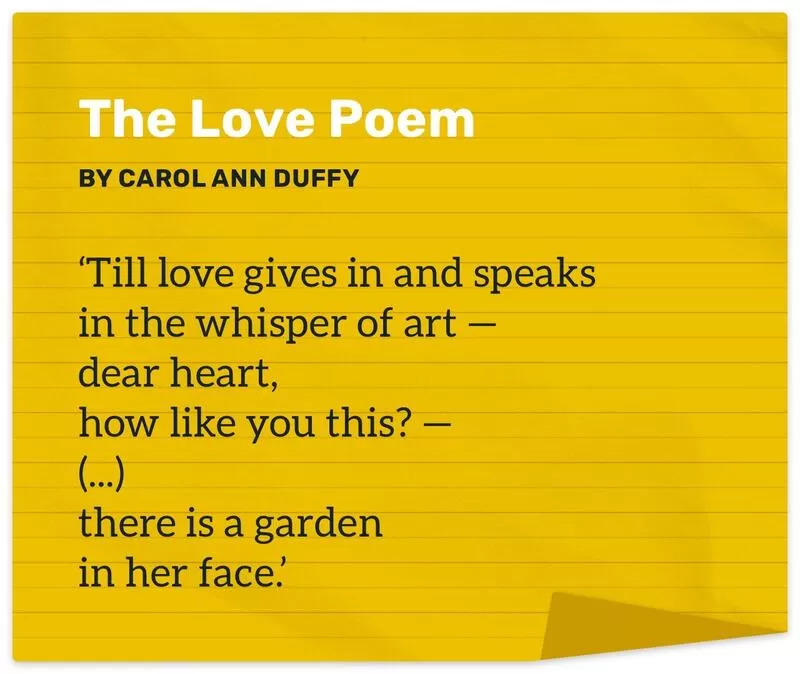
“The Love Poem” by Carol Ann Duffy
Carol Ann Duffy’s ‘The Love Poem’ is meta-poetic, exploring the difficulty of writing a love poem. The sweetness lies in the speaker’s struggle and sincere desire to find language adequate to describe their love. It’s a poem about the attempt to capture sweetness, acknowledging its elusive nature while demonstrating the depth of the feeling through the effort invested in trying to articulate it.
Love’s Sweet Restoration of Perception
Love can clear the fog, allowing you to see the world, and yourself, more truly. This restoration of clear perception is a profound sweetness.
“Before You Came” by Faiz Ahmed Faiz
Don’t leave now that you’re here—
Stay. So the world may become like itself again:
so the sky may by the sky,
the road a road,
and the glass of wine not a mirror, just a glass of wine.
Faiz Ahmed Faiz’s ‘Before You Came’ speaks to the transformative power of love in restoring a true perspective. The sweetness is in the relief and clarity the loved one brings, making the world feel “like itself again.” The simple examples – the sky being the sky, the road a road – highlight the gentle, fundamental way love allows the speaker to perceive reality without distortion, a quiet yet deep form of sweetness.
The Simple, Sweet Joy of Noticing
Sometimes the sweetest poems are those that focus on the small, shiny details of a person, reflecting simple adoration.
“Lines Depicting Simple Happiness” by Peter Gizzi
It feels right to notice all the shiny things about you
About you there is nothing I wouldn’t want to know
With you nothing is simple yet nothing is simpler
About you many good things come into relation
Peter Gizzi’s poem finds sweetness in simple observation and adoration. The opening line, “It feels right to notice all the shiny things about you,” is inherently sweet, focusing on positive, perhaps small, details. The desire to know “nothing I wouldn’t want to know” expresses a gentle, complete acceptance. The paradox of “nothing is simple yet nothing is simpler” suggests a comforting ease found within the depth of knowing the loved one.
Sweetness of a Cherished Bond Linked to Nature
Connecting love to the natural world can enhance its perceived strength and sweetness, aligning it with enduring beauty.
“For Keeps” by Joy Harjo
Joy Harjo’s ‘For Keeps’ draws parallels between love and the beauty of nature. This connection infuses the love with the perceived permanence and inherent sweetness of the natural world. By linking her feelings to elements that feel constant and beautiful, Harjo suggests a love that is not only powerful but also possesses the gentle, undeniable sweetness found in the enduring landscape.
 Image related to nature, possibly trees or a landscape
The Sweetness of Realistic Love
Not all sweet poems rely on idealized romance; some find sweetness in the imperfect, real aspects of a relationship.
“You Are the Penultimate Love of My Life” by Rebecca Hazelton
The garden you plant and I plant
is tunneled through by voles,
the vowels
we speak aren’t vows,
but there’s something
holding me here, for now,
like your eyes, which I suppose
are brown, after all.’
Rebecca Hazelton’s poem finds a unique, understated sweetness in its realism. The acknowledgment of imperfections (“garden…tunneled through by voles”) and the lack of grand vows highlight a love that is perhaps not the “ultimate,” but is real and present (“something holding me here, for now”). The simple, slightly uncertain observation about eye color (“which I suppose / are brown, after all”) adds a touch of authentic, unpretentious sweetness to this portrayal of love as it truly is.
Sweetness Through Evocative Metaphor
Skillful use of metaphors can create vivid, sweet imagery that resonates deeply with the reader. Understanding how to use literary devices effectively is part of mastering form poetry.
“Yours” by Daniel Hoffman
I am yours as the summer air at evening is
Possessed by the scent of linden blossoms,
As the snowcap gleams with light
Lent it by the brimming moon.
Without you I’d be an unleaded tree
Blasted in a bleakness with no Spring.
Daniel Hoffman’s ‘Yours’ employs natural metaphors to express the depth and sweetness of belonging. Comparing the speaker’s state to summer air with linden scent or a snowcap lit by the moon evokes sensations of pleasantness, beauty, and gentle illumination. The concluding lines, describing a bleak existence without the loved one, reinforce how much sweetness they bring into his life. The deliberate, lovely comparisons create a sense of profound, sweet connection.
The Sweet Exhilaration of New Love
The initial feeling of falling in love, with its excitement and enchantment, is a potent source of sweetness in poetry.
“A Love Song for Lucinda” by Langston Hughes
Love
Is a high mountain
Stark in a windy sky.
If you
Would never lose your breath
Do not climb too high.
Langston Hughes’s poem compares love to various natural phenomena. While some comparisons are powerful, the overall sense is one of exhilarating enchantment. The sweetness comes from the feeling of being swept away and captivated by love, akin to the breathtaking experience of natural beauty. The concluding lines can be interpreted as a gentle caution, but the preceding descriptions focus on the captivating, sweet intensity of the feeling itself.
The Sweetness of Spiritual Connection
For some, love transcends the physical, reaching a spiritual level of connection that feels deeply sweet and awe-inspiring.
“Poem for My Love” by June Jordan
June Jordan’s ‘Poem for My Love’ expresses spiritual awe towards a partner and their transcendent love. The sweetness here lies in the speaker’s profound reverence and sense of wonder at the depth of the connection. It’s a love that elevates and inspires, perceived as something sacred and beautiful, imbuing the relationship with a spiritual sweetness.
Sweetness in Simplicity and Recognition
Modern sweet poems often find beauty and impact in simple, direct language and the powerful feeling of recognizing a kindred spirit.
“for him” by Rupi Kaur
no,
it won’t
be love at
first sight when
we meet it’ll be love
at first remembrance
‘cause i’ve recognized you
in my mother’s eyes when she tells me,
marry the type of man you’d want to raise your son to be like.
Rupi Kaur’s poem captures a poignant, simple sweetness. The idea of “love at first remembrance” is inherently sweet, suggesting a fated, deeply felt connection that feels familiar. The comparison to her mother’s wisdom adds a layer of generational sweetness and approval, grounding the romantic feeling in family values and recognition. Its directness makes its emotional core easily accessible, a hallmark of effective, sweet poetry.
Bitter-Sweetness of Love’s Realities
Love can be challenging, but even in facing difficulties, there’s a sweetness in the understanding and generosity it teaches.
Untitled by Rupi Kaur
love will hurt you but
love will never mean to
love will play no games
cause love knows life
has been hard enough already
This untitled poem by Rupi Kaur presents a bittersweet truth about love. While acknowledging that love can cause hurt, the sweetness lies in the assertion that this hurt is unintentional (“will never mean to”). More profoundly, the idea that “love knows life / has been hard enough already” imbues love with a sense of empathy, understanding, and gentle consideration. It’s a mature, compassionate sweetness that acknowledges pain but offers solace.
Sweet Power in Self-Possession
Feeling underestimated in love, yet knowing your own strength and inherent worth, can be a form of quiet, self-possessed sweetness.
“Poem To An Unnameable Man” by Dorothea Lasky
And I will not cry also
Although you will expect me to
I was wiser too than you had expected
For I knew all along you were mine
Dorothea Lasky’s poem carries a subtle sweetness rooted in the speaker’s self-awareness and quiet power. Despite the implication of being underestimated, the speaker’s internal knowledge (“I was wiser too than you had expected,” “I knew all along you were mine”) holds a defiant, self-assured sweetness. It’s the sweetness of inner conviction and a gentle assertion of control within the dynamic.
Bittersweet Hope After Ending
Even after a relationship ends, there can be a bittersweet sweetness in hoping for healing and new beginnings for both individuals involved.
“Movement Song” by Audre Lorde
Audre Lorde’s ‘Movement Song’ deals with the end of a relationship. While sorrow is present, the poem ends with a hope for new beginnings for both partners. The bittersweet sweetness is in this generous wish for healing and future happiness, even when apart. It’s the sweetness of letting go with grace and maintaining a hopeful outlook for the well-being of the other person.
 Image of two people walking away from each other or a path dividing
The Quiet Sweetness of Familiar Comfort
Love that has settled into a comfortable, peaceful routine holds a distinct and often underrated sweetness.
“Camomile Tea” by Katherine Mansfield
We might be fifty, we might be five,
So snug, so compact, so wise are we!
Under the kitchen-table leg
My knee is pressing against his knee.
Our shutters are shut, the fire is low,
The tap is dripping peacefully;
The saucepan shadows on the wall
Are black and round and plain to see.
Katherine Mansfield’s ‘Camomile Tea’ is a masterclass in domestic sweetness. The poem paints a picture of quiet contentment and familiar intimacy. The detail of knees touching under the table, the low fire, the dripping tap, and the saucepan shadows all contribute to a sense of peaceful, settled life. The sweetness is in the snugness, compactness, and shared comfort of the moment, highlighting the beauty of mundane, everyday love.
Sweetness in Longing for Return
Waiting for a loved one to return, while anxious, also carries a sweet anticipation for the comfort and completion they bring.
“Dear One Absent This Long While” by Lisa Olstein
I expect you. I thought one night it was you
at the base of the drive, you at the foot of the stairs
you in a shiver of light, but each time
leaves in wind revealed themselves,
the retreating shadow of a fox, daybreak.
We expect you, cat and I, bluebirds and I, the stove.
Lisa Olstein’s poem beautifully conveys the anxious yet sweet anticipation of waiting for a loved one. The repeated instances of mistaking ordinary sights for the beloved’s return highlight the constant presence of the loved one in the speaker’s mind – a form of sweet preoccupation. The inclusion of the cat, bluebirds, and even the stove in the waiting (“We expect you”) adds a touch of charming, collective sweetness to the longing for their return to shared life.
Sweetness in Finding Refuge
For individuals facing external struggles, love can be a safe harbor, and this feeling of security is deeply sweet.
“My Lover Is a Woman” by Pat Parker
my lover is a woman
& when i hold her
feel her warmth
i feel good
feel safe
Pat Parker’s poem, born from her experiences as an African-American lesbian feminist, finds profound sweetness in safety and warmth. In a world that might be hostile, the simple acts of holding, feeling warmth, and feeling “good” and “safe” in a lover’s presence are elevated to acts of powerful, essential sweetness. It’s the sweetness of refuge, acceptance, and unburdened comfort found in love.
The Sweet Echo of Shared Beginnings
Love’s enduring sweetness can be felt by recalling the simple moment when connection first sparked, recognizing its lasting resonance.
“It Is Here” by Harold Pinter
What is this stance we take,
To turn away and then turn back?
What did we hear?
It was the breath we took when we first met.
Listen. It is here.
Harold Pinter’s ‘It Is Here’ finds sweetness in the echo of the past within the present relationship. The idea that the moment of first meeting, captured in “the breath we took,” is still “here” in the present is a powerful and sweet concept. It suggests that the essence of their connection, the initial spark, endures and can be accessed by simply listening and remembering.
Sweetness of Uncontainable Affection
Sometimes, love feels so overwhelming that even when physically together, there’s a sweet, paradoxical longing for more, a recognition that language falls short.
“Untitled” by Christopher Poindexter
I miss you even when you
are beside me.
I dream of your body
even when you are sleeping
in my arms.
The words I love you
could never be enough.
Christopher Poindexter’s untitled poem expresses an intense, almost overwhelming sweetness. The paradoxical feeling of missing someone even when they are present highlights the depth of connection that transcends physical proximity. The idea that “The words I love you / could never be enough” speaks to the inexpressible nature of this deep affection, a testament to its profound sweetness.
Sweetness as an Elemental Force
Some poems see love not as a mere emotion, but as a fundamental, elemental force as essential as nature itself, a core sweetness of existence. For those learning how do you write a poetry, capturing this sense of the fundamental can be powerful.
“Love Is Not A Word” by Riyas Qurana
Riyas Qurana’s “Love Is Not A Word” personifies love, describing it as elemental and connected to nature (“keep a falling flower in the mid-air”). The sweetness is in this portrayal of love as something essential, elusive yet inviting, asking to be fully embraced. The concluding line, “Don’t forget to bring the word / Darling / When you come,” adds a touch of personal sweetness, contrasting the abstract concept with a tender address.
The Sweetness of Constant Recommitment
Love that requires conscious effort and recommitment, yet is chosen again and again despite challenges, holds a deep, enduring sweetness.
“[Again and again, even though we know love’s landscape]” by Rainer Maria Rilke
Again and again, even though we know love’s landscape
and the little churchyard with its lamenting names
and the terrible reticent gorge in which the others
end: again and again the two of us walk out together
under the ancient trees, lay ourselves down again and
again
among the flowers, and look up into the sky.
Rainer Maria Rilke’s poem finds sweetness in the persistent, conscious choice to love. Despite acknowledging the potential for heartbreak (“little churchyard,” “terrible reticent gorge”), the repetition of “Again and again” highlights the sweet commitment to walk out together, lie down among flowers, and look up at the sky. It’s the sweetness of choosing connection and finding simple joy in shared moments, fully aware of love’s vulnerabilities.
Sweet Longing for What Was
Even after a love is lost, the longing for its return can be tinged with a bittersweet sweetness, cherishing the memory of what was.
“Echo” by Christina Rossetti
Christina Rossetti’s ‘Echo’ expresses longing for a lost love, wishing for it to return like an echo. The sweetness here is bittersweet, found in the cherished memory and the powerful desire for the past connection. The longing itself is fueled by the sweetness of the love that was experienced, highlighting its lasting impact even in absence.
 Abstract image suggesting echoes or fading memories
The Sweetness of Merging Loves
When two loves meet and become one, the resulting unity and mutual amplification of feeling can be a source of profound sweetness.
“I loved you first: but afterwards your love” by Christina Rossetti
I loved you first: but afterwards your love
Outsoaring mine, sang such a loftier song
As drowned the friendly cooings of my dove.
Which owes the other most? my love was long,
And yours one moment seemed to wax more strong
In this sonnet, Christina Rossetti explores the merging of two loves. While she questions who loved whom “first,” the poem ultimately highlights the sweetness of their loves combining into something greater. The idea of the partner’s love “Outsoaring” hers and singing a “loftier song” suggests a beautiful intensification and unity, where individual affections blend into a single, powerful, sweet bond. This poem exemplifies the structure and emotional depth possible within a sonnet, offering a practical look at the definition of italian petrarchan sonnet and how it can be used.
Sweet Surrender to Love’s Power
The act of surrendering to the overwhelming power of love can feel like a release, a sweet acceptance of its magnificent force.
“Defeated by Love” by Rumi
The sky was lit
by the splendor of the moon
So powerful
I fell to the ground
Your love
has made me sure
I am ready to forsake
this worldly life
and surrender
to the magnificence
of your Bering
Rumi’s poem expresses total surrender to love’s power. The sweetness is found in this complete yielding to the “magnificence” of the beloved. The imagery of falling to the ground and forsaking worldly life conveys the overwhelming force, but the surrender is depicted as a positive, affirming choice, leading to certainty and a connection with something magnificent. It’s the sweet release found in absolute devotion.
The Enduring Sweetness of Timeless Beauty
Some loves feel so perfect, so idealized, that they are compared to timeless concepts like a summer’s day, finding sweetness in their enduring quality.
“Shall I compare thee to a summer’s day? (Sonnet 18)” by William Shakespeare
Shall I compare thee to a summer’s day?
Thou art more lovely and more temperate:
Rough winds do shake the darling buds of May,
And summer’s lease hath all too short a date:
Shakespeare’s Sonnet 18 is a classic example of idealizing love. While the comparison to a summer’s day is central, the sweetness lies in the assertion that the beloved is more lovely and temperate, surpassing even this ideal of natural beauty. The promise that the beloved’s beauty will live on eternally in the poem adds a layer of sweet, lasting tribute, preserving their loveliness beyond the passage of time. This sonnet serves as a foundational example when discussing form poetry and the definition of italian petrarchan sonnet, demonstrating its power for expressing timeless affection.
 Image of a bust of William Shakespeare
Sweetness of Unchanging Love
A love that remains constant and true despite external changes or challenges holds a powerful, reassuring sweetness.
“Let me not to the marriage of true minds (Sonnet 116)” by William Shakespeare
Let me not to the marriage of true minds
Admit impediments. Love is not love
Which alters when it alteration finds,
Or bends with the remover to remove.
O no! it is an ever-fixed mark
Shakespeare’s Sonnet 116 is a definition of true, unchanging love. The sweetness is in the absolute conviction and the steadfastness described. Love is an “ever-fixed mark,” a beacon that does not waver. This unwavering nature, the refusal to admit “impediments” or alter when faced with change, provides a deep, reassuring sweetness – the comfort of knowing love’s constancy.
Sweetness in Seeing Beyond Ideal
Finding beauty and value in a loved one not because they fit an ideal, but simply for who they are, is a genuine and sweet form of acceptance.
“My mistress’ eyes are nothing like the sun” (Sonnet 130) by William Shakespeare
I grant I never saw a goddess go;
My mistress, when she walks, treads on the ground:
And yet, by heaven, I think my love as rare
As any she belied with false compare.
Shakespeare’s Sonnet 130 humorously rejects exaggerated comparisons common in love poetry. The sweetness lies in the speaker’s affection for his mistress precisely because she is real and human (“treads on the ground”). He sees her flaws but declares his love for her is as “rare” as any idealized beauty described with “false compare.” It’s the sweetness of loving someone authentically, imperfections and all. This sonnet is a famous example contrasting with the Petrarchan tradition often discussed when covering the definition of italian petrarchan sonnet.
Logical Sweetness of Natural Harmony
Love can feel as natural and inevitable as the blending of rivers and oceans, finding a sweet logic in its organic connection.
“Love’s Philosophy” by Percy Bysshe Shelley
The fountains mingle with the river
And the rivers with the ocean,
The winds of heaven mix forever
With a sweet emotion;
Nothing in the world is single;
All things by a law divine
In one spirit meet and mingle
Why not I with thine?
Percy Bysshe Shelley’s ‘Love’s Philosophy’ argues for the naturalness and inevitability of love by citing examples from nature. The sweetness comes from the harmonious mingling of natural elements (“fountains mingle,” “rivers with the ocean,” “winds…mix forever / With a sweet emotion”). This natural harmony is presented as a “law divine,” suggesting that human love, following this same principle of mingling, is inherently sweet and part of the universal order.
The Sweet Promise of Eternity
Even when faced with the transient nature of life, the promise of love’s enduring nature can be a profound source of sweetness.
“One Day I Wrote her Name (Sonnet 75)” by Edmund Spenser
One day I wrote her name upon the strand,
But came the waves and washed it away:
Again I wrote it with a second hand,
But came the tide, and made my pains his prey.
Edmund Spenser’s Sonnet 75, from his Amoretti sequence, contrasts the impermanence of physical things (“name upon the strand,” washed away by waves) with the promise of eternal love. The sweetness is in the speaker’s determination to immortalize his love through verse, ensuring her name will live on despite earthly transience. It’s the sweet promise of poetry granting eternal life to the beloved and the love they share.
Longing for a Sweet, All-Encompassing Love
The desire for a love so deep and immersive that one feels lost within it can be a powerful and sweet longing.
“I Am Not Yours” by Sara Teasdale
Sara Teasdale’s ‘I Am Not Yours’ expresses a longing for a passionate, all-encompassing love, contrasting it with a current state of not belonging. The sweetness is found in the ideal she yearns for – a love so complete it makes her feel “lost.” It represents the sweet anticipation and desire for a connection that is utterly consuming and provides a true sense of belonging.
 Image suggesting yearning or looking into the distance
Sweetness of Sensual Intimacy
Love often includes a physical dimension, and poetry can capture the gentle, inviting sweetness of sensual connection.
“Now Sleeps the Crimson Petal” by Alfred, Lord Tennyson
Now sleeps the crimson petal, now the white;
Nor waves the cypress in the palace walk;
Nor winks the gold fin in the porphyry font.
The firefly wakens; waken thou with me.
Alfred, Lord Tennyson’s song from The Princess evokes a sense of quiet, nocturnal sweetness and invitation. The peaceful sleeping of petals and the stillness create a tranquil atmosphere. The gentle awakening of the firefly and the speaker’s call to “waken thou with me” shift the mood towards intimate connection. The sensory details contribute to a subtle, inviting sweetness.
Sweetness in Shared Adventures (Big or Small)
The desire for a loved one to be part of every aspect of life, mundane or extraordinary, highlights a deep and simple sweetness of companionship.
“poem I wrote sitting across the table from you” by Kevin Varrone
I would fold myself
into the hole in my pocket and disappear
into the pocket of myself, or at least my pants
but before I did
like some ancient star
I’d grab your hand
Kevin Varrone’s conversational poem expresses a sweet, spontaneous affection. The whimsical idea of disappearing into a pocket is contrasted with the simple, grounded act of wanting to “grab your hand” before undertaking any journey, even an imaginary one. This highlights the fundamental sweetness of wanting the loved one present for all of life’s experiences, big or small.
The Sweet Intensity of Craving and Presence
Love can involve intense craving, but also a profound sweetness in the simple reality of shared presence, however brief.
“On Earth We’re Briefly Gorgeous” by Ocean Vuong
Tell me it was for the hunger
& nothing less. For hunger is to give
the body what it knows
it cannot keep. That this amber light
whittled down by another war
is all that pins my hand
to your chest.
Ocean Vuong’s poem explores intense desire but finds sweetness in the raw honesty of “hunger” and the tangible reality of shared presence in a difficult world. The “amber light” and the physical connection of a hand on a chest offer a moment of grounding sweetness amidst the intensity and awareness of impermanence. It’s the sweetness found in authentic, present connection, acknowledging its fleeting nature.
The Sweetness of Returning to Self
Healing after heartbreak involves a journey back to oneself, a process that, while difficult, holds the sweetness of self-reclamation and self-love.
“Love After Love” by Derek Walcott
You will love again the stranger who was your self.
Give wine. Give bread. Give back your heart
to itself, to the stranger who has loved you
all your life, whom you ignored
for another, who knows you by heart.
Derek Walcott’s ‘Love After Love’ is a poem about self-love and healing. The sweetness here is in the gentle encouragement to return to oneself after a relationship ends. The idea of rediscovering and loving “the stranger who was your self” and who “has loved you all your life” is profoundly sweet. It’s the sweetness of self-acceptance and the realization that the most enduring love is the one we cultivate for ourselves.
Sweetness in Simple Moments
Love is often most evident and sweet in the accumulation of small, specific details and moments that make a person uniquely lovable.
“I Love You” by Ella Wheeler Wilcox
I love your lips when they’re wet with wine
And red with a wild desire;
I love your eyes when the lovelight lies
Lit with a passionate fire.
I love your arms when the warm white flesh
Touches mine in a fond embrace;
I love your hair when the strands enmesh
Your kisses against my face.
Ella Wheeler Wilcox’s ‘I Love You’ finds sweetness in detailing specific physical and emotional aspects of the beloved. The repetition of “I love your…” creates a rhythm of affirmation. While it includes passion (“wild desire,” “passionate fire”), the focus on specific, tangible details like lips, eyes, arms, and hair in intimate moments (“fond embrace,” “kisses against my face”) grounds the love in physical, felt sweetness.
The Sweet Urgency of Cherishing Time
Recognizing that love is precious and time is limited imbues the moments shared with a poignant sweetness, encouraging appreciation.
“We Have Not Long to Love” by Tennessee Williams
Tennessee Williams’ ‘We Have Not Long to Love’ carries a bittersweet sweetness rooted in the awareness of time’s passage. The title itself highlights this urgency. The sweetness comes from the implied message: because time is short, the love shared in the present moment is incredibly precious and must be cherished. It encourages readers to appreciate the sweetness of connection while it lasts.
 Image suggesting time passing, like a clock or sunset
The Sweetness of Peak Emotional Memory
Remembering a past love, particularly the moment of first realizing its depth, can hold a significant and lasting sweetness.
“Poem to First Love” by Matthew Yeager
To have been told “I love you” by you could well be, for me,
the highlight of my life, the best feeling, the best peak
on my feeling graph, in the way that the Chrysler building
might not be the tallest building in the NY sky but is
the best, the most exquisitely spired
Matthew Yeager’s ‘Poem to First Love’ finds sweetness in the memory of a peak emotional experience – being told “I love you” for the first time by a specific person. The comparison to the Chrysler building, perhaps not the biggest but the “best, the most exquisitely spired,” adds a personal, charming sweetness to this memory. It’s the sweetness of recalling a moment that felt perfect and defining, acknowledging its lasting impact.
Exploring sweet poems reveals that love’s most powerful expressions are often found not in grand gestures, but in the quiet moments of comfort, understanding, and simple appreciation. These poems offer a reminder of the enduring value of tenderness and connection in our lives.