
Travel, whether a grand adventure to distant lands or a reflective exploration closer to home, stirs something deep within us. It alters our perspective, challenges our assumptions, and often reveals hidden aspects of ourselves and the world. Poetry, with its unique ability to capture complex emotions and fleeting experiences, serves as a powerful vehicle for expressing these feelings. We can call these “trip poems”—verses that explore the anticipation, reality, challenges, and transformations inherent in journeys. This article delves into a selection of notable trip poems from various eras and voices, analyzing how they illuminate the multifaceted experience of travel and what they offer to those who appreciate the art of poetry and the call of the road.
Contents
- Vacation by Rita Dove
- If You Were in Cairo by Simon Constam
- Self-Portrait on the Street of an Unnamed Foreign City by Jennifer Grotz
- Viaggiate (Travel) by Gio Evan
- Consolation by Billy Collins
- Dislocation by Simon Constam
- Learning to Travel by Julene Tripp Weaver
- Majorca by John Cooper Clarke
- Questions of Travel by Elizabeth Bishop
- For the Traveler by John O’Donohue
- The Lady in 38C by Lori Jakiela
- The World Won’t Miss You for a While by Kathryn Simmonds
- 3 Poems About Travel by Sheenagh Pugh
- What If This Road
- The Opportune Moment
- Do You Think We’ll Ever Get to See Earth, Sir?
- Song of the Open Road by Walt Whitman
- Why Do I Travel? Author Unknown
- The Return by Geneen Marie Haugen
- The Road Not Taken by Robert Frost
- Die Slowly by Martha Medeiros
Like meaningful poems about life, trip poems often touch upon universal themes of identity, connection, and discovery, framed through the lens of movement and place. They remind us that every journey, physical or metaphorical, is an opportunity for growth.
Vacation by Rita Dove
Rita Dove’s “Vacation” captures a specific, often overlooked, phase of a trip: the waiting period before departure. This poem transforms the mundane setting of an airport gate into a liminal space, a “stretch of no time, no home.”
I love the hour before takeoff,
that stretch of no time, no home
but the gray vinyl seats linked like
unfolding paper dolls. Soon we shall
be summoned to the gate, soon enough
there’ll be the clumsy procedure of row numbers
and perforated stubs—but for now
I can look at these ragtag nuclear families
with their cooing and bickering
or the heeled bachelorette trying
to ignore a baby’s wail and the baby’s
exhausted mother waiting to be called up early
while the athlete, one monstrous hand
asleep on his duffel bag, listens,
perched like a seal trained for the plunge.
Even the lone executive
who has wandered this far into summer
with his lasered itinerary, briefcase
knocking his knees—even he
has worked for the pleasure of bearing
no more than a scrap of himself
into this hall. He’ll dine out, she’ll sleep late,
they’ll let the sun burn them happy all morning—
a little hope, a little whimsy
before the loudspeaker blurts
and we leap up to become
Flight 828, now boarding at Gate 17.
(Dove, Rita. “Vacation.” Poets.org, American Academy of Poets, https://poets.org/poem/vacation)
This trip poem focuses on the shared, transient community formed by travelers. Dove observes the diverse individuals and groups united only by their common destination and the shared anticipation of leaving. The image of people shedding their everyday selves, bearing “no more than a scrap,” highlights travel’s potential for temporary liberation from routine and expectation. It’s a moment charged with possibility, a quiet breath before the literal and figurative leap into the experience of the trip itself.
If You Were in Cairo by Simon Constam
Simon Constam’s poem explores the theme of connection that transcends geographical distance, brought into sharp relief by taking a trip. The vast distances mentioned—Cairo, Kampala, Phoenix, Havana, Saigon, Phnom Penh, Tuvalu—emphasize the speaker’s unwavering desire to stay close to a loved one, no matter how far their travels take them.
If you were in Cairo, and I in Kampala;
if you took to Phoenix, and I to Havana;
if you sojourned in Saigon, and I in Phnom Penh
even that short distance would deeply offend.
And seeing as how I’d want to stay close to you,
I’d find every which way to stay in touch with you.

If you moved to Tuvalu, to live or to work,
And email was stalled and the phones didn’t work.
I’d train clever pigeons to soar up above,
to faithfully reach you with my missives of love.

I’d vouchsafe a letter with a monk in a monastery.
I’d entrust my love note to an Amazon missionary.
I’d hire a Sherpa to mountain climb after you
on Everest, on Lhotse, Nanga Parbat or K2…

I would do anything to keep myself close to you.
I’d learn Swahili, Hindi, and even Urdu.
No hurdle of language I’d have to confront,
could ever deter my untiring want.

You can travel as far and as long as you like
by plane, train, or boat, by car or by bike.
I’d find a way, some way, to reach out to you,
I’d even use snail mail if I absolutely had to.

If you flew supersonically out into the blue,
I’d radio the pilot to tell you I love you.
If you pined for space travel and lived in the shuttle,
and our back and forth was a quite public muddle,
and officials below and your crewmates above
had all grown quite tired of such raging, unending, fulsome, embarrassing love,

no matter the trouble I’d have surely incurred,
I’d carry on calling, could not be deterred by
pleading from NASA, complaints or protests,
they’d have to come get me, put me under arrest.

If not-talking was something that you took a vow for,
I’d read to you, sing to you, whatever you’d need me to.
I’d learn to lip read and learn to sign too
There’s really no end to what I would do.

I’d follow you through darkness.
I’d follow you through rain.
My daily attention might drive you insane.

Have I made my point clear? You have nothing to fear
I’m resourceful enough to keep loving you.

So great is my love, I am indefatigable .
When it comes to you, love,
I can’t stop loving you!
This trip poem uses hyperbole and humor to underscore the power of connection against the backdrop of extensive global travel. It suggests that while a trip can physically separate people, the bonds of love and determination can bridge any distance, even across continents or into space. The diverse list of locations highlights the breadth of potential journeys, contrasting them with the speaker’s singular focus on maintaining closeness.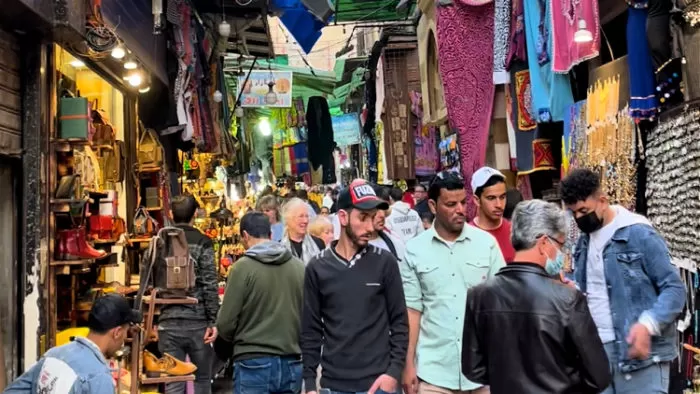 A bustling street scene in a Cairo bazaar, illustrating the vibrant settings explored in trip poems like 'If You Were in Cairo'
Self-Portrait on the Street of an Unnamed Foreign City by Jennifer Grotz
Jennifer Grotz’s poem captures the introspective nature of taking a trip alone, particularly to a foreign city. The anonymity of such a setting allows for a unique form of self-reflection.
The lettering on the shop window in which
you catch a glimpse of yourself is in Polish.

Behind you a man quickly walks by, nearly shouting
into his cell phone. Then a woman

at a dreamier pace, carrying a just-bought bouquet
upside-down. All on a street where pickpockets abound

along with the ubiquitous smell of something baking.
It is delicious to be anonymous on a foreign city street.

Who knew this could be a life, having languages
instead of relationships, struggling even then,

finding out what it means to be a woman
by watching the faces of men passing by.

I went to distant cities, it almost didn’t matter
which, so primed was I to be reverent.

All of them have the beautiful bridge
crossing a grey, near-sighted river,

one that massages the eyes, focuses
the swooping birds that skim the water’s surface.

The usual things I didn’t pine for earlier
because I didn’t know I wouldn’t have them.

I spent so much time alone, when I actually turned lonely
it was vertigo.

Myself estranged is how I understood the world.
My ignorance had saved me, my vices fueled me,

and then I turned forty. I who love to look and look
couldn’t see what others did.

Now I think about currencies, linguistic equivalents, how lop-sided they are, while
my reflection blurs in the shop windows.

Wanting to be as far away as possible exactly as much as still with you.
Shamelessly entering a Starbucks (free wifi) to write this.
(Grotz, Jennifer. “Self-Portrait on the Street of an Unnamed Foreign City.” Poets.org, American Academy of Poets, https://poets.org/poem/self-portrait-street-unnamed-foreign-city)
This trip poem explores the dualities of travel: the desire for distance and anonymity versus the pull of connection; the sensory richness of a new place versus the feeling of estrangement. The speaker observes the foreign environment and its inhabitants, but also her own reflection, using the trip as a mirror for internal reckoning. The mention of entering a Starbucks grounds the experience in a modern, relatable reality, contrasting the romantic ideal of foreign exploration with the practicalities of travel today. This poem highlights how a trip can be as much an internal journey as a physical one. A person with a backpack walking on a busy street, symbolizing the introspection and anonymity experienced during a solo trip in a foreign city.
Viaggiate (Travel) by Gio Evan
Gio Evan’s powerful piece, often shared for its motivational message, frames travel not just as leisure but as a vital necessity for personal and societal growth. This trip poem argues that without the experience of travel, one risks becoming narrow-minded and fearful.
Try to travel, otherwise you may become racist, and you may end up believing that your skin is the only one to be right, that your language is the most romantic and that you were the first to be the first. Travel, because if you don't travel then your thoughts won’t be strengthened, won’t get filled with ideas. Your dreams will be born with fragile legs and then you end up believing in tv-shows, and in those who invent enemies that fit perfectly with your nightmares to make you live in terror. Travel, because travel teaches to say good morning to everyone regardless of which sun we come from. Travel, because travel teaches to say goodnight to everyone regardless of the darkness that we carry inside. Travel, because traveling teaches to resist, not to depend, to accept others, not just for who they are but also for what they can never be. To know what we are capable of, to feel part of a family beyond borders, beyond traditions and culture. Traveling teaches us to be beyond. Travel, otherwise you end up believing that you are made only for a panorama and instead inside you there are wonderful landscapes still to visit.(Original Italian provided in source, this is the English translation.)
This trip poem is a direct exhortation, using repetition (“Travel, because…”) to build urgency. It connects the act of taking a trip directly to developing empathy, critical thinking, and resilience. By exposing oneself to different cultures and perspectives, travel broadens the mind and challenges insular beliefs. The final lines offer a beautiful metaphor: just as there are landscapes to visit outside, there are wonderful landscapes within us that only travel can help us discover. This perspective positions the trip as a tool for profound inner exploration and liberation.
Consolation by Billy Collins
Billy Collins, known for his accessible and often humorous style, offers a counterpoint to the usual glorification of travel in “Consolation.” This trip poem celebrates the quiet pleasures of staying home, finding richness and comfort in the familiar rather than seeking it in the exotic.
How agreeable it is not to be touring Italy this summer,
wandering her cities and ascending her torrid hilltowns.
How much better to cruise these local, familiar streets,
fully grasping the meaning of every roadsign and billboard
and all the sudden hand gestures of my compatriots.

There are no abbeys here, no crumbling frescoes or famous
domes and there is no need to memorize a succession
of kings or tour the dripping corners of a dungeon.
No need to stand around a sarcophagus, see Napoleon’s
little bed on Elba, or view the bones of a saint under glass.

How much better to command the simple precinct of home
than be dwarfed by pillar, arch, and basilica.
Why hide my head in phrase books and wrinkled maps?
Why feed scenery into a hungry, one-eyes camera
eager to eat the world one monument at a time?

Instead of slouching in a café ignorant of the word for ice,
I will head down to the coffee shop and the waitress
known as Dot. I will slide into the flow of the morning
paper, all language barriers down,
rivers of idiom running freely, eggs over easy on the way.

And after breakfast, I will not have to find someone
willing to photograph me with my arm around the owner.
I will not puzzle over the bill or record in a journal
what I had to eat and how the sun came in the window.
It is enough to climb back into the car

as if it were the great car of English itself
and sounding my loud vernacular horn, speed off
down a road that will never lead to Rome, not even Bologna.
(Collins, Billy. “Consolation.” Poetry Foundation, Poetry Magazine, July 1991, https://www.poetryfoundation.org/poetrymagazine/issue/71257/july-1991.)
This poem, framed as a deliberate choice not to take a specific trip, functions as a unique kind of trip poem. By contrasting the familiar comforts of home with the potential stresses and tourist-trap banality of foreign travel, Collins implicitly defines what a certain kind of trip is (or isn’t). He finds joy in the ease of understanding, the lack of performance (“hungry, one-eyed camera”), and the simple, authentic interactions that are often harder to come by when navigating a foreign environment. It’s a reminder that while trips offer escape, there is also profound value in the world we already inhabit.
Dislocation by Simon Constam
Simon Constam’s excerpt from “Dislocation” delves into the less glamorous, often challenging reality of extended travel. It speaks to the internal uncertainty that can arise when the initial thrill of being in a foreign place fades.
> I envy those who envy me for traveling.
> Sometimes I sit on a foreign street in a busy cafe,
> imagining you wishing you were here,
> feeling for the first time the thrilling flush
> of wanting to be elsewhere,
> the frisson of happiness that wishes bring.
> And so I sit quietly knowing that now
> it’s time to figure out just what it is
> I meant to do here.
This trip poem snippet captures the feeling of being physically present in an exotic location while experiencing a sense of disconnect or purposelessness. It challenges the common perception that travel is solely about constant excitement and discovery. The speaker reflects on the envy of others, acknowledging the perceived allure of travel, yet is faced with the quiet, difficult task of confronting their own presence and purpose during the trip. It highlights travel as a state that can reveal internal questions as much as external wonders.A person with a backpack walking on a busy street, symbolizing the introspection and anonymity experienced during a solo trip in a foreign city.
Learning to Travel by Julene Tripp Weaver
Julene Tripp Weaver’s “Learning to Travel” beautifully portrays the deep immersion that slow, long-term travel can facilitate. It highlights how a trip, taken without haste, allows for genuine connection with a place and its people.
> She will learn French,
> enough to greet and shop become known.
> A French baker befriends her.
> After a long summer
> she stays on into the fall
> writes poems, picks wild herbs.
> An old woman cooks with her.
> They sit in silence
> while the sun sets. In the evenings
> she lights candles, when hungry
> they share bread and cheese.
>
> A circus comes to town,
> young children knock
> on her door to watch
> elephants parade in the street.
> Tents are raised.
> A knife thrower invites her for his act.
> The wind of flying knives pulses
> dreams of moving on with the circus
> until there is no question. She will go.
> She pulls together a bag
> says goodbye to the old woman
> to the baker, to the children,
> moves to the next town
> beneath the throw of the knife.
(Weaver, Julene Tripp. “Learning to Travel.” The Literary Bohemian, Issue 03, February 2009, https://literarybohemian.com/poetry/learning-to-travel/.)
This trip poem illustrates a form of travel that moves beyond sightseeing to genuine living within a community. The traveler learns the language, builds relationships (with the baker, the old woman, the children), and integrates into local rhythms. The sudden appearance of the circus and the invitation from the knife thrower introduce an element of unexpected opportunity and risk, symbolizing how a long trip can open doors to entirely new paths. The decision to leave the comfortable, known life for the uncertain adventure “beneath the throw of the knife” captures the spirit of embracing the unpredictable nature of a continuous journey. This poem is a tribute to the transformative power of following serendipity during a trip.
Majorca by John Cooper Clarke
John Cooper Clarke’s “Majorca” offers a starkly unsentimental, even cynical, look at the package holiday experience. This trip poem contrasts sharply with idealized notions of travel, finding dark humor in the mass-market vacation.
> fasten your seatbelts says a voice
> inside the plane you can't hear no noise
> engines made by rolls royce
> take your choice…make mine majorca
>
> check out the parachutes
> can't be found
> alert those passengers
> they'll be drowned
> a friendly mug says “settle down”
> when i came round i was gagged and bound…
> for Majorca
>
> and the eyes caress
> the neat hostess
> her unapproachable flip finesse
> i found the meaning of the word excess
> they've got little bags if you wanna make a mess
> i fancied Cuba but it cost me less…
> to Majorca
>
> (Whose blonde sand fondly kisses the cool fathoms of the blue mediteranean)
>
> they packed us into the white hotel
> you could still smell the polycell
> wet white paint in the air-conditioned cell
> the waiter smelled of fake Chanel
> Gaulois… Garlic as well
> says if i like… i can call him “Miguel”…
> well really
>
> i got drunk with another fella
> who'd just brought up a previous paella
> he wanted a fight but said they were yella'…
> in Majorca
>
> the guitars rang and the castinets clicked
> the dancer's stamped and the dancer's kicked
> it's likely if you sang in the street you'd be nicked
> the double diamond flowed like sick
> mother's pride, tortilla and chips
> pneumatic drills when you try to kip…
> in Majorca
>
> a stomach infection put me in the shade
> must have been something in the lemonade
> but by the balls of franco i paid
> had to pawn my bucket and spade
> next year I'll take the international brigade…
> to Majorca
This trip poem uses vivid, often unpleasant imagery and a sardonic tone to depict the chaotic, sometimes grim reality of a cheap vacation package. From the potentially faulty plane to the shoddy hotel (“air-conditioned cell”) and the unappealing local scene (vomiting tourist, loud noise, stomach infection), Clarke strips away any romanticism. The italicized, overly poetic line about the Mediterranean sand is a clear mockery of typical travel brochures. This poem reminds us that not every trip is an idyllic escape; some are simply experiences to be endured, finding humor in the absurdities. A scenic coastal view in Majorca with blue water and cliffs, contrasting with the cynical portrayal of a package holiday in the poem 'Majorca'.
Questions of Travel by Elizabeth Bishop
Elizabeth Bishop’s reflective poem delves into the fundamental motivations behind taking a trip. Rather than simply describing a place, it questions the very act of leaving home to see the world.
There are too many waterfalls here; the crowded streams
hurry too rapidly down to the sea,
and the pressure of so many clouds on the mountaintops
makes them spill over the sides in soft slow-motion,
turning to waterfalls under our very eyes.
–For if those streaks, those mile-long, shiny, tearstains,
aren’t waterfalls yet,
in a quick age or so, as ages go here,
they probably will be.
But if the streams and clouds keep travelling, travelling,
the mountains look like the hulls of capsized ships,
slime-hung and barnacled.

Think of the long trip home.
Should we have stayed at home and thought of here?
Where should we be today?
Is it right to be watching strangers in a play
in this strangest of theatres?
What childishness is it that while there's a breath of life
in our bodies, we are determined to rush
to see the sun the other way around?
The tiniest green hummingbird in the world?
To stare at some inexplicable old stonework,
inexplicable and impenetrable,
at any view,
instantly seen and always, always delightful?
Oh, must we dream our dreams
and have them, too?
And have we room
for one more folded sunset, still quite warm?

But surely it would have been a pity
not to have seen the trees along this road,
really exaggerated in their beauty,
not to have seen them gesturing
like noble pantomimists, robed in pink.
–Not to have had to stop for gas and heard
the sad, two-noted, wooden tune
of disparate wooden clogs
carelessly clacking over
a grease-stained filling-station floor.
(In another country the clogs would all be tested.
Each pair there would have identical pitch.)
–A pity not to have heard
the other, less primitive music of the fat brown bird
who sings above the broken gasoline pump
in a bamboo church of Jesuit baroque:
three towers, five silver crosses.
–Yes, a pity not to have pondered,
blurr’dly and inconclusively,
on what connection can exist for centuries
between the crudest wooden footwear
and, careful and finicky,
the whittled fantasies of wooden footwear
and, careful and finicky,
the whittled fantasies of wooden cages.
–Never to have studied history in
the weak calligraphy of songbirds’ cages.
–And never to have had to listen to rain
so much like politicians’ speeches:
two hours of unrelenting oratory
and then a sudden golden silence
in which the traveller takes a notebook, writes:

“Is it lack of imagination that makes us come
to imagined places, not just stay at home?
Or could Pascal have been not entirely right
about just sitting quietly in one’s room?

Continent, city, country, society:
the choice is never wide and never free.
And here, or there . . . No. Should we have stayed at home,
wherever that may be?”
(Bishop, Elizabeth. “Questions of Travel.” All Poetry, https://allpoetry.com/Questions-of-Travel.)
This philosophical trip poem opens with a description of a landscape overwhelmed by natural beauty, prompting an immediate questioning of the traveler’s presence. Bishop asks whether the impulse to travel stems from a “lack of imagination,” suggesting that perhaps one could fully experience the world internally without taking a physical trip. Yet, the second part of the poem provides vivid, sensory details of things encountered only by traveling – the exaggerated beauty of trees, the sound of wooden clogs, the bird’s song above a gas pump, the historical connection between disparate objects. These details argue powerfully for the irreplaceable value of direct experience gained through taking a trip. The poem concludes without a definitive answer, leaving the reader to ponder their own motivations for exploring the world.
For the Traveler by John O’Donohue
John O’Donohue, an Irish poet and philosopher, offers a spiritual perspective on taking a trip in “For the Traveler.” This poem frames the journey as an opportunity for profound inner discovery and transformation.
> Every time you leave home,
> Another road takes you
> Into a world you were never in.
>
> New strangers on other paths await.
> New places that have never seen you
> Will startle a little at your entry.
> Old places that know you well
> Will pretend nothing
> Changed since your last visit.
>
> When you travel, you find yourself
> Alone in a different way,
> More attentive now
> To the self you bring along,
> Your more subtle eye watching
> You abroad; and how what meets you
> Touches that part of the heart
> That lies low at home:
>
> How you unexpectedly attune
> To the timbre in some voice,
> Opening in conversation
> You want to take in
> To where your longing
> Has pressed hard enough
> Inward, on some unsaid dark,
> To create a crystal of insight
> You could not have known
> You needed
> To illuminate
> Your way.
>
> When you travel,
> A new silence
> Goes with you,
> And if you listen,
> You will hear
> What your heart would
> Love to say.
>
> A journey can become a sacred thing:
> Make sure, before you go,
> To take the time
> To bless your going forth,
> To free your heart of ballast
> So that the compass of your soul
> Might direct you toward
> The territories of spirit
> Where you will discover
> More of your hidden life,
> And the urgencies
> That deserve to claim you.
>
> May you travel in an awakened way,
> Gathered wisely into your inner ground;
> That you may not waste the invitations
> Which wait along the way to transform you.
>
> May you travel safely, arrive refreshed,
> And live your time away to its fullest;
> Return home more enriched, and free
> To balance the gift of days which call you.
(O’Donohue, John. “For the Traveler.” Awakin.org, https://www.awakin.org/v2/read/view.php?tid=2191.)
This trip poem emphasizes the internal dimension of taking a trip. O’Donohue suggests that travel creates a unique solitude and attentiveness, allowing the traveler to connect with their “hidden life” and “territories of spirit.” The encounters and observations made abroad (“what meets you”) touch parts of the heart “that lies low at home,” fostering unexpected insights. The poem elevates the physical act of traveling to a sacred practice, urging the traveler to be mindful and open to the transformative possibilities that await on the road. It speaks to the profound personal growth that can result from a journey.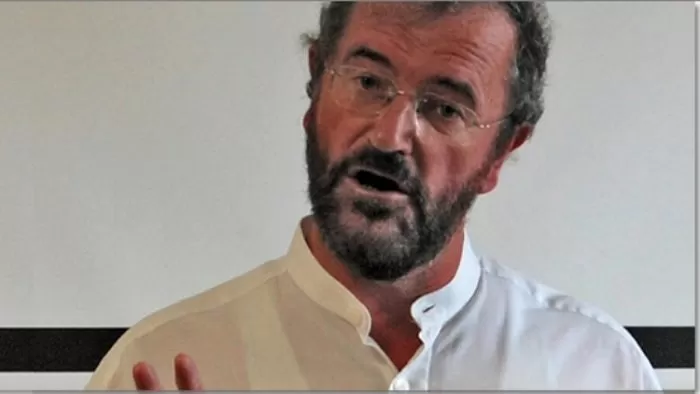 A portrait of John O'Donohue, an Irish scholar, philosopher, and poet, whose work 'For the Traveler' views a trip as a sacred journey of self-discovery.
The Lady in 38C by Lori Jakiela
Lori Jakiela, drawing on her experience as a former flight attendant, finds unexpected joy and perspective in the confined setting of an airplane cabin. This trip poem highlights how even short, routine travel can offer moments of human connection and insight.
> The Lady in 38 C
> gets confused. She thinks I'm her nurse.
> “Nurse!” she yells. “My finger!”
> So I bring her a band-aid
> and put it on even though she's fine.
> “Oh thank you nurse!” she yells.
> “You're a good one.”
> She winks and smiles and the woman next to her
> glares into her computer.
> I think the old lady's charming.
> She's 86, still pretty. Her eyes are blue.
> Her hair is a cloud.
> She looks exactly like what's outside.
> She's the only air in this cabin, the only light.
> “Nurse!” she yells, and I look back
> over the sad heads, eggs in a carton,
> faces pressed against
> the mite-ridden blankets
> and pillows they fought for,
> and there she is, beaming.
> “Nurse,” she says. “Where are we?”
> I take her hand
> and look out the window.
> I scratch my head, smile
> and say, “Somewhere
> over Idunno.”
> She's the only passenger
> who's ever gotten that joke.
> Up here, nearly everyone is miserable.
> I count on small joys to get by.
> The woman in 38C says, “Oh, Nurse!”
> and the woman next to her
> who probably thinks we're somewhere
> over Idaho, that wonderland of Hemingway
> and golden potatoes,
> rolls her eyes and bangs the computer keys
> until the seatbelt sign goes on
> and the captain says,
> “We'll be experiencing weather.”
> which is what people say
> instead of scary things like storm and turbulence
> and pretty soon the plane is bouncing
> and the woman with the computer
> grips her armrest
> while the old lady throws her arms up
> like she's on a roller coaster and yells,
> “They should charge extra for this!”
(Jakiela, Lori. The Lady in 38C. Source not explicitly cited in original excerpt.)
This trip poem, set during a turbulent flight, finds humor and warmth in human interaction within the confined space of travel. The contrast between the joyful, disoriented elderly passenger and the stressed, focused woman next to her highlights different ways people experience the same journey. The flight attendant narrator, weary of the usual misery of air travel (“sad heads, eggs in a carton”), finds solace and humor in the old woman’s uninhibited reaction to turbulence, viewing it as a thrilling ride rather than a scare. It’s a small, intimate trip poem that reminds us that memorable moments and human connection can occur anywhere, even thousands of feet in the air on a seemingly ordinary trip. Unexpected moments and quirky stories can offer light during a trip, much like funny christmas stories for adults might bring cheer during a specific season.
The World Won’t Miss You for a While by Kathryn Simmonds
Kathryn Simmonds’ poem offers a compelling argument for stepping away from the relentless demands of daily life, suggesting that taking a break or a trip is not an act of shirking responsibility but a necessary pause for rejuvenation.
> Lie down with me you hillwalkers and rest,
> untie your boots and separate your toes,
> ignore the compass wavering north/north west.
>
> Quit trailing through the overcrowded streets
> with tinkling bells, you child of Hare Krishna.
> Hush. Unfurl your saffron robes. How sweet
>
> the grass. And you, photographer of wars,
> lie down and cap your lens. Ambassador,
> take off your dancing shoes. There are no laws
>
> by which you must abide oh blushing boy
> with Stanley knife, no county magistrates
> are waiting here to dress you down: employ
>
> yourself with cutting up these wild flowers
> as you like. Sous chef with baby guinea fowl
> to stuff, surveillance officer with hours
>
> to fill, and anorexic weighing up a meal,
> lie down. Girl riding to an interview,
> turn back before they force you to reveal
>
> your hidey holes. Apprentice pharmacist,
> leave carousels of second generation
> happy pills. The long term sad. And journalist
>
> with dreams, forget the man from Lancashire
> who lost his tongue, the youth who found it,
> kept it quivering in a matchbox for a year.
(Simmonds, Kathryn. “The World Won’t Miss You for a While.” The Guardian, https://www.theguardian.com/books/2008/aug/28/guardianfirstbookaward.awardsandprizes9.)
This trip poem, while not explicitly about taking a physical trip, champions the spirit of stepping away—taking a break from the usual journey of one’s demanding life. It addresses a diverse group of people, from the hillwalker and Hare Krishna to the war photographer and sous chef, urging them all to pause. The core message is that stepping back, even briefly, allows for rest, introspection, and a recalibration that is ultimately beneficial. It’s a call to give oneself permission to disengage from the relentless pace, suggesting that the world will manage without you for a while, implying that taking a personal “trip” away from responsibility is a valuable act of self-preservation.
3 Poems About Travel by Sheenagh Pugh
Sheenagh Pugh explores different facets of the travel experience, from the allure of the unexpected journey to the importance of truly being present during a trip.
What If This Road
> What if this road, that has held no surprises
> these many years, decided not to go
> home after all; what if it could turn
> left or right with no more ado
> than a kite-tail? What if its tarry skin
> were like a long, supple bolt of cloth,
> that is shaken and rolled out, and takes
> a new shape from the contours beneath?
> And if it chose to lay itself down
> in a new way; around a blind corner,
> across hills you must climb without knowing
> what's on the other side; who would not hanker
> to be going, at all risks? Who wants to know
> a story's end, or where a road will go?
This poem plays with the metaphor of a familiar road suddenly gaining sentience and choosing a new path. It speaks to the innate human desire for novelty and the unknown, suggesting that the most exciting part of a trip is its unpredictability. The image of the road as a flexible cloth emphasizes the idea of forging new paths and embracing deviation from routine. It captures the ‘hanker’ for exploration and the deliberate choice to step onto a road where the destination is uncertain, embodying the spirit of embarking on a true adventure trip.
The Opportune Moment
> If you were waiting for the opportune moment, that was it” –*Capt Jack Sparrow, Pirates of the Caribbean: Curse of the Black Pearl*
>
> When you go ashore in that town,
> take neither a camera nor a notebook.
> However many photographs you upload
> of that street, the smell of almond paste
> will be missing; the harbour will not sound
> of wind slapping on chains. You will read
> notes like “Sami church”, later, and know
> you saw nothing, never put it where
> you could find it again, were never
> really there. When you go ashore
> in the small port with the rusty trawlers,
> there will be fur hawkers who all look
> like Genghis Khan on a market stall,
> crumbling pavements, roses frozen in bud,
> an altar with wool hangings, vessels
> like canal ware, a Madonna
> with a Russian doll face. When you go
> ashore, take nothing but the knowledge
> that where you are, you never will be again
This trip poem uses a movie quote as an epigraph to emphasize seizing the moment. It’s a cautionary poem about experiencing a trip through mediating devices rather than directly through the senses. Pugh argues that photos and notes, while records, fail to capture the full, multi-sensory reality of a place—the smells, sounds, and subtle details. By urging the traveler to arrive empty-handed, the poem advocates for complete presence during the trip, suggesting that the most valuable takeaway is the indelible, personal memory formed by fully inhabiting the moment and knowing its transient nature.
Do You Think We’ll Ever Get to See Earth, Sir?
> I hear they're hoping to run trips
> one day, for the young and fit, of course.
> I don't see much use in it myself;
> there'll be any number of places
> you can't land, because they're still toxic,
> and even in the relatively safe bits
> you won't see what it was; what it could be.
> I can't fancy a tour through the ruins
> of my home with a party of twenty-five
> and a guide to tell me what to see.
> But if you should see some beautiful thing,
> some leaf, say, damascened with frost,
> some iridescence on a pigeon's neck,
> some stone, some curve, some clear water;
> look at it as if you were made of eyes,
> as if you were nothing but an eye, lidless
> and tender, to be probed and scorched
> by extreme light. Look at it with your skin,
> with the small hairs on the back of your neck.
> If it is well-shaped, look at it with your hands;
> if it has fragrance, breathe it into yourself;
> if it tastes sweet, put your tongue to it.
> Look at it as a happening, a moment;
> let nothing of it go unrecorded,
> map it as if it were already passing.
> Look at it with the inside of your head,
> look at it for later, look at it for ever,
> and look at it once for me.
This poem presents a speculative future where Earth is a damaged place, potentially visited only by “young and fit” tourists taking a difficult trip back to their ancestral home. This dystopian vision serves as a poignant backdrop for the second part of the poem, which offers intense instruction on how to truly see and experience the world now. By imagining a future where experiencing Earth is a scarce privilege, the poem underscores the urgency of engaging with our environment through all senses during any trip or moment. It’s a powerful call to mindful observation and sensory immersion, making every encounter, even a seemingly small one, a profound experience worthy of deep engagement, much like finding depth in meaningful poems about life or reflecting on history as in poems for memorial day.
Song of the Open Road by Walt Whitman
Walt Whitman’s epic “Song of the Open Road” is perhaps one of the most iconic American trip poems. It celebrates freedom, self-reliance, and the democratic spirit of the journey itself, seeing the road as a metaphor for life and connection.
Afoot and light-hearted I take to the open road,
Healthy, free, the world before me,
The long brown path before me leading wherever I choose.

Henceforth I ask not good-fortune, I myself am good-fortune,
Henceforth I whimper no more, postpone no more, need nothing,
Done with indoor complaints, libraries, querulous criticisms,
Strong and content I travel the open road.

The earth, that is sufficient,
I do not want the constellations any nearer,
I know they are very well where they are,
I know they suffice for those who belong to them.

(Still here I carry my old delicious burdens,
I carry them, men and women, I carry them with me wherever I go,
I swear it is impossible for me to get rid of them,
I am fill'd with them, and I will fill them in return.)

2
You road I enter upon and look around, I believe you are not all
that is here,
I believe that much unseen is also here.

Here the profound lesson of reception, nor preference nor denial,
The black with his woolly head, the felon, the diseas'd, the
illiterate person, are not denied;
The birth, the hasting after the physician, the beggar's tramp, the
drunkard's stagger, the laughing party of mechanics,
The escaped youth, the rich person's carriage, the fop, the eloping couple,
The early market-man, the hearse, the moving of furniture into the
town, the return back from the town,
They pass, I also pass, any thing passes, none can be interdicted,
None but are accepted, none but shall be dear to me.

3
You air that serves me with breath to speak!
You objects that call from diffusion my meanings and give them shape!
You light that wraps me and all things in delicate equable showers!
You paths worn in the irregular hollows by the roadsides!
I believe you are latent with unseen existences, you are so dear to me.

You flagg'd walks of the cities! you strong curbs at the edges!
You ferries! you planks and posts of wharves! you timber-lined
side! you distant ships!
You rows of houses! you window-pierc'd facades! you roofs!
You porches and entrances! you copings and iron guards!
You windows whose transparent shells might expose so much!
You doors and ascending steps! you arches!
You gray stones of interminable pavements! you trodden crossings!
From all that has touch'd you I believe you have imparted to
yourselves, and now would impart the same secretly to me,
From the living and the dead you have peopled your impassive surfaces,
and the spirits thereof would be evident and amicable with me.

4
The earth expanding right hand and left hand,
The picture alive, every part in its best light,
The music falling in where it is wanted, and stopping where it is
not wanted,
The cheerful voice of the public road, the gay fresh sentiment of the road.

O highway I travel, do you say to me Do not leave me?
Do you say Venture not–if you leave me you are lost?
Do you say I am already prepared, I am well-beaten and undenied,
adhere to me?

O public road, I say back I am not afraid to leave you, yet I love you,
You express me better than I can express myself,
You shall be more to me than my poem.

I think heroic deeds were all conceiv'd in the open air, and all
free poems also,
I think I could stop here myself and do miracles,
I think whatever I shall meet on the road I shall like, and whoever
beholds me shall like me,
I think whoever I see must be happy.

5
From this hour I ordain myself loos'd of limits and imaginary lines,
Going where I list, my own master total and absolute,
Listening to others, considering well what they say,
Pausing, searching, receiving, contemplating,
Gently, but with undeniable will, divesting myself of the holds that
would hold me.

I inhale great draughts of space,
The east and the west are mine, and the north and the south are mine.

I am larger, better than I thought,
I did not know I held so much goodness.

All seems beautiful to me,
can repeat over to men and women You have done such good to me
I would do the same to you,
I will recruit for myself and you as I go,
I will scatter myself among men and women as I go,
I will toss a new gladness and roughness among them,
Whoever denies me it shall not trouble me,
Whoever accepts me he or she shall be blessed and shall bless me.

6
Now if a thousand perfect men were to appear it would not amaze me,
Now if a thousand beautiful forms of women appear'd it would not
astonish me.

Now I see the secret of the making of the best persons,
It is to grow in the open air and to eat and sleep with the earth.

Here a great personal deed has room,
(Such a deed seizes upon the hearts of the whole race of men,
Its effusion of strength and will overwhelms law and mocks all
authority and all argument against it.)

Here is the test of wisdom,
Wisdom is not finally tested in schools,
Wisdom cannot be pass'd from one having it to another not having it,
Wisdom is of the soul, is not susceptible of proof, is its own proof,
Applies to all stages and objects and qualities and is content,
Is the certainty of the reality and immortality of things, and the
excellence of things;
Something there is in the float of the sight of things that provokes
it out of the soul.

Now I re-examine philosophies and religions,
They may prove well in lecture-rooms, yet not prove at all under the
spacious clouds and along the landscape and flowing currents.

Here is realization,
Here is a man tallied–he realizes here what he has in him,
The past, the future, majesty, love–if they are vacant of you, you
are vacant of them.

Only the kernel of every object nourishes;
Where is he who tears off the husks for you and me?
Where is he that undoes stratagems and envelopes for you and me?

Here is adhesiveness, it is not previously fashion'd, it is apropos;
Do you know what it is as you pass to be loved by strangers?
Do you know the talk of those turning eye-balls?

7
Here is the efflux of the soul,
The efflux of the soul comes from within through embower'd gates,
ever provoking questions,
These yearnings why are they? these thoughts in the darkness why are they?
Why are there men and women that while they are nigh me the sunlight
expands my blood?
Why when they leave me do my pennants of joy sink flat and lank?
Why are there trees I never walk under but large and melodious
thoughts descend upon me?
(I think they hang there winter and summer on those trees and always
drop fruit as I pass;)
What is it I interchange so suddenly with strangers?
What with some driver as I ride on the seat by his side?
What with some fisherman drawing his seine by the shore as I walk by
and pause?
What gives me to be free to a woman's and man's good-will? what
gives them to be free to mine?

8
The efflux of the soul is happiness, here is happiness,
I think it pervades the open air, waiting at all times,
Now it flows unto us, we are rightly charged.

Here rises the fluid and attaching character,
The fluid and attaching character is the freshness and sweetness of
man and woman,
(The herbs of the morning sprout no fresher and sweeter every day
out of the roots of themselves, than it sprouts fresh and sweet
continually out of itself.)

Toward the fluid and attaching character exudes the sweat of the
love of young and old,
From it falls distill'd the charm that mocks beauty and attainments,
Toward it heaves the shuddering longing ache of contact.

9
Allons! whoever you are come travel with me!
Traveling with me you find what never tires.

The earth never tires,
The earth is rude, silent, incomprehensible at first, Nature is rude
and incomprehensible at first,
Be not discouraged, keep on, there are divine things well envelop'd,
I swear to you there are divine things more beautiful than words can tell.

Allons! we must not stop here,
However sweet these laid-up stores, however convenient this dwelling
we cannot remain here,
However shelter'd this port and however calm these waters we must
not anchor here,
However welcome the hospitality that surrounds us we are permitted
to receive it but a little while.

10
Allons! the inducements shall be greater,
We will sail pathless and wild seas,
We will go where winds blow, waves dash, and the Yankee clipper
speeds by under full sail.

Allons! with power, liberty, the earth, the elements,
Health, defiance, gayety, self-esteem, curiosity;
Allons! from all formules!
From your formules, O bat-eyed and materialistic priests.

The stale cadaver blocks up the passage–the burial waits no longer.

Allons! yet take warning!
He traveling with me needs the best blood, thews, endurance,
None may come to the trial till he or she bring courage and health,
Come not here if you have already spent the best of yourself,
Only those may come who come in sweet and determin'd bodies,
No diseas'd person, no rum-drinker or venereal taint is permitted here.

(I and mine do not convince by arguments, similes, rhymes,
We convince by our presence.)

11
Listen! I will be honest with you,
I do not offer the old smooth prizes, but offer rough new prizes,
These are the days that must happen to you:
You shall not heap up what is call'd riches,
You shall scatter with lavish hand all that you earn or achieve,
You but arrive at the city to which you were destin'd, you hardly
settle yourself to satisfaction before you are call'd by an
irresistible call to depart,
You shall be treated to the ironical smiles and mockings of those
who remain behind you,
What beckonings of love you receive you shall only answer with
passionate kisses of parting,
You shall not allow the hold of those who spread their reach'd hands
toward you.

12
Allons! after the great Companions, and to belong to them!
They too are on the road–they are the swift and majestic men–they
are the greatest women,
Enjoyers of calms of seas and storms of seas,
Sailors of many a ship, walkers of many a mile of land,
Habitues of many distant countries, habitues of far-distant dwellings,
Trusters of men and women, observers of cities, solitary toilers,
Pausers and contemplators of tufts, blossoms, shells of the shore,
Dancers at wedding-dances, kissers of brides, tender helpers of
children, bearers of children,
Soldiers of revolts, standers by gaping graves, lowerers-down of coffins,
Journeyers over consecutive seasons, over the years, the curious
years each emerging from that which preceded it,
Journeyers as with companions, namely their own diverse phases,
Forth-steppers from the latent unrealized baby-days,
Journeyers gayly with their own youth, journeyers with their bearded
and well-grain'd manhood,
Journeyers with their womanhood, ample, unsurpass'd, content,
Journeyers with their own sublime old age of manhood or womanhood,
Old age, calm, expanded, broad with the haughty breadth of the universe,
Old age, flowing free with the delicious near-by freedom of death.

13
Allons! to that which is endless as it was beginningless,
To undergo much, tramps of days, rests of nights,
To merge all in the travel they tend to, and the days and nights
they tend to,
Again to merge them in the start of superior journeys,
To see nothing anywhere but what you may reach it and pass it,
To conceive no time, however distant, but what you may reach it and pass it,
To look up or down no road but it stretches and waits for you,
however long but it stretches and waits for you,
To see no being, not God's or any, but you also go thither,
To see no possession but you may possess it, enjoying all without
labor or purchase, abstracting the feast yet not abstracting one
particle of it,
To take the best of the farmer's farm and the rich man's elegant
villa, and the chaste blessings of the well-married couple, and
the fruits of orchards and flowers of gardens,
To take to your use out of the compact cities as you pass through,
To carry buildings and streets with you afterward wherever you go,
To gather the minds of men out of their brains as you encounter
them, to gather the love out of their hearts,
To take your lovers on the road with you, for all that you leave
them behind you,
To know the universe itself as a road, as many roads, as roads for
traveling souls.

All parts away for the progress of souls,
All religion, all solid things, arts, governments–all that was or is
apparent upon this globe or any globe, falls into niches and corners
before the procession of souls along the grand roads of the universe.

Of the progress of the souls of men and women along the grand roads of the
universe, all other progress is the needed emblem and sustenance.

Forever alive, forever forward,
Stately, solemn, sad, withdrawn, baffled, mad, turbulent, feeble,
dissatisfied,
Desperate, proud, fond, sick, accepted by men, rejected by men,
They go! they go! I know that they go, but I know not where they go,
But I know that they go toward the best–toward something great.

Whoever you are, come forth! or man or woman come forth!
You must not stay sleeping and dallying there in the house, though
you built it, or though it has been built for you.

Out of the dark confinement! out from behind the screen!
It is useless to protest, I know all and expose it.

Behold through you as bad as the rest,
Through the laughter, dancing, dining, supping, of people,
Inside of dresses and ornaments, inside of those wash'd and trimm'd faces,
Behold a secret silent loathing and despair.

No husband, no wife, no friend, trusted to hear the confession,
Another self, a duplicate of every one, skulking and hiding it goes,
Formless and wordless through the streets of the cities, polite and
bland in the parlors,
In the cars of railroads, in steamboats, in the public assembly,
Home to the houses of men and women, at the table, in the bedroom,
everywhere,
Smartly attired, countenance smiling, form upright, death under the
breast-bones, hell under the skull-bones,
Under the broadcloth and gloves, under the ribbons and artificial flowers,
Keeping fair with the customs, speaking not a syllable of itself,
Speaking of any thing else but never of itself.

14
Allons! through struggles and wars!
The goal that was named cannot be countermanded.

Have the past struggles succeeded?
What has succeeded? yourself? your nation? Nature?
Now understand me well–it is provided in the essence of things that
from any fruition of success, no matter what, shall come forth
something to make a greater struggle necessary.

My call is the call of battle, I nourish active rebellion,
He going with me must go well arm'd,
He going with me goes often with spare diet, poverty, angry enemies,
desertions.

15
Allons! the road is before us!
It is safe–I have tried it–my own feet have tried it well–be not
detain'd!
Let the paper remain on the desk unwritten, and the book on the
shelf unopen'd!
Let the tools remain in the workshop! let the money remain unearn'd!
Let the school stand! mind not the cry of the teacher!
Let the preacher preach in his pulpit! let the lawyer plead in the
court, and the judge expound the law.

Camerado, I give you my hand!
I give you my love more precious than money,
I give you myself before preaching or law;
Will you give me yourselp. will you come travel with me?
Shall we stick by each other as long as we live?
(Whitman, Walt. “Song of the Open Road.” Poetry Foundation, https://www.poetryfoundation.org/poems/45162/song-of-the-open-road)
Whitman’s sprawling, free-verse poem is a celebration of movement, liberty, and connection, making it a quintessential trip poem. The “open road” is both a literal path and a powerful metaphor for life’s journey. The speaker embraces the road as a source of truth and self-discovery, finding wisdom outside of conventional institutions (“Done with indoor complaints, libraries”). The poem’s democratic vision includes everyone encountered on the road (“None but are accepted, none but shall be dear to me”). It emphasizes the richness gained from sensory experience and interaction with the world. The repeated call “Allons!” (Let’s go!) is an invitation to the reader to join this journey of freedom, self-reliance, and connection, viewing the entire universe as a series of “roads for traveling souls.” It touches upon the collective journey of humanity, much like poems written in tribute often honor shared experiences or figures.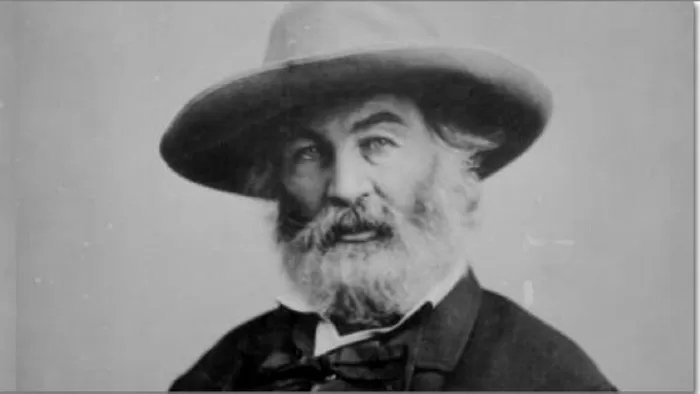 A historical portrait of Walt Whitman, whose 'Song of the Open Road' is a cornerstone trip poem celebrating freedom and the journey of life itself.
Why Do I Travel? Author Unknown
This reflective piece, whose author is not definitively known, powerfully articulates the profound personal impact of taking a trip, particularly alone. It presents travel as a catalyst for self-discovery and empowerment.
> It is on the road that my inner voice speaks the loudest and my heart beats the strongest.
> It is on the road that I take extra pride in my wooly hair, full features and lineage.
> It is on the road that I develop extra senses and the hairs on my arms stand up and say “Sana, don't go there”, and I listen.
> It's when I safety pin my money to my underclothes and count it a million times before I go to sleep,
> It is on the road that I am a poet, an ambassador, a dancer, medicine woman, an angel and even a genius.
> It's on the road that I am fearless and unstoppable and if necessary ball up my fist and fight back.
> It is on the road that I talk to my deceased parents and they speak back
> It's on the road that I reprimand myself, and set new goals, refuel, stop and begin again.
> It is on the road that I experience what freedom truly is.
> It is my travel that has transformed me making me a citizen of the world. When my humanness, compassion and affection are raised to a new level and I share unconditionally.
This trip poem is a testament to travel as a transformative force. The speaker lists the many ways travel enhances their identity, intuition, and courage. The road is not just a physical path but a space where the inner self comes alive and feels most authentic. The poem highlights the practical realities of travel (“safety pin my money”) alongside the heightened state of being it induces—feeling like a poet, ambassador, or genius. It speaks to the unique freedom and self-reliance gained when navigating the world alone. The reference to talking to deceased parents connects the physical trip to an internal, spiritual journey, suggesting travel provides space for deep personal reflection and healing, themes sometimes explored in beautiful poems about death of a loved one.
The Return by Geneen Marie Haugen
Geneen Marie Haugen’s poem explores the often-unspoken experience of returning home after a significant trip. It highlights the subtle yet profound ways that travel can change a person, making them feel both enriched and perhaps estranged upon their return.
> Some day, if you are lucky,
> you'll return from a thunderous journey
> trailing snake scales, wing fragments
> and the musk of Earth and moon.
>
> Eyes will examine you for signs
> of damage, or change
> and you, too, will wonder
> if your skin shows traces
>
> of fur, or leaves,
> if thrushes have built a nest
> of your hair, if Andromeda
> burns from your eyes.
>
> Do not be surprised by prickly questions
> from those who barely inhabit
> their own fleeting lives, who barely taste
> their own possibility, who barely dream.
>
> If your hands are empty, treasureless,
> if your toes have not grown claws,
> if your obedient voice has not
> become a wild cry, a howl,
>
> you will reassure them. We warned you,
> they might declare, there is nothing else,
> no point, no meaning, no mystery at all,
> just this frantic waiting to die.
>
> And yet, they tremble, mute,
> afraid you've returned without sweet
> elixir for unspeakable thirst, without
> a fluent dance or holy language
> to teach them, without a compass
> bearing to a forgotten border where
> no one crosses without weeping
> for the terrible beauty of galaxies
>
> and granite and bone. They tremble,
> hoping your lips hold a secret,
> that the song your body now sings
> will redeem them, yet they fear
>
> your secret is dangerous, shattering,
> and once it flies from your astonished
> mouth, they — like you — must disintegrate
> before unfolding tremulous wings.
(Haugen, Geneen Marie. “The Return.” Awakin.org, https://www.awakin.org/v2/read/view.php?tid=2191.)
This trip poem focuses on the transformative power of the journey and the challenge of re-entry into ordinary life. The imagery (“trailing snake scales, wing fragments”) suggests a deep, almost wild transformation has occurred during the trip. The traveler is examined for signs of this change, both by others and by themselves. The poem contrasts the limited perspectives of those who haven’t journeyed with the traveler’s expanded awareness. There’s a sense of others hoping the traveler brings back some “secret” or “elixir,” something to redeem their own unlived lives. The poem suggests that the traveler does return changed, singing a new “song,” and that this transformation, if shared, can be both powerful and destabilizing for those who remained behind. It’s a potent exploration of the lasting impact of taking a significant trip.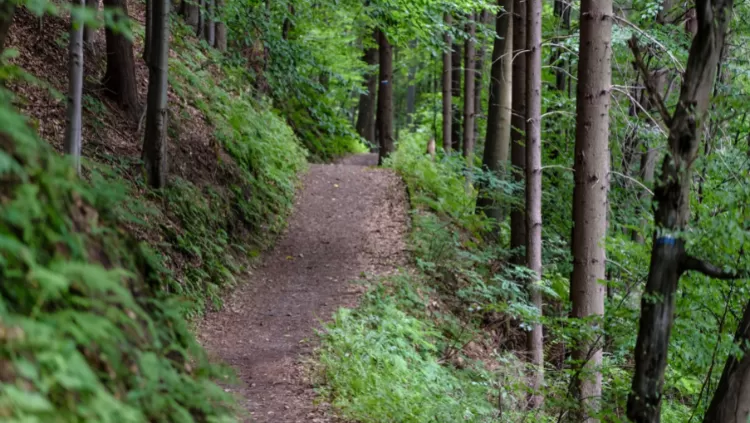 A photo illustrating 'The Return', perhaps showing a person looking back over a landscape, symbolizing the reflection and potential transformation after a significant trip.
The Road Not Taken by Robert Frost
Perhaps the most famous poem about choices, Robert Frost’s “The Road Not Taken” is often interpreted as a metaphor for life’s divergent paths, making it a resonant trip poem about the journey of life itself.
> Two roads diverged in a yellow wood,
> And sorry I could not travel both
> And be one traveler, long I stood
> And looked down one as far as I could
> To where it bent in the undergrowth;
>
> Then took the other, as just as fair,
> And having perhaps the better claim,
> Because it was grassy and wanted wear;
> Though as for that the passing there
> Had worn them really about the same,
>
> And both that morning equally lay
> In leaves no step had trodden black.
> Oh, I marked the first for another day!
> Yet knowing how way leads on to way,
> I doubted if I should ever come back.
>
> I shall be telling this with a sigh
> Somewhere ages and ages hence:
> Two roads diverged in a wood, and I—
> I took the one less traveled by,
> And that has made all the difference.
This trip poem uses the simple image of diverging roads in a wood to represent significant life choices. While often read as a celebration of individualism and taking the less common path, the poem’s nuance lies in the lines suggesting the roads were “really about the same” and “equally lay” untrodden that morning. The “sigh” and the assertion of the difference made by taking the “less traveled by” road are attributed to a future reflection, hinting perhaps at a constructed narrative about the past. Regardless of interpretation, the poem captures the fundamental experience of standing at a crossroads, making a choice about the direction of one’s journey, and reflecting on how that decision shaped the trip that followed.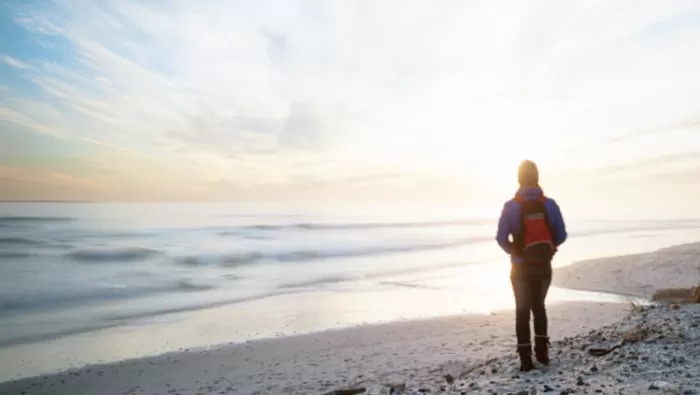 A statue of Robert Frost, author of the iconic trip poem 'The Road Not Taken', which uses diverging paths as a metaphor for life's choices.
Die Slowly by Martha Medeiros
Martha Medeiros’s poem is a powerful call to live fully, framing inaction and stagnation as a form of slow death. This trip poem is less about physical travel and more about approaching life like a journey filled with change, risk, and new experiences.
> He who becomes the slave of habit,
> who follows the same routes every day,
> who never changes pace,
> who does not risk and change the color of his clothes,
> who does not speak and does not experience,
> dies slowly.
>
> He or she who shuns passion,
> who prefers black on white,
> dotting ones i's rather than a bundle of emotions, the kind that make your eyes glimmer,
> that turn a yawn into a smile,
> that make the heart pound in the face of mistakes and feelings,
> dies slowly.
>
> He or she who does not turn things topsy-turvy,
> who is unhappy at work,
> who does not risk certainty for uncertainty,
> to thus follow a dream,
> those who do not forego sound advice at least once in their lives,
> die slowly.
>
> He who does not travel, who does not read,
> who does not listen to music,
> who does not find grace in himself,
> she who does not find grace in herself,
> dies slowly.
>
> He who slowly destroys his own self-esteem,
> who does not allow himself to be helped,
> who spends days on end complaining about his own bad luck, about the rain that never stops,
> dies slowly.
>
> He or she who abandons a project before starting it, who fails to ask questions on subjects he doesn't know, he or she who doesn't reply when they are asked something they do know,
> dies slowly.
>
> Let's try and avoid death in small doses,
> reminding oneself that being alive requires an effort far greater than the simple fact of breathing.
>
> Only a burning patience will lead
> to the attainment of a splendid happiness
This poem functions as a metaphorical trip poem, equating a lack of change, passion, and experience with a slow decline. It directly mentions travel as one of the things necessary to avoid this fate. By listing activities like changing routines, taking risks, seeking experiences, reading, and listening to music alongside travel, Medeiros positions the spirit of exploration and openness central to taking a trip as essential elements of a fully lived life. It’s a powerful reminder that the mindset of a traveler—curiosity, courage, engagement—can and should be applied beyond physical journeys to invigorate one’s everyday existence and pursue meaningful poems about life in all their forms.
The diverse selection of trip poems explored here—from the anticipation of departure and the challenges on the road to the transformation upon return and the metaphorical journeys of life itself—demonstrates the rich and varied ways poets have captured the essence of the travel experience. These poems invite us to reflect on our own journeys, reminding us that whether we travel far or stay home, there are always new landscapes, both outer and inner, waiting to be explored with curiosity and an open heart.
References
- Bishop, Elizabeth. “Questions of Travel.” All Poetry, https://allpoetry.com/Questions-of-Travel.
- Collins, Billy. “Consolation.” Poetry Foundation, Poetry Magazine, July 1991, https://www.poetryfoundation.org/poetrymagazine/issue/71257/july-1991.
- Dove, Rita. “Vacation.” Poets.org, American Academy of Poets, https://poets.org/poem/vacation.
- Grotz, Jennifer. “Self-Portrait on the Street of an Unnamed Foreign City.” Poets.org, American Academy of Poets, https://poets.org/poem/self-portrait-street-unnamed-foreign-city.
- Haugen, Geneen Marie. “The Return.” Awakin.org, https://www.awakin.org/v2/read/view.php?tid=2191.
- O’Donohue, John. “For the Traveler.” Awakin.org, https://www.awakin.org/v2/read/view.php?tid=2191.
- Simmonds, Kathryn. “The World Won’t Miss You for a While.” The Guardian, https://www.theguardian.com/books/2008/aug/28/guardianfirstbookaward.awardsandprizes9.
- Weaver, Julene Tripp. “Learning to Travel.” The Literary Bohemian, Issue 03, February 2009, https://literarybohemian.com/poetry/learning-to-travel/.
- Whitman, Walt. “Song of the Open Road.” Poetry Foundation, https://www.poetryfoundation.org/poems/45162/song-of-the-open-road.