
 Alt text: A powerful waterfall cascading down a cliff face, representing the relentless flow of time in Lauris Edmond's poem.
Contents
Lauris Edmond’s “Waterfall” is a powerful and moving exploration of time, memory, and the evolving nature of love. Like the relentless rush of water over a precipice, the poem plunges the reader into a visceral experience of life’s fleeting beauty and the poignant awareness of its inevitable end. This analysis will delve into Edmond’s masterful use of language, imagery, and form to convey these complex themes.
The Irresistible River of Time
The central metaphor of the waterfall dominates the poem, symbolizing the relentless and irreversible flow of time. Edmond establishes this from the outset:
I do not ask for youth, nor for delay
in the rising of time’s irreversible river
that takes the jewelled arc of the waterfall
in which I glimpse, minute by glinting minute,
all that I have and all I am always losing
as sunlight lights each drop fast, fast falling.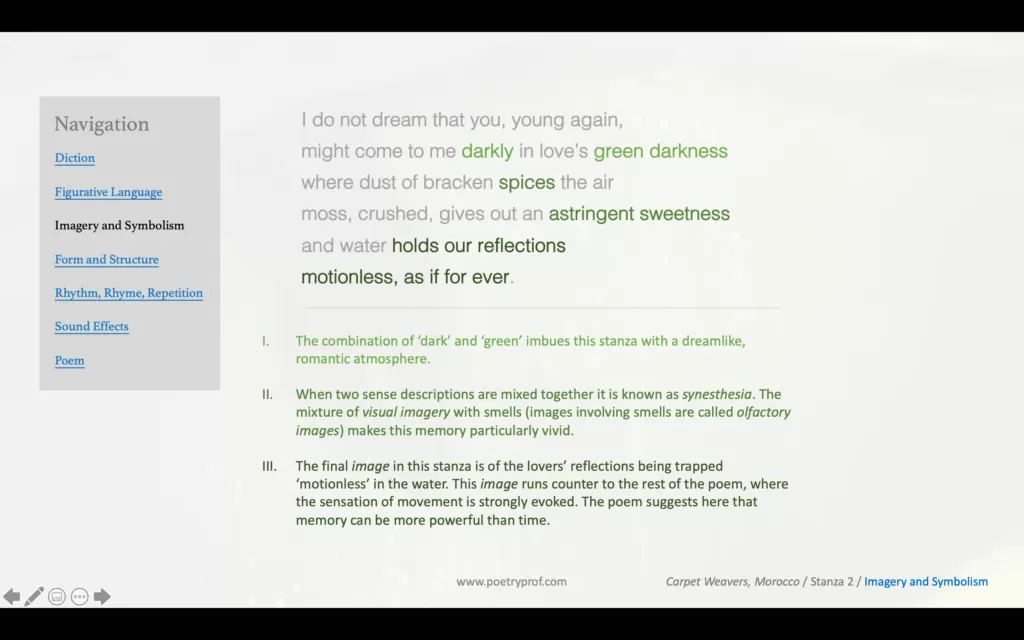 Alt text: A close-up of water droplets catching the sunlight, symbolizing the precious, fleeting moments of life in Edmond's "Waterfall".
The “irreversible river” becomes a powerful symbol of life itself, constantly moving forward, carrying with it the precious moments that sparkle and disappear just as quickly. Edmond’s use of enjambment, the running of lines of poetry without punctuation, mimics the continuous flow of water, further reinforcing this sense of relentless motion. The repetition of “minute by minute” and “fast, fast falling” emphasizes the speed and inevitability of time’s passage.
Love Transformed by Time
While the waterfall represents the universal experience of time, the poem also explores the deeply personal impact of time on love. The second stanza shifts focus to a specific “you,” likely Edmond’s husband, Trevor:
I do not dream that you, young again,
Might come to me darkly in love’s green darkness
Where the dust of the bracken spices the air
Moss, crushed, gives out an astringent sweetness
and water holds our reflections
motionless, as if for ever. Alt text: Lush green foliage surrounding a dark pool of water, evoking the sensory richness of memory and the bittersweet nature of past love in Edmond's poem.
This stanza evokes a dreamlike memory of youthful passion, a stark contrast to the present reality of their relationship. The “green darkness” creates a sense of mystery and intimacy, while the olfactory imagery of bracken and moss adds a layer of sensory depth. The “astringent sweetness” hints at the bittersweet nature of memory, acknowledging the complexities of a long-term relationship.
Acceptance and Intensity
The third stanza brings the poem back to the present, where love has transformed into a quieter “kindness”:
It is enough now to come into a room
and find the kindness we have for each other
– calling it love – in eyes that are shrewd
but trustful still, face chastened by years
of careful judgement; to sit in the afternoons
in mild conversation, without nostalgia.
This acceptance of the changing nature of love is juxtaposed with the sudden resurgence of intense emotion in the final stanza:
But when you leave me, with your jauntiness
sinewed by resolution more than strength
– suddenly then I love you with a quick
intensity, remembering that water,
however luminous and grand, falls fast
and only once to the dark pool below. Alt text: A dark pool at the base of a waterfall, symbolizing the finality of death and the urgency of cherishing life's fleeting moments in Edmond's "Waterfall".
The “dark pool” at the bottom of the waterfall becomes a potent metaphor for death, highlighting the finite nature of life. This awareness fuels a renewed appreciation for the present moment, a “quick intensity” of love sparked by the knowledge that time is running out.
The Power of Imagery and Sound
Edmond’s masterful use of imagery and sound further enhances the poem’s emotional impact. The visual contrast between light and darkness, the evocative descriptions of nature, and the use of alliteration, assonance, and consonance create a rich sensory experience for the reader.
 Alt text: Close-up of crushed moss, highlighting the sensory details and evocative imagery in Edmond's poem, linking memory and the passage of time.
Conclusion
“Waterfall” is a profound meditation on the passage of time, the transformative power of memory, and the enduring strength of love. Through its evocative imagery, skillful use of form, and deeply personal perspective, the poem resonates with readers on both an emotional and intellectual level, leaving a lasting impression of life’s fleeting beauty and the importance of cherishing every moment.