
The 1800s stand as a pivotal era in the history of poetry, witnessing the late stages of Romanticism blend into the flourishing Victorian age. This period produced a rich tapestry of voices, styles, and themes, from the sublime naturalism of Wordsworth and Keats to the narrative and often moralistic tones of Tennyson and Browning. Studying 1800s poems offers a window into the social, emotional, and intellectual landscapes of the time, exploring themes of love, nature, industrial change, faith, and doubt. Among the poets writing during this era, particularly within the developing literary scenes outside established centers, was Susanna Moodie, a fascinating figure in Canadian literature. Her poem, “The Waves That Girt My Native Isle,” though perhaps less known than works by her more famous contemporaries, provides a poignant example of the personal and emotional depth found within 1800s poems, reflecting themes of parting and forbidden love.
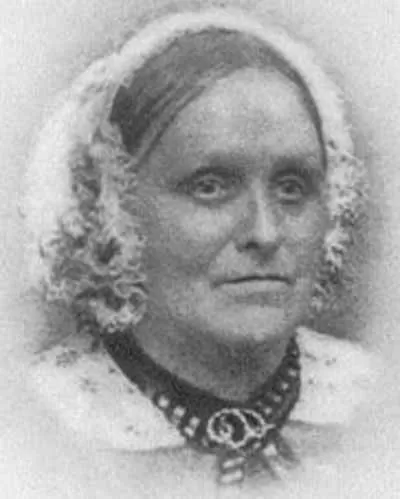
Susanna Moodie (1803–1885) was an English-born author who immigrated to Canada in 1832. While she is most famous for her prose works detailing life as a settler, such as Roughing It in the Bush, Moodie also wrote poetry throughout her life. Her poems often draw upon personal experiences, observations of nature, and deeply felt emotions, fitting within the broader currents of 19th-century Romantic and Victorian verse. “The Waves That Girt My Native Isle” is a lyric poem that tells a clear, albeit tragic, story of a final farewell.
The poem opens with a scene set at sea, the speaker observing the “parting sunbeams” over their “native isle.” The imagery is initially beautiful, creating a sense of serene, almost idealized nature.
The waves that girt my native isle,
The parting sunbeams tinged with red;
And far to seaward, many a mile,
A line of dazzling glory shed.
But, ah, upon that glowing track,
No glance my aching eyeballs threw;
As I my little bark steer’d back
To bid my love a last adieu.
This opening octet immediately contrasts the beauty of the natural setting with the speaker’s inner turmoil. The “aching eyeballs” fixed not on the glorious sunset but on the return journey signal the underlying pain. The purpose of this return is solemn: “To bid my love a last adieu.” This establishes the central theme: a final, painful separation.
The second stanza shifts focus to the beloved, waiting on the shore of a “lone bay.” Moodie employs classical Romantic imagery to depict the maiden: her “raven hair,” “snowy brow,” and pale, fair complexion likened to “the white foam.” The scene is static, emphasizing the maiden’s patient, sorrowful vigil as she watches the ship. This imagery is typical of 1800s poems dealing with love and loss, often portraying the beloved in idealized, almost ethereal terms.
The third stanza reveals the conflict driving the separation. The speaker’s “throbbing heart with grief swell’d high” because he has a “heavy tale” – his father has forbidden the union, and the speaker has promised to obey. This theme of parental opposition to love is a common motif in literature of the period, reflecting societal constraints and familial duty. The line “For once I shunn’d the beauteous eye, / Whose glance on mine so fondly fell” conveys the speaker’s guilt and sorrow at having to actively avoid the one he loves.
My throbbing heart with grief swell’d high,
A heavy tale was mine to tell;
For once I shunn’d the beauteous eye,
Whose glance on mine so fondly fell.
My hopeless message soon was sped,
My father’s voice my suit denied;
And I had promised not to wed,
Against his wish, my island bride.
The emotional depth characteristic of many 1800s poems is evident in the subsequent stanzas. The maiden’s reaction is not one of outward weeping but a deeper, more restrained sorrow. “She did not weep,” the speaker repeats, emphasizing the quiet dignity of her grief. Her “pale face” shows “trace of recent sorrow,” and her smile is described as “sadder than the briny tear.” This understated portrayal of pain can be more affecting than overt lamentation, highlighting the profound sense of loss.
She did not speak—no accents fell
From lips that breathed the balm of May;
In broken words I strove to tell
All that my broken heart would say.
She did not speak—but to my eyes
She raised the deep light of her own.
As breaks the sun through cloudy skies,
My spirit caught a brighter tone.
The silence of the maiden is profound. The speaker’s own words are “broken,” inadequate to express his anguish. Yet, in the fifth stanza, a moment of hope emerges, characteristic of the dramatic turns sometimes found in 1800s poems. Her silent gaze, described as “the deep light of her own,” pierces through the speaker’s despair “As breaks the sun through cloudy skies,” giving his “spirit… a brighter tone.”
This moment of renewed hope culminates in the final stanza, where the speaker dramatically defies his father’s command. “Dear girl!” he cries, “we ne’er can part, / My angry father’s wrath I’ll brave.” He urges her to “Fly, fly with me across the wave!” This sudden shift from despair to defiant action provides a powerful emotional climax. The maiden’s response, a convulsive press of his hand, mingling tears, and the murmured “For ever thine!” confirms their unbreakable bond, despite the external obstacles.
“Dear girl!” I cried, “we ne’er can part,
My angry father’s wrath I’ll brave;
He shall not tear thee from my heart.
Fly, fly with me across the wave!”
My hand convulsively she press’d,
Her tears were mingling fast with mine;
And, sinking trembling on my breast,
She murmur’d out, “For ever thine!”
“The Waves That Girt My Native Isle” serves as a compelling example of the lyric and narrative qualities often found in 1800s poems. It combines vivid imagery of nature and human form with a clear emotional arc, moving from sorrow and despair to defiance and affirmation of love. Susanna Moodie, though perhaps best known for her prose, demonstrates here her ability to capture intense personal feeling within a structured poetic form, offering readers a touching glimpse into the romantic sensibilities of the 19th century. Exploring such pieces allows for a deeper appreciation of the diverse voices and enduring themes that define the rich landscape of 1800s poems.