
The Romantic era, often associated with towering figures like Wordsworth, Coleridge, Byron, Keats, and Shelley, conjures images of rugged landscapes, emotional intensity, and the exploration of the sublime. While these male poets dominated the literary landscape, their female counterparts crafted equally compelling works that often explored similar themes through a different lens. This article delves into romantic poems from the Romantic era, specifically highlighting the contributions of women poets who reshaped and redefined the very essence of Romanticism.
Contents
Redefining the Romantic Experience
The traditional narrative of Romanticism often centers on experiences unavailable to women of the time, such as the Grand Tour or solitary mountain climbs. This has led to a skewed perception of the era, overlooking the rich and complex contributions of female poets. While women may not have scaled Mont Blanc, they transformed the everyday, the domestic, into experiences just as profound and awe-inspiring. This shift in perspective gives rise to what some scholars term the “domestic sublime.”
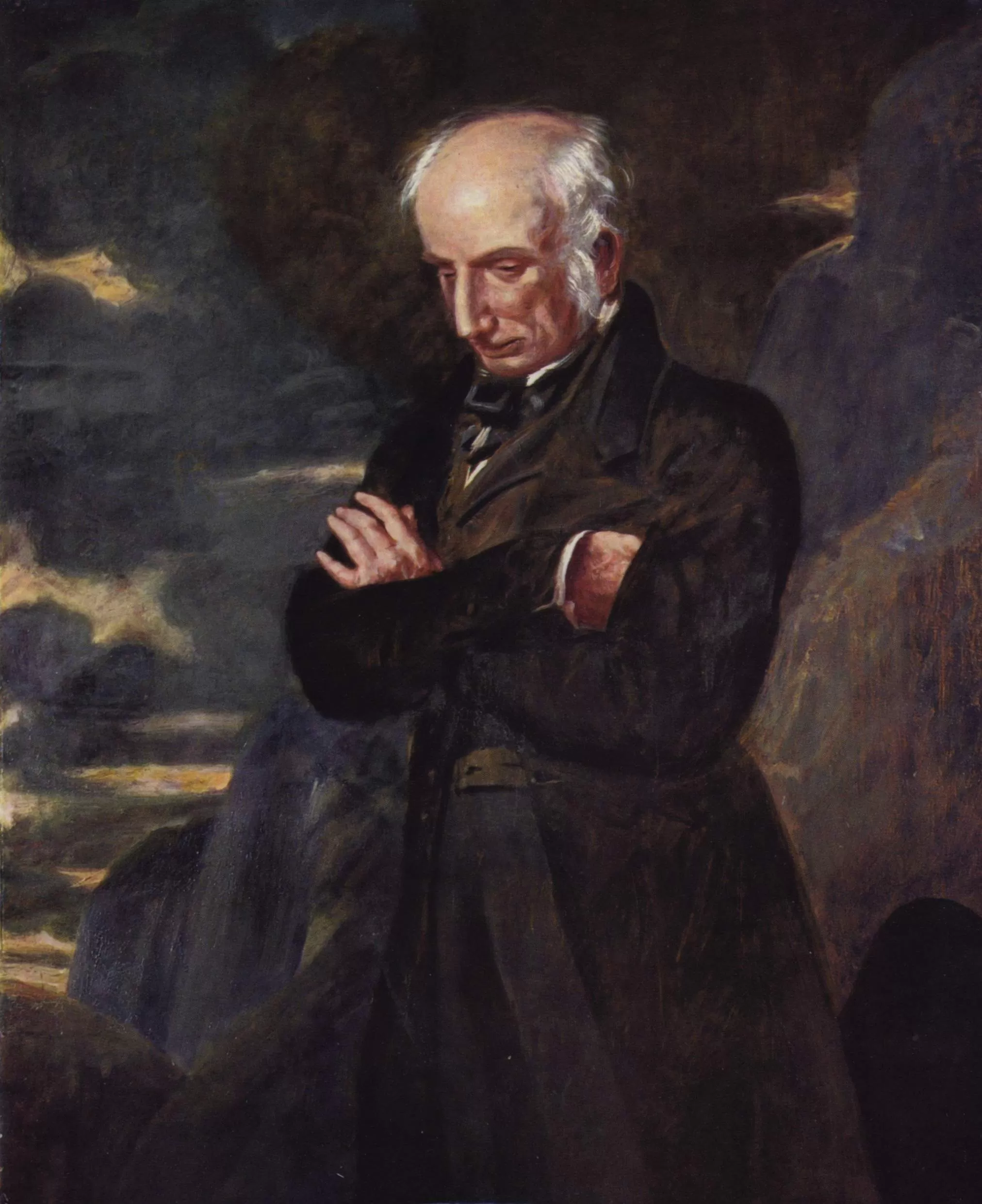 Portrait of William Wordsworth by Benjamin Robert Haydon (1842)
The Domestic Sublime: Finding Awe in the Everyday
Anna Laetitia Barbauld’s “Washing-Day” exemplifies this concept. The poem elevates the mundane act of laundry into a dramatic, almost tragic event, marked by anxiety and a strange thrill. Barbauld invokes the Muses, transforming the domestic sphere into a stage for sublime experience, accessible and relatable to women and children.
 Washing Day scene from a painting
Joanna Baillie’s “Thunder” offers another perspective on the sublime. While focusing on a natural phenomenon, Baillie’s vivid descriptions of the storm evoke the same awe and terror that male Romantic poets found in mountainous landscapes, demonstrating that the sublime wasn’t confined to masculine experiences.
Nature as Muse and Mirror
Beyond the sublime, nature played a crucial role in Romantic poetry. Charlotte Smith, in her elegiac sonnets, masterfully captures the intimate connection between humans and the natural world. “The Glow Worm” depicts a child’s wonder at discovering the insect, showcasing the simple joys found in nature. This perspective contrasts with the more dramatic and awe-inspiring depictions of nature often found in male Romantic poetry, highlighting the diverse approaches to this central theme.
 Portrait of Charlotte Smith by George Romney (1792)
Mary Robinson’s “Ode to Spring” embraces the traditional Romantic ode form, personifying the season and expressing a deep joy for nature reminiscent of Wordsworth or Keats. Her skillful use of repetition further reinforces her connection to both nature and the Romantic tradition.
Melancholy and the Female Voice
Melancholy, a hallmark of Romantic poetry, found a powerful expression in the works of female poets. Felicia Hemans explored themes of isolation, despair, and even suicide in poems like “The Last Song of Sappho.” Hemans’s work often delves into the limitations and constraints faced by women in society, offering a poignant commentary on the social realities of the era.
 Depiction of The Last Song of Sappho
The nightingale, a traditional symbol of melancholy, appears in Charlotte Smith’s “To a Nightingale.” While echoing the themes of loneliness and sorrow common in male Romantic poetry, Smith adds a layer of longing for freedom, contrasting the bird’s liberty with the societal constraints she faced.
Challenging the Figure of the Poet
The Romantic era often celebrated the “Poet” as a solitary, melancholic, and almost divinely inspired figure. This image, often associated with male poets, was challenged by women writers like Mary Robinson and Mary Alcock. Robinson’s “The Poet’s Garret” offers a satirical portrayal of the “tortured artist” trope, while Alcock’s “To a Certain Author” directly criticizes the arrogance often attributed to male poets. These works highlight the crucial role women played in deconstructing and broadening the understanding of the poet’s role and identity within the Romantic movement.
 Portrait of Mary Robinson by Thomas Gainsborough (1781)
Expanding the Romantic Canon
The works of these women poets offer a vital and often overlooked perspective on the Romantic era. Their explorations of the sublime, nature, melancholy, and the figure of the poet expand and enrich our understanding of Romanticism. By exploring the “domestic sublime” and challenging established conventions, they carved out a unique space within the movement, proving that Romanticism was not solely a male domain but a diverse and multifaceted literary landscape. Their contributions deserve greater recognition and study, helping us to appreciate the full breadth and depth of Romantic poetry.