
Amado Nervo (1870-1919), a celebrated Mexican journalist, fiction writer, and diplomat, remains one of the most beloved poets in the Spanish-speaking world. His work, often associated with the modernismo movement, is deeply introspective, exploring themes of love, spirituality, philosophy, and the search for meaning. Unlike some of his more ornate contemporaries, Nervo cultivated a style characterized by simplicity and directness, making his profound ideas accessible to a wide readership.
Contents
- Poetic Reflections on Love and Loss
- She Kissed Me Often (Me besaba mucho)
- Offertory (Ofertorio)
- Spiritual Quests and Philosophical Inquiries
- And the Basalt Buddha Smiled (Y el Buda de basalto sonreía)
- Kalpa (Kalpa)
- Identity (Identidad)
- The Wing’s Shadow (La sombra del ala)
- Deity (Deidad)
- Acceptance and Peace
- At Peace (En paz)
- Conclusion
A fascinating aspect of Amado Nervo’s poetry is his embrace of diverse spiritual traditions. Although he initially considered priesthood within the Catholic Church and remained devout, his poetry frequently incorporates elements and concepts from Eastern religions, particularly Buddhism and Hinduism. This synthesis of Western and Eastern thought provides a unique lens through which he examines universal human experiences, bridging cultural divides and suggesting a broad, ecumenical perspective on faith and existence.
Nervo’s life significantly shaped his work. His deep friendship with Rubén Darío, a key figure in modernismo, influenced his literary path. His pioneering biography of the 17th-century Mexican poet Sor Juana Inés de la Cruz also highlights his connection to Mexico’s rich literary heritage and complex figures grappling with faith and intellect. Perhaps most poignantly, the death of his beloved partner, Ana Daillez, after only eleven years together, infused his poetry with a profound sense of loss and longing, adding a layer of raw, personal emotion to his exploration of love and mortality.
His poems often grapple with the ephemeral nature of human life and emotion against the backdrop of vast cosmic cycles or spiritual truths. The selection below offers a glimpse into the range of his thematic concerns and his distinctive voice.
Poetic Reflections on Love and Loss
The sting of fleeting moments and the permanence of loss are palpable in Nervo’s love poems.
She Kissed Me Often (Me besaba mucho)
This poem captures a poignant premonition of separation, perhaps reflecting his later personal tragedy. The speaker initially misses the depth of his partner’s frantic affection, only realizing in retrospect that her “feverish haste” was a desperate attempt to “put all eternity into her kisses,” foreseeing a time that would “be short.” It’s a heartbreaking reflection on missed understanding and the tragic wisdom of love.
She kissed me often, as if she feared an imminent departure… Her affections were restless, nervous.
I didn’t understand such feverish haste. My coarse intention never saw very far… She foresaw!
She foresaw that our time would be short, that the sail battered by the wind’s lash was already waiting… and in her anxiety she tried to leave me her soul with every embrace, to put all eternity into her kisses.
(1912)
Offertory (Ofertorio)
Written after the death of Ana Daillez, “Offertory” is a direct, almost stark expression of grief. The only thing the speaker has left to offer God is his pain. The Latin epigraph, “Deus dedit, Deus abstulit” (God has given, God has taken away), grounds the personal sorrow within a traditional religious framework, yet the poem’s power comes from its raw, singular focus on pain as the ultimate offering.
Deus dedit, Deus abstulit
God, I offer you my pain— that’s all I can offer you! You gave me a love, only one love, a great love! Death stole it from me, and I have nothing else now but my pain. Accept it, Lord— it’s all that I can offer you!
Spiritual Quests and Philosophical Inquiries
Nervo’s fascination with spirituality extends beyond conventional religious boundaries, incorporating elements of Eastern philosophy to explore the nature of reality, identity, and the divine.
And the Basalt Buddha Smiled (Y el Buda de basalto sonreía)
This evocative poem contrasts fleeting human affairs with the seemingly eternal and impassive nature of a Buddha statue. The recurring image of the smiling basalt Buddha acts as a silent witness to the speaker’s changing romantic entanglements and eventual loneliness. It suggests a philosophical detachment, hinting at the Buddhist idea of impermanence (anicca) and the illusion of worldly attachments, viewed from a timeless, perhaps enlightened, perspective.
That evening in the poplar grove, mad with love, the sweet one I idolized offered me the wild rose of her mouth.
And the basalt Buddha smiled…
Later there was another whose charms captured me; we made a date, and in the shade exchanged letters and lockets.
And the basalt Buddha smiled…
It’s been a year today since I lost her love. I return to our trysting spot and, exhausted from the long walk, creep up to the top of the pedestal where the image rests. The day dies, squandered and bloody, and in the arms of the basalt Buddha I’m astonished to see the mysterious moon.
And the basalt Buddha smiled…
(1902)
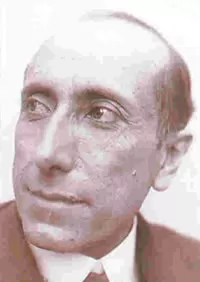 Portrait photo of Mexican poet Amado Nervo
Kalpa (Kalpa)
Referencing Nietzsche’s Thus Spoke Zarathustra and the concept of eternal recurrence, “Kalpa” (a term in Hinduism and Buddhism denoting a very long period of time, an age or eon) explores the cyclical nature of existence. Nervo questions if history and consciousness are merely repeating patterns, a “monotonous refrain of the same song.” This cosmic perspective contrasts human endeavors, like writing epics or delving into the soul, with the vast, potentially unending cycles of the universe.
“Do you want all this to begin again?” “Yes!” the chorus replied. THUS SPOKE ZARATHUSTRA
In all the eternities that preceded our world, how can we refuse to believe that there have already been other planets with human beings,
whose Homers have declaimed their first heroic deeds and whose Shakespeares have shared wisdom gleaned from delving into the depths of the soul?
Serpent biting your tail, uncompromising circle, black ball that turns without ceasing, monotonous refrain of the same song, abysmal tide— is this story of yours ever to have an end?
(1914)
Identity (Identidad)
Directly referencing the Upanishadic महावाक्य (Mahāvākya) “Tat Tvam Asi” (“Thou Art That”), this poem delves into the core Hindu concept of the identity of the individual self (Ātman) with the ultimate reality (Brahman). Nervo describes nirvana not just as an end but as a realization of this oneness, a “dizzying expansion of human consciousness” where the illusion of separateness (“the phenomenon”) is extinguished and the self is absorbed into the absolute, inheriting eternity. It’s a powerful poetic articulation of a complex philosophical idea.
Tat Tvam Asi (You are this: that is to say, you are one and the same as everything around you; you are the thing in itself)
Anyone who knows they are one with God achieves nirvana: a nirvana in which all darkness is illuminated, a dizzying expansion of human consciousness that is merely the projection of the divine idea on the screen of time…
The phenomenon—the external, useless fruit of illusion—is extinguished: now there is no plurality, and the self, ecstatic, is at last absorbed in the absolute, and has all eternity for an inheritance!
(1919)
The Wing’s Shadow (La sombra del ala)
Here, Nervo explores the struggle between faith and doubt, a theme common in spiritual quests. The speaker addresses someone who assumes his questioning implies a lack of belief, arguing instead that his doubt stems from a profound “thirst, I hunger for God.” He portrays his intellectual struggle as a difficult labor, questioning the abyss with “heroic tenacity.” The poem suggests that genuine seeking, even through doubt, can hold more love and truth than unquestioning certainty. Exploring complex themes like doubt and faith can be a rewarding journey for young poets, perhaps even inspiring entries in poetry contests for high school students that encourage philosophical depth.
You who assume I don’t believe whenever we two debate: you can’t imagine how I long, I thirst, I hunger for God.
You’ve never heard my desperate cries filling the heart of darkness with invocations of the Infinite.
You’ve never seen how my thought, in its dedication to bearing the ideal, regularly endures the tortures of childbirth.
If my barren spirit had your fertility, it would’ve already forged a heaven to make its world whole.
But I say: who knows what effort would suffice in a soul with no flag to lead your torturer about,
a soul that lives by abstinence from faith, and with heroic tenacity, interrogates each abyss and each night, asking why?
At all events, I take refuge in my thirst for investigation, my craving for God, deep and silent; and there is more love in my doubt than in your heated contention.
(1914)
Deity (Deidad)
This poem uses the metaphor of a spark in a pebble or a statue in clay to describe the potential divinity residing within each person. Suffering (“intense pain,” “hard blow of the chisel”) is presented not as punishment but as the necessary force that allows this inner divinity to emerge, like lightning from inert stone. It offers a perspective on hardship as a sculpting process that reveals one’s true, divine nature, promising a final, elevated state (“You shall see the condor at full altitude, you shall see the completed sculpture”).
As a spark sleeps in the pebble and a statue in the clay, so in you, divinity sleeps. Just a press of intense pain till the shock—the lightning of deity bursting from the inert stone.
Therefore don’t complain and blame fate, since what is divine within you can only emerge in such a manner. Grin and bear it if you can, this life the creator is sculpting, the hard blow of the chisel.
What matter, then, the evil hours, if every hour he adds a lovelier plume to your nascent wings? You shall see the condor at full altitude, you shall see the completed sculpture, you shall see, my soul, you shall see…
(1917)
Acceptance and Peace
Towards the end of his life, despite personal losses, Nervo articulated a profound sense of peace and acceptance.
At Peace (En paz)
Written shortly before his death, “At Peace” is a moving self-assessment. The speaker blesses life, feeling no debt, having accepted responsibility for his fate (“architect of my own fate”). He acknowledges hardships but frames them within the natural order (winter after blossoms, long nights) and balances them against moments of joy and love (“I loved, I was loved, the sun caressed my face”). The poem is a serene declaration of reconciliation with the entirety of one’s lived experience.
Very near to my sunset now, I bless you, life, because you never gave me any false hope or unjust labor or unwarranted punishment;
because at the end of my rough road, I see that I was the architect of my own fate,
that if I extracted honey or gall from things it was because I instilled them with a gall or honey flavor: when I planted rosebushes, I always harvested roses.
True, after all my blossoms, winter must come— but you never said that May would last forever!
Certainly I had my long nights with the blues, but you never promised only good nights, and to make up for it, I had some that were holy and serene.
I loved, I was loved, the sun caressed my face. Life, you owe me nothing! Life, we are at peace!
(1915)
Conclusion
Amado Nervo’s poetry offers a rich tapestry woven from the threads of personal emotion, philosophical inquiry, and spiritual exploration. His ability to combine deep introspection with a clear, accessible style resonates with readers seeking meaning in life, love, and the universe. From the raw grief of loss to the serene acceptance of life’s journey and the intellectual pursuit of divine oneness, Nervo’s work remains a powerful testament to the enduring human quest for understanding and peace. Exploring his poems provides not just a window into the modernismo era but also a timeless reflection on the most fundamental questions of existence.