
Amado Nervo (1870-1919) stands as one of the most cherished poets in the Spanish-speaking world, a versatile Mexican writer known also for his journalism, fiction, and diplomatic career. His work resonates deeply, often focusing on the expansive subject of love – whether sacred or worldly. A particularly fascinating aspect of Amado Nervo’s poetry is his engagement with Asian religions, suggesting a broad, ecumenical perspective within his Catholic faith (he initially considered becoming a priest). This interest also provides valuable context for understanding Eastern influences on contemporaries like Rilke and Jiménez. Nervo’s style is characterized by its simplicity and directness, yet it carries the weight of his personal history, including the tragic death of his beloved wife, Ana Daillez, after only eleven years of marriage, and his own untimely death at 48. His life story, marked by both deep love and profound loss, undoubtedly shaped the contemplative and often poignant nature of his verse.
Contents
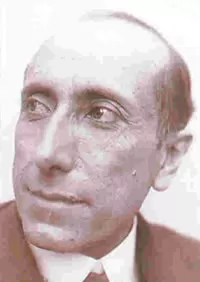 Portrait of Mexican poet Amado Nervo
Beyond his personal themes, Amado Nervo was a significant figure in the literary landscape. He was a close friend of Rubén Darío, another prominent poet featured in discussions of Latin American literature, and authored a pioneering biography of the 17th-century nun and poet Sor Juana Inés de la Cruz. His prolific output covers a range of themes, from intense personal emotion to deep philosophical inquiry, reflecting a soul grappling with the mysteries of existence, faith, and human connection.
Selected Poems by Amado Nervo
To delve into the heart of Amado Nervo’s artistry is to explore poems that capture the essence of human experience – love, loss, spirituality, and the search for meaning. The following selection offers a glimpse into his diverse thematic landscape and his enduring appeal to readers worldwide.
She Kissed Me Often
(Me besaba mucho)
She kissed me often, as if she feared an imminent departure… Her affections were restless, nervous.
I didn’t understand such feverish haste. My coarse intention never saw very far… She foresaw!
She foresaw that our time would be short, that the sail battered by the wind’s lash was already waiting… and in her anxiety she tried to leave me her soul with every embrace, to put all eternity into her kisses.
(1912)
This poem, penned just before the tragic loss of his wife, captures a sense of impending sorrow and the desperate attempt to distill eternity into fleeting moments of affection. It showcases Nervo’s ability to find profound emotional depth in simple observations of love and anticipation.
And the Basalt Buddha Smiled
(Y el Buda de basalto sonreía)
That evening in the poplar grove, mad with love, the sweet one I idolized offered me the wild rose of her mouth.
And the basalt Buddha smiled…
Later there was another whose charms captured me; we made a date, and in the shade exchanged letters and lockets.
And the basalt Buddha smiled…
It’s been a year today since I lost her love. I return to our trysting spot and, exhausted from the long walk, creep up to the top of the pedestal where the image rests. The day dies, squandered and bloody, and in the arms of the basalt Buddha I’m astonished to see the mysterious moon.
And the basalt Buddha smiled…
(1902)
This evocative poem highlights Amado Nervo’s interest in Eastern imagery and philosophy. The stoic, smiling Buddha contrasts with the human experiences of love, romance, and ultimately, loss. The repeated refrain underscores the timeless, perhaps even indifferent, nature of the universe compared to individual human suffering and joy, adding a layer of spiritual contemplation to a personal narrative.
Kalpa
(Kalpa)
“Do you want all this to begin again?” “Yes!” the chorus replied. THUS SPOKE ZARATHUSTRA
In all the eternities that preceded our world, how can we refuse to believe that there have already been other planets with human beings,
whose Homers have declaimed their first heroic deeds and whose Shakespeares have shared wisdom gleaned from delving into the depths of the soul?
Serpent biting your tail, uncompromising circle, black ball that turns without ceasing, monotonous refrain of the same song, abysmal tide— is this story of yours ever to have an end?
(1914)
Drawing inspiration from Nietzsche’s concept of eternal recurrence and the cyclical nature of time in Eastern thought (Kalpa is a Sanskrit word meaning a relatively long period of time, or an eon), this poem explores profound philosophical questions about the universe and history. Amado Nervo contemplates whether the grand narrative of human civilization, with its heroes and thinkers, is a unique event or merely one iteration in an endless cycle.
Identity
(Identidad)
Tat Tvam Asi (You are this: that is to say, you are one and the same as everything around you; you are the thing in itself)
Anyone who knows they are one with God achieves nirvana: a nirvana in which all darkness is illuminated, a dizzying expansion of human consciousness that is merely the projection of the divine idea on the screen of time…
The phenomenon—the external, useless fruit of illusion—is extinguished: now there is no plurality, and the self, ecstatic, is at last absorbed in the absolute, and has all eternity for an inheritance!
(1919)
Another poem explicitly referencing Eastern spirituality, “Identity” uses the Sanskrit phrase “Tat Tvam Asi” (a Mahavakya, or “Great Saying” from the Chandogya Upanishad, signifying the identity of the individual self with the Supreme Reality). Amado Nervo connects this concept to the attainment of nirvana and union with the divine, reflecting his synthesis of various spiritual ideas in his personal quest for understanding.
The Wing’s Shadow
(La sombra del ala)
You who assume I don’t believe whenever we two debate: you can’t imagine how I long, I thirst, I hunger for God.
You’ve never heard my desperate cries filling the heart of darkness with invocations of the Infinite.
You’ve never seen how my thought, in its dedication to bearing the ideal, regularly endures the tortures of childbirth.
If my barren spirit had your fertility, it would’ve already forged a heaven to make its world whole.
But I say: who knows what effort would suffice in a soul with no flag to lead your torturer about,
a soul that lives by abstinence from faith, and with heroic tenacity, interrogates each abyss and each night, asking why?
At all events, I take refuge in my thirst for investigation, my craving for God, deep and silent; and there is more love in my doubt than in your heated contention.
(1914)
“The Wing’s Shadow” presents a powerful exploration of faith, doubt, and the struggle for spiritual understanding. Amado Nervo challenges superficial assumptions about belief, revealing a deep, internal yearning for God that coexists with persistent questioning. He contrasts his earnest doubt and investigation with the “heated contention” of those who may claim certainty, suggesting that the sincere search itself holds a form of love and devotion.
Deity
(Deidad)
As a spark sleeps in the pebble and a statue in the clay, so in you, divinity sleeps. Just a press of intense pain till the shock—the lightning of deity bursting from the inert stone.
Therefore don’t complain and blame fate, since what is divine within you can only emerge in such a manner. Grin and bear it if you can, this life the creator is sculpting, the hard blow of the chisel.
What matter, then, the evil hours, if every hour he adds a lovelier plume to your nascent wings? You shall see the condor at full altitude, you shall see the completed sculpture, you shall see, my soul, you shall see…
(1917)
In “Deity,” Amado Nervo uses vivid metaphors to describe the potential for divinity within each person, suggesting that suffering and hardship are the necessary tools for its emergence. The poem offers a perspective on pain not as punishment, but as the chisel that sculpts the inner self, allowing the latent spiritual essence (“divinity sleeps”) to burst forth. It’s a message of resilience and faith in a higher purpose despite life’s challenges.
Offertory
(Ofertorio)
Deus dedit, Deus abstulit [God has given, God has taken away]
God, I offer you my pain— that’s all I can offer you! You gave me a love, only one love, a great love! Death stole it from me, and I have nothing else now but my pain. Accept it, Lord— it’s all that I can offer you!
This raw and poignant poem reflects Amado Nervo’s personal grief, likely related to the loss of his wife. It is a direct address to God, an offering of the only thing left to the speaker after a devastating loss: pain. The simple, repetitive structure emphasizes the depth of the sorrow and the sense that pain has become the sole remaining connection to the divine in the wake of heartbreak.
At Peace
(En paz)
Very near to my sunset now, I bless you, life, because you never gave me any false hope or unjust labor or unwarranted punishment;
because at the end of my rough road, I see that I was the architect of my own fate,
that if I extracted honey or gall from things it was because I instilled them with a gall or honey flavor: when I planted rosebushes, I always harvested roses.
True, after all my blossoms, winter must come— but you never said that May would last forever!
Certainly I had my long nights with the blues, but you never promised only good nights, and to make up for it, I had some that were holy and serene.
I loved, I was loved, the sun caressed my face. Life, you owe me nothing! Life, we are at peace!
(1915)
One of Amado Nervo’s most famous poems, “At Peace,” is a contemplative reflection on life as its end approaches. Despite the hardships endured, the speaker expresses profound gratitude and acceptance. It embodies a sense of responsibility for one’s own happiness and sorrow, a recognition that perspective shapes experience (“I instilled them with a gall or honey flavor”). The poem culminates in a powerful declaration of peace and equanimity, a testament to a life lived fully, with its inevitable mix of joy and sorrow.
The Enduring Legacy of Amado Nervo
Amado Nervo’s poetry continues to captivate readers with its emotional sincerity, philosophical depth, and accessible language. His ability to weave together personal experiences of love and loss with broader spiritual and existential inquiries creates a rich tapestry of human feeling and thought. Whether contemplating the nature of divinity, the cyclical flow of time, or the quiet peace found at the end of life’s journey, Amado Nervo offers verses that resonate with universal truths. His work remains a vital part of the legacy of Latin American poetry, inviting readers to explore the intricate connections between the self, the spiritual, and the world around us. Through his poems, amando nervo – the act of loving through Nervo’s verse – becomes an enriching experience of encountering beauty, sorrow, and wisdom distilled into unforgettable lines.