
Poetry has a unique power to capture the human experience, transcend time, and resonate deeply within our collective consciousness. Certain poems achieve a level of fame and cultural ubiquity that makes them instantly recognizable, even to those who don’t regularly read verse. These aren’t just academic exercises; they are cultural touchstones, quoted in movies, referenced in conversations, and studied for their enduring insights. But what makes a poem truly famous? It’s often a blend of literary excellence, emotional impact, and a message or image that sticks in the mind, becoming part of the shared cultural lexicon.
Today, we delve into some of the most celebrated and iconic poems written in English. This exploration isn’t exhaustive, as the landscape of influential poetry is vast and ever-evolving. However, the poems highlighted here represent a diverse collection that has left an indelible mark on literature and culture, often sparking discussions about profound human themes. From concise modernist masterpieces to sprawling, evocative works, these examples showcase the incredible range and lasting power of best famous poetry. We’ll look at why they’ve gained such prominence and what makes them continue to speak to readers across generations. As we explore these works, consider how they might connect with themes of human emotion and connection, perhaps reminding you of the power of love poems her or reflections on deeper life experiences.
Our focus is on individual poems rather than book-length works, highlighting pieces that are often excerpted, memorized, or widely referenced. Each selected poem, while representing the peak of a poet’s fame, often stands alongside other significant works by the same author, demonstrating a consistent thread of genius. Prepare to revisit some old favorites and perhaps discover new insights into why these poems remain central to the study and appreciation of English-language poetry.
Cornerstones of Iconic English Poetry
The following poems have earned their place among the most famous, often shaping literary movements and influencing countless subsequent writers. Their fame stems not just from critical acclaim but from their ability to capture fundamental aspects of the human condition in unforgettable language.
William Carlos Williams, “The Red Wheelbarrow”
Often cited as a prime example of Imagism and the power of finding poetry in the mundane, “The Red Wheelbarrow” is deceptively simple. Its 16 words, broken into four stanzas, present a vivid image that, according to the poet, holds immense significance: “so much depends upon / a red wheel barrow / glazed with rain water / beside the white chickens.” Its fame lies in this stark presentation, forcing the reader to pause and consider the weight and beauty found in everyday objects. It challenges traditional notions of poetic subject matter and form, proving that even the simplest scene can hold profound meaning. Williams’ ability to elevate the ordinary contributes to its status as one of the most anthologized poems of the modern era. His work, including “This is Just to Say,” which became a viral sensation in the internet age, demonstrates the enduring relevance of simple, direct language.
T. S. Eliot, “The Waste Land”
Though technically a longer, fragmented work, excerpts and themes from “The Waste Land” are so pervasive that it functions in the cultural imagination as an iconic poem. Considered a landmark of 20th-century Modernism, it captures the disillusionment and cultural decay following World War I. Its complex structure, myriad allusions, and shifting voices reflect the fragmentation of modern life. Phrases like “April is the cruellest month” have become instantly recognizable. Its influence on subsequent literature is immense, making it essential reading for understanding modern poetic development. As literary critics have noted, its glamour endures because it speaks powerfully to the fractured nature of both its own era and the centuries that have followed.
Robert Frost, “The Road Not Taken”
Perhaps one of the most quoted—and frequently misinterpreted—poems in English, Robert Frost’s “The Road Not Taken” speaks to the choices we make in life. The final lines, “I took the one less traveled by, / And that has made all the difference,” are often invoked as a mantra for individualism and daring to be different. However, a closer reading of the poem reveals a more nuanced perspective, suggesting the choices were perhaps not as distinct as the speaker later claims, or that the “difference” wasn’t necessarily positive. This complexity, coupled with its seemingly simple narrative, fuels its enduring fame and makes it a fascinating subject for analysis. Frost’s ability to imbue simple, rural scenes with profound philosophical questions is a hallmark of his work, seen also in poems like “Stopping by Woods on a Snowy Evening.”
Gwendolyn Brooks, “We Real Cool”
This compact, powerful poem captures the voices and fate of a group of young men skipping school. Through its striking rhythm and internal rhymes (“We / Jazz June. We / Die soon.”), Brooks conveys a sense of defiant rebellion intertwined with an inescapable tragic destiny. The poem’s form, with the word “We” placed at the end of each line (except the last), creates a halting, syncopated rhythm that mirrors the precarious existence it describes. It’s a masterful example of how form and content work together to create emotional impact, leaving a lasting impression on readers.
 Cover of "Poems" by Elizabeth Bishop, featuring abstract art.
Elizabeth Bishop, “One Art”
A villanelle that explores the theme of loss, “One Art” is renowned for its understated yet devastating emotional power. Through the repetition inherent in the villanelle form, Bishop builds a catalog of losses, starting small (“keys,” “places”) and escalating to much larger, more painful ones (“vaster” realms, a loved one). The poem’s tone is deceptively controlled, almost academic, as the speaker claims the “art of losing isn’t hard to master.” This tension between the casual tone and the profound pain of the subject matter is what makes the poem so resonant and unforgettable. Its honest portrayal of grief and the human struggle to cope with absence contributes significantly to its fame and impact. When considering poems that touch upon the pain of relationships ending, this poem serves as a powerful example alongside love poems heartbreak.
 Cover of "The Complete Poems of Emily Dickinson" with a simple blue design.
Emily Dickinson, “Because I could not stop for Death –”
Emily Dickinson’s unique voice and perspective on universal themes like death and eternity have made many of her poems iconic. This particular poem personifies Death as a courteous carriage driver taking the speaker on a leisurely ride past scenes of life (“the School, where Children strove / At Recess – in the Ring –”), through the setting sun, and finally towards eternity. The poem’s calm, almost gentle tone in the face of the ultimate unknown is striking and deeply moving. Dickinson’s unconventional use of dashes and capitalization, combined with her profound insights, ensures her work remains a central part of American poetry and this poem stands as a chilling and beautiful exploration of mortality.
 Cover of "The Collected Poems of Langston Hughes" featuring a photo of the author.
Langston Hughes, “Harlem”
Also known as “Dream Deferred,” Langston Hughes’s powerful interrogation of what happens to a dream that is postponed is a defining work of the Harlem Renaissance. Through a series of vivid similes (“Does it dry up / like a raisin in the sun?” “Or fester like a sore— / And then run?”), the poem explores the potential consequences of suppressing aspirations – from drying up or festering to exploding. Its direct language and urgent questioning capture the frustrations and hopes of a generation. The poem’s cultural impact is undeniable, famously inspiring the title of Lorraine Hansberry’s classic play, A Raisin in the Sun.
 Cover of Sylvia Plath's poetry collection "Ariel".
Sylvia Plath, “Daddy”
Intense, controversial, and undeniably powerful, “Daddy” is one of Sylvia Plath’s most famous poems. Written in the raw, confessional style she became known for, the poem uses charged metaphors and aggressive rhythms to confront complex emotions surrounding her father and, by extension, oppressive male figures. The poem’s controversial imagery and unflinching confrontation of trauma make it a challenging read, but its raw emotional honesty and striking language have cemented its place in the canon and contributed to its fame, particularly among readers drawn to confessional poetry.
 Cover of "Robert Hayden: Collected Poems" featuring "Middle Passage".
Robert Hayden, “Middle Passage”
Robert Hayden, the first African-American Poet Laureate (then called Consultant in Poetry), is best known for this sprawling, documentary-style poem about the transatlantic slave trade. Drawing on historical documents, logs, and voices, the poem vividly and horrifically portrays the journey of enslaved people across the ocean. Its fame comes from its unflinching portrayal of this brutal history and its innovative use of form and voice to bring the past to life. It’s a testament to poetry’s power to bear witness to suffering and injustice on a grand scale. Hayden’s other famous works, like the poignant “Those Winter Sundays,” showcase his versatility and depth.
Wallace Stevens, “Thirteen Ways of Looking at a Blackbird”
This poem is less about a narrative and more about exploring perception itself. Through thirteen distinct, short sections or “ways,” Stevens offers varied glimpses of a blackbird, changing perspectives, contexts, and philosophical implications with each one. The poem is a modernist exercise in subjectivity and observation, demonstrating how a single subject can yield a multitude of interpretations. Its fragmented structure and evocative imagery make it a favorite for study and imitation, leading to countless parodies and homages (“thirteen ways of looking at X”).
 Cover of Allen Ginsberg's iconic poem "Howl".
Allen Ginsberg, “Howl”
A central work of the Beat Generation, “Howl” exploded onto the literary scene with its raw energy, unconventional form, and defiant content. Beginning with the now-famous line, “I saw the best minds of my generation destroyed by madness, starving hysterical naked…”, the poem is a passionate, sprawling cry against societal norms and a lament for the counterculture. Its obscenity trial in 1957 brought it widespread attention and solidified its place as an iconic work of rebellion and artistic freedom. Its fame is intrinsically linked to its historical context and its role in challenging censorship and poetic conventions.
 Cover of Maya Angelou's celebrated collection "Still I Rise".
Maya Angelou, “Still I Rise”
Maya Angelou’s anthem of resilience and defiance is one of the most widely read and performed poems of the late 20th century. Addressed implicitly to oppressors, the speaker asserts her strength, dignity, and refusal to be kept down, drawing on the historical experience of African Americans. Lines like “Does my sexiness upset you? / Does it come as a surprise / That I dance like I’ve got diamonds / At the meeting of my thighs?” combine power with unapologetic self-celebration. Its empowering message and strong, accessible voice have made it a global phenomenon, frequently recited at public events and celebrated for its enduring inspiration.
 Cover of Dylan Thomas's "Do Not Go Gentle into That Good Night" poem pamphlet.
Dylan Thomas, “Do Not Go Gentle into That Good Night”
This villanelle is a powerful exhortation to resist death, addressed originally to the poet’s dying father. Its repeating lines, “Do not go gentle into that good night, / Old age should burn and rave at close of day; / Rage, rage against the dying of the light,” are among the most recognizable in modern poetry. The poem’s intensity and universal theme of confronting mortality with defiance resonate deeply with readers and have led to its frequent use in popular culture, further cementing its iconic status.
 Cover of Samuel Taylor Coleridge's "Kubla Khan".
Samuel Taylor Coleridge, “Kubla Khan”
Famously described by Coleridge as a fragment composed upon waking from an opium-induced dream, “Kubla Khan” is a work of stunning, mysterious imagery (“In Xanadu did Kubla Khan / A stately pleasure-dome decree…”). Its exotic setting, vivid sensory details, and unfinished nature contribute to its legendary status. The poem’s exploration of the creative process, inspiration, and the sublime has captivated readers and critics for centuries. Its fragmented beauty and the story of its composition make it a uniquely famous piece in the Romantic canon.
Percy Bysshe Shelley, “Ozymandias”
Shelley’s sonnet on the ephemeral nature of power and the vanity of human ambition is a timeless classic. Describing the ruined statue of a tyrannical king in a desolate desert, the poem contrasts the king’s boastful inscription (“My name is Ozymandias, King of Kings; / Look on my Works, ye Mighty, and despair!”) with the decay and emptiness surrounding it (“Nothing beside remains.”). The powerful message about the inevitable fall of empires and rulers has made it famous, often quoted as a reminder of humility in the face of history.
Edgar Allan Poe, “The Raven”
With its unforgettable refrain (“Nevermore”) and gothic atmosphere, “The Raven” is one of the most famous narrative poems in English. It tells the story of a grieving scholar visited by a mysterious raven that can only utter a single word, driving the speaker deeper into despair. Poe’s masterful use of rhythm, rhyme, and alliteration creates a haunting, musical quality that makes the poem highly memorable and contributes to its enduring popularity in literature and pop culture.
Louise Glück, “Mock Orange”
A stark and intense exploration of sexuality and disillusionment, “Mock Orange” is a significant poem by Nobel laureate Louise Glück. Its unflinching language and powerful imagery convey a sense of profound dissatisfaction and the struggle to reconcile physical experience with emotional reality. While perhaps not as broadly recognized as some older poems by the general public, it holds iconic status within contemporary poetry circles and among students who encounter its raw honesty.
 Cover of "The Complete Poems of Paul Laurence Dunbar".
Paul Laurence Dunbar, “We Wear the Mask”
Paul Laurence Dunbar’s most famous poem is a poignant depiction of the hidden pain and suffering beneath a facade of contentment. Written from the perspective of African Americans in a post-slavery, but still deeply prejudiced, America, the poem describes the necessity of concealing true feelings to navigate a hostile world: “We wear the mask that grins and lies, / It hides our cheeks and shades our eyes,— / This debt we pay to human guile; / With torn and bleeding hearts we smile.” Its powerful metaphor of the mask resonates with anyone who has had to hide their true self due to societal pressure or oppression.
 Cover of Elizabeth Bishop's "Complete Poems 1904-1962".
e.e. cummings, “i carry your heart with me(i carry it in)”
Known for his distinctive use of lowercase letters, unconventional punctuation, and playful typography, e.e. cummings wrote some of the most beloved love poems of the 20th century. This poem, in particular, with its famous lines “(i carry it in / my heart)”, is a staple at weddings and romantic occasions. Its fame comes from its expression of all-encompassing love and emotional intimacy in a unique, memorable style. For those seeking romantic verses, this poem stands out among love poems her and many other classic romantic works.
Marianne Moore, “Poetry”
Marianne Moore’s “Poetry” is famous partly for its provocative opening line: “I, too, dislike it: there are things that are important beyond all this fiddle.” This seemingly dismissive attitude towards poetry immediately grabs the reader’s attention. The poem then proceeds to explore what makes poetry worthwhile, suggesting it should offer “imaginary gardens with real toads in them.” Its fame lies in this meta-commentary on the art form itself, advocating for a poetry that is both imaginative and grounded in reality, making it a favorite among students and writers debating the purpose of verse.
 Cover of a collection of Rudyard Kipling's works.
Rudyard Kipling, “If—”
Often seen as a stoic guide to Victorian-era virtues, “If—” is a poem of paternal advice outlining characteristics of an ideal man. Lines like “If you can keep your head when all about you / Are losing theirs and blaming it on you” offer maxims for self-control, resilience, and integrity. Its fame is primarily due to its didactic nature and quotable lines, making it popular in contexts emphasizing perseverance and character development, from sports locker rooms to motivational speeches.
Gertrude Stein, “Sacred Emily”
While the full poem “Sacred Emily” isn’t widely read, one line within it is undeniably famous: “Rose is a rose is a rose is a rose.” This phrase, with its emphasis on the inherent nature of a thing, became synonymous with Gertrude Stein’s experimental approach to language and meaning. Its fame is more tied to this single, iconic line and its philosophical implications than to the poem as a whole, serving as a shorthand for concepts of identity and perception.
 Cover of William Blake's "The Tyger".
William Blake, “The Tyger”
From Blake’s Songs of Experience, “The Tyger” is a powerful and mysterious poem that questions the nature of creation and the existence of evil in the world created by God. Its striking imagery (“Tyger Tyger, burning bright, / In the forests of the night;”) and the famous question, “Did he who made the Lamb make thee?”, make it unforgettable. The poem’s exploration of contrasting forces (innocence vs. experience, good vs. evil) and its evocative language contribute to its enduring fame and its status as a masterpiece of the Romantic era.
Robert Burns, “To a Mouse”
Written in Scots dialect, Robert Burns’s “To a Mouse” is a compassionate reflection on the plight of a field mouse whose nest has been destroyed by the poet’s plough. The poem’s most famous lines, “The best laid schemes o’ Mice an’ Men / Gang aft agley,” express a universal truth about the unpredictability of life and the frequent failure of even the most careful plans. Immortalized by John Steinbeck’s novel Of Mice and Men, the poem’s fame extends beyond poetry readers into broader cultural awareness due to this literary connection and its relatable message.
Walt Whitman, “Song of Myself”
The central, longest poem in Walt Whitman’s groundbreaking collection Leaves of Grass, “Song of Myself” is an epic celebration of the self, humanity, and the American experience. Its revolutionary free verse form and democratic vision (“I celebrate myself, and sing myself, / And what I assume you shall assume, / For every atom belonging to me as good belongs to you.”) shattered poetic conventions. While the entire poem is vast, key sections and its overall spirit are highly famous and influential, considered by many to be the quintessential American poem for its expansive energy and innovative voice.
 Cover of a collection featuring Philip Larkin's poem "This Be The Verse".
Philip Larkin, “This Be The Verse”
Known for his distinctively bleak and often cynical voice, Philip Larkin’s “This Be The Verse” is famous for its memorable, darkly humorous opening lines: “They fuck you up, your mum and dad. / They may not mean to, but they do.” The poem’s blunt, conversational tone and its exploration of inherited trauma and dissatisfaction resonate with readers who appreciate its iconoclastic perspective. Its fame comes from its willingness to express uncomfortable truths about family and life in plain, unforgettable language.
William Shakespeare, “Sonnet 18” (“Shall I compare thee to a summer’s day?”)
While Shakespeare wrote many famous sonnets, Sonnet 18 is arguably the most celebrated and widely quoted. Its opening line is instantly recognizable, and the poem’s exploration of the power of poetry to immortalize beauty and love has ensured its lasting fame. This sonnet is a perfect example of why Shakespeare remains a titan of English literature, demonstrating his unparalleled skill in crafting enduring expressions of human emotion. For many, this poem is the quintessential example of romantic poetry shakespeare. Like Dickinson, several of Shakespeare’s sonnets could fit here, but Sonnet 18 holds a special place in the cultural imagination.
Audre Lorde, “Power”
Audre Lorde’s fierce and direct poem “Power” was written in response to the acquittal of a police officer who killed a Black child. It is a raw and necessary articulation of rage and injustice. Its power lies in its unflinching gaze at systemic violence and the emotional toll it takes. The poem’s fusion of personal pain with political critique has made it a significant work, particularly within feminist and social justice movements, ensuring its fame as a potent expression of righteous anger and the urgent need for change.
 Cover of Frank O'Hara's collection "Meditations in an Emergency".
Frank O’Hara, “Meditations in an Emergency”
This poem, from the collection of the same name, gained a new wave of fame after being featured prominently in the TV show Mad Men. Frank O’Hara, a key figure in the New York School of poets, wrote poetry that felt immediate, personal, and conversational. This poem captures a sense of urban alienation and introspection mixed with moments of sudden, vivid observation. Its renewed visibility in popular culture demonstrates how classic poetry can find new audiences and relevance, making it one of the more recently famous poems on this list for a broad audience.
John McCrae, “In Flanders Fields”
Written during World War I by a Canadian military doctor, “In Flanders Fields” is one of the most famous war poems ever composed. Its imagery of poppies growing among the graves of soldiers and its call to the living to continue the fight became incredibly powerful symbols associated with remembrance and the sacrifices of war. The poem’s widespread popularity, particularly in Commonwealth countries on Remembrance Day, stems from its simple, moving tribute to the fallen.
 Cover of "The Random House Book of Poetry for Children".
Lewis Carroll, “Jabberwocky”
From Through the Looking-Glass, “Jabberwocky” is arguably the most famous nonsense poem in English. Despite its use of invented words (“brillig,” “slithy,” “toves”), the poem follows traditional poetic structure and tells a clear narrative of a hero slaying a monster. Its playful language, memorable creatures (the Jabberwock, the Bandersnatch, the Jubjub bird), and underlying heroic quest make it endlessly entertaining and a perfect example of how linguistic creativity can be both absurd and engaging.
W. B. Yeats, “The Second Coming”
W. B. Yeats’s powerful and unsettling poem, written in the aftermath of World War I and during the Irish War of Independence, is famous for its chilling vision of a chaotic, disintegrating world. Lines like “Things fall apart; the centre cannot hold; / Mere anarchy is loosed upon the world,” are frequently quoted to describe periods of social or political upheaval. The poem’s evocation of a rough beast slouching towards Bethlehem has become a potent symbol of ominous change. Its lasting fame is due to its prophetic feel and its resonant description of a world losing its coherence.
Expanding the Notion of Famous Poetry
The poems above largely represent works that have been canonized over time, often reflecting a historical bias towards certain voices and styles. However, the landscape of impactful poetry is much broader. The following poems, while perhaps not yet having the same centuries-deep cultural saturation as some earlier examples, are undeniably iconic within specific communities, literary movements, or recent cultural moments. They demonstrate the ongoing evolution of what constitutes best famous poetry.
 Cover of Adrienne Rich's influential collection "Diving into the Wreck".
Adrienne Rich, “Diving into the Wreck”
The title poem of Adrienne Rich’s National Book Award-winning collection is a central text of feminist poetry. Using the metaphor of diving to explore a sunken shipwreck, the poem delves into the complexities of history, myth, and identity, particularly for women. Its powerful imagery and exploration of patriarchal structures and the search for buried truths have made it a famous and essential work for understanding feminist literary history and the ongoing struggle for liberation.
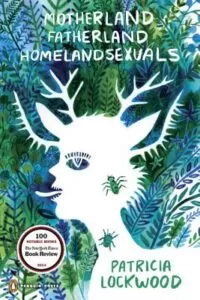 Cover of Patricia Lockwood's collection "Motherland Fatherland Homelandsexuals".
Patricia Lockwood, “Rape Joke”
This poem achieved viral fame upon its online publication in 2013, sparking widespread discussion about trauma, humor, and public discourse. Patricia Lockwood’s poem is unflinching and darkly humorous in its confrontation of the experience of sexual assault. Its directness, unexpected use of humor, and the way it resonated with countless readers made it an instant cultural phenomenon, demonstrating the power of poetry to address difficult subjects and find an enormous audience outside traditional literary channels.
Lucille Clifton, “Homage to My Hips”
Lucille Clifton’s poetry is celebrated for its accessibility, power, and focus on the experiences of Black women. “Homage to My Hips” is a joyful, confident celebration of the speaker’s body, defying conventional beauty standards and embracing self-love. Its famous lines declaring the hips’ power and independence (“these hips are big hips. / they need space to / move around in.”) make it an iconic poem of body positivity and self-acceptance.
Lucie Brock-Broido, “Am Moor”
Known for her dazzling, intricate language and unique voice, Lucie Brock-Broido’s poetry is highly admired within contemporary literary circles. While perhaps less known to a general audience, poems like “Am Moor” are considered iconic examples of her distinctive style and the kind of intense, often darkly beautiful work produced by poets focused on craft and lyrical intensity.
 Cover of "The Poetry of Sappho".
Sappho, “The Anactoria Poem” (Fragment 31)
Though written in ancient Greek and surviving only in fragments, Sappho’s poetry has exerted enormous influence and her “Anactoria Poem” (often translated from Fragment 31) is arguably her most famous surviving work. Describing the speaker’s physical and emotional reactions upon seeing her beloved, the poem is remarkable for its vivid portrayal of desire and jealousy, capturing universal feelings across millennia. Its fame is intertwined with the mystique of her partially lost work and her status as one of the earliest and most significant female poets.
 Cover of Kevin Young's collection "Jelly Roll: A Blues".
Kevin Young, “Errata”
Kevin Young is a major voice in contemporary American poetry, and “Errata” stands out as a poignant and unconventional poem about love and commitment, framed through the concept of errors or corrections. Its unique conceit and moving exploration of the imperfections inherent in relationships have earned it significant acclaim, making it an iconic love poem for a modern sensibility, though perhaps not yet a standard reading at weddings. This poem offers a nuanced perspective on love, making it a fascinating counterpoint to more traditional love poems for lost love or expressions of perfect romance.
 Cover of Mark Leidner's collection "Beauty Was the Case that They Gave Me".
Mark Leidner, “Romantic Comedies”
Mark Leidner’s poetry often blends philosophical inquiry with surreal humor. “Romantic Comedies” is famous for its unexpected and hilarious take on the conventions of the romantic comedy genre, applying absurd logic to the pursuit of love. Its fame is concentrated among readers who appreciate its unique blend of wit and insight, showcasing a different facet of contemporary poetic expression that gains traction through its distinct voice and shareability.
Muriel Rukeyser, “The Book of the Dead”
A powerful long poem from 1938, Muriel Rukeyser’s “The Book of the Dead” is a significant example of documentary poetry, addressing the Hawk’s Nest Tunnel disaster in West Virginia, where hundreds of miners died from silicosis. Its fame stems from its moral urgency, its innovative use of various voices and documents (including testimony), and its role as a major work of protest and social justice poetry. It is considered a landmark American poem for its fusion of poetic craft with investigative journalism and political commitment.
Carolyn Forché, “The Colonel”
Carolyn Forché is known for her poetry of witness, exploring the impact of political and social turmoil. “The Colonel,” a prose poem based on a real encounter in El Salvador during its civil war, is chillingly famous for its depiction of casual brutality and the normalization of violence. The image of a bag of human ears spilled onto a table is unforgettable. Its fame comes from its stark, powerful testimony to the horrors of political oppression and its impact on the human psyche.
Rita Dove, “After Reading Mickey in the Night Kitchen for the Third Time Before Bed”
Rita Dove, a former U.S. Poet Laureate and Pulitzer Prize winner, has a diverse and acclaimed body of work. This particular poem is famous for its warm, relatable portrayal of the intimacy between a parent and child through the shared experience of reading a beloved book. Its accessible language and focus on a simple, tender domestic scene make it a favorite for many readers and a notable example of Dove’s ability to find profundity in everyday life.
 Cover of Nikki Giovanni's collection including "Ego Tripping".
Nikki Giovanni, “Ego Tripping (there may be a reason why)”
Nikki Giovanni is a celebrated voice of the Black Arts Movement and beyond. “Ego Tripping” is a powerful, imaginative poem where the speaker traces her lineage back to mythical and historical origins, celebrating the strength and resilience of Black identity. Its famous lines, like “I am so hip even my errors are correct,” are declarations of self-possession and confidence. The poem’s exuberant tone and powerful message have made it an enduringly popular and iconic work, particularly for its celebration of heritage and self-worth.
Terrance Hayes, “The Golden Shovel”
Terrance Hayes created a new poetic form called the “Golden Shovel” in homage to Gwendolyn Brooks and her poem “We Real Cool.” A Golden Shovel poem takes each word from a line (or lines) of an existing poem and uses them, in order, as the last word of each line in the new poem. Hayes’s own “The Golden Shovel,” which uses Brooks’s famous poem, is a brilliant execution of this form, creating a dialogue with Brooks’s work while exploring themes of race, identity, and artistic inheritance. Its fame comes from its innovative form and its masterful engagement with a foundational poem, making it a significant piece in contemporary American poetry.
Conclusion
This collection of poems, spanning centuries and diverse voices, offers a glimpse into the rich tapestry of best famous poetry in the English language. Their fame is a testament to their artistic merit, their ability to capture the zeitgeist of their time, and their enduring capacity to connect with readers on an emotional and intellectual level. Whether through a stark image, a powerful narrative, a challenging form, or a universally relatable emotion, these poems have carved out a permanent space in our cultural landscape. They remind us that poetry is not a relic of the past but a vibrant, evolving art form that continues to illuminate our shared human experience. Exploring these works provides not just a deeper understanding of literary history but also a profound connection to the poets and the moments they captured.