
La poesía posee un poder único para iluminar el mundo que nos rodea, invitándonos a desacelerar y realmente ver los detalles que de otro modo podríamos pasar por alto. Esta conciencia agudizada a menudo conduce a una profunda sensación de gratitud – un agradecimiento no solo por las grandes bendiciones, sino por los dones simples y complejos entretejidos en el tejido de la vida cotidiana. Si bien muchos buscan poemas que ofrezcan declaraciones directas de agradecimiento, algunas de las expresiones de gratitud más impactantes provienen de poetas que simplemente dirigen sus ojos perspicaces hacia la existencia misma, revelando su belleza y maravilla inherentes.
Explorar cómo los poetas capturan este sentimiento puede profundizar nuestra propia capacidad de apreciación. No siempre se trata de escribir en una forma específica, como dominar la esquema de rima para un soneto, sino de la forma única del poeta de observar y articular.
Un ejemplo célebre que encarna este espíritu de observación agradecida es “Pied Beauty” de Gerard Manley Hopkins. Aunque escrito en su distintivo “ritmo sprung“, que se aparta de los patrones métricos estándar, el poema es un himno directo de alabanza y gratitud a Dios por la belleza diversa, variada e imperfecta del mundo.
Pied Beauty

Glory be to God for dappled things—
   For skies of couple-colour as a brinded cow;
      For rose-moles all in stipple upon trout that swim;
Fresh-firecoal chestnut-falls; finches’ wings;
   Landscape plotted and pieced—fold, fallow, and plough;
      And áll trádes, their gear and tackle and trim.

All things counter, original, spare, strange;
   Whatever is fickle, freckled (who knows how?)
      With swift, slow; sweet, sour; adazzle, dim;
He fathers-forth whose beauty is past change:
   Praise him.
Hopkins no solo afirma estar agradecido; nos muestra por qué está agradecido con imágenes vívidas y específicas: el cielo moteado, las manchas en una trucha, las castañas caídas, los patrones de la tierra cultivada y las herramientas de diversos oficios. Esta atención minuciosa a los detalles sirve como la base misma de su agradecimiento. El poema nos enseña que la gratitud se puede encontrar en lo único, lo imperfecto, lo “counter, original, spare, strange”.
Otro poema famoso que aborda directamente la gratitud es “i thank You God for most this amazing day” de e.e. cummings. Cummings, conocido por su uso poco convencional de minúsculas, puntuación y estructura, aquí ofrece una expresión poderosa, casi sin aliento, de agradecimiento por la pura maravilla de estar vivo y experimentar el día.
i thank You God for most this amazing
day:for the leaping greenly spirits of trees
and a blue true dream of sky;and for everything
which is natural which is infinite which is yes

(i who have died am alive again today,
and this is the sun’s birthday;this is the birth
day of life and of love and wings:and of yonder star the
minutest crimson whisper,which was shy:

and it’s this fool of an i who feels a
smarter than anybody else my self is dancing)

i thank You God for this most amazing day
for the leaping greenly spirits of trees
and for the blue heart of the west and for what could not be here and for what is coming

(because minus each next nowhere is my forever)
and it’s your say goodnight dear here comes the
close of day)
La estructura de cummings puede no seguir reglas tradicionales como las de un esquema de rima de soneto, pero su forma innovadora refleja el sentimiento abrumador y no lineal de profunda gratitud. El poema se derrama con agradecimiento por el mundo natural (“leaping greenly spirits of trees,” “blue true dream of sky”), la sensación de renacimiento (“i who have died am alive again today”) y el simple hecho de la existencia misma. Es una sensación visceral de estar vivo lo que enciende el agradecimiento.
Finalmente, Mary Oliver, una aclamada poeta contemporánea famosa por sus observaciones de la naturaleza, a menudo evoca una sensación de gratitud a través de la atención profunda. Si bien no siempre afirma explícitamente “Estoy agradecida”, sus poemas, como “The Summer Day”, guían al lector hacia una profunda apreciación por el momento presente y el mundo natural.
The Summer Day
Who made the world?
Who made the swan, and the black bear?
Who made the grasshopper?
This grasshopper, I mean—
the one who has flung herself out of the grass,
the one who is eating sugar out of my hand,
who is moving her jaws back and forth instead of up and down—
who is gazing around with her enormous and complicated eyes.
Now she lifts her pale forelegs and thoroughly washes her face.
Now she snaps her wings open, and floats away.
I don’t know exactly what a prayer is.
I do know how to pay attention.
I know how to fall down on my knees and be melted into the snow.
I know how to be idle and blessed. I know this dense world I live in.
Sometimes I think attention is a form of prayer.
For seventy years I have lived here on earth.
Given my seventy years, not counting my childhood, of the pure labor of doing
nothing luxuriously.
And all my life
I have been a bride married to amazement.
I stood in the path, I came into the house.
Which was warm and full of light.
Still, I can’t think of anything, in the way of meaning,
that lasts beyond the body’s sweet wilderness:
flowers, and green weeds, the song of the thrush.
The moth crossing the dark barn, the turtle basking in the pond,
the plump woodchuck.
How should I live then
the one life, I can’t remember much about,
except for this moment, and that one, and the other.
What about this snapdragon, this peach, this dusty-velvet leaf?
***
Tell me, what is it you plan to do
with your one wild and precious life?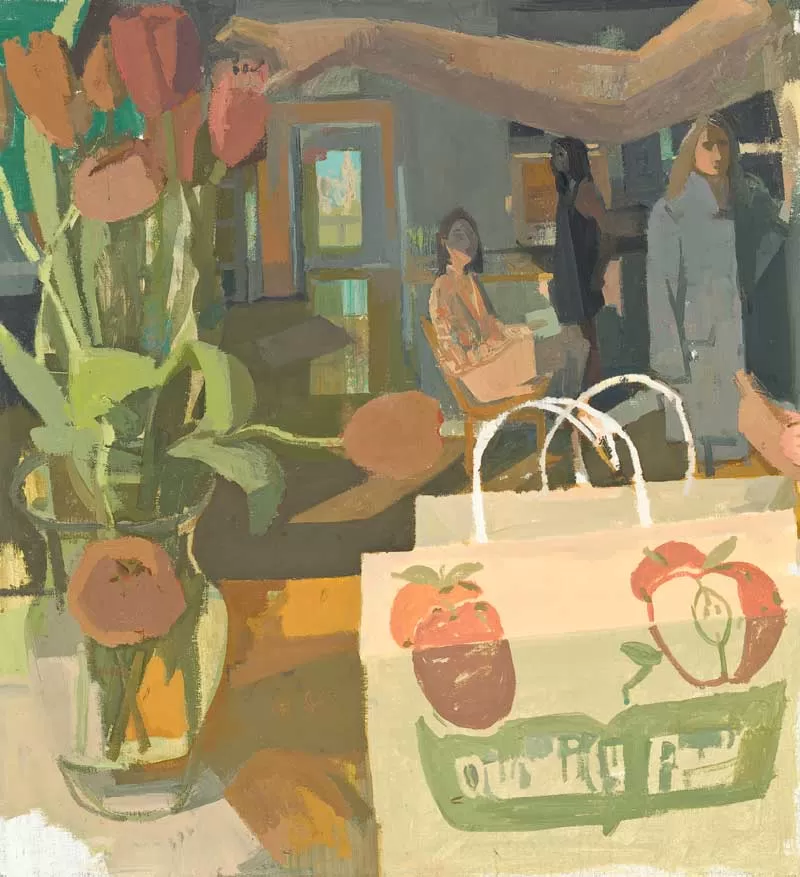 Pintura de cesta con frutas y flores sobre mesa, evocando la belleza sencilla y abundancia natural, al igual que el poema de Oliver.
El poema de Oliver es una meditación sobre prestar atención, sobre la interconexión de la vida y sobre la realidad simple y física de la existencia – el saltamontes, la boca de dragón, el durazno. Su famosa pregunta final, “Tell me, what is it you plan to do / with your one wild and precious life?”, sirve no solo como un desafío, sino como un poderoso recordatorio del don de la vida misma. Este enfoque en notar el mundo en su esplendor detallado se convierte en un acto de profunda gratitud, sugiriendo que cómo vivimos, con atención y apreciación, es nuestra respuesta a este don. Si bien este poema no presenta un ejemplo de terceto en poesía ni sigue una estrofa spenseriana estricta, su poder reside en su interpelación directa y en sus imágenes vívidas, características valiosas al explorar cualquier tema poético.
Estos famosos poemas sobre la gratitud, desde la celebración de Hopkins de la creación divina en sus variadas formas hasta la alegría efervescente de cummings por el día y la silenciosa insistencia de Oliver en la santidad de la atención, demuestran la infinidad de maneras en que los poetas expresan agradecimiento. Nos recuerdan que la gratitud no es solo un sentimiento, sino una forma activa de ver e interactuar con el mundo. Al leer y reflexionar sobre estas obras, podemos cultivar nuestra propia capacidad para encontrar belleza y dar gracias por las innumerables “dappled things” y “amazing days” que componen nuestras vidas.