
Poetry, at its heart, is an art form built on the careful arrangement of words to evoke emotion, paint pictures, and explore the vast landscape of human experience. One of the most potent tools in a poet’s arsenal is juxtaposition – the act of placing two things side by side, often with a contrasting effect. This simple technique can generate tension, reveal hidden connections, highlight themes, and add profound depth to a poem.
Contents
- What is Juxtaposition in Poetry?
- Why Poets Employ Juxtaposition
- Examples of Juxtaposition in Poetry
- Robert Frost, “The Road Not Taken”
- William Shakespeare (Oxymoron)
- Wilfred Owen, “Dulce et Decorum Est”
- T.S. Eliot, “The Love Song of J. Alfred Prufrock”
- Emily Dickinson (Abstract vs. Concrete)
- The Visual and Sensory Juxtaposition
- Conclusion
In poetry, juxtaposition isn’t just about opposites; it’s about the relationship between contrasting elements when they are brought into close proximity. This could be contrasting images, ideas, emotions, sounds, or even grammatical structures. By holding these different elements up against each other, the poet invites the reader to notice the friction, the irony, the surprising harmony, or the poignant disparity between them. The meaning doesn’t just reside in the individual elements, but in the dynamic space created between them.
What is Juxtaposition in Poetry?
At its core, juxtaposition in poetry involves the strategic placement of contrasting elements. This contrast can manifest in several ways:
- Antithesis: The juxtaposition of opposing ideas or phrases within a balanced grammatical structure. “To err is human, to forgive divine” is a classic example (though prose), placing “err is human” against “forgive divine” for rhetorical effect. In poetry, this can create powerful thematic tension.
- Oxymoron: The combination of two contradictory terms, like “living dead” or “deafening silence.” These compressed juxtapositions create immediate paradox and can highlight complex or conflicting emotions or states of being.
- Contrasting Imagery or Concepts: Placing disparate images, scenes, themes (like innocence and experience, nature and industry, past and present), or emotions (joy and sorrow) side-by-side. This is arguably the most common form in poetry, using sensory details or abstract ideas to create striking effects.
The power of these techniques lies in the fact that the poet doesn’t usually explain the connection between the juxtaposed elements. Instead, the reader is prompted to actively engage, to bridge the gap, and to uncover the nuances of meaning that emerge from the contrast.
 Yin and Yang symbol representing contrast
Why Poets Employ Juxtaposition
Poets use juxtaposition for a multitude of reasons, all serving to enrich the reader’s experience and deepen the poem’s impact:
- Creating Tension and Conflict: Placing opposing forces or ideas together inherently creates tension, holding the reader’s attention and reflecting the complexities of life or the subject matter.
- Highlighting Themes: By contrasting elements central to the poem’s theme (e.g., wealth and poverty, love and hate, beauty and decay), the poet can throw those themes into sharp relief.
- Evoking Strong Emotions: The sudden shift or clash created by juxtaposition can generate powerful emotional responses – shock, pity, irony, confusion, or even unexpected beauty.
- Generating Irony: Placing what is expected or claimed against a harsh or different reality can create profound irony, often used in social commentary or war poetry.
- Adding Complexity and Nuance: Life is rarely simple; juxtaposition allows poets to capture contradictory truths or feelings that exist simultaneously.
- Surprising the Reader: Unexpected juxtapositions can jar the reader, forcing them to see familiar things in a new light and preventing passive reading.
- Revealing Deeper Meaning: Often, the interaction between juxtaposed elements reveals a truth or insight that neither element could convey alone.
Consider how juxtaposition can make a poem more relatable or impactful. It can help readers connect with complex emotions, making feelings of conflicting love and resentment, or hope and despair, resonate more deeply. For instance, exploring hopeless poetry often involves the juxtaposition of despair with faint glimmers of hope, or the crushing weight of reality against shattered dreams, enhancing the raw emotional power.
Examples of Juxtaposition in Poetry
Let’s look at some specific examples of how poets have masterfully used juxtaposition to craft memorable and impactful works.
 Stack of classic literature books
Robert Frost, “The Road Not Taken”
Perhaps one of the most famous (and often misinterpreted) examples comes from Robert Frost:
Two roads diverged in a yellow wood,
And sorry I could not travel both
And be one traveler, long I stood
And looked down one as far as I could
To where it bent in the undergrowth;Then took the other, as just as fair,
And having perhaps the better claim,
Because it was grassy and wanted wear;
Though as for that the passing there
Had worn them really about the same,And both that morning equally lay
In leaves no step had trodden black.
Oh, I kept the first for another day!
Yet knowing how way leads on to way,
I doubted if I should ever come back.I shall be telling this with a sigh
Somewhere ages and ages hence:
Two roads diverged in a wood, and I—
I took the one less traveled by,
And that has made all the difference.
Frost juxtaposes the image of two distinct paths (“two roads diverged”) representing life choices. While the poem initially presents them as different (one “less traveled by”), it then immediately places against this the observation that the “passing there / Had worn them really about the same” and that “both that morning equally lay”. This juxtaposition of perceived difference versus actual similarity, and the final assertion of choosing the ‘less traveled’ path despite the roads being similar, creates a complex tension about memory, choice, and the stories we tell ourselves.
William Shakespeare (Oxymoron)
Shakespeare frequently employed oxymorons in his plays and poems to capture the conflicting emotions of love and conflict. Consider these famous lines from Romeo and Juliet:
O brawling love, O loving hate,
O any thing, of nothing first create!
O heavy lightness, serious vanity,
Misshapen chaos of well-seeming forms,
Feather of lead, bright smoke, cold fire, sick health,
Still-waking sleep, that is not what it is!
This love feel I, that feel no love in this.
Here, Romeo uses a string of oxymorons (“brawling love,” “loving hate,” “heavy lightness,” “cold fire,” “sick health”) to express the confusing and contradictory nature of his unrequited love for Rosaline. He is experiencing love, but it feels like conflict and pain. The juxtaposition of these opposite terms side-by-side vividly captures his internal turmoil and the paradoxical state of being wounded by something that is supposed to bring joy.
Wilfred Owen, “Dulce et Decorum Est”
Wilfred Owen’s harrowing poem powerfully uses juxtaposition to expose the horrific reality of World War I and refute the patriotic lie that war is glorious. He juxtaposes the lived experience of the soldiers with the abstract ideal:
If in some smothering dreams you too could pace
Behind the wagon that we flung him in,
And watch the white eyes writhing in his face,
His hanging face, like a devil’s sick of sin;
If you could hear, at every jolt, the blood
Come gargling from the froth-corrupted lungs,
Obscene as cancer, bitter as the cud
Of vile, incurable sores on innocent tongues,—
My friend, you would not tell with such high zest
To children ardent for some desperate glory,
The old Lie: Dulce et decorum est
Pro patria mori.
Owen juxtaposes the graphic, visceral horrors of a gas attack and a dying soldier (“white eyes writhing,” “blood / Come gargling,” “froth-corrupted lungs”) with the final lines, the Latin aphorism: “It is sweet and fitting to die for one’s country.” The stark contrast between the brutal reality he describes and the elevated, patriotic phrase creates profound irony and condemnation. The effect is devastating; the lie is exposed through its cruel juxtaposition with unimaginable suffering.
T.S. Eliot, “The Love Song of J. Alfred Prufrock”
Eliot masterfully juxtaposes images and ideas to create a sense of the fragmented, alienated experience of modern life and Prufrock’s internal paralysis:
The yellow fog that rubs its back upon the window-panes,
The yellow smoke that rubs its muzzle on the window-panes,
Licked its tongue into the corners of the evening,
Lingered upon the pools that stand in drains,
Let fall upon its back the soot that falls from chimneys,
Slipped by the terrace, made a sudden leap,
And seeing that it was a soft October night,
Curled once about the house, and fell asleep.And indeed there will be time
For the yellow smoke that slides along the street,
Rubbing its back upon the window-panes;
There will be time, there will be time
To prepare a face to meet the faces that you meet;
There will be time to murder and create,
And time for all the works and days of hands
That lift and drop a question on your plate;
Time for you and time for me,
And time yet for a hundred indecisions,
And for a hundred visions and revisions,
Before the taking of a toast and tea.
Eliot juxtaposes the mundane, almost squalid urban imagery (fog as a cat rubbing on window-panes, pools in drains, soot) with moments suggesting deeper existential questions (“time to murder and create,” “lift and drop a question”). He places grand possibilities and anxieties (“hundred indecisions,” “visions”) against trivial actions (“taking of a toast and tea”). This constant interplay between the lofty and the low, the internal struggle and external inaction, the urban decay and potential for something more, creates a sense of fragmentation, anxiety, and the inability to connect or act decisively.
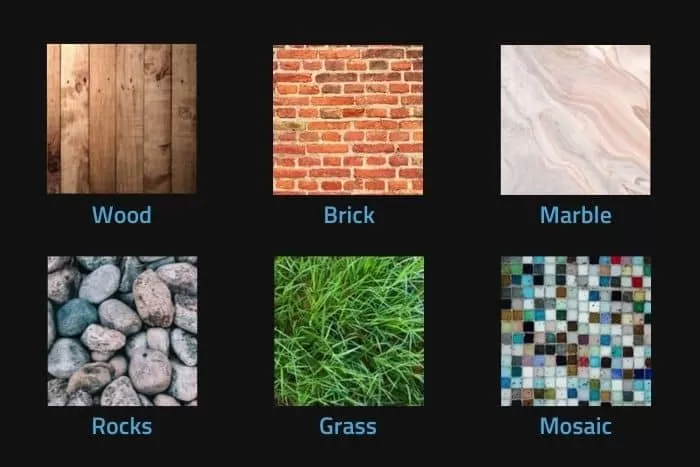 Close up showing different textures like wood grain and smooth stone
Emily Dickinson (Abstract vs. Concrete)
Emily Dickinson frequently juxtaposes abstract concepts with concrete, often surprising, images to make the intangible feel real and understandable:
“Hope” is the thing with feathers –
That perches in the soul –
And sings the tune without the words –
And never stops – at all –And sweetest – in the Gale – is heard –
And sore must be the storm –
That could abash the little Bird
That kept so many warm –
Here, Dickinson juxtaposes the abstract concept of “Hope” with the concrete image of a bird (“the thing with feathers”). Hope is personified as a creature that lives within us, sings, and endures storms. This juxtaposition makes hope feel tangible, resilient, and vulnerable yet persistent, far more vivid than a simple definition ever could. It is one of the many ways poets make complex ideas accessible through striking imagery. Poetry forms like some examples of haiku poems often rely on a similar principle, juxtaposing two distinct images to create a sudden moment of insight or connection, as seen in traditional haiku or popular haiku poems by masters like Basho.
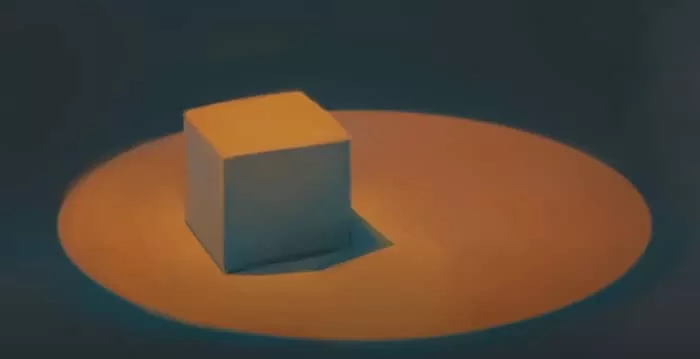 Illustration demonstrating visual color contrast with shapes
The Visual and Sensory Juxtaposition
Beyond abstract ideas, poets also use juxtaposition with sensory details. Placing a harsh sound next to a soft sound, a vibrant color next to a dull one, or a rough texture next to a smooth one within a poem can create powerful sensory experiences for the reader, mimicking the way we perceive the world through contrasts. Just as visual artists use contrast in color, shape, or texture to create depth and focus, poets use sensory juxtaposition to make their descriptions more vivid and impactful.
Conclusion
Juxtaposition is a fundamental technique that adds layers of meaning, emotional resonance, and intellectual stimulation to poetry. By placing contrasting elements side-by-side – be they images, ideas, sounds, or emotions – poets create tension, highlight themes, generate irony, and surprise the reader into new ways of seeing and feeling.
Exploring these examples of juxtaposition in poetry reveals how this device is not just a stylistic flourish but a core method for unlocking deeper truths and capturing the inherent complexities and contradictions of existence. As readers, recognizing juxtaposition allows us to engage more deeply with the poem’s message and appreciate the poet’s craft. As aspiring poets, understanding juxtaposition provides a powerful tool for enhancing the impact and effectiveness of our own verse. It is a reminder that often, the most profound insights arise from the spaces between opposing forces.