
 Hyperbole in PoetryHyperbole, a cornerstone of figurative language, adds depth and vibrancy to poetry. This literary device, through deliberate exaggeration, amplifies emotions and creates striking imagery. Understanding hyperbole unlocks a richer appreciation for poetry, both classic and contemporary, and empowers aspiring poets to craft impactful verse. This article explores hyperbole poem examples, illustrating how this powerful tool connects with readers on a visceral level.
Contents
What is Hyperbole in Poetry?
 What is a Hyperbole in a Poem?
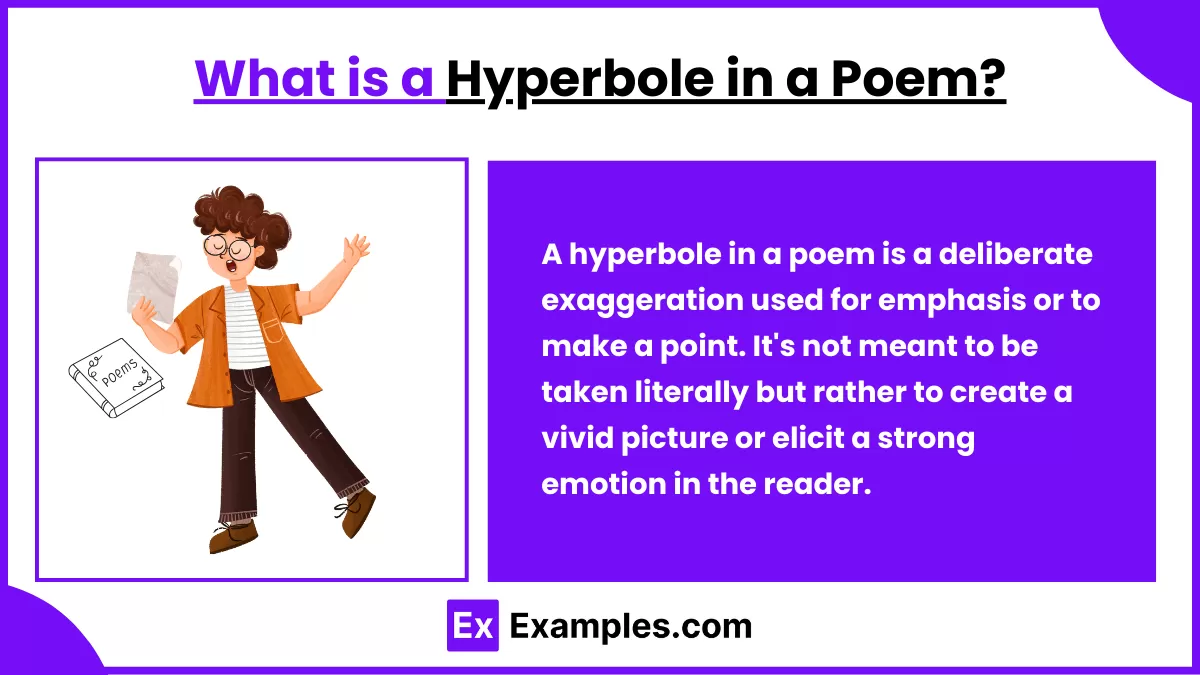
Hyperbole in poetry is a figure of speech that employs extreme exaggeration to create emphasis or humor. It’s not meant to be taken literally but rather to evoke strong feelings or paint vivid mental pictures. For example, saying “I’ve told you a million times” isn’t a factual statement, but it effectively conveys the speaker’s frustration.
Hyperbole Poem Examples from Famous Poets
 Hyperbole Examples in Poetry/ Poem
From classic verses to modern masterpieces, poets have employed hyperbole to achieve lasting impact. Here are some hyperbole poem examples that illustrate its power:
-
“I’ll love you, dear, I’ll love you / Till China and Africa meet” (W.H. Auden, “As I Walked Out One Evening”): This line uses geographical impossibility to express eternal love.
-
“An hundred years should go to praise / Thine eyes and on thy forehead gaze; / Two hundred to adore each breast; / But thirty thousand to the rest” (Andrew Marvell, “To His Coy Mistress”): Marvell uses exaggerated timeframes to emphasize the speaker’s desire and the poem’s theme of carpe diem.
-
“I felt a Funeral, in my Brain, / And Mourners to and fro / Kept treading – treading – till it seemed / That Sense was breaking through—” (Emily Dickinson, “I felt a Funeral, in my Brain”): Dickinson’s hyperbolic description of a mental breakdown creates a powerful image of internal chaos and overwhelming emotion.
Short and Sweet: Concise Hyperbole Examples
Hyperbole doesn’t require lengthy passages to be effective. Sometimes, a few words are enough to create a striking image.
-
“The world is mud-luscious” (e.e. cummings, “in Just-“): This concise image vividly captures the sensory experience of spring.
-
“I have measured out my life with coffee spoons” (T.S. Eliot, “The Love Song of J. Alfred Prufrock”): This line uses the mundane act of measuring coffee to highlight the speaker’s sense of a wasted life.
Humor Through Hyperbole: Adding a Touch of Whimsy
 How to Write a Hyperbole in a Poem
Hyperbole can also be a source of humor in poetry, creating absurd and amusing scenarios.
-
“I’m so hungry I could eat a horse”: This common hyperbolic expression uses an impossible feat to emphasize extreme hunger.
-
“My teacher’s so old she rode a dinosaur to school”: This humorous hyperbole creates a playful and outlandish image.
Hyperbole in Poems about Life: Expressing the Inexpressible
Life’s complexities often defy simple descriptions. Hyperbole provides poets with a tool to express these intense experiences.
-
“My tears could fill an endless sea”: This powerful image conveys the depth of sorrow and grief.
-
“Life’s lessons weigh heavier than mountains”: This hyperbole emphasizes the profound impact of life’s experiences.
Why and How Poets Use Hyperbole
Poets utilize hyperbole for various reasons:
- Emphasis: Exaggeration highlights key emotions or ideas.
- Emotional Impact: Hyperbole intensifies feelings and creates a stronger connection with the reader.
- Imagination and Creativity: It pushes the boundaries of reality and allows for imaginative expression.
- Memorability: Exaggerated statements are often more memorable than literal descriptions.
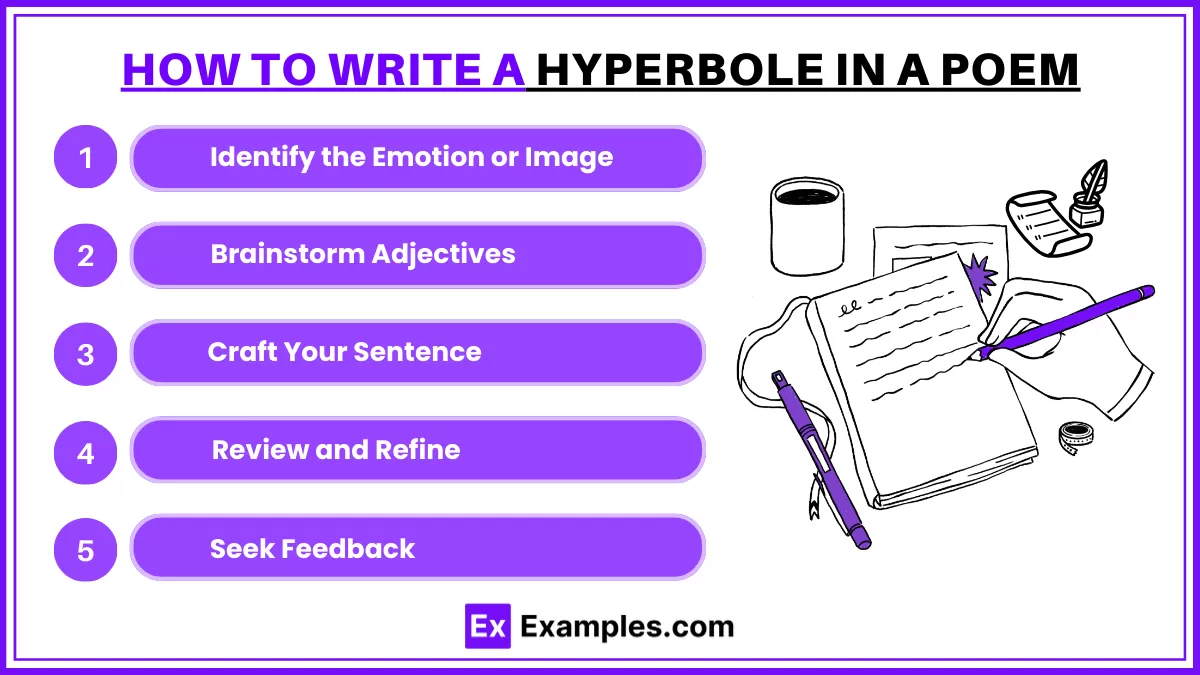
To effectively use hyperbole in your own poetry:
- Identify the emotion or image you want to amplify.
- Use vivid and descriptive language.
- Ensure the exaggeration is clear and intentional.
- Avoid clichés and strive for originality.
- Maintain consistency with the poem’s overall tone and theme.
Hyperbole: A Powerful Poetic Tool
Hyperbole offers poets a powerful means to create vivid imagery, evoke intense emotions, and leave a lasting impression on the reader. By understanding how to wield this figure of speech effectively, you can unlock new levels of meaning and impact in your own poetry and deepen your appreciation for the artistry of others.