
George Gordon Byron, the 6th Baron Byron, universally known as Lord Byron, remains a colossal figure in English poetry and a leading light of the Romantic movement. His literary contributions, including the epic narrative poem Don Juan and the widely quoted sonnet She Walks in Beauty, secured his place as one of the most influential poets of his era, whose impact resonates even today.
Contents
Byron’s life was as dramatic and captivating as his verse, filled with public scandals that fascinated and sometimes appalled contemporary society. His notorious affair with Lady Caroline Lamb, followed by her obsessive pursuit and public dramatization of their relationship in her novel Glenarvon, cemented his image as a scandalous figure. His subsequent marriage to Anne Isabella Milbanke produced a daughter, Ada Lovelace, but was short-lived, ending in a highly publicized separation that fueled further speculation about his personal life and conduct.
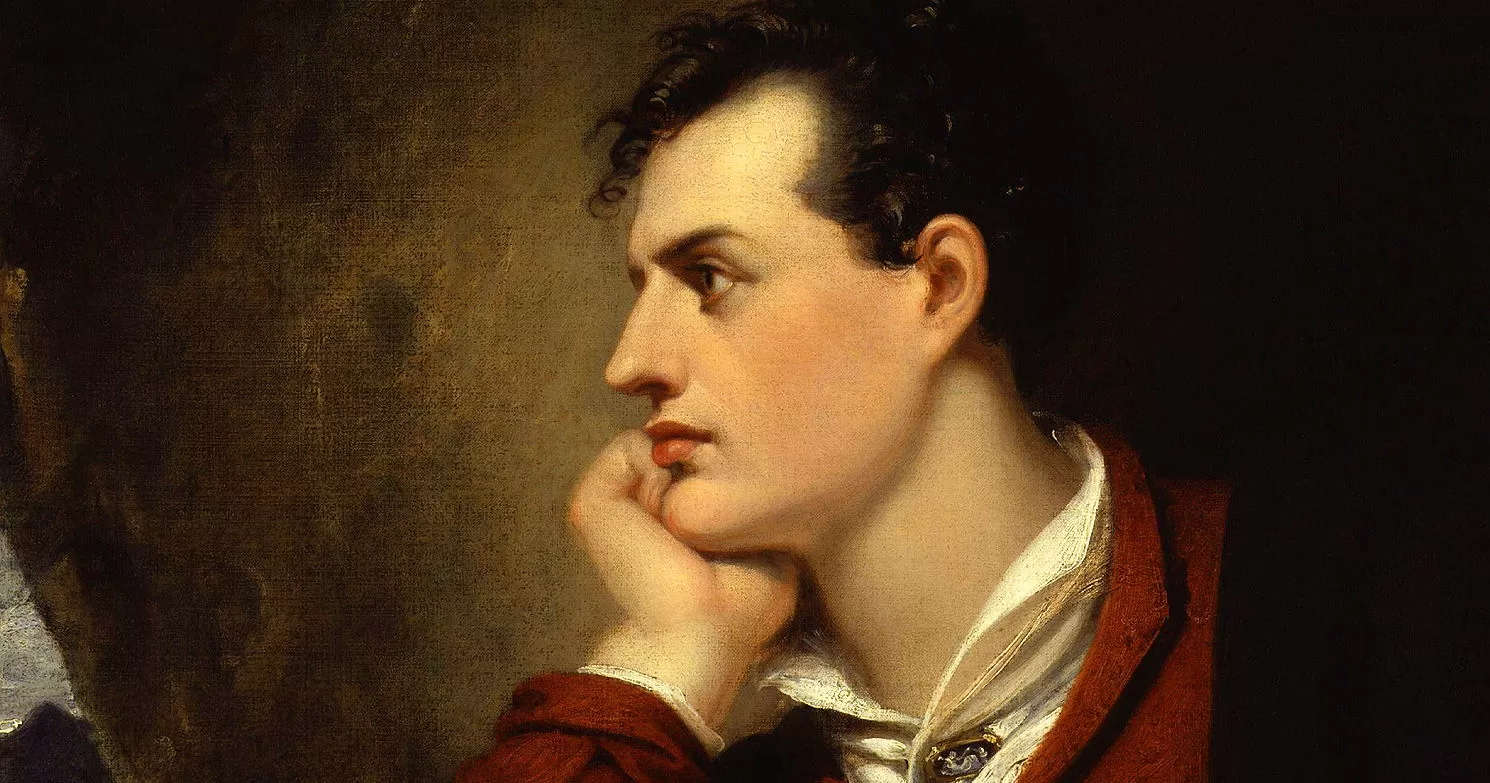 Lord Byron is depicted in a formal portrait, wearing a white shirt and dark coat, looking off to the side with a contemplative expression.
Following his separation and ostracism from English society, Byron departed for continental Europe, where he would spend the remainder of his years. It was during this period that he cultivated significant relationships within literary circles, notably befriending Percy Bysshe Shelley and Mary Godwin (later Mary Shelley), author of Frankenstein. He was also joined by Claire Clairmont, with whom he had previously been involved. His time abroad continued to be marked by a complex web of personal connections and romantic entanglements.
Byron cultivated a potent public image, embodying the archetype of the Byronic hero – brooding, passionate, and enigmatic. This carefully curated persona, coupled with his literary fame, contributed to an unprecedented level of celebrity, leading his wife Annabella to coin the term “Byromania” to describe the public frenzy surrounding him. This self-awareness and promotion are often cited as early examples of modern celebrity culture.
While his numerous heterosexual affairs were often public knowledge or quickly became fodder for gossip and literature, another significant aspect of Lord Byron’s personal life – his relationships with men – was largely obscured during his lifetime and for many years after his death. The intentional destruction of his memoirs and subsequent efforts by publishers to suppress details of his sexual history meant that biographical evidence regarding his same-sex relationships remained hidden or downplayed.
However, painstaking research by biographers delving into personal letters, journals, and other historical records over time has revealed abundant evidence of his relationships with both men and women. This complex picture made defining Byron’s sexuality a challenging task for earlier scholars. As one commentator noted, “Byron’s sexual orientation has long been a difficult, not to say contentious, topic… it is not so simple to define Byron as homosexual or heterosexual: he seems rather to have been both, and either.” [1]
While searches for “lord byron gay” reflect a public interest in understanding this facet of his identity, modern biographical understanding, supported by collected evidence, points towards a more nuanced reality. Lord Byron’s life, filled with passionate attachments to individuals of different genders, is perhaps best understood through the lens of bisexuality, acknowledging the full spectrum of his emotional and romantic connections, rather than attempting to fit him neatly into a single category. His multifaceted relationships, like his poetry, continue to invite analysis and reflection.
References
[1] Quote attribution based on the original article’s reference [2].
Note: The term “gay” in the search query “lord byron gay” may reflect a modern understanding or simplification of historical sexual identities. This article uses “bi” or “bisexuality” to align with the nuanced conclusion presented in the original source based on available biographical evidence.