
The landscape of English Romanticism is populated by giants, and among the most luminous are Percy Bysshe Shelley and John Keats. Though their personal acquaintance was limited, the intersection of their lives and, crucially, their poems, offers a fascinating study for anyone delving into this revolutionary period of literature. While Lord Byron often grabbed the public spotlight and Wordsworth charted new paths in nature poetry, the relationship, or perhaps more accurately, the literary dialogue, between Shelley and Keats reveals a deeper current of philosophical inquiry and artistic aspiration that defined the second wave of Romantic poets. Exploring their individual works and how they perceived one another provides rich insight into the creative ferment of the early 19th century and highlights the enduring power of shelley keats poems.
Contents
Keats and the Romantic Vision
John Keats arrived on the literary scene as the Romantic movement was evolving. The first generation had championed nature, emotion, and the power of the individual imagination, often grappling with the aftermath of the French Revolution and societal change. Keats, alongside Shelley and Byron, inherited this legacy but approached it with a fresh perspective. Their poetry often combined introspective depth with a keen interest in philosophical questions about beauty, truth, life, and death. Unlike some earlier Romantics who turned away from radicalism, the second generation, including Keats and Shelley, maintained a visionary edge, using their poetry to explore the complexities of the human condition and critique societal norms, even if implicitly.
Keats’s ability to weave intense sensory experience with profound intellectual contemplation, evident in works like “Ode to a Nightingale” or “To Autumn,” solidified his place within this movement. His dedication to the craft of poetry, meticulously exploring form and language, showcased a unique blend of aesthetic focus and thematic weight.
 An inviting grey stone building with large windows, surrounded by green trees and a garden path, representing Keats House where poems were written.
Shelley, Keats, and Their Literary Circles
The personal connection between Percy Bysshe Shelley and John Keats was, perhaps surprisingly, not a close friendship. Accounts suggest they met only a couple of times in London, and no deep bond formed. However, the absence of personal intimacy did not negate a mutual awareness and literary engagement. Shelley expressed considerable admiration for Keats’s work in his letters, recognizing the burgeoning genius even when contemporary critics were harsh.
This respect culminated tragically after Keats’s untimely death in Rome at the age of 25. Shelley, deeply affected by the loss of a fellow poet and by what he perceived as the brutal reception Keats received from critics, composed one of his most famous works: Adonais: An Elegy on the Death of John Keats. This powerful verse-elegy mourns Keats’s death while simultaneously celebrating his enduring poetic legacy and attacking his detractors. Adonais stands as a monumental tribute from one great Romantic to another, solidifying Keats’s posthumous reputation and forever linking the names of Shelley and Keats in literary history.
While Shelley was a prominent figure in radical circles and had connections with figures like Leigh Hunt (who was also a friend of Keats), and, of course, his wife Mary Shelley, the author of Frankenstein, Keats cultivated his own distinct circle of friends. These included artists like Joseph Severn (who would accompany him to Rome) and Benjamin Robert Haydon, as well as his close friend and housemate Charles Brown. These relationships were crucial to Keats’s life and work, underscoring that despite the sometimes-isolated image of the tragic poet, Keats was embedded in a vibrant network of creative individuals.
Compared to the notoriously antagonistic relationship between Keats and Lord Byron – who famously, and crudely, dismissed Keats’s work and even attributed Keats’s death to negative reviews – Shelley’s response highlights a different dynamic among the second-generation Romantics. While they competed and differed politically and artistically, there was also recognition and elegy among them.
Echoes in Their Work: Philosophical and Emotional Resonance
Despite their limited personal interaction, examining shelley keats poems reveals shared intellectual and emotional territory. Both poets were deeply engaged with philosophical questions, grappling with the nature of reality, the search for truth and beauty, and the human struggle against transience and suffering.
Shelley’s poetry, often more explicitly political and metaphysical, explored themes of liberty, justice, and the potential for human progress. Keats, while perhaps more focused on aesthetic experience and the emotional intensity of the moment, also delved into existential themes, questioning the relationship between imagination and reality, and confronting the inevitability of death. Shelley’s decision to write Adonais was not merely an act of mourning but a philosophical statement about the immortality of the poet’s spirit and work, directly engaging with the themes of legacy and transcendence that Keats himself explored in his odes and longer poems.
The thematic connections, though approached through distinct poetic styles (Shelley’s often expansive, soaring lyricism versus Keats’s rich, concentrated imagery and language), demonstrate a shared intellectual climate. Both contributed significantly to the body of poems that make you think, pushing the boundaries of poetic expression to explore complex ideas and deep emotions. Keats’s mastery of form, seen in his famous odes or his use of the sonnet, provides examples of an english sonnet that sit within the broader landscape of Romantic poetic innovation.
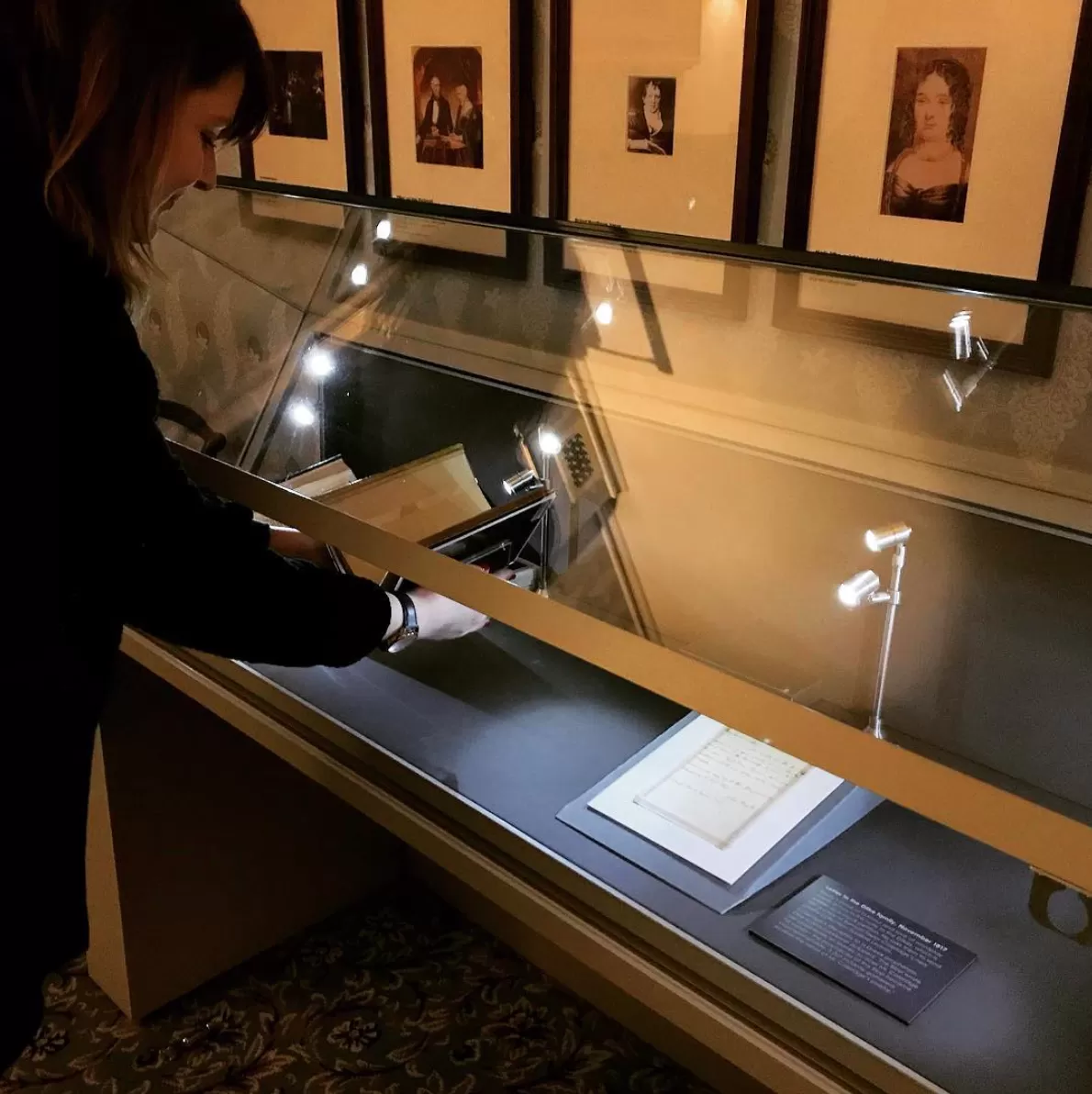 An interior view of a historic room, furnished with period pieces including a large desk and chair near a fireplace, potentially John Keats's parlour.
The thematic resonance between their works, particularly concerning the confrontation with mortality and the search for meaning in the face of loss, finds a poignant expression in Shelley’s elegy for Keats. Adonais not only laments Keats’s death but also offers a vision of his integration into the eternal, making it a significant piece within the collection of pretty poems about death.
Keats House: A Tangible Link to the Poets’ World
For those seeking a tangible connection to the world that shaped Keats’s poetry and, by extension, the context for understanding shelley keats poems, Keats House in Hampstead offers a unique experience. It was here that Keats lived from 1818 to 1820 and composed some of his most celebrated works. Walking through the rooms where he read, wrote, and interacted with friends like Charles Brown provides a vivid sense of the environment that fostered his creative genius. While Shelley never resided there, the house represents the very world of letters and intellectual exchange that both poets inhabited and transformed through their work.
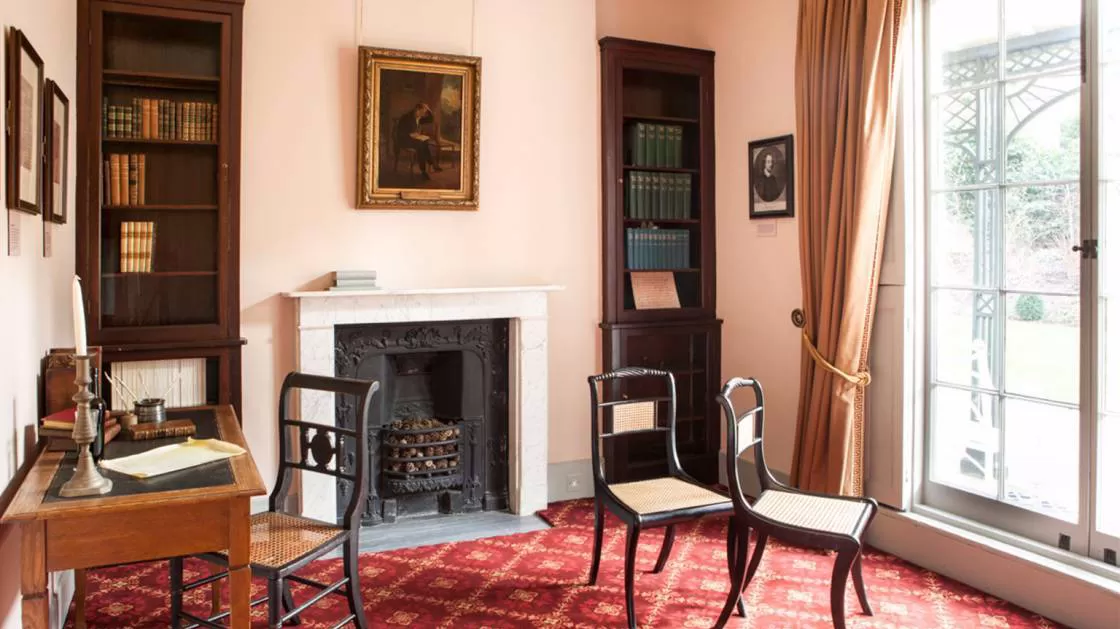 The interior of Keats's parlour, featuring a fireplace, desk, and chair, offering a glimpse into the poet's writing space.
Conclusion
The connection between Shelley and Keats is less a story of close friendship and more one of profound literary impact. While their personal interactions were few, Shelley’s admiration for Keats’s talent and his heartfelt, powerful elegy Adonais cemented their intertwined legacy. Exploring shelley keats poems side-by-side, understanding their shared place in the Romantic movement’s evolution, and appreciating their individual contributions allows for a deeper appreciation of this vital period in literary history. Their works continue to resonate, offering timeless insights into the human experience and showcasing the transformative power of poetry.