
The image of a cat curled up in slumber is universally recognized, a picture of apparent peace and stillness. Yet, anyone who has observed a sleeping feline – the twitching paws, the murmurs, the sudden stretches – might suspect there is more activity beneath the surface than meets the eye. Poets throughout history have been drawn to these quiet moments, finding in them reflections on nature, consciousness, memory, and the hidden lives of creatures great and small. J.R.R. Tolkien, a master wordsmith known for crafting epic sagas, also turned his gaze to this simple scene, resulting in a delightful poem on sleeping that captures the intriguing duality of a domestic pet at rest.
Contents
Tolkien’s poem, fittingly titled “Cat,” offers a whimsical, yet insightful look at a common house cat. Published in 1962 in The Adventures of Tom Bombadil and later included in Tales from the Perilous Realm, the poem is attributed within the text to Samwise Gamgee, suggesting it belongs to the lore and perspective of the hobbits, who held a deep affection for domestic animals. It begins with the familiar image of a cat in repose:
The fat cat on the mat
may seem to dream
of nice mice that suffice
for him, or cream;
but he free, maybe,
walks in thought
unbowed, proud, where loud
roared and fought
his kin, lean and slim,
or deep in den
in the East feasted on beasts
and tender men.
The opening lines establish a seemingly straightforward picture: a well-fed, comfortable cat appearing to have simple dreams of food. This sets up a contrast with the poem’s surprising turn. The cat’s physical state of being “on the mat,” seemingly content and docile, is juxtaposed with the potential freedom and wildness of its mind in sleep. The phrase “but he free, maybe, walks in thought” immediately shifts the focus from the external, sleeping form to the internal, active consciousness. This internal world is not one of cozy domesticity but of untamed, ancestral ferocity.
The Dreamscape of a Sleeping Hunter
Tolkien vividly describes the cat’s potential dream world, painting a picture of its wild relatives. The sleeping pet mentally strides “unbowed, proud,” inhabiting a realm where its ancestors, “lean and slim,” engaged in epic battles and hunted formidable prey. This internal landscape is populated by powerful, even terrifying, images:
The giant lion with iron
claw in paw,
and huge ruthless tooth
in gory jaw;
the pard, dark-starred,
fleet upon feet,
that oft soft from aloft
leaps on his meat
where woods loom in gloom–
far now they be,
fierce and free,
and tamed is he;
but fat cat on the mat
kept as a pet,
he does not forget.
Here, the analysis deepens. While outwardly a “fat cat on the mat, kept as a pet,” the creature carries within it the genetic memory and instinctual power of its wild heritage. The “giant lion” and the swift, legendary “pard” represent the raw, untamed nature that is merely dormant, not absent. The details – “iron claw,” “ruthless tooth,” “gory jaw,” the silent, deadly leap – evoke a visceral sense of the predatory prowess that exists, perhaps only in dreams, within the domestic animal.
This exploration of the sleeping mind revealing a hidden, wild nature is central to the poem’s charm and insight. It suggests that even in their most passive state, animals possess a complex inner life, possibly connected to their evolutionary past. The poem doesn’t just describe a sleeping cat; it muses on the nature of sleep itself as a gateway to a different reality, a place where the constraints of domestication are shed. The final lines, returning to the image of the “fat cat on the mat” but adding the powerful declaration “he does not forget,” underline this point. The wildness is not gone; it is merely submerged, remembered in the quiet hours of sleep.
Poems that explore the quiet, often overlooked moments of life, like a creature asleep, resonate deeply with readers. They remind us that complexity and wonder can be found in the most ordinary scenes. While some poets explore grand themes like love or journeys, such as those found in sweetheart poems or a trip poem, focusing on a simple act like sleeping allows for a concentrated meditation on being.
More Than Just a Nap: Connecting to the Inner Life
Tolkien’s approach in “Cat” aligns with a broader tradition in poetry that observes animals not just as passive subjects but as beings with their own interiority. Poets like T. S. Eliot, John Keats, W. B. Yeats, and Emily Dickinson also wrote about cats, often imbuing them with personality or imagining their perspectives. Keats’s “To Mrs. Reynolds’s Cat,” for instance, also speculates on the imagined, perhaps wilder, past of an elderly cat. This persistent poetic interest suggests a fascination with the hidden lives of these enigmatic companions, particularly perhaps when they are in states of rest or solitude.
The simplicity of a poem on sleeping allows for a focus on observation and interpretation. Tolkien moves from the external appearance to the conjectured internal experience, bridging the gap between the domestic pet and its wild lineage through the vehicle of the dream state. It’s a reminder that the tranquility of sleep can mask an inner world of incredible energy and ancestral memory. This duality adds layers to our understanding of the creatures with whom we share our lives.
Like the exploration of different aspects of human relationships found in poems for lovers, a poem on a sleeping pet reveals a different kind of bond and understanding – one based on quiet observation and imaginative empathy. Tolkien’s “Cat” stands as a charming example of how even a simple subject, viewed with a poet’s eye and a touch of whimsy, can unlock deeper reflections on identity, memory, and the enduring wildness that persists even in the most domesticated heart.
It demonstrates that the state of sleep is not merely an absence of activity, but potentially a realm where the past lives, instincts roam free, and the true, untamed spirit finds expression. For anyone who has watched a pet sleep and wondered what worlds they visit in their dreams, Tolkien’s poem offers a delightful and imaginative possibility.
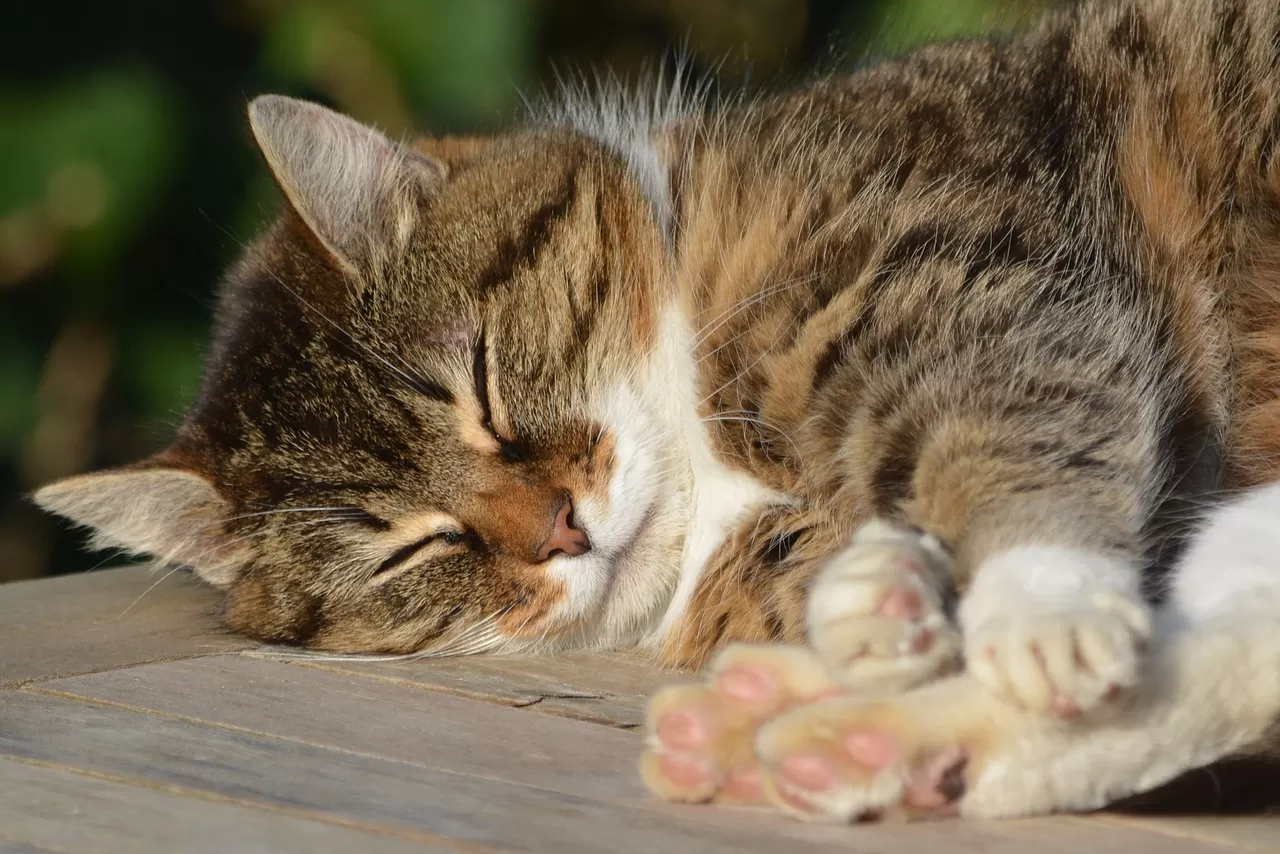 A peaceful tabby cat curled up asleep on a light-colored surface, depicting the main subject of a poem on sleeping
References
- Tolkien, J.R.R. The Adventures of Tom Bombadil and Other Verses from the Red Book. London: George Allen & Unwin, 1962.
- Tolkien, J.R.R. Tales from the Perilous Realm. Edited by Christopher Tolkien. London: HarperCollins, 2008. (Includes “The Adventures of Tom Bombadil”)