
Fairy tales, myths, and legends have captivated human imagination for centuries, weaving together universal themes of good and evil, transformation, courage, and love. These stories, passed down through generations, are more than just children’s bedtime tales; they are rich tapestries of symbolism, archetypes, and narrative structures that offer fertile ground for poetic exploration. For poets, fairy tales provide a familiar yet endlessly adaptable framework, a lexicon of potent images and characters ready to be reinterpreted, subverted, or celebrated. Engaging with poems about fairy tales allows both writers and readers to delve into these timeless narratives with fresh eyes, uncovering new meanings and emotional depths.
Contents
- The Enduring Allure of Fairy Tales in Poetry
- Retelling and Reimagining Classic Tales
- Modern Twists on Old Stories
- Unveiling the Darker Side
- Characters Reimagined
- Fairy Tale as Metaphor and Parallel
- Personal Narratives Through a Fairy Tale Lens
- Self-Portraits and Identity
- Symbolism and Archetypes in Fairy Tale Poetry
- Crafting Your Own Fairy Tale Poem
- Conclusion
Poetry offers a unique lens through which to view these classic stories. Unlike prose retellings, poems can isolate moments, focus on a single character’s internal world, or use metaphor and imagery to distill the essence of a tale. The compact nature of poetry can highlight the stark brutality of early versions, the shimmering magic of transformation, or the quiet despair hidden beneath a “happily ever after.” Whether drawing inspiration from the dark forests of the Brothers Grimm, the epic journeys of Greek myths, or the vibrant characters of global folklore, poets find in these stories a source of potent material for creating evocative and thought-provoking works. This blend of the familiar and the unexpected is part of what makes poems about fairy tales so compelling.
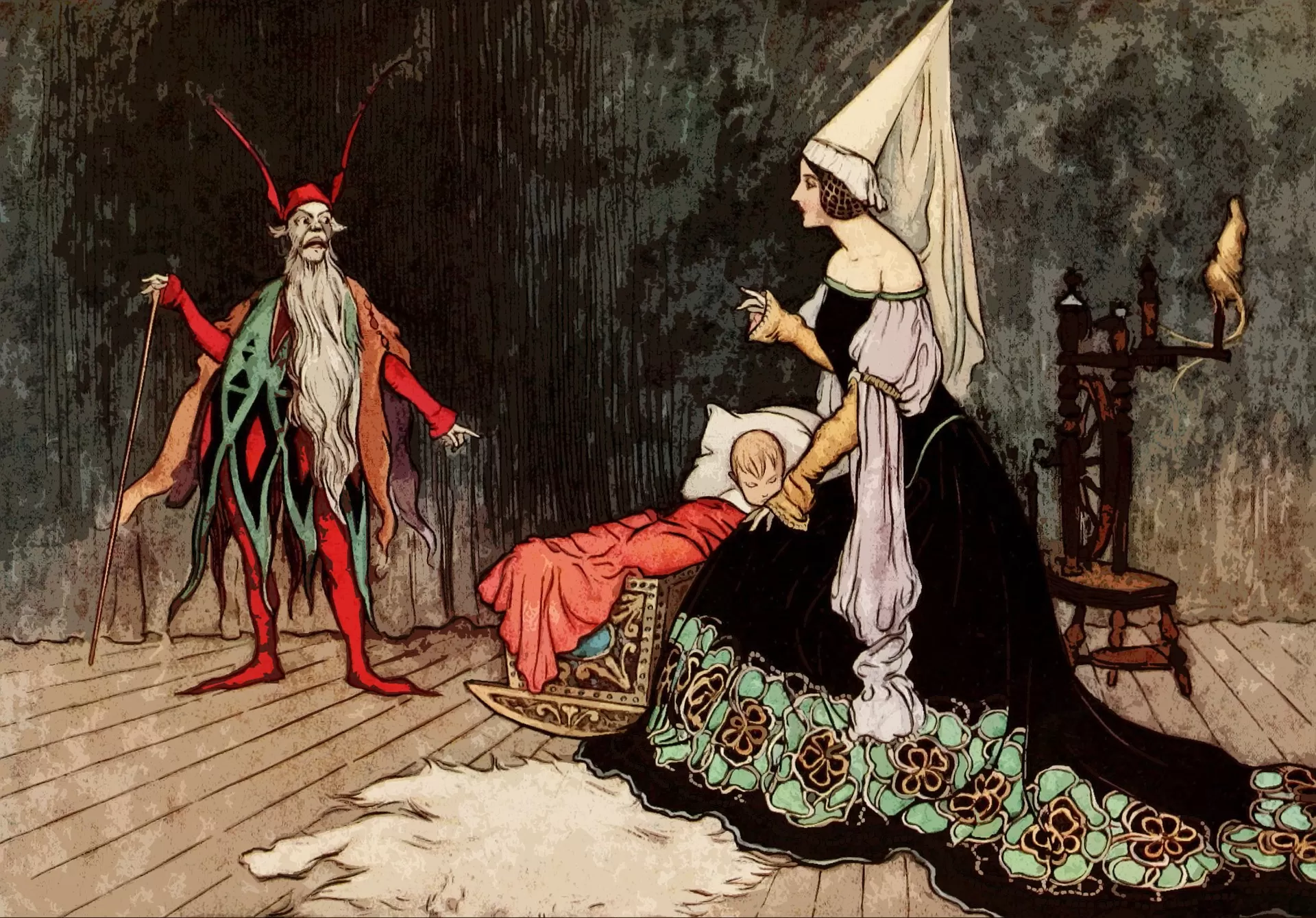 Illustration of fairy tale characters: man, child, and woman with a cone hat
The Enduring Allure of Fairy Tales in Poetry
Why do poets return to fairy tales again and again? Part of the appeal lies in their foundational narratives. Many fairy tales follow a clear, almost ritualistic structure: a beginning establishing the ordinary world, a call to adventure or crisis, a journey through trials and encounters with magical helpers or adversaries, a climax, and a resolution, often a return or transformation. This inherent structure provides a ready-made scaffold for narrative poetry, offering a sequence of events or emotional beats that a poet can choose to follow, deviate from, or deconstruct.
Furthermore, fairy tales are packed with powerful symbols and archetypes that resonate across cultures. The dark forest, the wicked stepmother, the heroic quest, the magical object, the enchanted sleep, the transformative kiss – these elements tap into deep collective unconscious pools, providing poets with shorthand for complex ideas and emotions. By invoking these symbols, a poem can immediately access a wealth of pre-existing associations in the reader’s mind, creating layers of meaning and emotional impact that go beyond the literal words on the page. Exploring poems about fairy tales often feels like stepping into a shared dreamscape, where familiar figures and settings are charged with renewed significance.
Retelling and Reimagining Classic Tales
One of the most common and fruitful approaches in writing poems about fairy tales is the retelling or reimagining of a classic story. This can involve shifting the perspective, updating the setting to a modern context, or altering the plot to offer a new commentary on the original themes.
Modern Twists on Old Stories
Poets frequently transplant fairy tale characters and plots into contemporary life. This can highlight the timelessness of the story’s core conflicts or expose how societal expectations have changed (or haven’t). Christine Heppermann’s poem “Retelling,” for instance, takes the story of Rumpelstiltskin and grounds it in a modern reality. The Miller’s daughter, instead of being forced to spin straw into gold, gets a studio apartment and works two jobs. Heppermann’s poem begins with a series of stark refusals, mirroring the demands made of the character in the original tale: “No, I won’t give you my necklace. / No, I won’t give you my ring. / No, I can’t give you the child. The child will never exist. / End of story.” This powerful opening immediately signals a feminist reinterpretation, giving the often-passive fairy tale heroine agency and a voice. The poem then builds a new narrative from scratch, starting with the classic “Once upon a time,” but quickly pivoting to reveal a life of quiet independence rather than magical coercion or royal marriage. This demonstrates how poets can use the fairy tale form to comment on modern themes of work, identity, and female autonomy. Readers interested in exploring the roots of familiar stories might also enjoy learning about poems by mother goose, which often share structural and thematic links with simple folk tales.
Unveiling the Darker Side
Many original fairy tales, particularly those collected by the Brothers Grimm, are far darker and more brutal than their sanitized modern adaptations (like many Disney versions). Poets often lean into this inherent darkness, restoring the gore, the complex motivations, and the unhappy endings that were later edited out. Consider the original Cinderella story, where the stepsisters mutilate their feet to fit the slipper and later have their eyes pecked out by birds at Cinderella’s wedding. Or the original Little Mermaid, where Ariel dissolves into seafoam after the prince marries another. Poets can use these elements to explore themes of pain, sacrifice, and the often-cruel realities hidden beneath the surface of seemingly simple tales. Roald Dahl’s Revolting Rhymes offers a satirical take, explicitly highlighting the difference between the familiar and the original: “I guess you think you know this story. / You don’t. The real one’s much more gory,” his Cinderella poem begins. This satirical approach, also seen in poems like A. E. Stallings’ “Fairy Tale Logic,” uses humor and irony to dissect the absurdities or cruelties embedded within the fairy tale structure, often employing rhyme and meter in ways that playfully mock the nursery-rhyme quality of some tales.
Characters Reimagined
Another compelling approach in poems about fairy tales is to shift the focus to a character who is not the main protagonist, or to delve more deeply into the internal world of a familiar figure. What does the wolf think in “Little Red Riding Hood”? How does the witch feel, or the seemingly minor magical creature who offers cryptic advice? Giving voice to these characters can completely alter the reader’s perception of the story and its themes.
Exploring the motivations of the villain, the silent suffering of a background character, or the inner life of an animal companion can reveal hidden layers and complexities. A poem might explore the psychological burden of the princess waiting in the tower, the quiet life of the dwarf whose home is invaded by Snow White, or the feelings of the objects magical creatures transform into. This approach invites empathy for characters often presented as one-dimensional archetypes and allows poets to explore nuances of morality, loneliness, or transformation from an unexpected angle.
Fairy Tale as Metaphor and Parallel
Perhaps the most sophisticated use of fairy tales in poetry involves using the tales, their characters, or their structures as metaphors or parallels for aspects of the poet’s or the reader’s own life. This moves beyond simply retelling the story and uses the fairy tale as a framework through which to understand or comment on personal experience or broader societal issues.
Personal Narratives Through a Fairy Tale Lens
Poets can draw direct parallels between moments in their lives and events in fairy tales. Jehanne Dubrow’s “Fairy Tale with Laryngitis and a Resignation Letter” masterfully weaves together the narrative of “The Little Mermaid” with the mundane act of writing a resignation letter. The poem moves between the mermaid’s deal (“You remember the mermaid makes a deal”) and the poet’s own task (“Dear colleagues…”). By juxtaposing the mermaid’s sacrifice of her voice for love with the act of quitting a job, the poem invites the reader to find the resonant connection between these seemingly disparate narratives. The repetition of “Dear colleagues” acts as a refrain, grounding the fantastical elements in the poet’s reality and suggesting the difficulty or significance of her own action. This technique allows the poet to explore personal themes through the elevated, symbolic language of the fairy tale, adding depth and universality to the private experience.
Self-Portraits and Identity
Following the lead of visual art, where artists create self-portraits “as” or “with” specific objects or in particular styles, poets can write “self-portrait as a fairy tale character.” This allows for an imaginative exploration of identity, using the characteristics, conflicts, or fate of a fairy tale figure to illuminate aspects of the self. What does it mean to write a “Self-Portrait as Cinderella,” for example? Does it focus on hardship and eventual triumph, or perhaps the feeling of being overlooked and underestimated? Does a “Self-Portrait with Glass Slippers” explore fragility, transformation, or the precariousness of fortune? This approach, seen in poems like Ashanti Anderson’s “Self-Portrait as Kendrick Lamar, Laughing to the Bank” or Safia Elhillo’s “Self-Portrait with No Flag” (applying the ‘as’ or ‘with’ concept to other domains), demonstrates the versatility of the self-portrait form and its potential when combined with the symbolic richness of fairy tales. By comparing their own lives or inner selves to fairy tale figures, poets can reveal profound truths about ambition, constraint, dreams, and reality. Many famous children’s poems also utilize simple narratives and character types that echo the archetypes found in fairy tales, creating a bridge between early exposure to story and later poetic forms. You can explore some children’s poems famous for such connections.
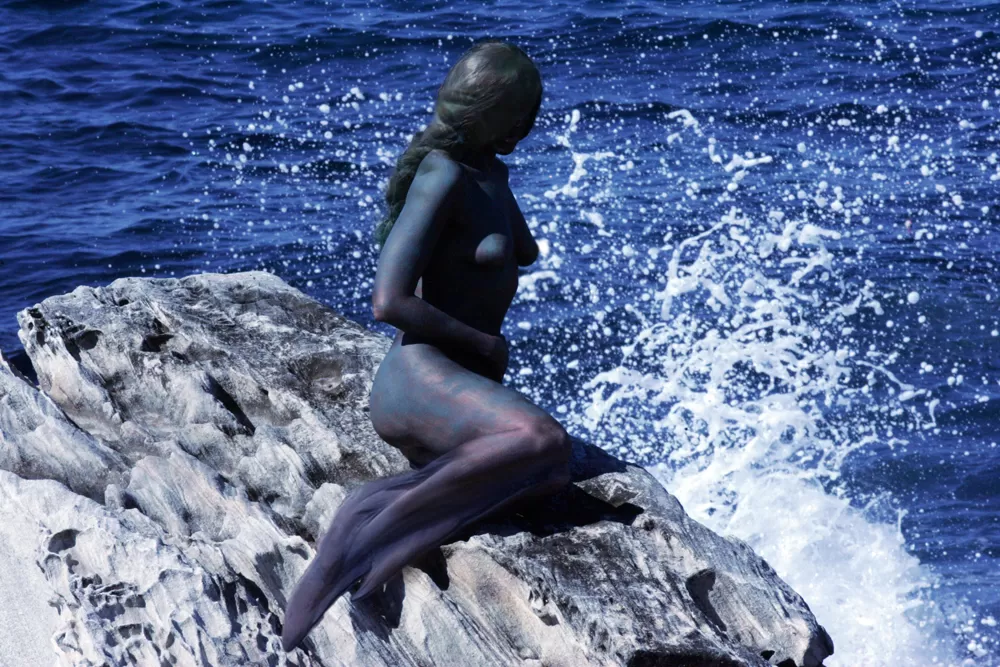 Iconic Little Mermaid statue, a common subject for poems about fairy tales
Symbolism and Archetypes in Fairy Tale Poetry
Beyond narrative structure and character, the inherent symbolism within fairy tales provides poets with a powerful toolkit. The forest can represent the unknown or the subconscious; the apple, temptation or knowledge; the mirror, self-perception or illusion; the key, access or mystery. By drawing on these established symbols, poets can infuse their work with layers of meaning without needing lengthy exposition.
Analyzing poems about fairy tales often involves unpacking how these traditional symbols are used or twisted. Does the forest in a poem still represent danger, or is it a place of refuge? Is the witch a figure of pure evil, or does she embody suppressed feminine power? Poets can adhere to the traditional symbolism, reinforcing the archetype, or they can subvert it, using the audience’s expectation to create surprise, irony, or a new interpretation. This interplay between the familiar and the novel is central to the power of fairy tale poetry. The specific literary devices employed – metaphor, simile, personification, repetition – work in tandem with the symbolic content to build the poem’s meaning and emotional resonance.
Crafting Your Own Fairy Tale Poem
For those inspired to write their own poems about fairy tales, the possibilities are vast. Begin by revisiting your favorite tales, myths, or fables. What moment or character sticks with you? Is there something overlooked you want to magnify? Could you tell the story from a different point of view? Consider the structure of the fairy tale – its clear beginning, climax, and resolution – and how you might map that onto a poetic form, whether narrative or lyrical.
Think about the inherent tension in many tales: the contrast between the seemingly simple plot and the complex psychological or societal forces at play. Could you explore the darker subtext or the unspoken emotions? Consider updating the setting or paralleling a fairy tale structure or character with a personal experience. Use the rich symbolism – the glass slipper, the spinning wheel, the poisoned apple – as starting points for imagery and metaphor in your poem. Experiment with form; does a strict rhyme scheme and meter lend itself to a satirical take, or does free verse better capture the internal turmoil of a character? The goal is not simply to recount the story, but to use the story as a foundation upon which to build something new, something that reflects your own perspective and engages with the enduring power of these ancient narratives.
Conclusion
Poems about fairy tales offer a fascinating intersection of timeless narrative and personal or contemporary insight. They demonstrate the enduring power of these stories to capture the human condition, providing poets with a versatile framework for exploring complex themes, reimagining iconic characters, and using potent symbols to craft resonant and layered works. Whether through faithful retelling, modern adaptation, satirical critique, or metaphoric parallel, poets continue to find fresh ways to engage with the magic, the darkness, and the profound truth embedded in fairy tales. Reading and writing these poems not only deepens our appreciation for the art of poetry but also rekindles our connection to the foundational stories that have shaped our collective imagination. The world of fairy tales remains an enchanted forest for poets, ripe for endless exploration and transformation into verse.