
The world—a complex tapestry of nature, humanity, history, and infinite possibilities—has long been a central muse for poets. From sweeping landscapes and the intricate dance of ecosystems to the bustling chaos of cities and the quiet corners of human experience, the “world” in poetry is more than just a physical place; it is a stage for existence, a source of wonder, a mirror of the soul, and sometimes, a subject of critique or lament. Exploring love and poems allows us to see how our deepest feelings are often intertwined with our perception of the world around us. Poets grapple with its beauty, its brutality, its fleeting moments, and its enduring mysteries, offering readers unique lenses through which to view their own place within this vast and ever-changing sphere. Poems about the world capture the myriad ways we interact with, understand, and are shaped by our shared home.
Contents
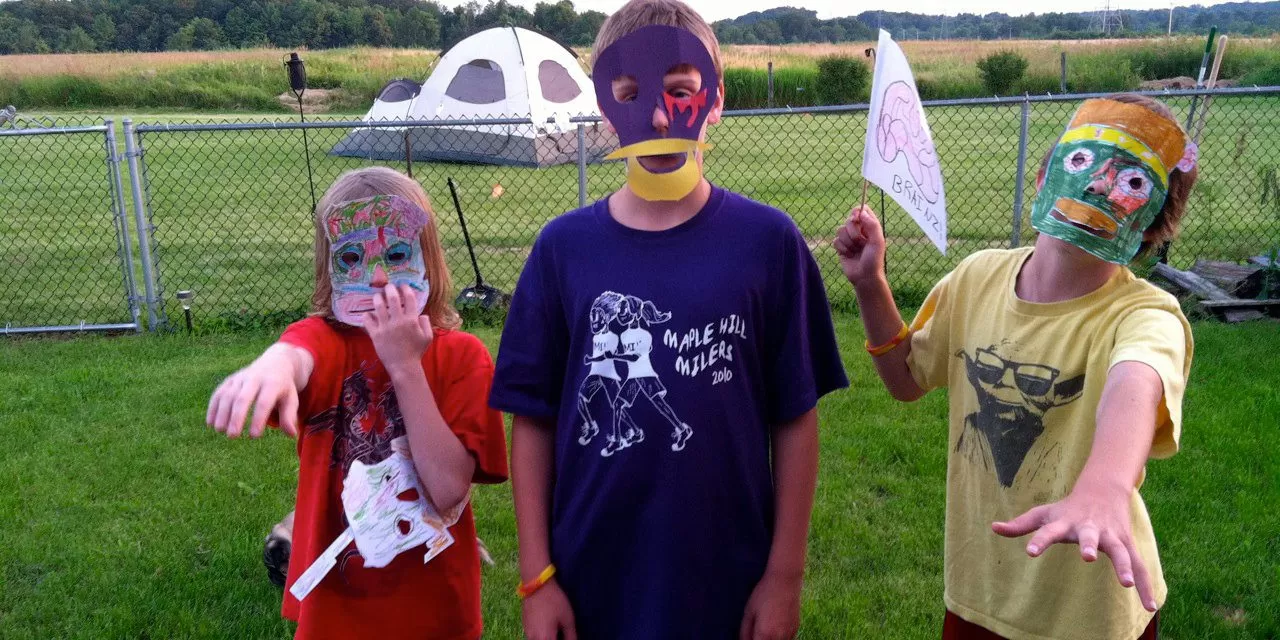 Image of children dressed as zombies, reflecting on the world's future.
Understanding poems about the world involves peeling back layers of imagery, metaphor, and rhythm to uncover the poet’s specific perspective—be it one of awe, disillusionment, connection, or detachment. These works invite us to pause, observe, and reconsider our relationship with everything outside ourselves, fostering a deeper appreciation for the planet and the life it holds.
The World As Distraction and Loss: Wordsworth’s Lament
William Wordsworth, a central figure of English Romanticism, often explored the profound connection between humanity and the natural world. In his sonnet “The World Is Too Much With Us,” he presents a poignant critique of how the burgeoning industrial age and increasing materialism were leading people to lose touch with nature. The world, in this context, is not just the planet itself, but the human world of commerce and acquisition, which distracts us from the natural.
The world is too much with us; late and soon,
Getting and spending, we lay waste our powers;—
Little we see in Nature that is ours;
We have given our hearts away, a sordid boon!
This Sea that bares her bosom to the moon;
The winds that will be howling at all hours,
And are up-gathered now like sleeping flowers;
For this, for everything, we are out of tune;
It moves us not. Great God! I'd rather be
A Pagan suckled in a creed outworn;
So might I, standing on this pleasant lea,
Have glimpses that would make me less forlorn;
Have sight of Proteus rising from the sea;
Or hear old Triton blow his wreathed horn.
Wordsworth argues that our focus on “getting and spending” has rendered us insensitive to the natural beauty surrounding us (“Little we see in Nature that is ours”). The “world,” here, represents the all-consuming pursuits of modern life that cause a fundamental disconnect from the natural world’s power and wonder—the sea, the winds, the mythological figures symbolizing nature’s vibrant life force (Proteus, Triton). The poem is a powerful lament about a world where human priorities have become tragically misplaced, leading to a spiritual impoverishment. It suggests that the human-made world can actively detract from the richness offered by the natural world. Even in our modern world, finding moments of sweet poems can help us reconnect with beauty and emotion often overshadowed by daily life.
The World As a Stage for Fleeting Power: Shelley’s Ozymandias
Percy Bysshe Shelley, another Romantic poet, offers a different perspective on “the world” by focusing on the transience of human power and ambition against the backdrop of vast, indifferent nature. In “Ozymandias,” the world is the arena where empires rise and fall, but it is ultimately the natural world—the desert—that endures.
I met a traveller from an antique land,
Who said—Two vast and trunkless legs of stone
Stand in the desert. . . . Near them, on the sand,
Half sunk, a shattered visage lies, whose frown,
And wrinkled lip, and sneer of cold command,
Tell that its sculptor well those passions read
Which yet survive, stamped on these lifeless things,
The hand that mocked them and the heart that fed:
And on the pedestal these words appear:
'My name is Ozymandias, King of Kings;
Look on my Works, ye Mighty, and despair!'
Nothing beside remains. Round the decay
Of that colossal Wreck, boundless and bare
The lone and level sands stretch far away.
The poem presents the ruined statue of a once-mighty king in a desolate desert. Ozymandias’s boast (“Look on my Works, ye Mighty, and despair!”) contrasts sharply with the reality: his works have crumbled, and only fragments remain in a “boundless and bare” landscape. The world, in this poem, is a place that witnesses the rise and fall of human constructs. The desert sands outlast the most arrogant monuments to power. Shelley uses this image to reflect on the ultimate futility of tyranny and the humbling perspective offered by the immense scale and time of the natural world. The human “world” of kingdoms and statues is temporary; the world of sand and wind is eternal. Comparing this vast perspective to personal themes, we find poets like robert browning poems about love offer a different kind of enduring legacy – that of human connection and emotion, which also exists within this larger world.
The World As Acceptance and Belonging: Mary Oliver’s Wild Geese
Mary Oliver, a contemporary poet renowned for her deep connection to nature, presents the world not as a problem or a transient stage, but as a place of inherent belonging and acceptance. In “Wild Geese,” the world is vast, indifferent to human striving and self-recrimination, yet utterly welcoming.
You do not have to be good.
You do not have to walk on your knees
for a hundred miles through the desert repenting.
You only have to let the soft animal of your body
love what it loves.
Tell me about despair, yours, and I will tell you mine.
Meanwhile the world goes on.
Meanwhile the sun and the clear pebbles of the rain
are moving across the landscapes,
over the prairies and the deep trees,
the mountains and the rivers.
Meanwhile the wild geese, high in the clean blue air,
are heading home again.
Whoever you are, no matter how lonely,
the world offers itself to your imagination,
calls to you like the wild geese, harsh and exciting –
over and over announcing your place
in the family of things.
Oliver directly addresses the reader, offering a sense of relief from the burdens of self-judgment and societal expectations. The line “Meanwhile the world goes on” is not a dismissal but a comforting truth. The world—represented by the sun, rain, landscapes, and wild geese—continues its natural processes regardless of individual human struggles. More importantly, this natural world is depicted as a place of unconditional acceptance. The world “offers itself to your imagination” and “calls to you like the wild geese,” announcing “your place in the family of things.” This perspective contrasts sharply with Wordsworth’s lament or Shelley’s focus on decay; here, the world is a source of solace and belonging, a place where one can find inherent value simply by existing within it. From the vast natural world captured by Oliver to the specific cultural landscapes that inspire different forms of expression, the world’s diversity is endless, encompassing everything from profound reflections to even funny cowboy poems that capture a unique slice of life.
Conclusion: The World Reflected in Verse
Poems about the world demonstrate the incredible capacity of poetry to capture diverse perspectives on our planet and our experience within it. Whether lamenting our disconnection from nature, reflecting on the transient nature of human power, or celebrating the simple acceptance offered by the natural world, poets provide vital insights into our relationship with the physical and societal world we inhabit. Through vivid imagery, thoughtful analysis, and emotional depth, these works encourage us to look beyond our immediate concerns and contemplate the larger stage of existence. Exploring themes like love and sweet poems further reveals how deeply intertwined our inner emotional landscapes are with the outer world. By reading and engaging with poems about the world, we can gain a richer understanding of its complexities and our own place in the vast “family of things.”