
The passing of Roger Scruton on January 12th marked the loss of a distinguished philosopher and public intellectual, a rare voice passionately advocating for the significance of beauty. Scruton dedicated his life to cultivating beauty and striving to “re-enchant the world.” In his influential documentary “Why Beauty Matters,” he presents a compelling argument that beauty is a fundamental human necessity capable of elevating the spirit and imbuing life with meaning. He posits beauty as a value equal in importance to truth and goodness, offering solace in sorrow and affirmation in joy, thereby revealing the inherent worth of human existence.
Scruton contended that beauty is diminishing in the contemporary world, particularly within the realms of art and architecture. For those who grew up navigating urban landscapes, the confusion wrought by much of modern art and architecture is a familiar experience. A conscious choice to seek beauty in things, often leading individuals to places renowned for aesthetic harmony, underscores the profound impact beauty can have on daily life and perception.
Scruton’s critique of modern art frequently begins with Marcel Duchamp’s notorious urinal. Intended initially as a satirical jab at the art world’s pretensions, its acceptance signified that potentially anything could be deemed art, and anyone an artist. This paved the way for what Scruton termed a “cult of ugliness,” where originality was prioritized over beauty, and the conceptual idea superseded the artwork itself. He argued that art risked becoming a mere jest, validated by critics, diminishing the need for skill, taste, or genuine creativity.
This sentiment resonates deeply with anyone who has experienced the shift in artistic education or practice over recent decades. The pressure to eschew traditional skills like painting and drawing in favor of conceptual approaches or found objects highlights the perceived irrelevance of beauty and craft in certain contemporary circles. The focus can sometimes shift to generating intellectual justification rather than aesthetic or emotional impact, leading to a disconnect between the artist’s intent and the viewer’s experience.
Scruton engaged with artists holding differing views, such as Michael Craig-Martin, known for his work “An Oak Tree” – a glass of water accompanied by text declaring it an oak tree. Craig-Martin argued that Duchamp sparks imagination and that art’s status is conferred by our perception. However, for many encountering such works, the initial feeling is confusion, sometimes leading to the self-doubt that one simply lacks the intellectual capacity to “get it.” This echoes the tale of “The Emperor’s New Clothes,” where validation is based on fear of appearing incompetent rather than genuine appreciation.
Scruton posited that consumerist culture has significantly influenced this trajectory in modern art. The constant barrage of advertisements, designed to be brash and attention-grabbing to fuel desire for material goods, has created an environment where art mimics advertising’s strategies. Artists, seeking to create brands, sell themselves, with shocking or outrageous work gaining the most attention. Scruton found works like Piero Manzoni’s “Artist’s Shit” – cans purportedly filled with the artist’s excrement – particularly disturbing examples of this phenomenon.
A common defense of modern art is that it merely reflects the disorder and ugliness of contemporary life. Scruton countered this by suggesting that great art throughout history has always depicted the real world through the lens of the ideal, thereby transfiguring it. The artistic act lies in this transformation, not in mere replication of reality’s flaws.
A masterpiece doesn’t require a traditionally beautiful subject matter; its beauty is forged through the artist’s interpretation and rendering. Rembrandt’s sensitive portraits of elderly individuals or Velazquez’s compassionate depictions of the Spanish court dwarfs exemplify this – they find dignity and beauty in subjects not conventionally idealized. Modern art, Scruton argued, often fixates on the literal subject matter, neglecting the transformative power of the creative act. He contrasted Tracey Emin’s installation ‘My Bed’ with Delacroix’s painting of his own unmade bed to illustrate this point.
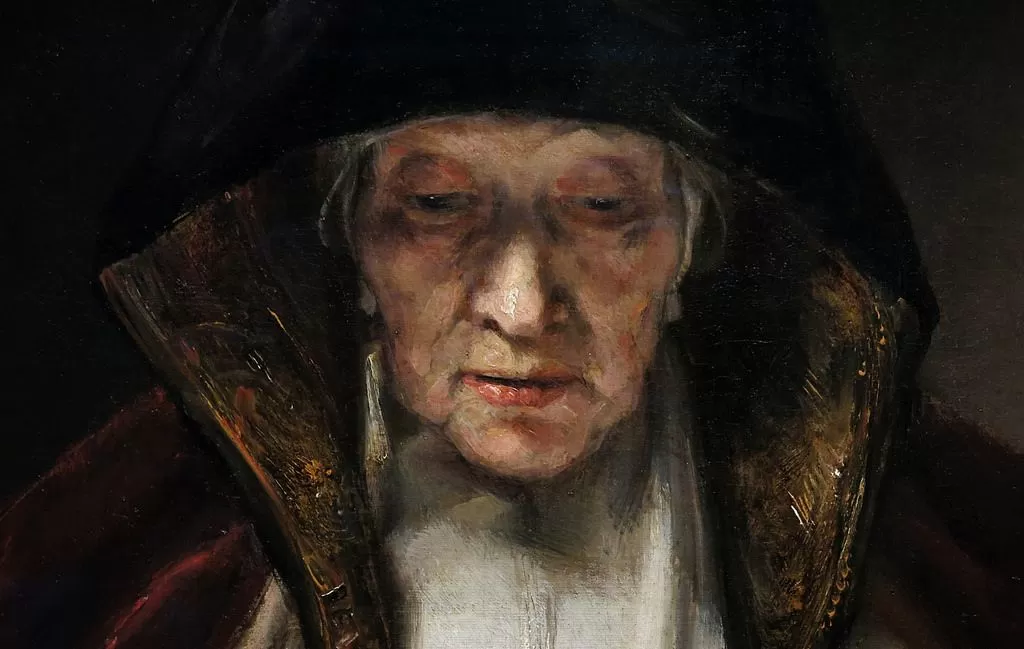 Detail from Rembrandt's 1655 painting of an old woman reading, showcasing masterful depiction of human character
Both works depict an unmade bed, a scene often associated with disorder or sordidness. Yet, Delacroix imbues the scene with beauty through his considered artistry, applying brushwork and composition that lend emotional depth and formal harmony, effectively blessing his own emotional turmoil by translating it into art. Emin’s work, using the literal object, presents the ugliness directly. According to her, its status as art stems simply from her declaration that it is so – a perspective Scruton found insufficient.
Philosophers have long argued that the pursuit of beauty is fundamental to shaping the world into a meaningful home. Traditional architecture, prioritizing beauty alongside utility, incorporates ornate details and harmonious proportions that satisfy a human need for order and upliftment. This reminds us that human needs extend beyond the practical to encompass the moral and spiritual. Oscar Wilde’s famous remark, “All art is absolutely useless,” was not a dismissal but praise, elevating art to the level of essential, non-utilitarian human experiences like love, friendship, and worship – things not strictly “useful” but deeply needed.
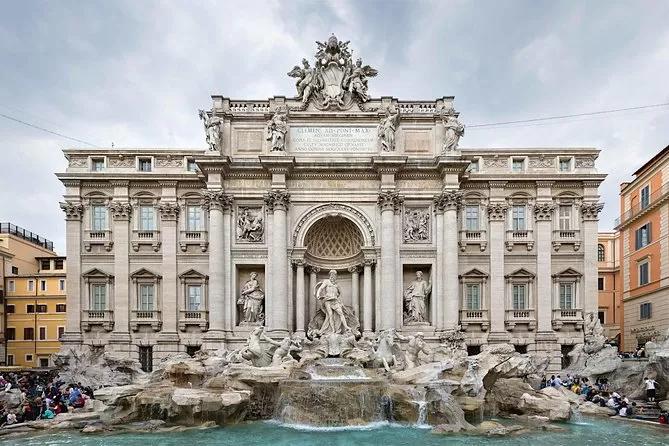 The Trevi Fountain in Rome, a symbol of traditional architectural beauty and harmony
Most people have experienced the transporting power of beauty – that feeling of being lifted from the ordinary world into what Scruton called “the illuminated sphere of contemplation.” This experience can feel like encountering a higher reality. Since antiquity, poets and philosophers have viewed the encounter with beauty as a connection to the divine. Plato, for instance, saw beauty as a cosmic force, distinguishing the elevating nature of love (giving) from mere lust (taking), suggesting a spiritual, rather than purely physical, engagement with beauty. As he famously said, “Beauty is a visitor from another world. We can do nothing with it save contemplate its pure radiance.”
Traditionally, art and beauty were closely intertwined with religious expression. However, the rise of science led to a spiritual vacuum, prompting people to seek beauty increasingly in nature and human life, shifting artistic focus from religious themes to landscapes and portraits.
In today’s cultural landscape, beauty is often regarded with suspicion or as a relic of the past. Yet, Scruton’s perspective offers a powerful counter-narrative. His vision of beauty provides meaning, rescuing us from mundane routines and inviting us into higher contemplation. He encouraged artists and individuals alike not to retaliate against reality by merely depicting its ugliness, but to return to the practice where the real and the ideal meet in harmony, “consoling our sorrows and amplifying our joys.”
Cultivating one’s senses allows access to a richer perception of the world. Artists, trained in observation and interpretation, often perceive beauty everywhere and possess the skill to reveal it to others. For many, nature serves as the primary source of beauty and a potent catalyst for creativity. The Tonalist painter George Inness advised artists to convey their emotional response to a subject, allowing the viewer to share that feeling. This pursuit – expressing love for the world and sharing its beauty – lies at the heart of much artistic endeavor, including poetry.
Scruton’s ideas on beauty have significant resonance for poetry. Like painting, poetry doesn’t just describe reality; it interprets and transforms it through language, rhythm, and imagery. A poem might tackle a difficult or even “ugly” subject, but the artistry lies in how the poet shapes the raw material, finding form, emotional truth, and perhaps even a dark beauty in it. The poet, through craft and vision, elevates the everyday, the painful, or the commonplace into something that resonates deeply, offering that same sense of transportation and contemplation Scruton discussed. His call to seek the ideal within the real and to create works that console and amplify joy directly applies to the poet’s task of finding meaning and beauty in the human condition and the world around us. Encountering Scruton, as some have had the privilege, revealed a man dedicated to these principles, recognizing and supporting the resurgence of art forms, including poetry, that strive for representational and emotional truth guided by the pursuit of beauty.
[internal_links]
In conclusion, Roger Scruton’s “Why Beauty Matters” offers a profound and timely meditation on the essential role of beauty in human life, art, and architecture. His arguments, while critical of certain modern trends, serve not as a rejection of the new but as a powerful reminder of what is lost when beauty is devalued. For enthusiasts and practitioners of poetry, Scruton’s philosophy provides a vital framework for understanding the art form’s purpose: not merely to reflect the world as it is, but to transfigure it, to seek harmony, to offer solace, and to connect us to deeper truths and higher experiences. Engaging with his work encourages a renewed appreciation for the enduring power of beauty to enrich our lives and reveal the world’s potential for enchantment.