
Before the age of instant digital communication, Victorians seeking to send private messages in public turned to a unique newspaper feature: the Agony Column. You might not know the name, but if you’ve encountered the mysteries of Sherlock Holmes, you’re likely familiar with its methods and central plot devices. This intriguing element of the Victorian press, often filled with coded messages, holds a special place in the history of communication and significantly influenced detective fiction, making the “sherlock newspaper” connection a fascinating area of study.
Contents
Appearing in the mid- to late-19th century, the Agony Column consisted of anonymous personal advertisements. These were sometimes disguised using various numbered ciphers and pseudonyms, allowing for private exchanges within a widely read public forum. This blend of public visibility and private encryption gave these messages a unique power and mystery.
Although the Agony Column is no longer used in its original form, its impact on literature, entertainment, and popular culture endures. Our research highlights how these hidden messages in plain sight captivated the Victorian public and continue to inspire stories today.
The Power of Encryption in Public Print
Encryption provided authors with the means to share private messages in a public space. The daily unfolding of personal dramas within this column contributed to its immense popularity in 19th-century English newspapers. It offered readers a glimpse into lives shrouded in mystery, allowing for clandestine communication, secret rendezvous, or urgent, discreet pleas.
Alice Clay, in an 1881 book about these private messages, noted:
“Most of the advertisements … show a curious phase of life, interesting to an observer of human existence and human eccentricities. They are veiled in an air of mystery … but at the same time give a clue unmistakable to those for whom they were intended.”
This inherent mystery and the challenge of deciphering hidden meanings are precisely what made the Agony Column a fertile ground for fiction, particularly tales involving detectives.
Longing, Tragedy, and the Everyday Life in the Agony Column
By 1853, the anonymous advertisements were popularly known as “the agonies” due to their frequent themes of longing, tragedy, and misfortune shadowing the Victorian domestic everyday. These snippets of life, often conveying profound personal struggles, occupied prime space on the front page of major newspapers like The Times.
Messages came from a diverse range of individuals: desperate parents searching for lost children, forlorn lovers exchanging secret notes, and even savvy detectives communicating discreetly. Many were published anonymously or under pseudonyms, making their true authorship a mystery to the general reader, adding to the intrigue. amusing love poems might seem a far cry from the often somber tone, but the column did carry messages of love, albeit usually distressed or secretive.
As public interest in these cryptic communications grew, the private affairs contained within became increasingly public spectacle. Readers weren’t just following serialized narratives; they actively engaged in trying to crack the most puzzling codes and ciphers presented in the column. This interactive element turned passive readers into active participants in the dramas playing out on the page.
Detectives and amateur enthusiasts alike were drawn to the unfolding dramas of the agonies. As Stephen Winkworth observed in Room Two More Guns: the Intriguing History of the Personal Column of the Times, the Agony Column transformed from a mere marketplace of needs into “more a meeting-place than a market-place and a forum where national quirks and characteristics can be expressed, where lovers can make their rendezvous and lost causes can be proclaimed.”
How Fascination Shaped Detective Novels, Including Sherlock
The widespread fascination with the Agony Column during the Victorian era significantly influenced both the content of newspapers themselves and the narratives found in contemporary novels. Elements of sensational real-life stories that appeared in the papers, like the Constance Kent Road Hill House murder, began to find their way into popular fiction.
Crucially, the intricate world of coded messages and personal ads became a staple in detective stories. Original and modern reworkings of Sherlock Holmes consistently feature a variety of newspaper codes and ciphers that need cracking, directly harkening back to the real-life practice of the Agony Column. The “sherlock newspaper” connection is not just incidental; it’s woven into the fabric of his methods.
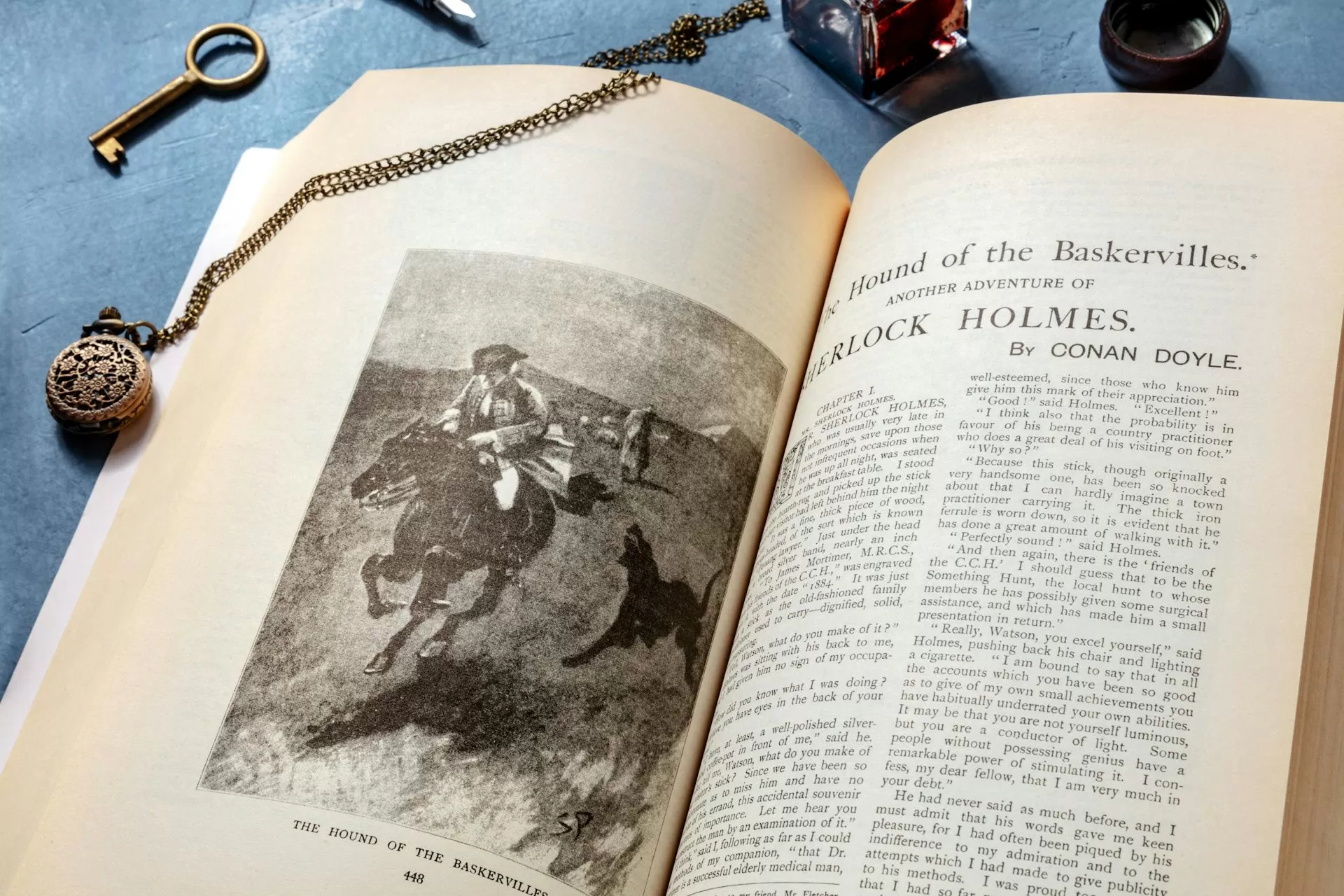 Text from a Sherlock Holmes book, The Hound of the Baskervilles, with a magnifying glass highlighting newspaper text; illustrating sherlock newspaper code use.
In the 2020 Netflix film adaptation of Enola Holmes, based on Nancy Springer’s novels, Sherlock Holmes’ case-cracking younger sister, Enola, relies on communicating with her missing mother via complex ciphers hidden within newspaper advertisements, a clear nod to the Agony Column tradition used in her brother’s stories. don’t go peacefully into the night could well describe the desperate tone of some messages found in these columns. Beyond the Holmes universe, many popular films have utilized newspaper personal columns to advance their plots, including Ghost World (2001), Kissing Jessica Stein (2001), and Desperately Seeking Susan (1985).
Exploring the Agony Column Through Research
Our exploration of this cultural phenomenon is featured in the exhibition News and Novel Sensations, available online through the McGill Library. This exhibit provides valuable resources for studying the Victorian era and print history.
As part of this project, our research team compiled two significant data sets. We scraped 650,000 sentences from the Agony Column of The Times between 1860 and 1879 and over 25 million words from a corpus of 220 Victorian novels published from 1800 to 1920. These datasets are openly available for exploration and download on the project webpage, offering unique insight into the language and themes present in both mediums.
We continue to use both computational analysis of these extensive datasets and close reading techniques to further explore the ways newspapers, specifically the Agony Column, featured in and shaped Victorian novels and the experiences of Victorian readers. Understanding this dynamic relationship sheds light on how real-world phenomena are absorbed and reflected in literature, particularly concerning communication and secrecy.
The Victorian Detective’s Perspective
While the “sherlock newspaper” element, focusing on agonies and coded advertisements, has gained renewed attention thanks to adaptations of Sherlock and Enola Holmes, assessing just how popular or influential they were on Victorian society remains a complex task today. However, resources like the online exhibit offer ways to gain a firsthand perspective. poem of love for boyfriend seems unrelated, but perhaps a detective might use a coded message disguised as a personal note to a loved one?
Visitors to the exhibit website can explore some of the encrypted stories published in The Times in unique ways, gaining a direct glimpse into the print media of another era. This includes understanding the role of figures like Ignatius Pollaky.
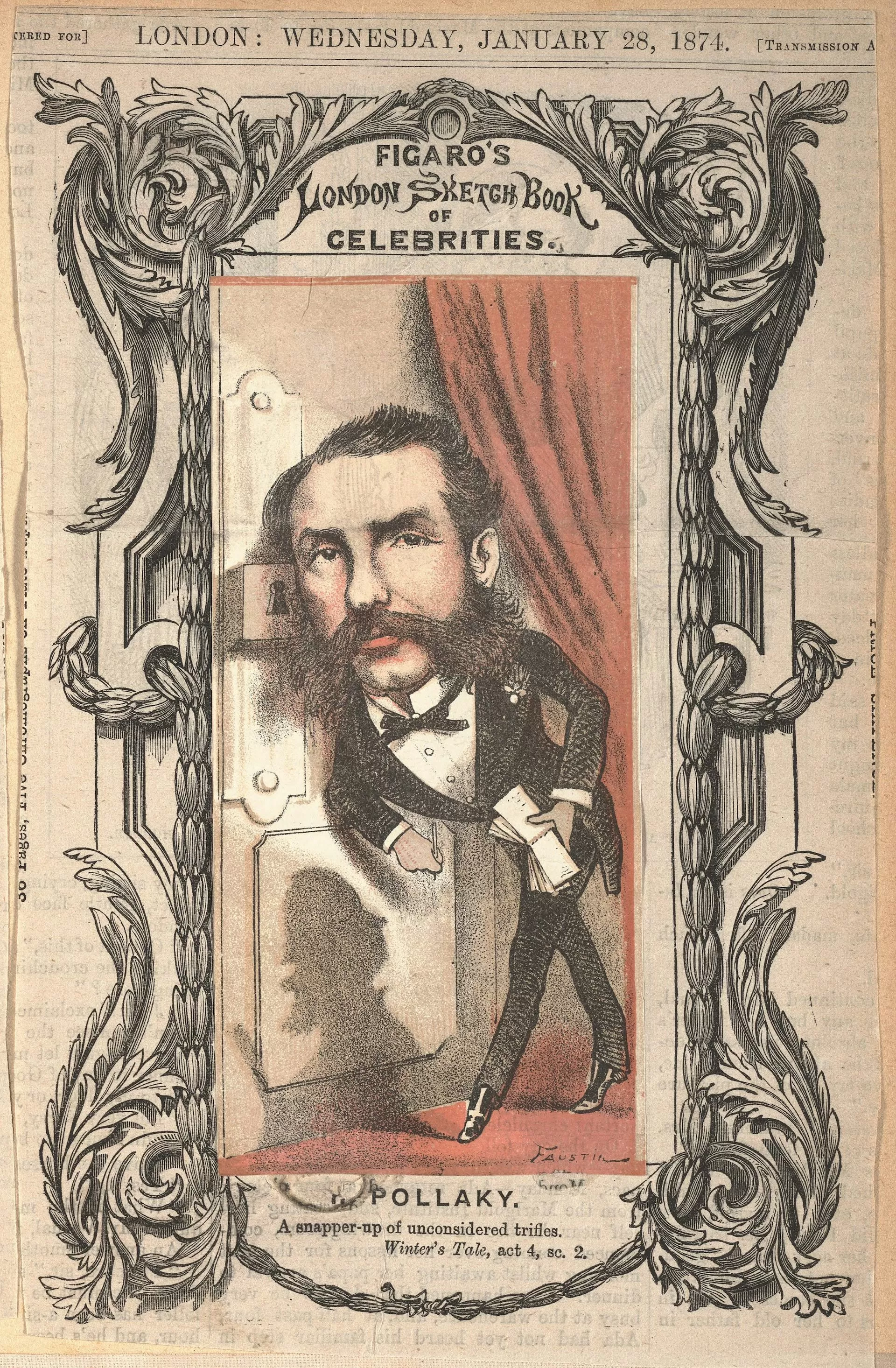 1874 illustration of Victorian detective Ignatius Pollaky, often called a real-life Sherlock Holmes, who advertised in the agony column newspaper.
Ignatius Pollaky, sometimes referred to as the “real-life Sherlock Holmes,” was known for using the Agony Column not only to advertise his own detective business but also to insert mysterious notes and messages related to his cases. This demonstrates a direct link between the profession of detection and the use of this unique newspaper feature. seventy birthday rhymes are a form of personal message, showing the column’s capacity for various communications beyond just urgent or tragic ones.
We developed a game as part of the exhibit titled Pollaky’s Agonizing Adventure. This game allows visitors to track coded clues embedded in the agony columns by following fictionalized detective case notes.
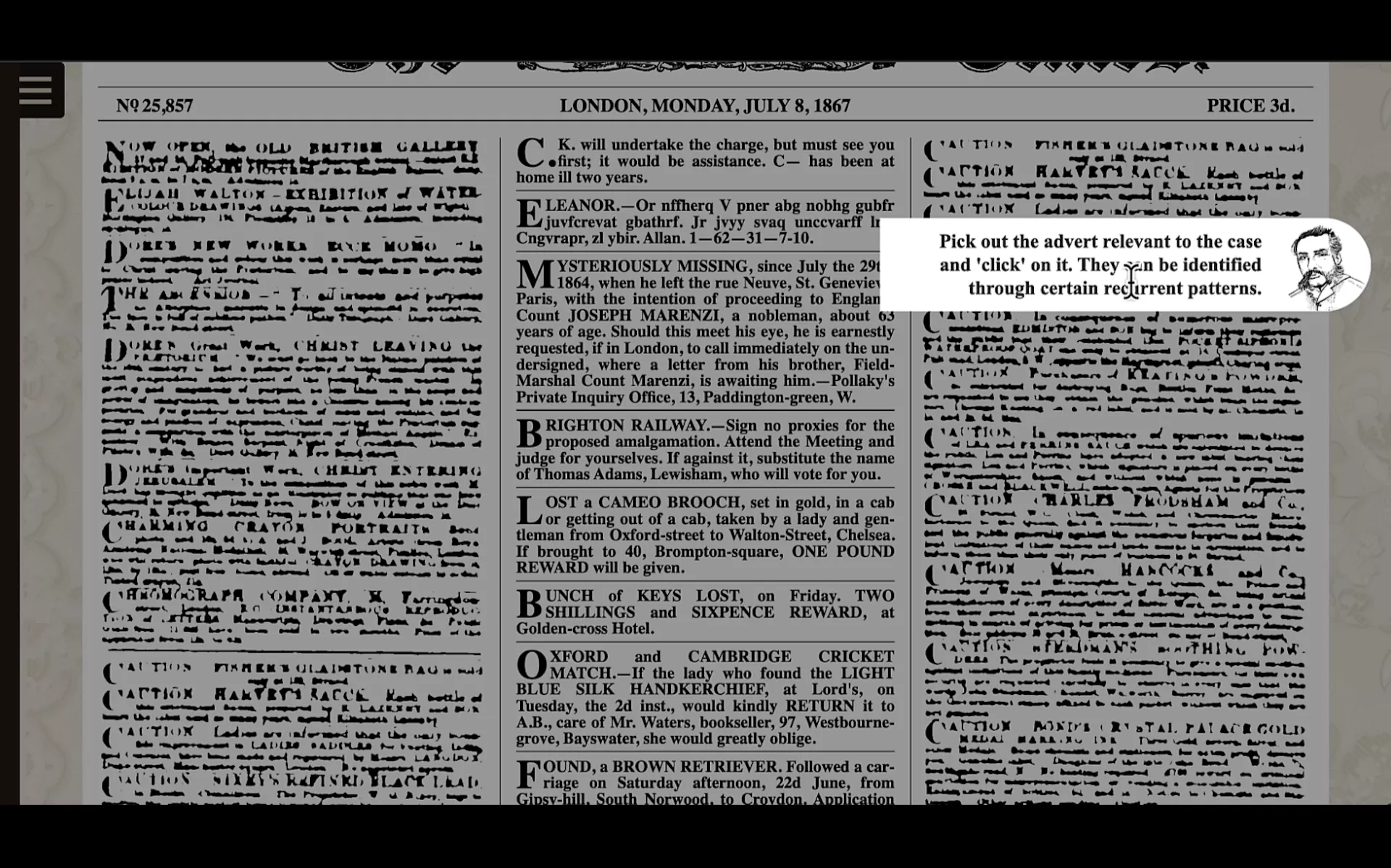 Screenshot of the Pollaky's Agonizing Adventure online game showing a highlighted section of The Times newspaper front page, demonstrating how to track coded clues in the agony columns for a sherlock newspaper experience.
Playing the game offers an immersive experience of how the agonies were integrated into the emerging world of detective practice, allowing visitors to understand how these newspaper columns made communicating private messages and plans possible within the public medium of the press, a skill invaluable to fictional characters like Sherlock Holmes. poems for guys might describe the type of correspondence exchanged, even if coded.
Changing Vocabulary: A Victorian Vibecheck
Beyond the historical and literary connections, our research also explores the linguistic landscape of the era. Do you write like a Victorian? How much has our vocabulary changed since the late 19th century?
Our research team created the Victorian Vibecheck tool, which allows visitors to test how period-appropriate their own text is. The Vibecheck quantifies the rarity of words in a given text by comparing them to our corpus of over 450 Victorian novels, providing a score based on word usage frequency.
Visitors can enter their own writing or select from example texts to see how closely they approximate a Victorian linguistic style. It’s a fascinating way to engage directly with the language used in both the novels and, by extension, the kinds of words that would have appeared in the Agony Column.
Exploring how closely Victorian novels resemble the agonies in their language, or how our own language compares to the Victorians’, offers unique insights into linguistic and cultural shifts. We invite visitors to explore these resources for themselves and delve deeper into the captivating world of the Victorian Agony Column and its enduring legacy on literature and the “sherlock newspaper” phenomenon.