
Classical literature forms the bedrock of culture across civilizations, much like classical poetry which serves as a powerful, condensed expression of ideas and language. From the epic verse of Homer and the dramatic heights of Shakespeare to the foundational texts of the East, understanding these classic forms provides a crucial lens through which to appreciate the full scope of literary genius, including the novel. The ability to discern and engage with the depth and nuance found in poetry naturally extends to analyzing and appreciating complex prose narratives. This exploration delves into ten novels that stand as monumental achievements in the history of literature, works that not only entertain but also offer profound insights into the human condition, society, and the world around us. While the term “novel” might be used here in a broader sense to include some foundational narrative works that predate the modern novel form, these are books that have profoundly shaped literary history and continue to enrich readers across generations. Often encountered in educational settings, these texts challenge and expand our understanding, proving their enduring value far beyond the classroom. My aim is to illuminate the unique power and timeless appeal of each of these ten works, highlighting why they deserve recognition as some of the greatest ever written.
Contents
- 10. War and Peace by Leo Tolstoy (1828–1910)
- 9. Great Expectations by Charles Dickens (1812–1870)
- 8. The Count of Monte Cristo by Alexandre Dumas (1802–1870)
- 7. The Odyssey by Homer (circa 8th century B.C.?)
- 6. Pride and Prejudice by Jane Austen (1775–1817)
- 5. Robinson Crusoe by Daniel Defoe (1660–1731)
- 4. The Iliad by Homer (circa 8th century B.C.?)
- 3. Hamlet by William Shakespeare (1564–1616)
- 2. Journey to the West by Wu Cheng’en (1501–1582)
- 1. Sir Gawain and the Green Knight (14th-century author unknown)
10. War and Peace by Leo Tolstoy (1828–1910)
Leo Tolstoy’s epic historical fiction novel, War and Peace, masterfully chronicles the tumultuous period in Russia during Napoleon Bonaparte’s campaigns (1805-1820). It follows the interwoven lives of several aristocratic Russian families, placing their personal dramas against the sweeping backdrop of historical events. Tolstoy’s genius lies in his unparalleled ability to connect the intimate, lived experiences of his characters with the grand, inexorable forces of history. He demonstrates how individual choices, emotions, and fates are profoundly shaped by and, in turn, influence the massive currents of societal and political change.
 War and Peace book cover featuring historical figures
The novel opens not with military strategy, but with a scene of domestic aristocracy, immediately illustrating this connection. An aristocratic woman addresses Prince Vasili at a soirée:
Well, Prince, so Genoa and Lucca [Italian states] are now just family estates of the Bonapartes. But I warn you, if you don’t tell me that this means war, if you still try to defend the infamies and horrors perpetrated by that Antichrist—I really believe he is Antichrist—I will have nothing more to do with you and you are no longer my friend, no longer my ‘faithful slave,’ as you call yourself! But how do you do? I see I have frightened you—sit down and tell me all the news. (Book I, Chapter I)
This seemingly simple social exchange is loaded with political significance, linking drawing-room gossip to continental upheaval. Prince Vasili’s primary concern is not the fate of Italian states or the nature of Napoleon, but navigating social hierarchies and securing advantages for his family. This juxtaposition highlights Tolstoy’s insight into human motivation and the complex interplay between private ambition and public events. Napoleon, the disruptor, represents a shift towards a potentially meritocratic (or at least, different) order, challenging the entrenched system of inherited status and influence that figures like Prince Vasili embody.
Beyond the historical and social panorama, War and Peace is deeply concerned with spiritual and philosophical questions. Tolstoy weaves profound ponderings on life, death, faith, and existence into the characters’ dialogues and inner thoughts. Pierre Bezukhov, one of the central figures, expresses a search for meaning in a conversation with Prince Andrew:
There is no truth, all is false and evil; but in the universe, in the whole universe there is a kingdom of truth, and we who are now the children of earth are—eternally—children of the whole universe. Don’t I feel in my soul that I am part of this vast harmonious whole? Don’t I feel that I form one link, one step, between the lower and higher beings, in this vast harmonious multitude of beings in whom the Deity—the Supreme Power if you prefer the term—is manifest? If I see, clearly see, that ladder leading from plant to man, why should I suppose it breaks off at me and does not go farther and farther? I feel that I cannot vanish, since nothing vanishes in this world, but that I shall always exist and always have existed. I feel that beyond me and above me there are spirits, and that in this world there is truth. (Book V, Chapter XII)
This passage, like many others, demonstrates Tolstoy’s capacity to use character interactions as vehicles for exploring universal spiritual truths. The journey of his characters is not just one through history, but also one of internal growth and the search for meaning in a seemingly chaotic world. The novel’s immense scope and philosophical depth contribute significantly to its reputation as one of the ten greatest novels of all time. However, its sheer size—often exceeding 1,400 pages unabridged—makes it a challenging read, particularly in classroom settings. Excerpts, however, can offer valuable glimpses into its richness.
The Louise and Aylmer Maude translation is widely available and accessible in the public domain on Gutenberg.org. Abridged versions, while losing some of the intricate detail, can still provide a meaningful experience for readers less daunted by the full text.
9. Great Expectations by Charles Dickens (1812–1870)
Charles Dickens’s Great Expectations follows the compelling coming-of-age journey of Pip, an orphan boy living in rural England. Beginning as a humble blacksmith’s apprentice, Pip’s life is dramatically altered by a mysterious benefactor, elevating him to the status of a wealthy gentleman in London. The narrative is a masterful blend of realistic social commentary and darkly humorous fairytale elements.
 Great Expectations book cover with Pip and other characters
Dickens excels at portraying Pip’s challenging childhood, using descriptions of the dreary marshlands and his harsh upbringing. However, the novel truly comes alive through Pip’s imaginative and often guilt-ridden internal world. Forced into a compromising situation early on, Pip projects his feelings of culpability onto the world around him:
The cattle came upon me with like suddenness, staring out of their eyes, and steaming out of their nostrils, “Halloa, young thief!” One black ox, with a white cravat on,—who even had to my awakened conscience something of a clerical air,—fixed me so obstinately with his eyes, and moved his blunt head round in such an accusatory manner as I moved round, that I blubbered out to him, “I couldn’t help it, sir! It wasn’t for myself I took it!” (Chapter III)
This anthropomorphic projection, blending reality with Pip’s heightened emotional state, is characteristic of Dickens’s unique style, allowing him to explore psychological depth through vivid externalization.
Set against the backdrop of the rapidly industrializing Victorian era, Dickens champions a Romantic ideal: the inherent value of simplicity, innocence, and traditional values, often associated with rural life and lack of formal education. This theme is embodied most clearly in the character of Joe Gargery, Pip’s kind and uneducated father-figure blacksmith. When Joe visits Pip in London, now transformed into a polished but socially awkward gentleman, the contrast in their worlds and values is palpable. Joe, uncomfortable in formal attire, delivers a poignant monologue before departing, recognizing their diverging paths:
Pip, dear old chap, life is made of ever so many partings welded together, as I may say, and one man’s a blacksmith, and one’s a whitesmith, and one’s a goldsmith, and one’s a coppersmith. Diwisions among such must come, and must be met as they come. If there’s been any fault at all today, it’s mine. You and me is not two figures to be together in London; nor yet anywheres else but what is private, and beknown, and understood among friends. It ain’t that I am proud, but that I want to be right, as you shall never see me no more in these clothes. I’m wrong in these clothes … I’m awful dull, but I hope I’ve beat out something nigh the rights of this at last. And so GOD bless you, dear old Pip, old chap, GOD bless you!
Pip’s subsequent realization of Joe’s inherent dignity, stripped of social pretense, marks a crucial moment of recognition. Pip narrates:
I had not been mistaken in my fancy that there was a simple dignity in him. The fashion of his dress could no more come in its way when he spoke these words than it could come in its way in Heaven. He touched me gently on the forehead, and went out. As soon as I could recover myself sufficiently, I hurried out after him and looked for him in the neighboring streets; but he was gone. (Chapter XXVII)
This scene beautifully captures the novel’s core theme: the fleeting and often elusive nature of true goodness and simplicity in the face of social ambition and artifice. Dickens uses Joe’s authentic language (“diwisions,” capitalized “GOD”) to underscore his character’s genuine nature and his connection to a simpler, perhaps purer, world. The poignant image of Joe disappearing down the street emphasizes the difficulty Pip (and perhaps modern society) faces in holding onto these values. The novel’s enduring exploration of class, ambition, and the definition of a “gentleman,” combined with its unforgettable characters and vivid prose, secures its place among the ten greatest novels of all time. The novel’s ending, famously revised by Dickens, leaving readers uncertain of the true resolution, perhaps serves as a final comment on the ambiguities of modern life and the search for happiness.
Great Expectations is readily available in the public domain on Gutenberg.org. Numerous abridged versions also exist, making this classic accessible to a wider audience, particularly students. Exploring the themes of love and aspiration within this narrative can resonate with discussions on poetry for lovers and the expression of complex emotions.
Interestingly, Dickens’s works, including Great Expectations, share thematic parallels with classic literature from other cultures, such as Cao Xueqin’s Dream of the Red Chamber. Both explore the dynamics of upper-class families, societal expectations (especially regarding marriage), and provide detailed cultural depictions, highlighting the universal nature of these concerns and the genius of authors who capture them across different contexts.
8. The Count of Monte Cristo by Alexandre Dumas (1802–1870)
Alexandre Dumas’s The Count of Monte Cristo is a gripping saga of betrayal, imprisonment, escape, and meticulously planned revenge. The story follows the young sailor Edmond Dantès, whose bright future is cruelly snatched away by jealous rivals on the eve of his marriage and promotion. Falsely accused, he is imprisoned in the notorious Château d’If. While incarcerated, he learns of a vast treasure hidden on the island of Monte Cristo. After a daring escape, Dantès retrieves the fortune and reinvents himself as the enigmatic Count of Monte Cristo, dedicating his life to enacting justice – or vengeance – upon those who wronged him.
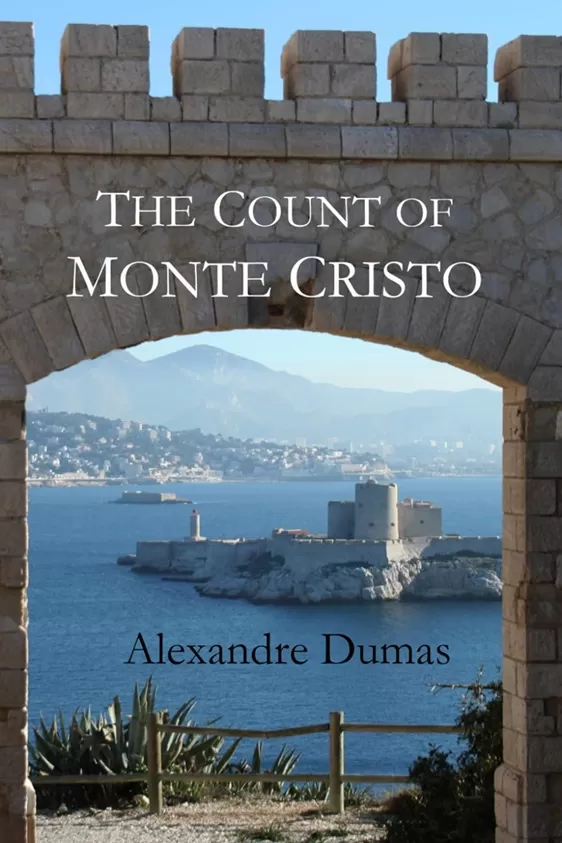 The Count of Monte Cristo book cover by Alexandre Dumas
The true brilliance of Dumas’s novel lies not just in the intricate revenge plot, but in the rich tapestry of French culture, sophistication, and a deep undercurrent of spirituality that permeates the narrative. Scenes unfold against backdrops of opera, ballet, art, and refined social customs, creating a sense of a world governed by both strict etiquette and hidden passions. This setting elevates the often-brutal actions of the Count.
More profoundly, the novel explores spiritual themes, contemplating divine justice and human suffering. Dumas’s narration reflects on Dantès’s early prayers in prison:
Pride gave way to entreaty, yet it was not to God that he prayed to, for that is the last resource, but man. The wretched and miserable should turn to their Savior first, yet they do not hope in Him until all other hope is exhausted. (Chapter XII)
This passage highlights the spiritual journey that parallels Dantès’s physical imprisonment and escape. The narrative frequently evokes a sense of a divine presence, suggesting that Heaven or a higher power is intimately connected to the events unfolding. A powerful flash of lightning is described as seeming to “open the heavens to the very throne of God” (Chapter XVII), underscoring this pervasive spirituality.
Adding another layer, Dantès often operates under the guise of an abbé, delivering lines that blend genuine piety with his hidden vengeful purpose: “There are times when God’s justice tarries for a while and it appears to us that we are forgotten by Him, but the time always comes when we find it is not so, and here is the proof.” (Chapter XXII). This allows Dumas to explore complex questions about divine timing, justice, and the human role in enacting cosmic balance. Through the Count’s elaborate plans, the novel gives form to the eternal law of retribution – “you reap what you sow.”
The novel reaches its emotional and spiritual climax when the Count is confronted by Mercédès, the woman he loved, who pleads for the life of her son, who is also the son of the man who instigated Dantès’s imprisonment. This confrontation forces the Count to grapple with the limits of his vengeance and the possibility of a higher path:
“Have you seen your father die in your absence?” cried Monte Cristo, thrusting his hands into his hair. “Have you seen the woman you loved give her hand to your rival while you were pining away in the depths of a dungeon? …”
“No, but I have seen him who I loved about to become my son’s murderer!”
Mercédès said these words with such infinite sadness and in such tones of despair that they wrung a sob from the Count’s throat. The lion was tamed, the avenger was overcome!
“What do you ask of me?” he said “Your son’s life? Well then, he shall live!”
Mercédès uttered a cry which forced two tears into Monte Cristo’s eyes, but they disappeared again immediately; doubtless God had sent some angel to collect them, for they were far more precious than the richest pearls of Guzerat or Ophir. (Chapter LVII)
In this pivotal moment, the Count relinquishes his lifelong quest for revenge, acknowledging a truth beyond human hatred and embracing compassion guided by a higher power. This transformation from relentless avenger to a figure capable of mercy is what elevates the novel from a mere adventure story to a profound exploration of justice, forgiveness, and the human spirit. While a lengthy read at over 1,200 pages, abridged versions are available and capture the core narrative effectively, albeit with some compression. The unabridged English translation is also available on Gutenberg.org. The emotional journey of seeking and giving mercy resonates deeply, much like the themes explored in various forms of literature, including your pretty poems that capture delicate emotional shifts.
7. The Odyssey by Homer (circa 8th century B.C.?)
Homer’s The Odyssey, an epic poem of immense scale and enduring popularity, recounts the 10-year journey of the Greek hero Odysseus (also known as Ulysses) as he struggles to return to his home in Ithaca after the Trojan War. His path is fraught with mythological dangers – cyclopes, sirens, sorceresses, monsters, and the wrath of gods like Poseidon. Yet, alongside these external challenges are Odysseus’s internal battles against his own flaws: pride, cunning, and the simple human desires for comfort and rest. It is, in essence, the archetypal adventure narrative.
 Cover artwork for Homer's Iliad and Odyssey
The central theme is perseverance, not only for Odysseus facing seemingly insurmountable obstacles but also for his family back home. His son, Telemachus, must mature quickly and embark on his own search for his father while fending off his mother’s persistent suitors. His wife, Penelope, demonstrates remarkable resilience and ingenuity, famously delaying the suitors’ demands by weaving a burial shroud by day and secretly unraveling it by night.
The original work was composed as ancient Greek poetry, intended for oral performance, with a distinct rhythm and meter. While modern translations often prioritize accessibility, some capture the inherent poetic beauty. Alexander Pope’s 18th-century translation, for instance, uses iambic pentameter and rhyme to convey the rhythm and atmosphere. Here is his description of the approach to the sorceress Circe’s dwelling:
A palace in a woody vale we found
Brown with dark forests, and with shades around.
Access we sought, nor was access denied:
Radiant she came: the portals opened wide:
The goddess mild invites the guests to stay:
They blindly follow where she leads the way.
I only wait behind of all the train:
I waited long, and eyed the doors in vain:
The rest are vanished, none repassed the gate,
And not a man appears to tell their fate. (Book 10)
The regular meter and rhyme scheme mirror the physical movement of the men and the tension of the narrator’s anticipation, adding a layer of sensory experience that prose might miss.
Perhaps the most profound aspect of The Odyssey is Homer’s worldview, one where the divine is ever-present and intricately involved in human affairs. The gods are depicted as powerful beings, often morally ambiguous by modern standards, but inhabiting a hierarchical realm that directly interacts with the human world. This pervasive sense of divinity shapes the narrative, presenting a universe governed by forces larger than humanity. Zeus, the king of the gods, comments on human folly: “It’s disgraceful how these humans blame the gods. They say their tribulations come from us, when they themselves, through their own foolishness, bring hardships which are not decreed by fate.” (Book 1). This brief statement encapsulates a complex theological perspective, exploring themes of free will, fate, and divine judgment with remarkable efficiency, setting a philosophical tone within the epic’s opening lines.
The enduring appeal of The Odyssey lies in its blend of thrilling adventure, exploration of fundamental human struggles (perseverance, homecoming, identity), and its rich, divinely infused world. The countless translations reflect its continuous relevance, though finding one that balances readability with the poetic essence of the original is a personal quest for every reader. Older translations by Pope and Samuel Butler are available for free on Gutenberg.org, offering different approaches to capturing Homer’s voice. For those seeking an accessible modern version, adapted translations are available. Exploring the timeless journeys and trials depicted in The Odyssey can inspire reflections on the nature of human experience, a theme often beautifully captured in famous poems uk and across literary traditions.
6. Pride and Prejudice by Jane Austen (1775–1817)
Jane Austen’s Pride and Prejudice is a quintessential example of a comedy of manners and one of the most beloved novels in English literature. It centers on the Bennet family and their five daughters in Regency-era England, where securing favorable marriages is paramount to a secure future. The arrival of two wealthy bachelors, the amiable Mr. Bingley and the initially haughty Mr. Darcy, sets the stage for social intrigue and romantic entanglements. The story focuses particularly on the spirited and intelligent Elizabeth Bennet, who finds herself locked in a battle of wits and wills with the proud Mr. Darcy, whose aloofness she immediately interprets as arrogant prejudice.
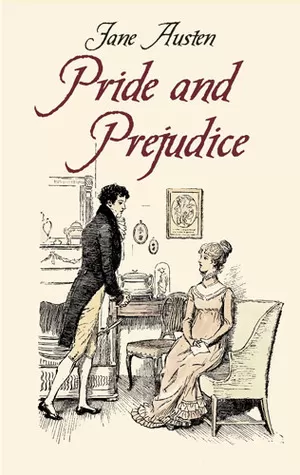 Pride and Prejudice book cover featuring a group of people in historical dress
Austen’s genius shines in her ability to create characters who are both deeply embedded in the social conventions of their time and wonderfully individual, possessing charm, humor, and distinct eccentricities. Her dialogues are sharp, witty, and reveal character with remarkable precision. Consider the famous scene where Miss Bingley attempts to engage Mr. Darcy while he is writing a letter:
“How delighted Miss Darcy will be to receive such a letter!”
He made no answer.
“You write uncommonly fast.”
“You are mistaken. I write rather slowly.”
“How many letters you must have occasion to write in the course of a year! Letters of business, too! How odious I should think them!”
“It is fortunate, then, that they fall to my lot instead of yours.”
“Pray tell your sister that I long to see her.”
“I have already told her so once, by your desire.”
“I am afraid you do not like your pen. Let me mend it for you. I mend pens remarkably well.”
“Thank you—but I always mend my own.”
“How can you contrive to write so even?”
He was silent. (Chapter 10)
This exchange is a masterclass in subtle humor and social dynamics. Miss Bingley’s persistent attempts to impress Darcy, his terse and proper replies, and the almost absurd focus on mundane details like mending pens highlight the characters’ personalities and the performative nature of aristocratic social interaction. Characters like the unctuous Mr. Collins and the imperious Lady Catherine de Bourgh further populate Austen’s world with unforgettable figures who, despite their flaws, possess a peculiar charm.
Beyond the brilliant characterizations and social satire, Pride and Prejudice offers a profound moral lesson, particularly through Elizabeth Bennet’s journey. Initially confident in her judgments, Elizabeth is forced to confront her own biases and misinterpretations. The moment of her self-realization is a powerful turning point:
“How despicably I have acted!” she cried; “I, who have prided myself on my discernment! I, who have valued myself on my abilities! who have often disdained the generous candor of my sister, and gratified my vanity in useless or blameable mistrust! How humiliating is this discovery! Yet, how just a humiliation! Had I been in love, I could not have been more wretchedly blind! But vanity, not love, has been my folly. Pleased with the preference of one, and offended by the neglect of the other, on the very beginning of our acquaintance, I have courted prepossession and ignorance, and driven reason away, where either were concerned. Till this moment I never knew myself. (Chapter 36)
This introspective passage reveals the core of the novel’s ethical message: the dangers of allowing vanity and initial impressions to cloud judgment, and the necessity of self-awareness to overcome one’s own “pride and prejudice.” It is this insightful exploration of human fallibility and the possibility of personal growth that elevates the novel beyond light romance to a work of lasting literary significance, securing its place among the ten greatest novels of all time.
Pride and Prejudice is widely available in the public domain on Gutenberg.org. Its exploration of finding love and navigating social expectations continues to resonate with readers, themes also central to expressions found in adorable love poems for her or specifically i love you poems girlfriend. The universal appeal of Austen’s themes, particularly her focus on marriage arrangements and detailed depiction of upper-class life, finds interesting parallels in classical Chinese literature like Cao Xueqin’s Dream of the Red Chamber, both published around the same era and sharing insights into propriety, etiquette, and societal structures.
5. Robinson Crusoe by Daniel Defoe (1660–1731)
Daniel Defoe’s Robinson Crusoe is arguably the most iconic adventure story ever written, giving rise to an entire genre of “Robinsonades” – tales of survival on deserted islands. Its influence can be seen in classics like The Swiss Family Robinson, popular culture phenomena like Gilligan’s Island, and modern reality TV shows like Survivor. The novel’s enduring appeal stems from its vivid depiction of a single man’s struggle against nature and solitude.
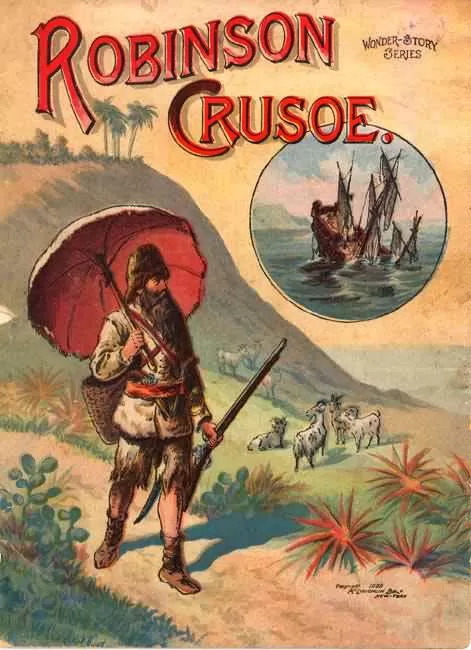 Robinson Crusoe book cover depicting a man on a raft approaching an island
Defoe employs a first-person, diary-like narrative style, coupled with meticulous attention to detail, creating an illusion of reality that immerses the reader in Crusoe’s experience. This technique was groundbreaking and highly influential, paving the way for later novels like Herman Melville’s Moby Dick and Yann Martel’s Life of Pi. In a passage describing a life-threatening storm, Defoe’s detailed prose makes the peril palpable:
As to making sail, we had none, nor if we had could we have done anything with it; so we worked at the oar towards the land, though with heavy hearts, like men going to execution; for we all knew that when the boat came near the shore she would be dashed in a thousand pieces by the breach of the sea. However, we committed our souls to God in the most earnest manner; and the wind driving us towards the shore, we hastened our destruction with our own hands, pulling as well as we could towards land. (Chapter III)
Such moments of intense, life-or-death struggle are balanced by equally detailed descriptions of Crusoe’s adaptation to island life, his resourcefulness in building shelter, cultivating crops, and taming animals. These depictions, like his discovery of edible plants – “I saw here abundance of cocoa trees, orange, and lemon, and citron trees; but all wild, and very few bearing any fruit, at least not then. However, the green limes that I gathered were not only pleasant to eat, but very wholesome; and I mixed their juice afterwards with water, which made it very wholesome, and very cool and refreshing” (Chapter VII) – ground the extraordinary adventure in believable, sensory reality.
Crucially, Robinson Crusoe is not just a physical survival story; it is also a journey of moral and spiritual awakening. Crusoe begins the novel as a rebellious son who disobeys his father’s wishes, seeking adventure and wealth at sea. Even after achieving some success, his desire for more leads him into the slave trade. Stranded and facing sickness on the island, he experiences a vivid dream that he interprets as divine judgment for his past sins. This triggers a period of deep reflection, leading him to a newfound understanding of God’s providence and his own transgressions. His isolation strips him down to his core self, forcing him to confront his own nature. He realizes his true need is not rescue from the island, but salvation from his own moral failings. This realization brings him to a state of peace and gratitude:
“I learned to look more upon the bright side of my condition, and less upon the dark side, and to consider what I enjoyed rather than what I wanted; and this gave me sometimes such secret comforts, that I cannot express them; and which I take notice of here, to put those discontented people in mind of it, who cannot enjoy comfortably what God has given them, because they see and covet something that He has not given them. All our discontents about what we want appeared to me to spring from the want of thankfulness for what we have.” (Chapter IX)
Defoe’s greatest achievement is portraying Crusoe’s island as both a physical place of survival and a spiritual wilderness where he finds redemption. This integration of thrilling adventure with a profound exploration of faith, repentance, and contentment solidifies Robinson Crusoe‘s position as one of the ten greatest novels of all time.
Robinson Crusoe is available in the public domain on Gutenberg.org. Its themes of human resilience and the search for meaning resonate deeply, reflecting the complex journey often explored through various literary forms.
4. The Iliad by Homer (circa 8th century B.C.?)
Homer’s The Iliad, a cornerstone of Western literature, plunges into the heart of the Trojan War, focusing on a crucial few weeks near the conflict’s end. It is an unflinching depiction of war in all its brutality and glory, a subject that, throughout human history, has been inescapable. While modern society may view war from a distance, The Iliad reminds us of its central place in the human story for millennia. The epic poem centers on the rage of the mighty Greek warrior Achilles against his commander, Agamemnon, and the heroic defense of Troy by the Trojan prince Hector. The Greek term for these combatants, “hērōs,” underscores the romanticized view of warriors prevalent in the epic.
Cover artwork for Homer's Iliad and Odyssey
The Iliad, like The Odyssey, can sometimes feel repetitive due to its origins as oral poetry, but this repetition is part of its unique beauty and rhythm. The epic similes, in particular, are a hallmark of Homer’s style. They start as seemingly simple comparisons but expand into elaborate, multi-lined descriptions that hold the moment in a state of suspended, sublime detail rarely seen in modern literature. Consider this simile describing a fallen warrior:
Ajax struck him in the chest, by the right nipple.
The bronze spear went clean through his shoulder.
He collapsed in the dust, like a poplar tree,
one growing in a large well-watered meadow,
from whose smooth trunk the branches grow up to the top,
until a chariot builder’s bright axe topples it,
bends the wood, to make wheel rims for a splendid chariot,
letting the wood season by the riverbank. (Chapter 4)
Even in a scene of violence, the simile offers a parallel image of natural beauty and purposeful creation (the chariot), suggesting that death, however brutal, might have a larger context or even yield something of value.
The Iliad is also more explicit than The Odyssey in its moral lessons. The conflict between Achilles and Agamemnon, sparked by Agamemnon’s taking of a woman Achilles claims, mirrors the war’s origin – Paris’s abduction of Helen, wife of Agamemnon’s brother. This structural parallel suggests a core moral challenge for the Greeks: can they overcome internal strife caused by similar acts (woman stealing) to prove their moral superiority to the Trojans and earn victory? The narrative details the suffering and losses incurred by both sides due to this internal conflict, culminating in Achilles’s eventual decision to relinquish his pride and apologize:
Fewer Achaeans would have sunk their teeth into this wide earth at enemy hands, if I’d not been so angry. That’s really helped lord Hector and his Trojans… Still, though it hurts, we should let all this pass, repressing hearts within our chests—we must do that. (Chapter 19)
This moment of humility and acceptance is central to the epic’s exploration of pride, honor, and reconciliation.
Throughout The Iliad, the presence and influence of the gods are pervasive. The word “god” appears far more frequently than “war” or “love,” emphasizing the divine dimension of human conflict and destiny. This focus on the divine is intertwined with a sense of cosmic balance and order that transcends even the gods themselves. Relatable heroes and interfering deities populate both sides, and the tide of battle often shifts according to divine will or a larger cosmic order. A striking example is the depiction of Zeus using golden scales to weigh the fates of Achilles and Hector:
Father Zeus raised his golden scales,
setting there two fatal lots for death’s long sorrow,
one for Achilles, one for horse-taming Hector.
Seizing it in the middle, Zeus raised his balance.
Hector’s fatal day sank, moving down to Hades.
At once Phoebus Apollo abandoned him. (Chapter 22)
Here, the scales themselves seem to determine the outcome, and even a powerful god like Apollo must withdraw once fate is sealed. This rich portrayal of a universe governed by complex interactions between humans, gods, and a higher, perhaps impersonal, order is what makes The Iliad an truly epic work and one of the ten greatest novels of all time. The exploration of heroism and fate echoes themes found in your pretty poems that delve into human struggle and destiny.
Recommended translations by Alexander Pope and Samuel Butler are freely available on Gutenberg.org. Adapted versions are also available, aiming to make the epic accessible while retaining some of its poetic essence.
3. Hamlet by William Shakespeare (1564–1616)
William Shakespeare’s Hamlet is arguably the most analyzed and performed play in the English language, and its profound exploration of complex themes places it firmly among the ten greatest novels of all time (recognizing its origin as a play but acknowledging its narrative depth and influence). Prince Hamlet returns to Denmark from university to find his father, the king, dead, his uncle Claudius on the throne, and his mother Gertrude hastily married to Claudius. The appearance of his father’s ghost, revealing he was murdered by Claudius, thrusts Hamlet into a world of deception, political corruption, and existential doubt. He finds himself isolated, unsure who to trust, with his own sanity seemingly at stake.
The immense psychological and moral struggle Hamlet faces is the engine of the play’s enduring power. His predicament gives weight to even seemingly tangential advice, such as Polonius’s counsel to his son Laertes, “this above all—to thine own self be true.” This line resonates throughout the play as Hamlet grapples with the imperative to act on his conscience versus the immense dangers of doing so. His suspicion that Claudius murdered his father forces him into an impossible choice: ignore the truth for safety, or seek justice and risk everything. To ignore it would be to deny his own honor and conscience.
From Hamlet’s tormented introspection arises the play’s most famous passage, the “To be, or not to be” soliloquy:
To be, or not to be—that is the question—
Whether ’tis nobler in the mind to suffer
The slings and arrows of outrageous fortune
Or to take arms against a sea of troubles,
And by opposing end them? (Act III, Scene I)
This contemplation, whether primarily about suicide or the act of killing Claudius, captures a universal human dilemma: the struggle against suffering and the nature of courageous action. It speaks to the aspiration for a “nobler” state of being, achieved perhaps through righteous opposition to adversity. The play demonstrates that Hamlet ultimately chooses a difficult, righteous path, guided by his conscience and a pursuit of justice.
Shakespeare also provides incisive commentary on human nature and society. Lines like “Till then sit still, my soul: foul deeds will rise, / Though all the earth o’erwhelm them, to men’s eyes.” (Act I, Scene II) suggest an inherent moral order in the universe, where hidden wrongs will inevitably come to light and be repaid. The play’s language is rich with poetic imagery and often composed in iambic pentameter, giving it a rhythmic beauty even in its darkest moments.
Furthermore, Shakespeare introduces a layer of cosmic irony through the subplot of Fortinbras, the Prince of Norway, whose father was killed by Hamlet’s father. The play subtly suggests that Denmark rightfully belongs to Fortinbras. By the end, despite Hamlet’s desperate efforts to restore justice to his kingdom, Denmark falls into Fortinbras’s hands. This outcome introduces a profound perspective: perhaps Hamlet’s personal struggle, while morally significant, occurred within a larger sweep of destiny or fate. The play hints that a higher form of nobility might lie not in reactive action, but in a state of being that transcends the fear of death and the need for worldly justice. Thus, “To be or not to be” becomes a question whose answer is not fixed, but depends on one’s state of mind and the specific circumstances, guiding an individual towards their unique path of spiritual or moral elevation. The complex interplay of fate, free will, and morality solidifies Hamlet‘s place as one of the ten greatest novels of all time in terms of narrative impact and philosophical depth.
Hamlet is available in the public domain on Gutenberg.org. Its themes of love, loss, and existential questioning resonate deeply, much like the emotional complexity explored in poetry for lovers or specific expressions found in i love you poems girlfriend.
It is worth noting the striking thematic parallels between Hamlet and an episode in the classical Chinese novel Journey to the West (discussed next), both published in the 1590s. Both narratives feature a king’s ghost revealing his murder by a brother (the current king) in a garden, a prince attempting to dethrone the murderous uncle, and a climactic ending involving the uncle’s removal followed by a surprising twist. This uncanny similarity across cultures and continents in the same era suggests potentially deeper patterns or inspirations in storytelling, or perhaps simply the universal nature of certain dramatic archetypes.
2. Journey to the West by Wu Cheng’en (1501–1582)
Unlike many Western classics grounded in secular goals like war, status, or survival, Wu Cheng’en’s Journey to the West, one of the Four Great Classical Novels of Chinese literature, has a fundamentally spiritual and altruistic core. It is a fictionalized account of the real 7th-century Buddhist monk Xuanzang’s pilgrimage from China to India to retrieve sacred scriptures. This noble quest provides the framework for a fantastic adventure populated by unforgettable characters and mythical events.
 Monkey King character illustration from Journey to the West
Wu Cheng’en masterfully transforms this spiritual quest into an exciting, action-packed narrative that rivals any adventure story. Xuanzang is accompanied by three powerful disciples: the pig-like Pigsy (Zhu Bajie), the sand-ogre Friar Sand (Sha Wujing), and the most famous, the Monkey King (Sun Wukong). The Monkey King, a mischievous and incredibly powerful immortal, is a constant source of conflict and comic relief, always ready for a fight. His famous battle cry, “Stand your ground, and eat old Monkey’s fist!” exemplifies his fearless nature. However, his impulsiveness often clashes with Xuanzang’s pacifist ideals. When the Monkey King kills six roadside robbers, Xuanzang is distraught: “One has no right to kill robbers, however violent and wicked they may be …You have behaved with a cruelty that ill becomes one of your sacred calling.” (Chapter XIV). The narrative hints at a deeper allegorical meaning: the “robbers” represent sensory attachments (“Eye that Sees and Delights,” etc.), suggesting that the Monkey King’s actions symbolize the forceful overcoming of worldly desires on the path to enlightenment.
Because the story is rooted in spiritual allegory and myth, it is unbound by the constraints of realism. It often operates like a fantastical fairytale or even a cartoon, where imagination dictates the events. This freedom allows for incredibly creative and often humorous episodes. In a famous scene, the Monkey King wagers with the Buddha that he can leap out of Buddha’s hand. He flies to what he believes is the end of the universe, marks five pillars, only to discover upon his return that the pillars were Buddha’s fingers and he had been in Buddha’s palm all along: “Monkey peered down with his fiery, steely eyes, and there at the base of the middle finger of Buddha’s hand he saw written [his name] and from the fork between the thumb and first finger came a smell of monkey’s urine.” (Chapter VII). This blend of the sacred and the absurd is a unique strength of the novel, making spiritual concepts accessible and engaging. Wu Cheng’en’s greatest achievement is this ability to imbue idealistic spiritual goals with a sense of immediacy, fun, and possibility, presenting them as attainable through perseverance and self-cultivation. The narrative also strongly emphasizes perseverance over the long and arduous journey and hints at a hidden order and meaning behind seemingly random events.
As mentioned previously, the striking narrative parallels between an episode in Journey to the West and Shakespeare’s Hamlet, both emerging around the same time, are remarkable. While simple historical influence is one possibility, ancient Chinese wisdom offers another perspective: that changes in society and consciousness unfold according to cosmic patterns that can manifest across seemingly disparate cultures. This comparative point underscores the universal human themes and the potential for shared insights found in great literature across the globe, further solidifying Journey to the West‘s place among the ten greatest novels of all time.
Arthur Waley’s abridged translation, Monkey, is a popular entry point into the novel, capturing its essence in a more manageable length, though it omits much of the poetry found in the original. For a complete experience, unabridged translations like Anthony Yu’s are recommended.
1. Sir Gawain and the Green Knight (14th-century author unknown)
At the pinnacle of this list, representing the enduring power of classic narrative, is Sir Gawain and the Green Knight. This late 14th-century Middle English poem, written by an unknown author, is perhaps the most exquisite and profound expression of Arthurian legend. The tales of King Arthur and his knights form a foundational part of Western culture, their influence spanning centuries and countless retellings in literature, film, and art. Sir Gawain captures the essential charm, mystery, and moral depth of this tradition like no other work.
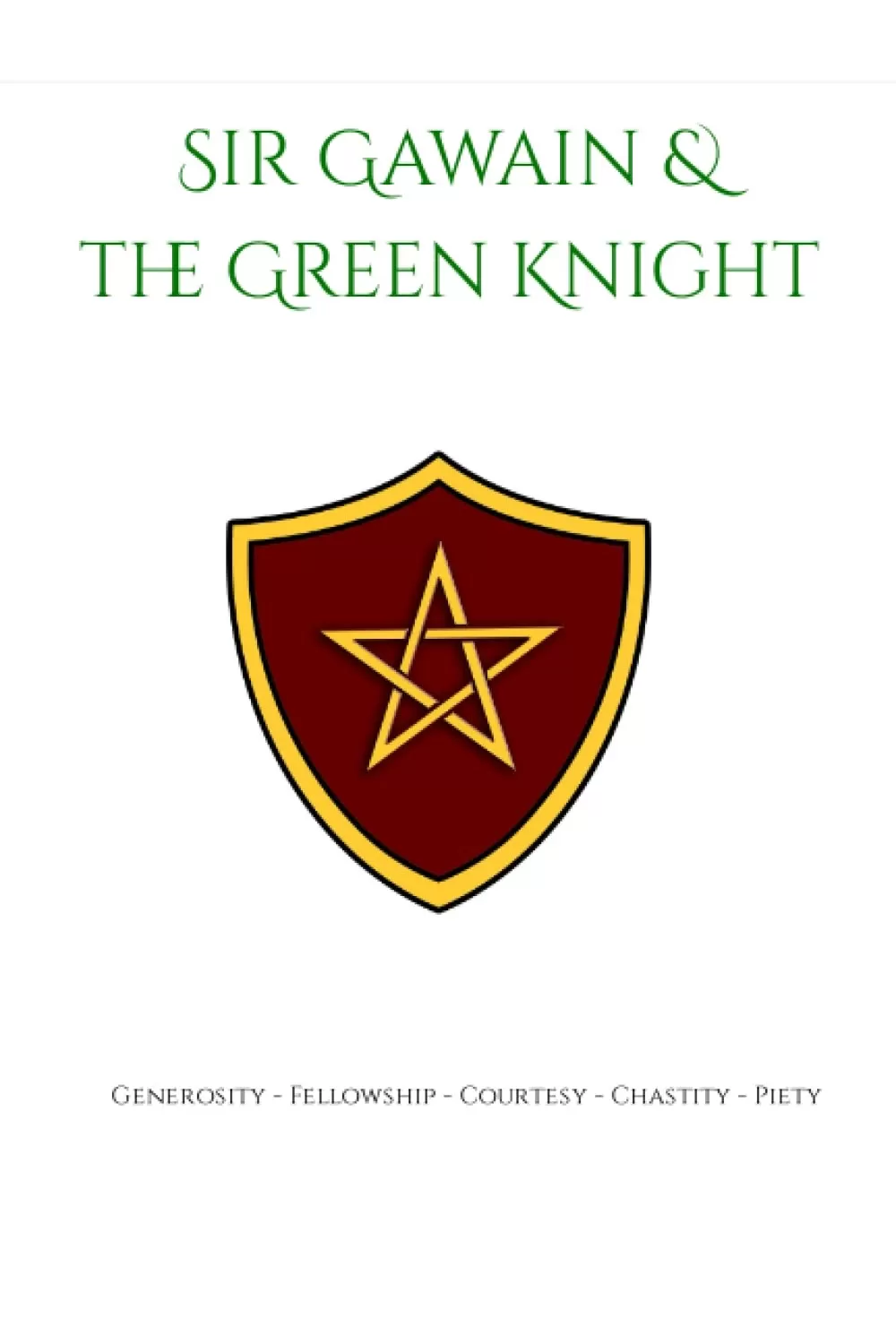 Sir Gawain and the Green Knight book cover featuring the Green Knight on horseback
The poem’s unique poetic form contributes significantly to its vibrancy. Written in alliterative verse, where key words in each line share the same initial sound, it creates a driving rhythm. Each stanza concludes with a “bob and wheel” – a short line (“bob”) followed by four rhyming lines (“wheel”) – adding a lyrical flourish. This structure is evident in the description of a Christmas feast at Camelot:
Then a feast was brought forth, the finest of food,
multitudes of fresh meats on so many dishes
that there were few free places in front of the people
to set the silver bowls full of soups, on cloth
________so white.
____Each lord to his liking there
____took food with full delight:
____twelve plates to every pair,
____the wine was glistening bright. (Lines 121-129)
The lively rhythm and rhyming end-section enhance the festive mood before the narrative’s dramatic turn. The merriment is abruptly interrupted by the appearance of the Green Knight, a formidable figure entirely green, who challenges Arthur’s court to a bizarre game: one knight may strike him with an axe, provided the Green Knight can return the blow in a year and a day. When Arthur is about to accept, the young Sir Gawain volunteers, placing his life in fate’s hands.
The poem’s genius lies not only in its intriguing plot and lush descriptions but, most importantly, in its profound and convincing portrayal of pure goodness embodied in the character of Sir Gawain. Gawain is depicted as the epitome of knighthood – virtuous, humble, and humanly fallible. When he steps forward to accept the Green Knight’s challenge, his humility is striking: “while many bold men around you are seated: / on earth there are, I hold, none more honest, / none fairer on fields of fighting than them. / I am the weakest, I am aware, and in wit feeblest, / and would be least loss if I don’t live, to tell you the truth. / Only because you are my uncle is this honor given to me: / other than your blood in my body I have no virtue” (lines 351-357). This blend of ideal virtue and relatable self-deprecation makes Gawain an enduring and identifiable hero across centuries.
Sir Gawain is more than just a brave warrior; he represents a complete ethical philosophy. His shield bears the symbol of the pentangle, a five-pointed star, each point representing a cluster of virtues. The “fifth five” that define him are listed:
The fifth five that was used, I find, by this knight
was generosity and fellowship first before all,
and chastity and courtesy ever changeless and straight,
and piety surpassing all points (lines 651-654)
These virtues are tested and demonstrated throughout the narrative. Gawain diligently seeks out the Green Knight to fulfill his promise, even when it means facing likely death, showcasing his unwavering integrity and loyalty (fellowship/brotherhood). He also steadfastly resists the temptations of a seductive lady at the castle where he stays, highlighting his chastity and courtesy. These instances illustrate how the poem connects virtuous action with honor and goodness in the grandest, most compelling way. Such clear and powerful reinforcement of foundational morals, linking character to conduct, is invaluable and explains the poem’s lasting impact on readers.
The virtues central to Gawain find fascinating parallels in other great civilizations. The five Confucian virtues (Rén – benevolence, Yì – righteousness, Lǐ – propriety, Zhì – wisdom, Xìn – integrity), revered in China for millennia, share a core universality with Gawain’s pentangle. While the specific groupings differ, the emphasis on integrity, righteousness, proper conduct, and humaneness points to shared wisdom about the foundations of a thriving individual and society. Sir Gawain and the Green Knight, through its compelling narrative, vivid poetry, and profound moral lessons, stands as a timeless testament to the pursuit of virtue and solidifies its place as one of the ten greatest novels of all time (in its narrative form).
Adaptations and translations of Sir Gawain and the Green Knight are widely available, including versions that aim for modern accessibility while preserving the poem’s unique structure and spirit.
This exploration of these ten extraordinary literary works reveals a common thread: regardless of genre or origin, the greatest narratives delve deeply into the human condition, exploring themes of love, loss, justice, faith, and the complex interplay between individual lives and the broader forces of history and destiny. They challenge us, move us, and ultimately enrich our understanding of ourselves and the world, much like the finest poetry.