
In the rich tapestry of Greek mythology, few figures wield power as absolute or symbolize the human condition as profoundly as the Fates. Known as the Moirai, these three sisters – Clotho, Lachesis, and Atropos – preside over the inescapable destiny of every mortal, from the moment of birth to the final breath. Their work is often depicted through the powerful metaphor of weaving, illustrating how the threads of individual lives are spun, measured, and ultimately cut by their unseen hands. Understanding who the three sisters of fate were offers deep insight into the ancient Greek view of destiny, free will, and the inexorable march of time, themes that resonate throughout literature and poetry across the ages.
Contents
The concept of fate, as embodied by the Moirai, highlights a central tension in Greek thought: the balance between preordained destiny and the choices made by individuals. While the Fates knew the ultimate course of a life, human actions and reactions to circumstances still held significance. It was not merely the deeds themselves but how one navigated the challenges and opportunities presented by their “allotted portion” that mattered. This intricate relationship between fate and agency provides fertile ground for storytelling and poetic exploration, making the figures of the Fates eternally compelling.
 the three fates greek mythology painting
The Moirai: Weavers of Destiny
The Fates, or Moirai, derive their name from the Greek word meaning “allotted portion” or “share.” This concept is fundamental to their role: they are the ones who deal out each human being’s share of life, including its length, challenges, and ultimate end. The metaphor of weaving is central to their depiction, often showing them working with threads or at a loom, meticulously crafting the individual destinies of mortals. Each of the three sisters of fate has a distinct, yet interconnected, role in this cosmic process.
Clotho: The Spinner
Clotho is the first of the Moirai and her name means “the Spinner.” Her task begins before birth, as she spins the thread of life for each individual soul. This thread represents the very essence of a person’s existence, containing within it the potential pathways, choices, and events of their future life. The act of spinning symbolizes the initiation of life and the beginning of the intricate narrative that each person will live. Homer, in the Odyssey (7.193), references this role:
“He must look to meet whatever events his own fate and the stern Klothes (Clotho) twisted into his thread of destiny when he entered the world and his mother bore him.”
Clotho’s spinning signifies the start of the journey, the raw material from which a life’s story will be woven.
 giani three the fates
Lachesis: The Allotter/Measurer
The second sister, Lachesis the fate, is “the Allotter.” Her role is to measure the thread that Clotho has spun. By measuring the thread, Lachesis determines the length of a human’s life and the quantity of trials, joys, and experiences they will encounter. She allots the individual’s portion of existence. Plato, in his Republic (617c), describes her significance:
“This is the word of Lachesis, the maiden daughter of Ananke (Necessity), souls that live for a day, now is the beginning of another cycle of mortal generation where birth is the beacon of death.”
Lachesis’s measurement is the defining factor of a life’s duration and scope, setting the bounds within which free will operates. For those searching for details about the names of the three fates, Lachesis is the crucial middle figure defining the span.
Atropos: The Unturnable/Cutter
The third and final sister is Atropos, whose name translates to “the un-turnable” or “she who cannot be turned.” This name highlights her unyielding and final role. Atropos holds the shears and is the one who cuts the thread of life, determining the manner and moment of death. Her cut is absolute, marking the end of the mortal journey and the soul’s passage to the Underworld for judgment. John Milton famously invokes her in Lycidas (1. 75):
“Comes the blind Fury with th’abhorred shears, / And slits the thin spun life.”
Atropos embodies the inevitability of death, the endpoint predetermined by fate. While artistic representations vary, Atropos is often depicted as older, fitting her association with the conclusion of life.
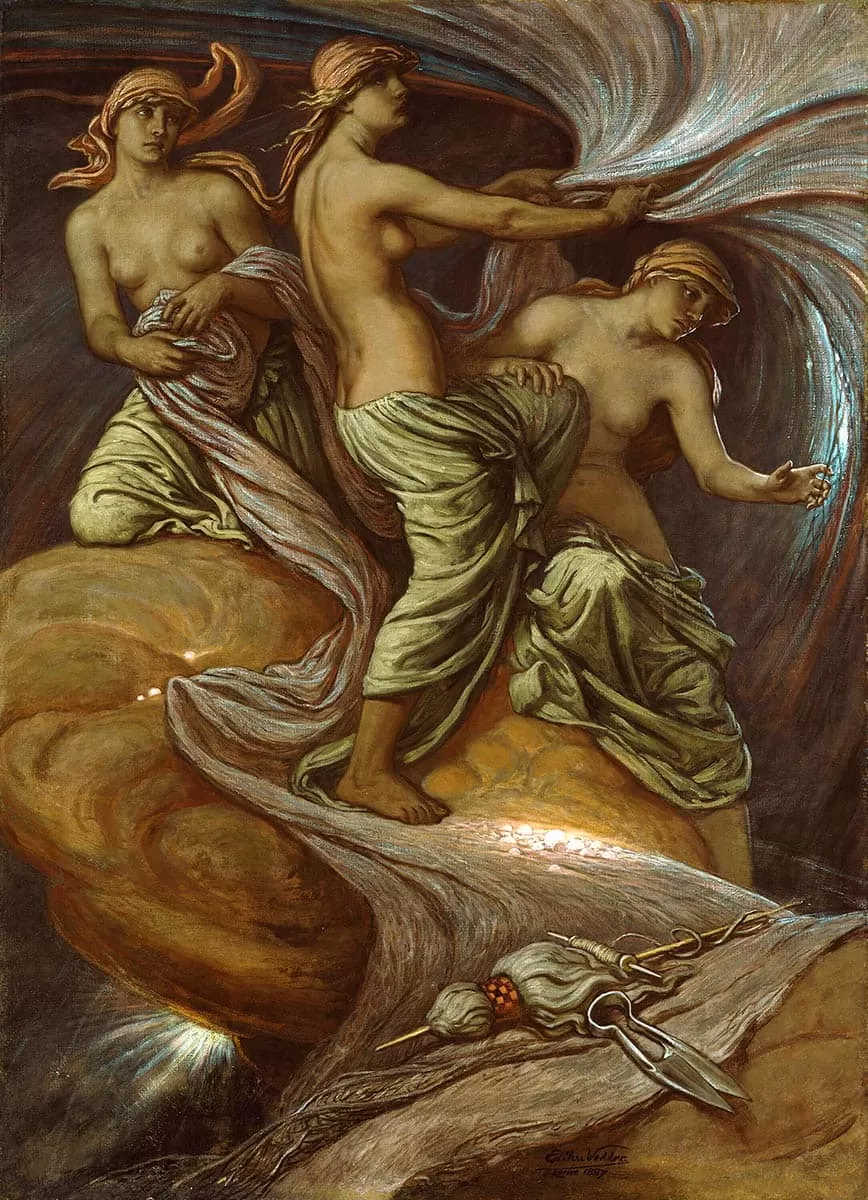 vedder the fates gathering stars
Lineage and Interpretation
The origins of the Moirai are subject to different accounts in Greek mythology, each offering a unique perspective on their nature and the concept of fate.
One tradition, mentioned by Plato, suggests they are the daughters of Ananke (Necessity). This lineage emphasizes the inescapable nature of their power; as daughters of Necessity, the Fates represent an intrinsic, unavoidable element of the cosmos. Their decrees are not arbitrary but stem from the fundamental order of existence.
Another prominent account, found in Hesiod’s Theogony (Lines 221–225), names Nyx (Night) as their mother:
“Also Night [Nyx] bare the destinies, and ruthless avenging Fates, who give men at their birth both evil and good to have, and they pursue the transgressions of men and gods… until they punish the sinner with a sore penalty.”
This version links the Fates to the primordial darkness and suggests a more somber role, associating them with both destiny and the punishment of wrongdoing. It paints a slightly more pessimistic picture of fate.
A third perspective posits Themis (Divine Law/Justice) as their mother. This lineage connects the Fates to cosmic order and justice, suggesting that their apportionment of life is not merely arbitrary but part of a larger, albeit often inscrutable, divine plan or balance. This view sees the cycle of life and death as essential to maintaining order against chaos.
Each lineage highlights a different facet of the Fates’ power and the Greek understanding of destiny – as necessary, as potentially grim, or as part of divine order. Regardless of their mother, their authority was immense, sometimes even exceeding that of the Olympian gods.
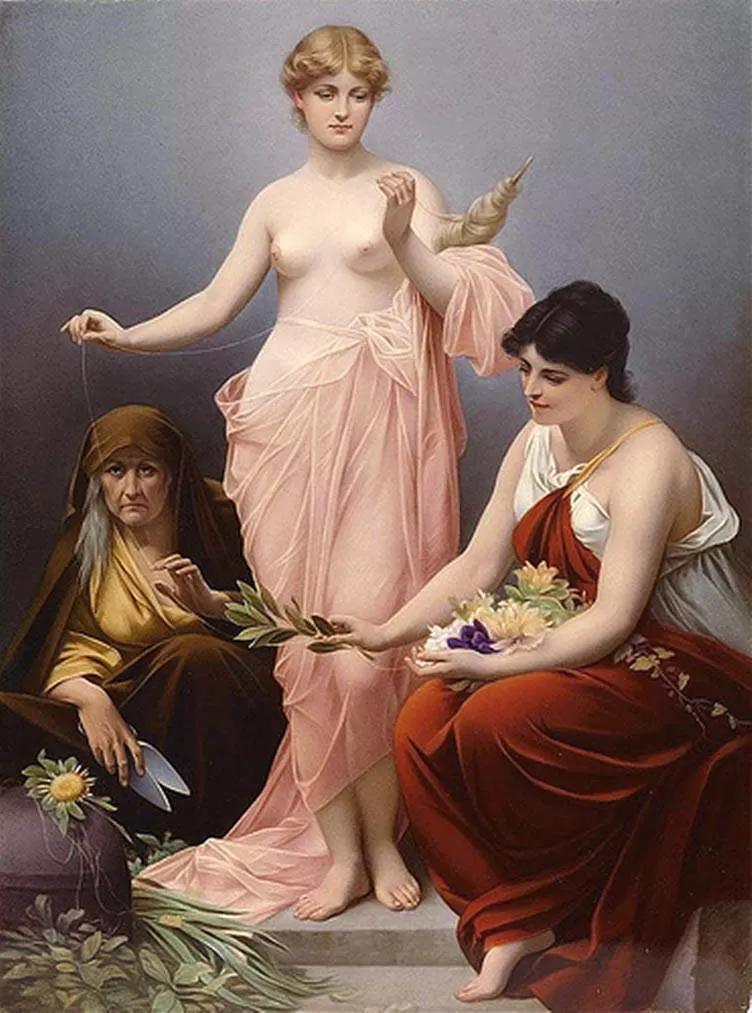 thumann the fates
Fate as “Portion” or “Share”
The direct translation of Moirai as “allotted portion” or “share” is deeply tied to the ancient Greek concept of meros (“part” or “lot”) and moros (“fate” or “doom”). These terms were not solely confined to grand notions of destiny but were also used in mundane contexts, like receiving a meros of food or dividing land.
This everyday usage underscores a fundamental Greek worldview: life, in all its aspects, is comprised of portions assigned by a higher power (fate). To lose one’s assigned share, whether it be property, honor, or life itself, was seen as a violation of the natural order or fate’s decree. This concept forms the backdrop for many Greek myths, where characters grapple with their assigned lots.
The Fates in Myth: Testing Destiny
Greek mythology abounds with tales where characters encounter, challenge, or fulfill their destiny as woven by the 3 sisters of fate. These myths illustrate the complex interplay between divine fate and human action.
The story of Achilles in the Trojan War is a prime example. Achilles was fated to have a choice: a long, unremarkable life or a short, glorious one. His decision to fight at Troy, though influenced by circumstances (like the taking of his moira, Briseis), was his to make, leading him down the path of eternal fame and early death determined by the Fates.
The myth of Meleager demonstrates how fate could be known, yet seemingly manipulated. The Fates foretold that Meleager would die when a specific log burned to ash. His mother, Althaea, saved the log, thereby preserving his life for a time. However, consumed by grief and rage later, she threw the log back into the fire, fulfilling the original prophecy. This suggests that while the timing or circumstances might appear flexible, the ultimate outcome determined by the Fates is often inescapable.
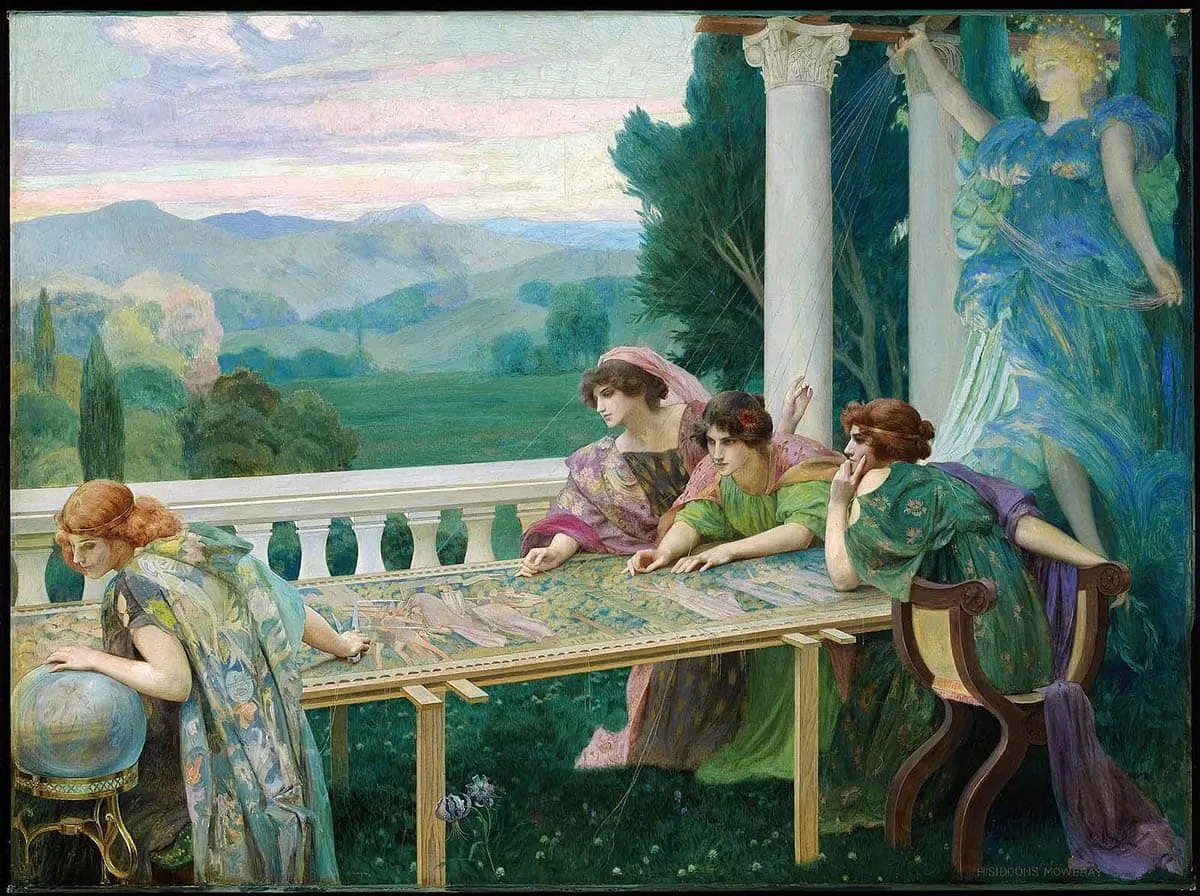 mowbray the fates destiny
The myth of Alcestis offers a rare instance where fate seems to bend. King Admetus was fated to die, but Apollo persuaded the Fates to allow a substitute if one could be found. His wife, Alcestis, willingly took his place. This unique situation, however, required intervention by the hero Hercules, who wrestled Death (Thanatos) himself to bring Alcestis back from the Underworld. It’s a powerful story of sacrifice and divine/heroic intervention, suggesting that even the Fates’ decrees, while usually absolute, might have rare, difficult-to-achieve conditions or exceptions. Yet, the difficulty and the need for extraordinary aid underscore the general rule of fate’s inflexibility.
In contrast, the tragic tale of Orpheus and Eurydice highlights the finality of fate. Orpheus’s love and music persuaded Hades and Persephone to allow Eurydice’s return from the Underworld, but under a strict condition. When Orpheus looked back too soon, his fate – and hers – was sealed. As Statius writes in the Thebaid (8. 58), the Fates (the Sisters) resumed “their allotted task” of keeping her in the underworld. This narrative reinforces the Moirai’s ultimate authority; even divine pity could not permanently override their original decree without the condition being met.
Even seemingly absolute endings could be reversed by the Fates, as seen in the myth of Pelops. After being murdered and served to the gods by his father, Pelops was restored to life by the Fates, who were outraged by the impiety. This instance, however, is often framed as the gods (and thus the Fates) correcting an unnatural and horrific act, rather than a mortal defying their weave.
 agache parques the fates
The Enduring Symbolism of the Fates in Poetry and Art
The imagery and concept of the Fates – the spinning, measuring, and cutting of the thread of life – have provided a potent wellspring of symbolism for poets and artists throughout history, extending far beyond ancient Greece. The three sisters of fate embody universal themes of destiny, mortality, control, and the passage of time, making them timeless figures for artistic exploration.
In poetry, the Moirai and their work serve as powerful metaphors for the limits of human agency and the inevitable nature of death. Poets use the “thread of life” to represent an individual’s fragile existence, vulnerable to the whims or stern decrees of destiny. The “shears of Atropos” are a stark symbol of mortality, appearing in verses that contemplate loss, the brevity of life, or the arbitrary nature of death’s arrival.
The idea of life being “woven” or “spun” connects the abstract concept of destiny to the tangible, painstaking craft of textiles. This metaphor allows poets to explore the intricate patterns of cause and effect, the interwoven relationships between individuals, and the way circumstances are knit together to form a life story. The smoothness or roughness, strength or fragility of the thread can symbolize the quality and challenges of the existence it represents.
From classical epics to modern verse, the Fates appear directly as characters or indirectly through their symbolic tools and actions. They represent the larger forces at play in the universe, indifferent perhaps, but immensely powerful. Their presence in poetry often evokes a sense of awe, dread, or philosophical contemplation about the human place in the cosmos and the extent to which we truly control our path.
 cosway the fates cupid
Even unrelated themes can borrow their power; the idea of an unchangeable outcome, or a destiny tied to birth, echoes the work of Clotho, Lachesis, and Atropos. The concept of fate continues to inspire poems about love, loss, hope, and the human struggle against forces larger than themselves. The enduring power of the Moirai as symbols lies in their simple, yet profound, representation of the fundamental truth that every life has a beginning, a middle, and an end, orchestrated by forces often beyond our comprehension or control. For those exploring poetic themes related to family and destiny, the Fates offer a powerful mythological backdrop, distinct yet resonant, perhaps even providing a stark contrast to themes found in poems like family christmas poems, which often emphasize warmth and connection over predetermined destiny.
 doyle the fates drawing
Conclusion
The Fates, or Moirai – Clotho the Spinner, Lachesis the Measurer, and Atropos the Cutter – are some of the most compelling and formidable figures in Greek mythology. As the three sisters of fate, they embody the ancient Greek understanding of destiny, a power that weaves the very fabric of existence and dictates the length and end of every mortal life. Their varying mythological origins and the tales of heroes who interact with their decrees illustrate the complex relationship between fate and human will.
Though their power is often depicted as absolute and their decisions unchangeable, the myths also reveal glimmers of conditionality or the possibility of extraordinary intervention, highlighting the nuanced Greek view that while fate exists, the human experience involves navigating within its bounds. The enduring symbolism of the Fates and their tools – the thread, the distaff, and the shears – continues to resonate in art and literature, particularly in poetry, providing a powerful vocabulary for exploring profound human concerns about life, death, and the mystery of destiny. They remind us that every life is a unique, finite thread in the vast, intricate tapestry woven by the unseen hands of fate.