
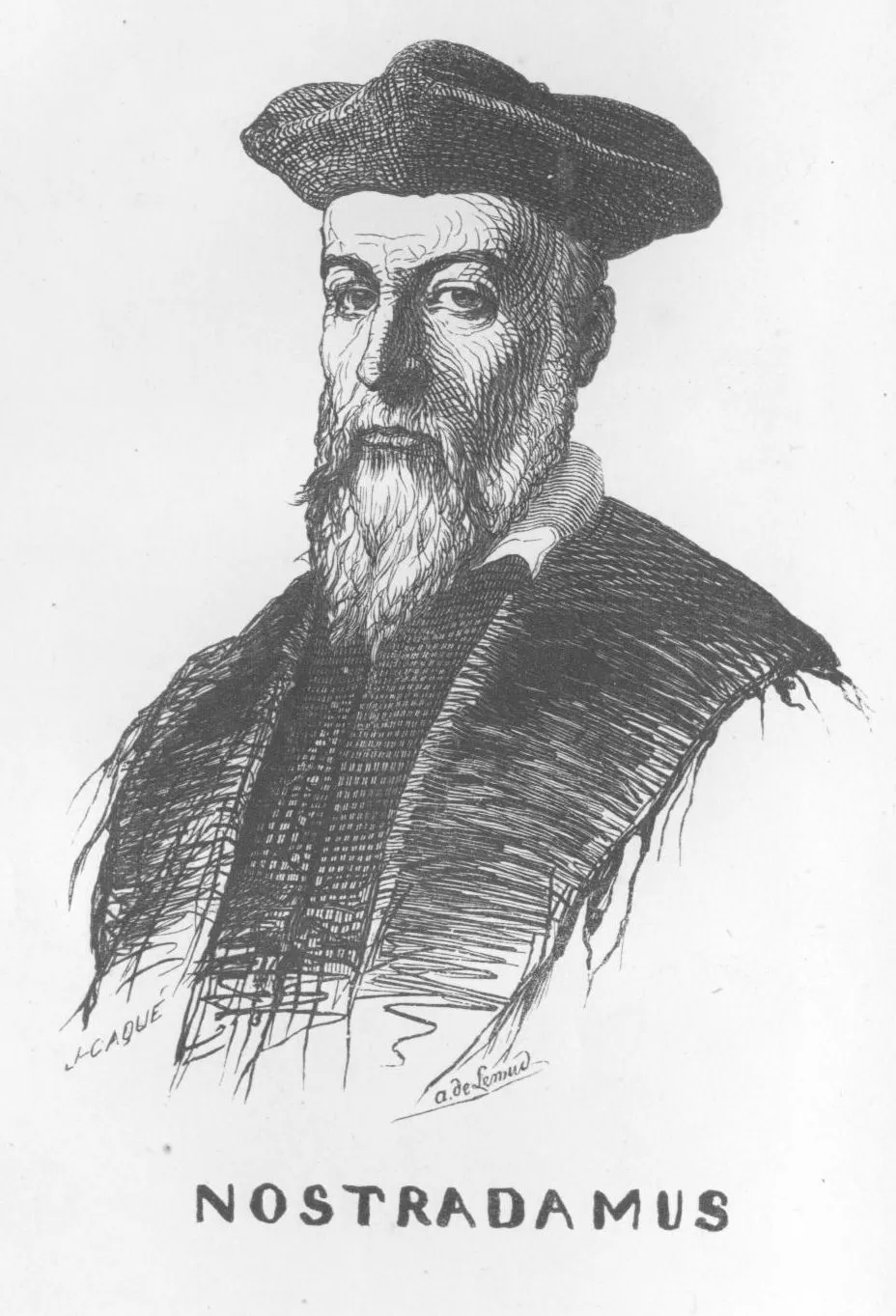
 NostradamusNostradamus, the 16th-century French astrologer and physician, remains a figure shrouded in mystique. His cryptic quatrains, penned centuries ago, continue to spark debate and speculation, particularly in the wake of major world events. One such quatrain, frequently cited in connection with the 2016 US Presidential election, reads:
Contents
Man with a false trumpet claiming he’s right,
Will rise from the tower’s of the New World
On dames he will spew tangerine venom
But victorious he will be, despite allegations being hurled.
Many interpreted this as a prediction of Donald Trump’s victory. The imagery of the “false trumpet” and “tangerine venom” certainly lends itself to such a reading. However, a deeper look at Nostradamus’s work and methods reveals a more nuanced picture.
The Art of Ambiguity: Nostradamus’s Prophetic Style
Nostradamus’s prophecies are characterized by their deliberate vagueness. This ambiguity allows for multiple interpretations, making it easy to retroactively connect his quatrains to historical events. This is precisely what happened with the “trumpet” quatrain. While the imagery might resonate with some aspects of Trump’s persona and campaign, it’s important to remember the context in which Nostradamus wrote.
As a court astrologer for Catherine de Medici, Nostradamus practiced astrology, a field closely aligned with astronomy and generally respected at the time. Though tolerated by the Church, astrologers weren’t considered divinely inspired prophets.
NostradamusIt’s likely Nostradamus drew inspiration from collections of past prophecies, reworking them into his enigmatic verses. This practice, combined with his astrological background, explains the vague and often symbolic nature of his predictions. While some of his quatrains might coincidentally align with later events, this doesn’t necessarily validate his prophetic abilities. Indeed, his name change from de Notredame to the more Latinate Nostradamus suggests a savvy self-promoter, adept at capitalizing on the public’s fascination with the occult.
Nostradamus vs. Hildegard: Prophecy and Popular Culture
Nostradamus’s enduring popularity is a curious phenomenon. Numerous editions of his Prophecies and countless commentaries attest to his enduring appeal. Yet, other historical figures with arguably stronger claims to prophetic vision, like Hildegard of Bingen, a Doctor of the Church, receive comparatively little attention. This disparity highlights the public’s enduring fascination with the mysterious and the occult, often at the expense of more verifiable sources.
The allure of the paranormal is a powerful force. From ghost stories to UFO sightings, the supernatural captures the human imagination. This fascination can be a valuable tool for engagement and exploration, but it’s important to approach such topics with critical thinking and discernment.
The Dangers of Misinterpreting Prophecy
The “trumpet nostradamus” connection exemplifies the dangers of misinterpreting prophecy. Over-interpreting vague predictions can lead to fear-mongering and a distorted understanding of both history and the future. True prophecy, if it exists, should be approached with humility and caution.
While the “trumpet” quatrain might superficially resemble aspects of the 2016 election, it’s crucial to avoid reading too much into its ambiguous imagery. Nostradamus’s work, though intriguing, shouldn’t be mistaken for infallible predictions. Instead, it serves as a reminder of the human fascination with the unknown and the enduring power of ambiguous language to spark imagination and debate.