
The Tower of London’s imposing walls hold centuries of secrets, and perhaps none so poignant as the story of Anne Boleyn’s grave. Executed on Tower Green in 1536, her final resting place within the Chapel of St. Peter ad Vincula became a focal point for Tudor history enthusiasts. This article explores the somber circumstances of Anne’s burial, the chapel’s rich history, and the fascinating account of her exhumation centuries later.
Contents
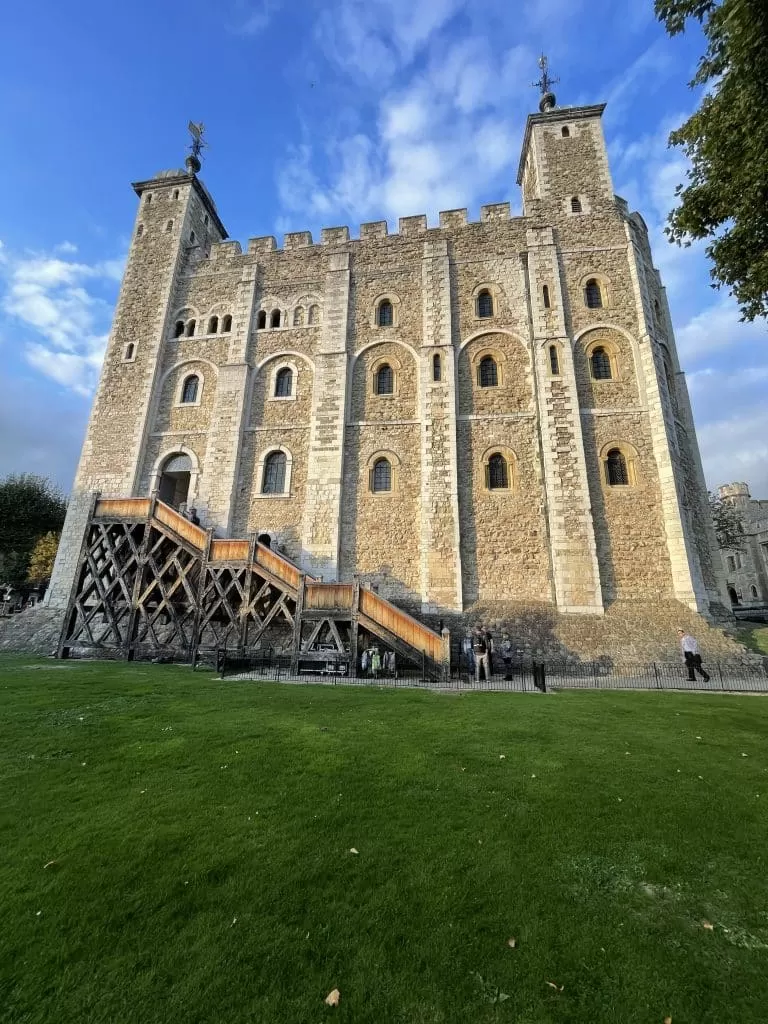 alt text: The White Tower at the Tower of London, where Anne Boleyn was imprisoned.
A Hasty Burial for a Fallen Queen
Convicted of treason, Anne Boleyn met her fate on May 19, 1536. With little ceremony, her remains were placed in an arrow chest, a makeshift coffin, and carried to the nearby Chapel of St. Peter ad Vincula. Her ladies-in-waiting, themselves grief-stricken, wrapped her body in cloth before laying her to rest in an unmarked grave near the high altar. Just two days prior, her brother, George Boleyn, had been buried in the same location, making them the first of many notable figures to be interred there during the tumultuous Tudor era.
The Chapel of St. Peter ad Vincula: A Sanctuary of History
One of two chapels within the Tower of London, St. Peter ad Vincula resides in the outer bailey, overlooking Tower Green. Though its current structure dates to the early 16th century, the chapel’s history stretches back further. An earlier medieval chapel, potentially predating the Tower itself, stood outside the fortifications, serving as a parish church. It wasn’t until the 13th century, under Henry III, that it was incorporated within the Tower walls. A fire in 1512 necessitated the rebuilding that resulted in the Tudor-era chapel seen today. Unassuming in its architecture, the chapel’s significance lies in its association with the tragic figures who found their final rest within its walls.
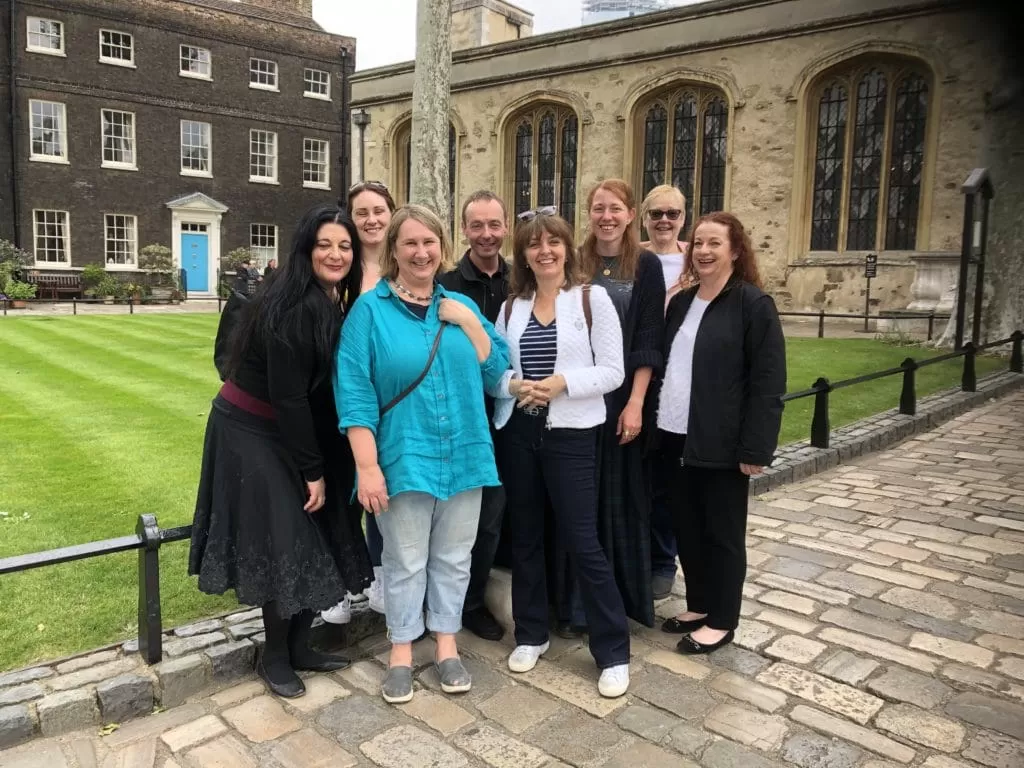 alt text: The Chapel of St. Peter ad Vincula at the Tower of London, viewed from the grounds.
Unmarked Graves and Shifting Ground
Anne Boleyn’s grave, like those of other executed individuals, remained unmarked. Over the centuries, St. Peter ad Vincula served as a burial place for Tower residents and even those from the surrounding neighborhood. This resulted in overcrowding and, by the mid-19th century, the need for extensive renovations. In 1876, a restoration project aimed to address structural and sanitary concerns. Upon lifting the uneven pavement, it became clear that earlier graves had been disturbed by subsequent burials.
The Exhumation: Unearthing a Queen
On November 9, 1876, a team began excavating the area believed to be Anne Boleyn’s grave. At a depth of two feet, they discovered a collection of bones, later identified as those of a female between 25 and 30 years of age. Further excavation revealed the collapsed coffin of a later burial, explaining the disturbance. Dr. Frederic J. Mouat, a surgeon, examined the bones, noting the small stature, slender proportions, and notably, the small vertebrae of the neck, consistent with contemporary descriptions of Anne’s “lyttle neck.”
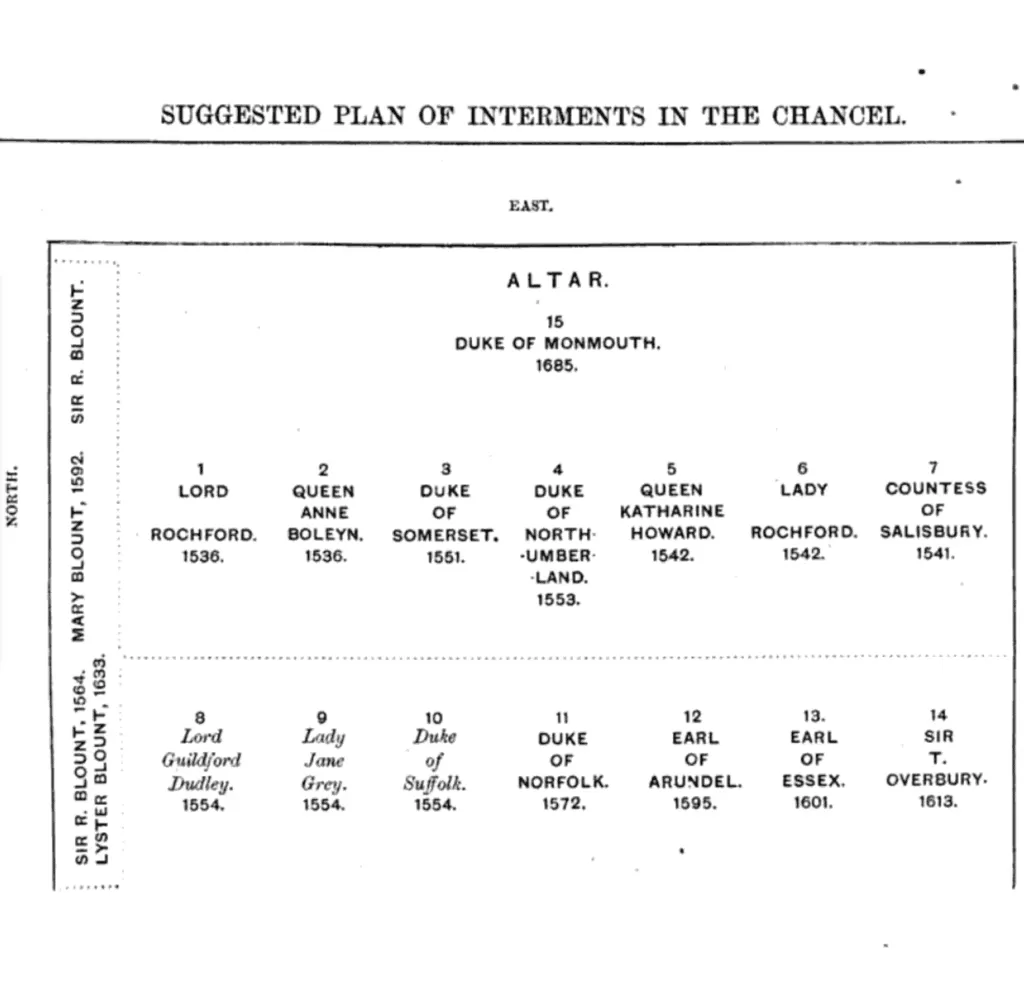 alt text: A diagram illustrating the layout of internments within the chancel of St. Peter ad Vincula.
A Queen’s Reinterment
The exhumed remains were carefully collected and stored for five months. On April 13, 1877, they were placed in lead caskets and reinterred in new oak boxes, each bearing a plaque identifying the deceased. A new tiled floor was laid, marking each individual’s burial location, and a record of the reinterments was preserved.
Anne Boleyn’s Legacy at the Tower
Anne Boleyn’s story, from her brief reign as queen to her tragic execution and hasty burial, continues to resonate within the Tower of London’s walls. Though disturbed during the chapel’s renovation, her final resting place is now marked, offering a place for contemplation and remembrance. The Chapel of St. Peter ad Vincula, a silent witness to centuries of history, remains a poignant reminder of the lives and deaths intertwined with the Tower’s enduring legacy.
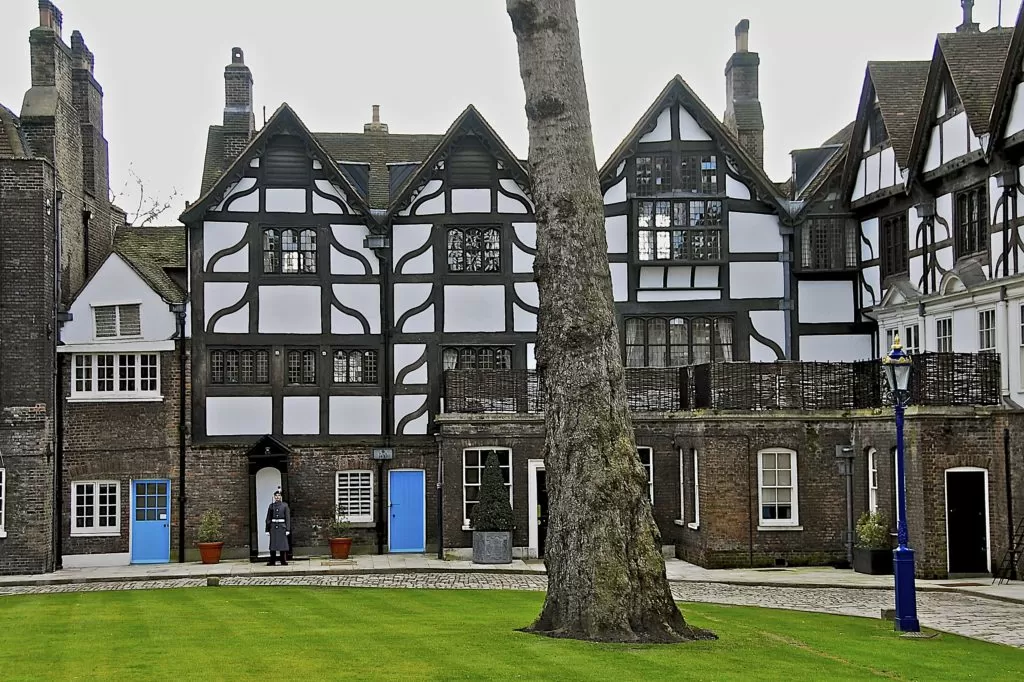 alt text: The Queen's House at the Tower of London, where Anne Boleyn's remains were temporarily stored after exhumation.