
Charles Baudelaire’s Les Fleurs du mal remains a cornerstone of modern poetry, capturing the complexities and contradictions of 19th-century Parisian life. Among its most striking poems is “À une passante” (To a Passer-By), a sonnet that distills the essence of the fleeting, anonymous encounter in the bustling urban environment. This poem is a vivid portrayal of sudden connection, intense sensation, and immediate loss, central themes in Baudelaire’s exploration of modernity and the human condition. Through powerful imagery and raw emotion, Baudelaire transforms a simple street sighting into a profound moment of existential reflection.
Contents
The Electric Jolt of the Urban Street
The poem opens amidst the sensory overload of the city: “La rue assourdissante autour de moi hurlait” (The street about me roared with a deafening sound). This cacophony sets the stage for the unexpected appearance of a woman who cuts through the noise and anonymity. Described as “Longue, mince, en grand deuil, douleur majestueuse” (Tall, slender, in heavy mourning, majestic grief), she embodies a striking figure of sorrow and nobility. Her gesture of lifting her hem is noted with a “main fastueuse” (glittering/stately hand), adding a touch of elegance to her somber presence.
La rue assourdissante autour de moi hurlait.
Longue, mince, en grand deuil, douleur majestueuse,
Une femme passa, d'une main fastueuse
Soulevant, balançant le feston et l'ourlet;
This initial description highlights the contrast between the chaotic urban background and the woman’s distinct, almost regal, presence.
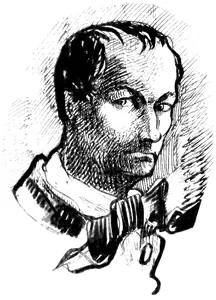 Self Portrait by Charles Baudelaire
Eyes Like a Stormy Sky
The second stanza shifts focus from the woman’s appearance to the narrator’s visceral reaction. He observes her “Agile et noble, avec sa jambe de statue” (Agile and noble, with her leg like a statue’s). The tension is palpable as he describes himself “crispé comme un extravagant” (tense as in a delirium or an extravagant). His gaze locks onto her eyes: “Dans son oeil, ciel livide où germe l’ouragan” (From her eyes, pale sky where tempests germinate). This powerful simile captures the depth and turmoil he perceives, a mix of potential danger and captivating beauty. He drinks “La douceur qui fascine et le plaisir qui tue” (The sweetness that enthralls and the pleasure that kills), a classic Baudelairean paradox that speaks to the intoxicating and destructive nature of intense sensation and desire.
Agile et noble, avec sa jambe de statue.
Moi, je buvais, crispé comme un extravagant,
Dans son oeil, ciel livide où germe l'ouragan,
La douceur qui fascine et le plaisir qui tue.
This internal reaction reveals the speaker’s susceptibility to the sudden, overwhelming impact of the encounter.
The Poignancy of What Could Have Been
The tercets capture the abruptness of the moment’s end and the ensuing sense of loss. It’s like “Un éclair… puis la nuit!” (A lightning flash… then night!). The woman is a “Fugitive beauté” (Fleeting beauty) whose mere glance caused the narrator to be “soudainement renaître” (suddenly reborn). The rhetorical questions that follow emphasize the finality of her departure: “Ne te verrai-je plus que dans l’éternité?” (Will I see you no more before eternity?).
Un éclair... puis la nuit! — Fugitive beauté
Dont le regard m'a fait soudainement renaître,
Ne te verrai-je plus que dans l'éternité?
The final stanza confronts the irreversible nature of the missed connection. “Ailleurs, bien loin d’ici! trop tard! jamais peut-être!” (Elsewhere, far, far from here! too late! never perhaps!). The italics on “jamais” underscore the profound regret. The closing lines articulate the anonymity and the bitter irony: “Car j’ignore où tu fuis, tu ne sais où je vais, / Ô toi que j’eusse aimée, ô toi qui le savais!” (For I know not where you fled, you know not where I go, / O you whom I would have loved, O you who knew it!). This final address, simultaneously intimate and distant, encapsulates the tragedy of modern urban isolation – two souls potentially meant for each other, separated forever by the indifferent flow of the crowd.
Themes and Enduring Impact
“À une passante” is a quintessential poem of urban modernity, exploring themes of chance encounters, the sublime in the everyday, the isolating nature of the city, and the bittersweet pain of missed opportunities. Baudelaire masterfully uses the sonnet form to contain this intense, fleeting experience. The poem’s structure, imagery, and raw emotion make it a powerful depiction of the human heart navigating the alienating yet potentially electric landscape of the modern metropolis. Its enduring relevance lies in its universal portrayal of the poignant ‘what if’ moments that define city life.
Ailleurs, bien loin d'ici! trop tard! *jamais* peut-être!
Car j'ignore où tu fuis, tu ne sais où je vais,
Ô toi que j'eusse aimée, ô toi qui le savais!
The multiple translations presented in the original source (Aggeler, Campbell, Scott, Wagner) highlight the challenge and subjective nature of rendering Baudelaire’s precise language and emotional intensity into English, each offering a slightly different interpretation of this iconic urban lament.