
Poetry has long been a companion to various states of human experience, and perhaps none is as multifaceted or culturally ingrained as the act of drinking. From celebratory toasts to somber reflections, the consumption of alcohol, or states of intoxication, has provided poets across centuries and cultures with a rich well of inspiration. Drinking poems explore themes of escapism, social connection, creative inspiration, rebellion, melancholy, and raw human emotion. This collection delves into diverse perspectives on this potent subject, showcasing how different poets have captured the essence of intoxication and its effects on the mind and soul.
Contents
The Intoxicating Muse: Diverse Voices on Drinking
The relationship between drinking and the creative spirit is complex, often viewed through lenses of liberation, heightened perception, or painful escape. The poems below offer varied glimpses into this relationship and the broader human condition it often mirrors.
Baudelaire’s Imperative: “Get Drunk”
Charles Baudelaire, the quintessential flâneur and chronicler of modern urban life, issues a powerful command in his prose poem “Get Drunk” (or “Enivrez-vous”). It’s not merely an encouragement of physical intoxication but a philosophical call to arms against the crushing weight of time and mundane reality.
Always be drunk. That’s it. The great imperative. In order not to feel the horrible burden of Time bruise your shoulders, grinding you into the earth, Get drunk and stay drunk. But on what? On wine, poetry, virtue, whatever. But get drunk.
And if you sometimes happen to wake up on the porches of a palace, in the green grass of a ditch, in the dismal loneliness of your own room, your drunkenness gone or disappearing, ask the wind, the wave, the star, the bird, the clock, ask everything that flees, everything that groans or rolls or sings, everything that speaks, ask what time it is;
And the wind, the wave, the star, the bird, the clock will answer you:
“Time to get drunk! In order to not be martyred slaves of Time, Get drunk and stay drunk. On wine, virtue, poetry, whatever.
Here, “drunkenness” becomes a metaphor for passionate engagement with life, a necessary state of heightened sensation or focus—whether achieved through wine, virtue, or, significantly, poetry itself—to resist the soul-crushing march of time. It elevates intoxication from a physical state to a spiritual and intellectual necessity for meaningful existence. Exploring different form poetry can also be seen as a way poets seek unique structures to express complex ideas and emotional states, much like Baudelaire seeks a state of “drunkenness” to transcend reality.
 Illustration related to Charles Baudelaire's poem "Get Drunk" showing figures against a chaotic backdrop
Dickinson’s Celestial Brew: “I taste a liquor never brewed”
Emily Dickinson often found the infinite within the finite, and in “I taste a liquor never brewed,” she transforms the natural world into a source of divine intoxication. Her “liquor” is not earthly alcohol but the sheer sensory overload and spiritual exhilaration derived from nature.
I taste a liquor never brewed –
From Tankards scooped in Pearl –
Not all the Frankfort Berries
Yield such an Alcohol!
Inebriate of air – am I –
And Debauchee of Dew –
Reeling – thro’ endless summer days –
From inns of molten Blue –
When “Landlords” turn the drunken Bee
Out of the Foxglove’s door –
When Butterflies – renounce their “drams” –
I shall but drink the more!
Till Seraphs swing their snowy Hats –
And Saints – to windows run –
To see the little Tippler
Leaning against the – Sun!
Dickinson uses the language of drinking (“liquor,” “brewed,” “Tankards,” “Alcohol,” “Inebriate,” “Debauchee,” “Reeling,” “drams,” “Tippler”) to describe an almost religious ecstasy experienced through nature. The poem playfully suggests her intoxication is more profound and enduring than that of bees or butterflies on nectar, leading to a state so elevated it attracts heavenly attention. This metaphorical use of “drinking” highlights the intensity of her connection to the natural world as a form of spiritual transcendence.
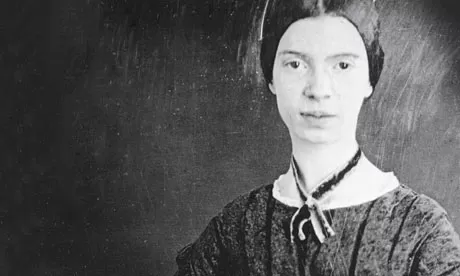 Emily Dickinson portrait
Yeats’s Simple Equation: “A Drinking Song”
William Butler Yeats offers a succinct, almost proverbial observation on the nature of love and sensory experience in “A Drinking Song.”
Wine comes in at the mouth
And love comes in at the eye;
That’s all we shall know for truth
Before we grow old and die.
I lift the glass to my mouth,
I look at you, and I sigh.
This short poem presents a deceptively simple dichotomy. The immediate, physical pleasure of wine is contrasted with the visual apprehension that leads to love. The final lines bring these two sensory inputs together in a moment of poignant recognition and perhaps resignation – these basic sensory truths are all we can be certain of in life. The act of drinking and the sight of the beloved are distilled into fundamental experiences that define human existence before mortality intervenes. Different poetry formats can emphasize such concise observations, using structure to amplify the weight of simple statements.
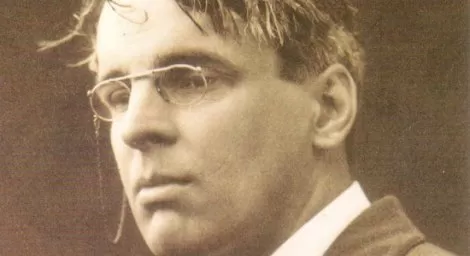 Portrait of William Butler Yeats
Botev’s Revolutionary Despair: “In the Tavern”
Hristo Botev, a Bulgarian revolutionary and poet, presents a starkly different view of drinking in “In the Tavern.” Here, the tavern is a refuge, but also a place of painful self-awareness and social critique.
It’s hard, it’s hard, so give me wine.
Drunk, I can forget the face
the thing you fools cannot define:
where lies glory – and disgrace.
Forget the country of my birth,
my father’s dear homely nest,
and those whose souls were never curbed,
whose fighting soul was their bequest.
Forget my family in their need,
my father’s grave, my mother’s tears,
and those who’d steal a crust of bread
with all the aristocratic airs.
The rich man with his crookedness,
the merchant thirsting for his plunder,
the priest reciting holy mass,
rob from the people who must hunger.
Rob them. All you wanton band.
Rob them. Who will make a fuss?
Soon they’ll be too tight to stand:
every hand holds up a glass.
We drink, we sing with recklessness,
we snarl against the tyrant foe,
the taverns are too small for us –
we shout: “To the mountains we shall.
We shout, but when we’re sober we
forget our pledges and our phrases
and say no more, and roar with laughter
at the people’s sacrifices.
While all the time the tyrant rages
and ravages our native home,
slaughters, hangs and flogs and curses
then fines the people he has tamed.
So fill the glass and let me drink.
Bring my soul its soothing gift
and kill the sober way I think
and let my manly hand grow soft.
I’ll drink, despite the enemy,
despite all you, great patriots.
There’s nothing near and dear to me,
and you… well. you are idiots.
Drinking here is initially presented as a means of forgetting hardship and injustice (“forget the face / the thing you fools cannot define”). However, the poem quickly reveals a deep-seated conflict: the tavern is also a place of fleeting, drunken boasts of rebellion that dissolve with sobriety, highlighting a painful gap between rhetoric and action. The speaker’s final embrace of drink seems less about simple escape and more about a bitter, cynical detachment from a world he finds unbearable, including the hypocrisy of fellow “patriots.” It’s a powerful political poem disguised as a drinking song.
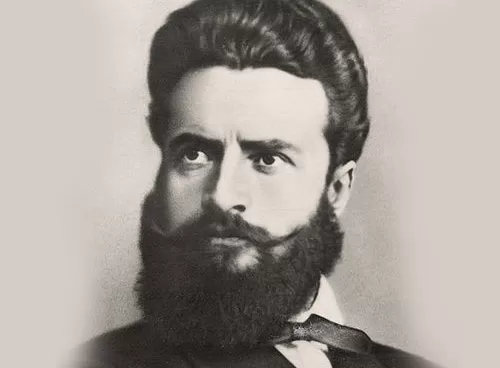 Portrait of Hristo Botev
Brouwer’s Stark Modernity: “Vodka”
Joel Brouwer’s “Vodka” offers a contemporary and unflinching look at intoxication, specifically through the lens of vodka. The poem strips away romanticism, presenting a raw, physical, and psychologically invasive experience.
The Stoli bottle’s frost melts to brilliance
where I press my fingers. Evidence.
Proof I’m here, drunk in your lamplit kitchen,
breathing up your rented air, no intention of leaving.
Our lust squats blunt as a brick on the table
between us. We’re low on vocabulary.
We’re vodkaquiet. Vodkadeliquescent.
Vodka doesn’t like theatrics: it walks
into your midnight bedroom already naked,
slips in beside you, takes your shoulders
in its icy hands and shoves. Is that a burglar
at the window? No, he lives with me, actually.
Well, let him in for Christ’s sake, let’s actually
get this over with.
The poem uses striking, almost violent imagery (“lust squats blunt as a brick,” “takes your shoulders / in its icy hands and shoves”) to depict vodka’s effect. It’s not just a backdrop but an active agent, stripping away facades and forcing confrontation with uncomfortable truths – about oneself, about relationships. The neologisms “vodkaquiet” and “Vodkadeliquescent” capture the specific, dissolving effect of the spirit. This poem shows that modern drinking poems can be intensely personal and psychologically focused, far from traditional odes to wine or revelry.
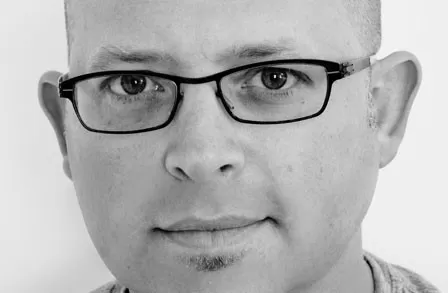 Image associated with Joel Brouwer, possibly an abstract or atmospheric photo
Conclusion
From Baudelaire’s existential imperative to get drunk on anything that lifts the spirit, to Dickinson’s natural ecstasy, Yeats’s simple equation of sensory input, Botev’s socio-political commentary veiled in tavern talk, and Brouwer’s raw modern portrayal, these drinking poems demonstrate the rich and varied ways poets have engaged with themes of intoxication. They remind us that drinking in poetry is rarely just about the act itself; it is a lens through which to examine consciousness, escape, reality, social dynamics, and the enduring complexities of the human experience. These works offer a glimpse into the power of poetry to capture even the most mundane or controversial aspects of life and elevate them to art.