
The Advent season is a time steeped in anticipation, a period marked by waiting, longing, and the quiet stirring of hope. While Christmas carols often capture the celebratory joy of the Nativity, Advent poems offer a richer, more nuanced exploration of this sacred time. They delve into the complexity of expectation, acknowledging the darkness and the difficulty alongside the promised light. An Advent poem serves not just as a reflection on historical events, but as a guide to understanding the present moment – our own waiting, our own needs, and the hope that sustains us. These poems invite us to sit with the tension between the “already” and the “not yet,” preparing our hearts and minds for the full revelation of grace.
Contents
Exploring the power of an Advent poem allows us to connect deeply with the emotional landscape of this season. It’s a season that holds space for both lament and praise, uncertainty and profound faith. As liturgical theologian W. David O. Taylor notes, the biblical Nativity stories themselves are filled with complexity, moving between effusive joy and moments of struggle or confusion. Our hymns and carols often sanitize this narrative, focusing solely on uncomplicated happiness. Advent poetry, however, can embrace this full spectrum, offering a truer reflection of life and faith. It helps us see how God is at work not just in the moments of clear joy, but in the minor-key, difficult, and dissonant parts of the story – and our own lives.
The Spectrum of Advent Emotion: Waiting, Longing, and Joy
Advent is inherently a season of waiting, but this waiting is far from passive. It is active, often filled with both deep longing and quiet anticipation. The Psalms, frequently read during Advent, model this emotional complexity, moving seamlessly between expressions of sorrow, yearning, and triumphant joy. This dynamic is echoed in Advent poems that capture the tension of the season. Drew Miller’s “Psalm 126,” set to music, beautifully articulates this journey:
Laughter filled our mouths
Spread across our faces
It was like a dream
When we found how good your grace is
Those who sow with tears reap songs of joy
You have done great things
You came to us a child
We can’t help but sing
Of your glory, meek and wild
Those who sow with tears reap songs of joy
So go out in your weeping
Carrying the seed
God will surely find you
In your deepest need
Those who sow with tears reap songs of joy
No more let sin or sorrow grow
Nor thorns infest the ground
He comes to make his blessings flow
Far as the curse is found
This poem, referencing the biblical Psalm, directly links weeping and sowing with reaping and joy. It acknowledges the present “weeping” and “deepest need” while holding onto the promise of future abundance and God’s grace. This emotional honesty is a hallmark of powerful Advent poetry – it doesn’t ignore the struggle but frames it within the context of divine action and future hope. The image of “glory, meek and wild” encapsulates the surprising nature of Christ’s coming, a force of profound power entering the world in vulnerability. Engaging with an Advent poem like this allows us to bring our full selves, including our sorrows, into the season of waiting, trusting that God is present in it all. God will surely find you in your deepest need, a connection akin to that found in heart touching love poems for him from the heart.
Seeing the Incarnation: Tangibility in Advent Poetry
The miracle of the Incarnation lies in God taking on human flesh, entering fully into our physical reality. This aspect is often overlooked in sanitized depictions, but Advent poetry can ground this profound mystery in tangible imagery. It reminds us that grace comes not as an abstract concept, but embedded in the messiness and wonder of the physical world. Scott Erickson’s art, for example, has challenged traditional views by emphasizing the bodily reality of Mary carrying Christ. This perspective finds resonance in poems that use concrete images to explore the nature of hidden life and eventual revelation, echoing the process of Incarnation and spiritual sight.
Consider the opening lines of Sister Sinjin’s adaptation of Christina Rossetti’s verse, “That We Might See”:
Lord, grant us eyes that we might see
Within the seed a mighty tree
Within the glowing egg a bird
Within the shroud a butterfly
These lines use familiar, physical images of hidden potential – the tree dormant within the seed, the bird waiting within the egg, the butterfly enclosed in the shroud. These natural metaphors serve as pathways to understanding the spiritual truth: just as these things are hidden before their revealing, so too was Christ’s full glory veiled in his earthly form. The final couplet reinforces the desire for spiritual sight, asking to see beyond the creature to the Creator, and hearing the intimate, reassuring voice of Christ: “Fear not, for it is I.” An Advent poem that employs such tangible imagery helps us appreciate the miracle of God’s presence in the physical world and invites us to look for the divine in the ordinary. Listening for that tender voice is like seeking the connection in good love poems for him.
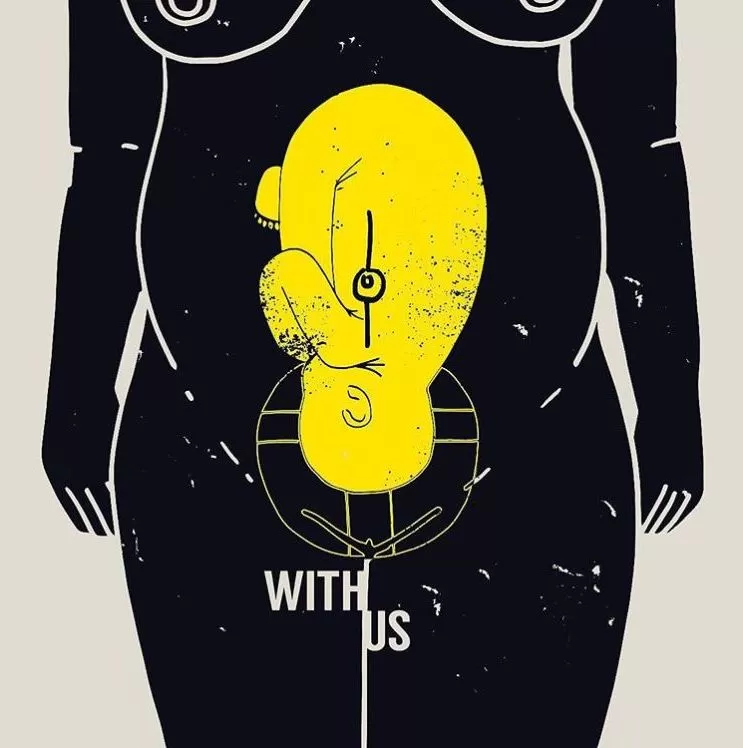 Artwork depicting a pregnant Virgin Mary in the Advent season
A Peace Beyond Understanding: Advent’s Transformative Hope
Advent is ultimately a season of hope, rooted in the promise of Christ’s coming – both his first arrival in Bethlehem and his anticipated return. This hope is not merely passive expectation but a transformative force that reshapes our understanding of the world and our place within it. Advent poems can articulate this active hope, portraying the coming Christ as a catalyst for peace, freedom, and unity.
Audrey Assad’s “Your Peace Will Make Us One” (a rewrite of “The Battle Hymn of the Republic”) transforms a martial tune into an anthem of Advent peace:
Mine eyes have seen the glory
Of the coming of the Lord
You are speaking truth to power
You are laying down our swords
Replanting every vineyard
Till a brand-new wine is poured
Your peace will make us one
I’ve seen you in our home fires
Burning with a quiet light
You are mothering and feeding
In the wee hours of the night
Your gentle love is patient
You will never fade or tire
Your peace will make us one
Glory, glory, hallelujah
Glory, glory, hallelujah
Glory, glory, hallelujah
Your peace will make us one
In the beauty of the lilies
You were born across the sea
With a glory in your bosom
That is still transfiguring
Dismantling our empires
Till each one of us is free
Your peace will make us one
This poem presents a powerful vision of the coming Lord bringing active, transformative peace. It’s a peace that involves laying down swords, replanting vineyards, dismantling empires, and bringing freedom. This isn’t a sentimental peace but a revolutionary one, rooted in gentle love and patient presence (“home fires,” “mothering and feeding”). The repeated refrain, “Your peace will make us one,” speaks to the unifying power of this Advent hope. An Advent poem that captures this transformative vision encourages us to actively participate in bringing about the peace and justice Christ inaugurated. Your gentle love is patient… Your peace will make us one, reflecting the unity celebrated in best poems about love for him. This transformative process allows his glory, which is still transfiguring, to sink deeply into the fibers of our hearts, connecting with the core feelings captured in boyfriend i love you poems for him.
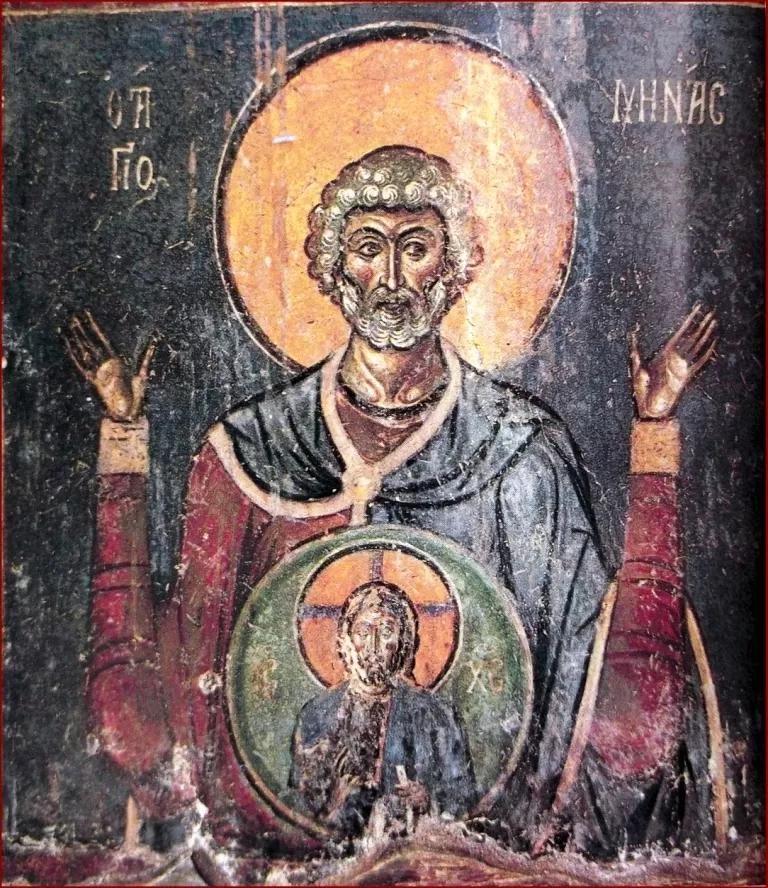 Ancient icon showing Saint Menas bearing the Christ child, related to Advent themes of bearing Christ
The idea of bearing Christ within us is also a significant Advent theme, suggesting that the coming is not just an external event but an internal transformation. An ancient icon depicts Saint Menas bearing the Christ child in his chest, an image Matthew Milliner discusses as symbolizing the call for all, male and female, to bear Christ within. This idea resonates with the transformative power described in Advent poetry – the peace that makes us one, the love that is patient, the transfiguring glory.
Finding Your Advent Poem
The poems highlighted above represent just a few examples of how Advent poetry can enrich our understanding and experience of this season. Many resources exist for discovering Advent poems, from classic poets to contemporary voices. Some collections are curated around specific biblical texts, like the Lectionary readings, offering poetic responses to the weekly themes of hope, faith, joy, and peace.
 Album covers for Advent music releases discussed in an article about Advent poems and songs
Seeking out and engaging with an Advent poem can deepen your connection to this sacred time. Whether you prefer lyrical reflections on waiting, vivid imagery of the Incarnation, or declarations of transformative peace, poetry offers a unique pathway into the heart of Advent. This season invites us into a posture of longing, a theme beautifully captured in love poems for new love, reflecting the soul’s anticipation.
Conclusion
An Advent poem does more than recount a story; it invites us into an experience. It provides language for the complex emotions of waiting, anchors us in the tangible reality of the Incarnation, and fuels our hope for transformative peace. By engaging with Advent poetry, we allow words to bloom into deeper understanding and more authentic participation in this profound season of anticipation. These poems help us to see the beauty to come, not in a sanitized, overly simplified way, but in the fullness of its mystery, its challenge, and its glorious hope.