
Drinking has long been a potent muse for poets, a subject capable of unlocking profound insights into the human condition, societal norms, and the elusive nature of experience. From the celebratory to the despairing, the theme of alcohol and intoxication permeates literary history, offering a unique lens through which poets explore consciousness, escape, social critique, and sensory perception. These poems about drinking delve into the many facets of this complex relationship, revealing how moments of altered states can offer both temporary solace and stark, sometimes painful, truths.
Contents
Charles Baudelaire’s Imperative: “Get Drunk”
Charles Baudelaire, the quintessential flâneur and poet of modernity’s shadows, offers not a celebration of what you drink, but why you should drink – or, more broadly, intoxicate yourself. His prose poem “Get Drunk” presents a radical, almost philosophical, argument for constant intoxication as the only defense against the tyranny of Time.
Always be drunk. That’s it. The great imperative. In order not to feel the horrible burden of Time bruise your shoulders, grinding you into the earth, Get drunk and stay drunk. But on what? On wine, poetry, virtue, whatever. But get drunk.

And if you sometimes happen to wake up on the porches of a palace, in the green grass of a ditch, in the dismal loneliness of your own room, your drunkenness gone or disappearing, ask the wind, the wave, the star, the bird, the clock, ask everything that flees, everything that groans or rolls or sings, everything that speaks, ask what time it is;

And the wind, the wave, the star, the bird, the clock will answer you:

“Time to get drunk! In order to not be martyred slaves of Time, Get drunk and stay drunk. On wine, virtue, poetry, whatever.
Baudelaire elevates “drunkenness” to a state of being, a necessary resistance against the relentless march of time and the crushing weight of existence. The flexibility of what you get drunk on – wine, poetry, virtue, “whatever” – highlights that the goal isn’t merely alcoholic escapism, but a disruption of sober consciousness that allows one to transcend the mundane and the oppressive. It’s a manifesto for altered perception as a means of survival in a hostile reality.
 baudelaire_wide
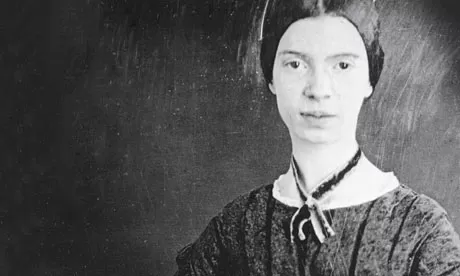
Emily Dickinson’s Transcendental Tippler: “I taste a liquor never brewed”
Emily Dickinson, known for her unique perspective and unconventional style, takes the idea of intoxication beyond the physical realm. In “I taste a liquor never brewed,” she describes a state of divine, natural intoxication derived not from earthly beverages, but from the sheer experience of existence itself – air, dew, endless summer days, and the vast blue sky.
I taste a liquor never brewed – From Tankards scooped in Pearl – Not all the Frankfort Berries Yield such an Alcohol!

Inebriate of air – am I – And Debauchee of Dew – Reeling – thro’ endless summer days – From inns of molten Blue –

When “Landlords” turn the drunken Bee Out of the Foxglove’s door – When Butterflies – renounce their “drams” – I shall but drink the more!

Till Seraphs swing their snowy Hats – And Saints – to windows run – To see the little Tippler Leaning against the – Sun!
Dickinson uses the language of drinking – “liquor,” “brewed,” “Tankards,” “Alcohol,” “Inebriate,” “Debauchee,” “Reeling,” “inns,” “Landlords,” “drams,” “Tippler” – to describe a spiritual or ecstatic experience. Her intoxication comes from nature’s abundance. The speaker is more profoundly drunk on air and dew than bees on nectar or butterflies on floral “drams.” The poem culminates in a hyperbolic, almost comical image of the speaker leaning against the sun, a tiny figure whose immense, transcendent “drunkenness” is so potent it draws the attention of heavenly beings. It redefines “drinking” as an absorption of the divine within the everyday world.
 emily-dickinson-001
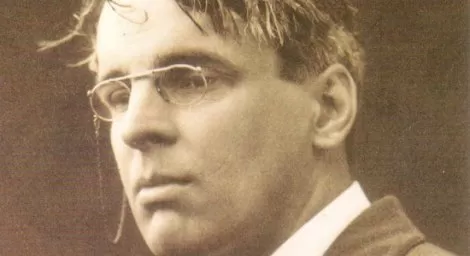
W.B. Yeats’s Simple Equation: “A Drinking Song”
William Butler Yeats’s “A Drinking Song” presents a concise, almost aphoristic statement about two fundamental human experiences: love and drinking. The poem’s directness and simple structure belie a profound observation about perception and truth.
Wine comes in at the mouth
And love comes in at the eye;
That’s all we shall know for truth
Before we grow old and die.
I lift the glass to my mouth,
I look at you, and I sigh.
This short lyric establishes a parallel between physical consumption (wine through the mouth) and sensory-emotional intake (love through the eye). These are presented as the only tangible “truths” one can grasp in life. The final stanza brings these two elements together in a moment of quiet contemplation, the sigh suggesting a complex mix of pleasure, longing, and perhaps melancholy awareness of life’s simple, yet profound, realities before old age and death. The act of drinking becomes intertwined with the experience of love, both immediate and deeply felt.
 yeats
yeats
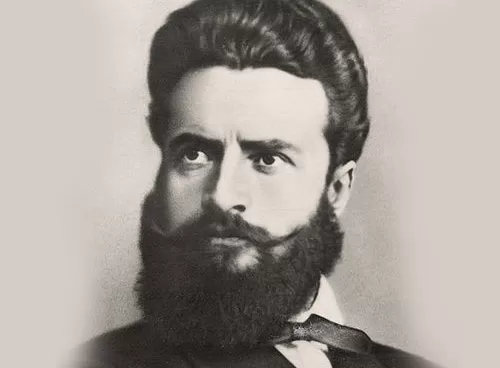
Hristo Botev’s Bitter Tavern: “In the Tavern”
Hristo Botev, a Bulgarian revolutionary and poet, uses the setting of a tavern and the act of drinking as a vehicle for searing social and political critique. “In the Tavern” portrays drinking not as escape or transcendence, but as a symptom of despair, disillusionment, and the failure of action against oppression.
It’s hard, it’s hard, so give me wine.
Drunk, I can forget the face
the thing you fools cannot define:
where lies glory – and disgrace.

Forget the country of my birth,
my father’s dear homely nest,
and those whose souls were never curbed,
whose fighting soul was their bequest.

Forget my family in their need,
my father’s grave, my mother’s tears,
and those who’d steal a crust of bread
with all the aristocratic airs.

The rich man with his crookedness,
the merchant thirsting for his plunder,
the priest reciting holy mass,
rob from the people who must hunger.

Rob them. All you wanton band.
Rob them. Who will make a fuss?
Soon they’ll be too tight to stand:
every hand holds up a glass.

We drink, we sing with recklessness,
we snarl against the tyrant foe,
the taverns are too small for us –
we shout: “To the mountains we shall.

We shout, but when we’re sober
we forget our pledges and our phrases
and say no more, and roar with laughter
at the people’s sacrifices.

While all the time the tyrant rages
and ravages our native home,
slaughters, hangs and flogs and curses
then fines the people he has tamed.

So fill the glass and let me drink.
Bring my soul its soothing gift
and kill the sober way I think
and let my manly hand grow soft.

I’ll drink, despite the enemy,
despite all you, great patriots.
There’s nothing near and dear to me,
and you… well. you are idiots.
The speaker initially seeks wine to forget painful realities – personal hardship, the suffering of others, national disgrace, and the injustices perpetrated by the wealthy, merchants, and even priests. However, the poem quickly turns bitter. The drunken boasts and revolutionary fervor expressed in the tavern (“To the mountains we shall!”) are contrasted sharply with the sober reality of inaction and forgotten pledges. Drinking becomes a trap, a “soothing gift” that “kills the sober way I think” and softens the “manly hand” meant for action. The final lines deliver a cynical indictment of both the oppressors and the passive “patriots” (including the speaker himself, perhaps), highlighting drinking as both an effect and a perpetuator of helplessness in the face of tyranny. Botev uses drinking to expose a deep societal malaise and the tragic cycle of drunken rebellion followed by sober apathy. These poems about drinking reveal varied cultural and personal perspectives.
 hristo_botev_1
For those reflecting on profound historical suffering, poems can offer a different kind of engagement. Reading short holocaust poems might provide a stark contrast to themes of revelry or escape, emphasizing poetry’s capacity to bear witness to trauma. Similarly, exploring a poem about holocaust can deepen understanding of how language grapples with atrocity, a far cry from the tavern’s forgetfulness. Delving into a poem from the holocaust offers direct voices from within that experience, highlighting the stark realities that make Botev’s escapism so poignant. A poem about the holocaust, even if not written by a survivor, requires immense sensitivity, just as analyzing Botev’s use of drinking requires understanding its social context. Finally, considering a poem of holocaust as a collective body of work further underscores the vast range of human experience captured in verse, from the mundane act of drinking to the unimaginable horrors of history.
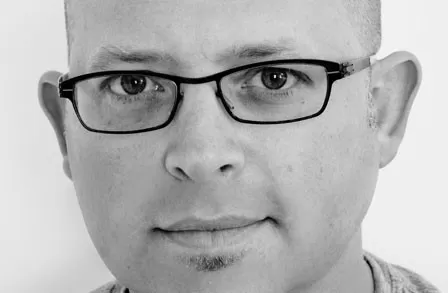
Joel Brouwer’s Blunt Reality: “Vodka”
Joel Brouwer’s contemporary poem “Vodka” approaches drinking with a stark, modern sensibility. The poem focuses on the immediate, blunt reality of vodka intoxication in a domestic setting, stripping away romanticism to reveal an almost unsettling directness.
The Stoli bottle’s frost melts to brilliance where I press my fingers. Evidence. Proof I’m here, drunk in your lamplit kitchen, breathing up your rented air, no intention of leaving. Our lust squats blunt as a brick on the table between us. We’re low on vocabulary. We’re vodkaquiet. Vodkadeliquescent. Vodka doesn’t like theatrics: it walks into your midnight bedroom already naked, slips in beside you, takes your shoulders in its icy hands and shoves. Is that a burglar at the window? No, he lives with me, actually. Well, let him in for Christ’s sake, let’s actually get this over with.Brouwer uses visceral, almost aggressive imagery (“lust squats blunt as a brick,” “icy hands and shoves”) to describe the effects of vodka. The language is fragmented, neologistic (“vodkaquiet,” “Vodkadeliquescent”), reflecting the altered state of mind and the breakdown of conventional communication. The drinking isn’t portrayed as joyful or philosophically significant, but as a raw, inescapable force that confronts reality head-on, symbolized by the blunt, uninvited “burglar” who turns out to be an unwelcome truth or aspect of the self that “lives with” the speaker. The final lines embrace this confrontation with a weary, dark humor.
 joel-brouwer-448
Diverse Perspectives on a Common Theme
These five poems, spanning different eras and styles, collectively showcase the rich and varied ways poets engage with the theme of drinking. From Baudelaire’s philosophical imperative to escape time through any form of intoxication, to Dickinson’s unique vision of nature as a source of divine “liquor,” Yeats’s simple, elegant comparison of wine and love, Botev’s bitter critique of drinking as a symptom of social and political decay, and Brouwer’s raw, contemporary portrayal of vodka’s blunt impact, the exploration of drinking in poetry reflects fundamental human desires for escape, connection, truth, and transformation, often revealing as much about the sober world as the intoxicated one.