
Easter is a season rich with profound themes: sacrifice and redemption, death and resurrection, despair and hope, darkness and light. These powerful concepts have inspired poets across centuries to capture the spiritual and emotional depth of the holiday. Exploring easter poems by famous poets allows us to connect with the historical and theological significance of this time through the lens of masterful language and imagery.
The literary landscape offers a diverse array of works touching upon the events of Holy Week, from the somber reflections of Good Friday to the jubilant celebrations of Easter Sunday. Here, we delve into a selection of poems that resonate with the various moods and meanings of Eastertide, showcasing the enduring power of poetry to illuminate the human experience of faith and transformation.
Maundy Thursday
Maundy Thursday commemorates the Last Supper and the beginning of Christ’s passion. While not explicitly focused on this day, Dante Alighieri’s Inferno begins its journey on this very Thursday, plunging the reader into a dark wood, lost and astray. This opening sets a tone of spiritual lostness that precedes the journey toward salvation, mirroring the gravity of the events leading up to Easter.
Inferno by Dante (1321)
Midway upon the journey of our life
I found myself within a forest dark,
For the straightforward pathway had been lost.
This iconic opening introduces a journey of profound spiritual consequence, aligning with the introspective nature of Maundy Thursday.
Good Friday
Good Friday marks the crucifixion of Jesus Christ, a day of solemn contemplation on suffering and sacrifice. Poets have approached this day with intense reflection, grappling with themes of sin, redemption, and the paradoxical victory found in defeat.
John Donne, the metaphysical poet, explores the geographical and spiritual paradoxes of the day in “Good Friday 1613, Riding Westward.”
‘Good Friday 1613, Riding Westward’ by John Donne (1613)
Hence is’t, that I am carryed towards the West
This day, when my Soules forme bends toward the East.
There I should see a Sunne, by rising set,
And by that setting endlesse day beget
Donne contrasts his physical journey westward with his soul’s yearning towards the East (Jerusalem/Christ), reflecting on the spiritual orientation demanded by the cross. The “Sunne” here is a complex metaphor for Christ, whose setting (death) paradoxically begets “endlesse day” (eternal life).
Thomas Hardy, known for his often bleak perspective, offers a broader, secularized view of sacrifice in “Unkept Good Fridays.”
‘Unkept Good Fridays’ by Thomas Hardy (1927)
There are many more Good Fridays
Than this, if we but knew
The names, and could relate them,
Of men whom rulers slew
Hardy expands the concept of suffering and martyrdom beyond the specific Christian narrative, suggesting that history is filled with “unkept Good Fridays” where individuals have suffered injustice and death at the hands of power. This offers a poignant, if melancholic, reflection on the universality of sacrifice. For a broader look at solemn themes, consider reading a short poem about death.
Easter Saturday
Easter Saturday, or Holy Saturday, is a day of waiting and stillness, commemorating the time Christ’s body lay in the tomb. It’s a period of transition between the sorrow of Good Friday and the joy of Easter Sunday.
Christina Rossetti captures this quiet anticipation in “Easter Even,” meditating on rest and the promise of renewal.
‘Easter Even’ by Christina Rossetti (1862)
Lay Him in the garden-rock to rest;
Rest you the Sabbath length:
The Sun that went down crimson in the west
Shall rise renewed in strength.
Rossetti’s poem beautifully evokes the stillness of the tomb, emphasizing the waiting period while hinting at the coming dawn and the resurrection. The setting sun’s promise of rising renewed mirrors the central theme of Easter.
A. E. Housman’s “Loveliest of Trees” offers a different, nature-focused perspective that often resonates with Eastertide’s arrival in spring.
‘Loveliest of Trees’ by A. E. Housman (1896)
Loveliest of trees, the cherry now
Is hung with bloom along the bough,
And stands about the woodland ride
Wearing white for Eastertide. Cherry blossoms adorn a tree, symbolic of spring and renewal
While not directly theological, this poem ties the natural world’s cycle of renewal in spring (“wearing white for Eastertide”) to the Easter season, a common theme in poetry celebrating this time of year. It highlights the beautiful poems found in nature’s awakening.
Easter Day
Easter Sunday is the culmination of Holy Week, a day of celebration and triumphant joy, marking the resurrection of Christ. Poets writing about this day often express themes of victory over death, spiritual rebirth, and profound hope.
George Herbert’s “Easter” focuses on the singular significance of this day.
‘Easter’ by George Herbert (1633)
Can there be any day but this,
Though many sunnes to shine endeavour?
We count three hundred, but we misse:
There is but one, and that one ever.
Herbert’s poem asserts the unique and eternal importance of Easter Day, arguing that despite the passage of time and other events, this single day holds a significance that transcends all others, being the day of Christ’s resurrection.
Oscar Wilde’s “Easter Day” is a sonnet observing the Pope in procession, focusing on the ritualistic splendor of the day in Rome.
‘Easter Day’ by Oscar Wilde (1881)
Priest-like, he wore a robe more white than foam,
And, king-like, swathed himself in royal red,
Three crowns of gold rose high upon his head:
In splendour and in light the Pope passed home. A portrait of Oscar Wilde, author of 'Easter Day'
Wilde’s poem is less about the theological event and more about the powerful visual and ceremonial aspects of the Easter celebration within the Catholic tradition, highlighting the figurehead of the Church.
Joyce Kilmer offers a simple, joyful lyric capturing the feeling of spring and renewal associated with Easter.
‘Easter’ by Joyce Kilmer (1914)
The air is like a butterfly
With frail blue wings.
The happy earth looks at the sky
And sings. A photo of Joyce Kilmer, poet
This short poem connects the spiritual lightness of Easter with the physical sensation of spring, using the image of a butterfly and the earth’s joyful singing to convey the sense of rebirth.
W. B. Yeats’s “Easter, 1916” is a powerful and complex poem reflecting on the Easter Rising in Dublin. While set during Easter, its themes are political transformation, sacrifice, and the terrible beauty born from revolutionary change.
‘Easter, 1916’ by W. B. Yeats (1916)
Too long a sacrifice
Can make a stone of the heart.
O when may it suffice?
That is Heaven’s part, our part
To murmur name upon name,
As a mother names her child
When sleep at last has come
On limbs that had run wild.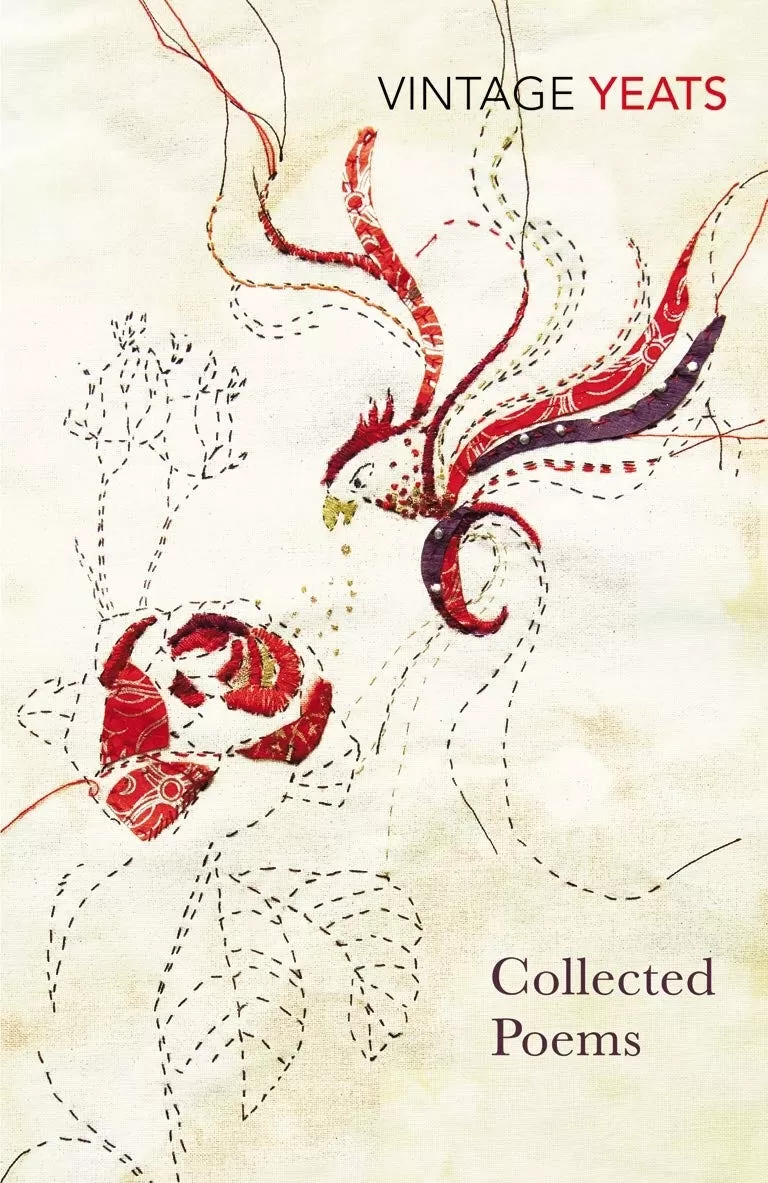 A portrait of W. B. Yeats, a Nobel laureate poet
Yeats’s poem uses the Easter setting to explore themes of martyrdom and change, reflecting on how sacrifice, even for a political cause, can transform individuals and history, creating a “terrible beauty.”
Finally, Steve Turner offers a modern, somewhat cynical take on the secularization of Easter in “Christmas is Really for the Children.”
‘Christmas is Really for the Children’ by Steve Turner (2003)
Easter is not really
for the children
unless accompanied by
a cream filled egg.
It has whips, blood, nails,
a spear and allegations
of body snatching. A book cover for a collection of Steve Turner's poems
Turner starkly contrasts the commercialized version of Easter (chocolate eggs) with its grim theological realities (whips, blood, nails), suggesting that the core Christian story is too brutal for children unless sugar-coated. This poem provides a thought-provoking contemporary perspective on the holiday.
Exploring these easter poems by famous poets offers a journey through centuries of reflection on the central tenets of the holiday – sacrifice, waiting, and triumphant rebirth. From devout hymns to critical observations and political metaphors, the poetry of Easter illuminates its enduring significance in human culture and belief. What other Easter poems have resonated with you? Share your thoughts below.